Round Nose Pliers for Jewelry Making: DIY Nose Piercing Tools
Assess the budget and value of round nose pliers for jewelry making custom nose hoops, septum rings, and nostril screws. Compare top brands.

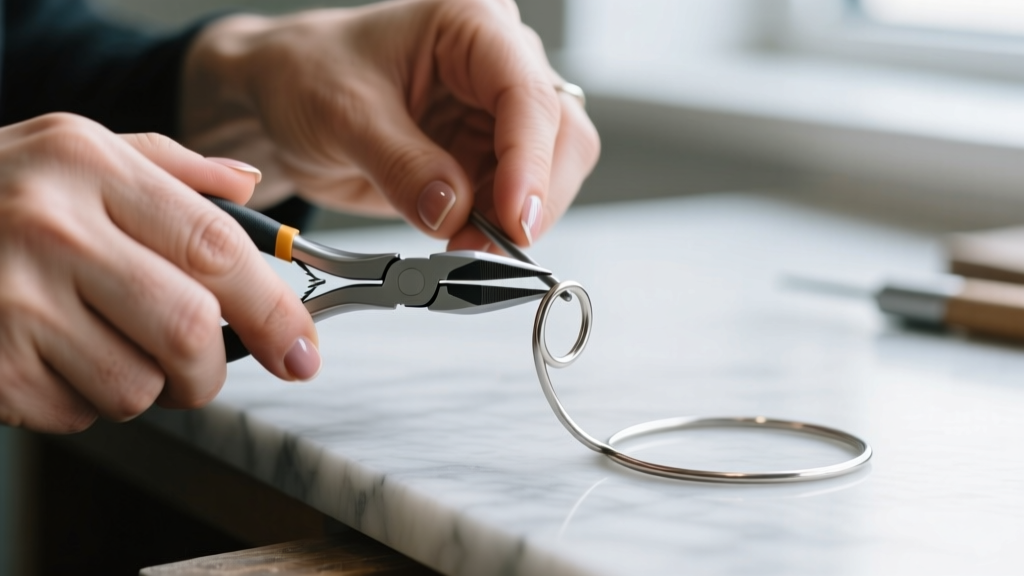
The resurgence of custom, hand-forged body jewelry has transformed how enthusiasts and independent jewelers approach nose piercings. Whether you are crafting a bespoke 14k gold nostril screw, shaping a seamless 16-gauge titanium septum hoop, or simply adjusting the fit of a captive bead ring, the tools you use dictate the safety and aesthetic of the final piece. Specifically, finding the right round nose pliers for jewelry making is not just a matter of convenience—it is a critical factor in preventing tissue irritation, ensuring structural integrity, and protecting expensive raw materials.
In this comprehensive budget and value assessment, we break down the metallurgy, jaw tapers, and brand tiers of round nose pliers. We will help you determine whether a $15 budget tool is sufficient for your workbench, or if investing in a $90 premium pair is mandatory for crafting safe, high-end nose piercing jewelry.
Why Round Nose Pliers Are Essential for Nose Piercings
Nose jewelry demands a level of precision that standard flat-nose or chain-nose pliers simply cannot provide. The anatomy of the nostril and the septum requires jewelry with smooth, sweeping curves, perfectly rounded L-bends, and seamless hoop closures. Round nose pliers feature two conical, tapered jaws designed specifically to bend wire into loops, curves, and spirals without creating sharp creases or structural weak points.
When crafting a custom corkscrew nose stud, for instance, the wire must be wrapped around a perfectly cylindrical surface to ensure the spiral sits flush against the inner nasal wall. Flat pliers will create angular, polygonal bends that can scratch the delicate fistula (the piercing channel) and harbor bacteria. Furthermore, when closing a seamless hoop for a healed septum piercing, the rounded jaws allow you to apply even pressure, bringing the two ends of the wire together flawlessly without overlapping or leaving a gap that could catch on clothing or hair.
Metallurgy and Jaw Coatings: Protecting Your Investment
The material of your pliers is just as important as the material of the jewelry you are crafting. According to the Association of Professional Piercers (APP), body jewelry must have a flawless, mirror-like finish to prevent the accumulation of biofilm and bacteria. If your pliers have rough, unpolished jaws, or worse, a flaking chrome coating, they will impart micro-scratches onto your titanium or gold wire.
The Danger of Tool Marks on Implant-Grade Metals
Implant-grade titanium (ASTM F136) is relatively soft compared to hardened steel. If you use cheap, low-carbon steel pliers with misaligned jaws, you risk gouging the titanium. These micro-gouges not only ruin the aesthetic polish but can also cause irritation bumps in healing piercings. For soft metals like 18k gold, 24k gold, or pure niobium, the risk of marring is even higher.
Pro-Tip: For finishing and adjusting high-karat gold or polished niobium nose hoops, invest in a pair of nylon-jawed round nose pliers. The replaceable nylon inserts grip the metal firmly without leaving any tool marks, saving you hours of polishing with a rotary tool.
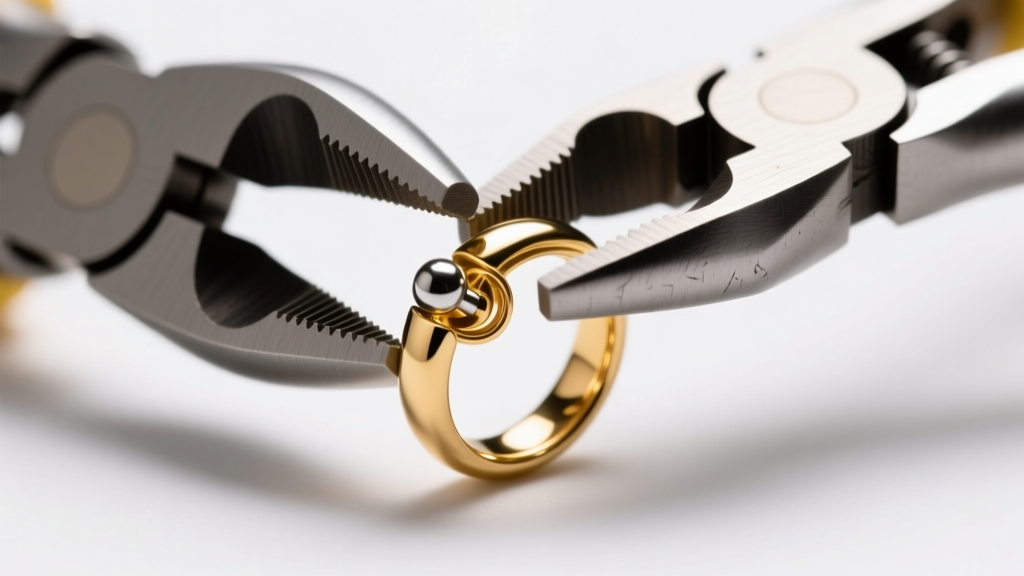
Budget vs. Premium: A Value Assessment Table
When shopping for round nose pliers for jewelry making, the market is flooded with options ranging from $10 to over $100. The price discrepancy comes down to steel hardness (measured on the Rockwell C scale, or HRC), joint precision, and spring tension. Below is a breakdown of what you get at each price tier.
| Brand Tier | Price Range | Steel Hardness (HRC) | Joint Quality | Best Application for Nose Jewelry |
|---|---|---|---|---|
| Budget (e.g., Wubbers, Generic) | $12 - $18 | 45-50 | Loose, prone to wobble | Bending base metals, practice wire, heavy structural shaping |
| Mid-Range (e.g., Beadalon, Xuron) | $20 - $35 | 50-55 | Flush, minimal light bleed | Surgical steel, basic titanium hoops, 20G/18G nostril screws |
| Premium (e.g., Lindstrom, Pepe Tools) | $50 - $75 | 60+ | Lapped, zero wobble | 14k/18k Gold, ASTM F136 Titanium, seamless hoop closures |
| Luxury (e.g., Tronex, GRS) | $85 - $120 | 62-65 | Micro-lapped, perfect alignment | Master jewelers, flawless high-karat finishes, production work |
The Hidden Costs of Cheap Pliers
While a $12 pair of pliers might seem like a smart budget move, the hidden costs quickly add up. Budget pliers often suffer from 'jaw wobble'—a slight lateral movement caused by poorly machined rivets. When you try to close a 16-gauge (1.2mm) titanium septum ring, this wobble causes the jaws to slip, resulting in a twisted hoop rather than a flat, seamless closure. Furthermore, the return springs on cheap tools are often made of low-grade wire that fatigues and snaps within a few months of heavy use, rendering the tool useless.
Mastering the Taper: Sizing Hoops for Nostrils and Septums
The defining feature of round nose pliers is their tapered jaws. This taper is not just a design quirk; it is a built-in measuring tool for creating different inner diameters (ID) for nose jewelry. Understanding how to utilize the taper is essential for achieving the correct fit for various piercing placements.
- The Tip (1mm - 2mm diameter): Use the very tip of the pliers for creating tight, small-diameter loops, such as the decorative rosette on a nose pin, or for bending ultra-fine 22-gauge or 20-gauge (0.8mm) wire.
- The Mid-Section (3mm - 4mm diameter): This is the sweet spot for standard nostril hoops. Bending your wire here will yield a 6mm to 8mm inner diameter, which is the standard size for most healed nostril piercings.
- The Base (5mm - 6mm diameter): Use the base of the jaws for shaping larger septum rings or daith-style clickers that require a 10mm to 12mm inner diameter. The thicker part of the jaw provides the leverage needed to bend heavier 14-gauge (1.6mm) wire without straining your wrists.
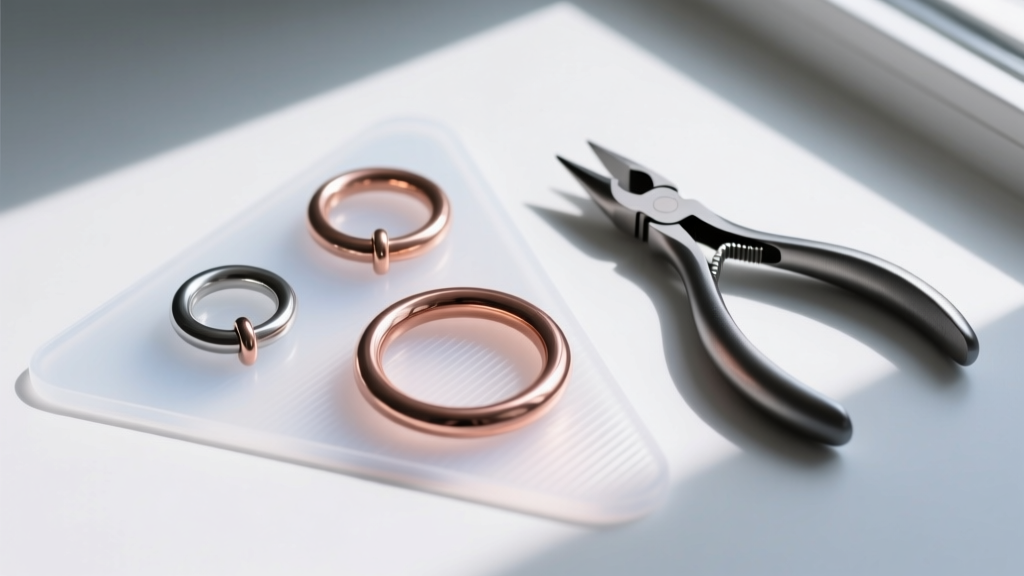
For jewelers who produce nose hoops in bulk, stepped round nose pliers are a game-changer. Instead of a smooth taper, stepped pliers feature distinct, machined grooves at exact millimeter intervals (e.g., 3mm, 4mm, 5mm). This allows you to bend every 8mm nostril hoop to the exact same specification, ensuring consistency across your product line. As noted by master jewelers at Rio Grande, stepped pliers eliminate the guesswork and reduce material waste caused by improperly sized bends.
Step-by-Step: Forging a Custom Nostril L-Bend
To truly understand the value of a high-quality tool, let us walk through the process of creating a custom L-shaped nostril stud from a straight piece of 18-gauge (1.0mm) niobium wire. Niobium is highly biocompatible and can be anodized into vibrant colors, making it a favorite for custom nose jewelry.
- Measure the Post Length: Using a digital caliper, measure 7mm from the end of your wire. This will be the length of the post that sits inside the nostril fistula. Mark it with a fine-point jeweler's marker.
- Position the Wire: Open your premium round nose pliers and place the wire exactly at the mark. Ensure the wire is seated deeply in the jaw to prevent slipping.
- Apply Even Pressure: Squeeze the handles firmly but smoothly. High-quality pliers with dual-leaf springs will distribute the force evenly, creating a crisp, 90-degree L-bend without crushing or flattening the round wire profile.
- Check the Angle: Inspect the bend against a steel block. If the wire has sprung back slightly (a common issue with hard metals), re-seat it in the pliers and apply a micro-adjustment. Cheap pliers will mar the wire during this adjustment phase; premium polished jaws will leave the niobium pristine.
- Finish and Polish: Tumble the finished L-bend in a rotary tumbler with stainless steel shot and burnishing compound to achieve a mirror finish before anodizing.
Final Verdict: Where to Invest Your Money
When it comes to crafting nose piercing jewelry, the margin for error is virtually zero. A poorly shaped hoop can cause migration, tearing, or chronic irritation. Therefore, your budget allocation should heavily favor precision over quantity.
If you are a hobbyist experimenting with copper or brass practice wire, a $15 budget pair of round nose pliers is perfectly adequate. However, if you are working with implant-grade titanium, 14k gold, or niobium intended for actual human wear, bypass the mid-range options and invest directly in a premium pair from Lindstrom or Pepe Tools. The $60 investment will pay for itself by preventing ruined materials, reducing hand fatigue, and ensuring that every custom nose screw and seamless septum hoop you create meets the highest standards of safety and aesthetic perfection.


