Fixing Irritation: Choosing the Right Types Nose Piercing Jewelry
Discover how to troubleshoot irritation bumps by selecting the best types nose piercing jewelry, materials, and sizes for rapid healing.

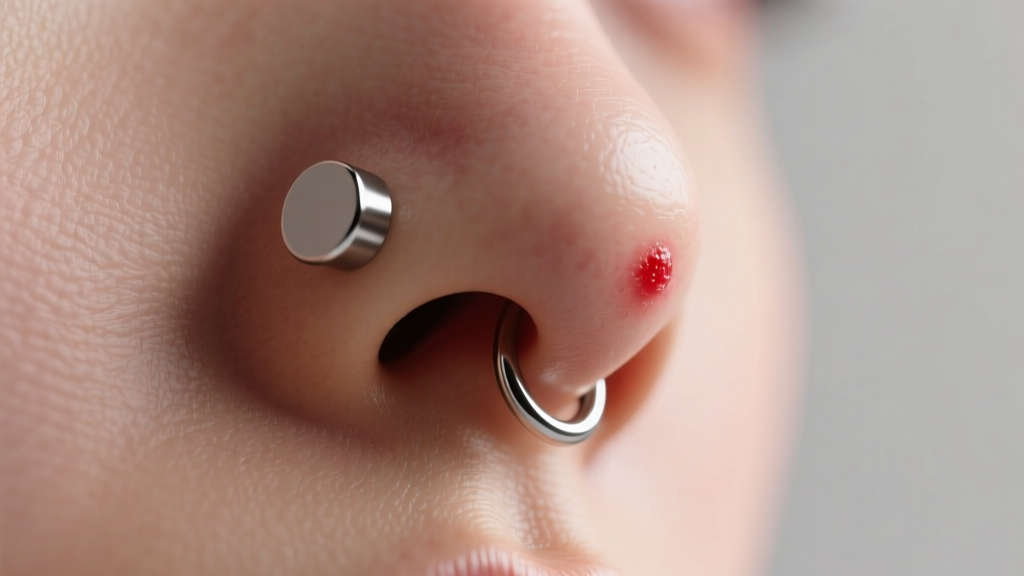
Dealing with a stubborn, angry, or swollen nostril piercing is one of the most frustrating experiences in body modification. You clean it diligently, avoid sleeping on it, and yet, that dreaded irritation bump persists. More often than not, the culprit isn't your aftercare routine—it is the jewelry itself. Understanding the different types nose piercing jewelry available, and how their specific mechanics interact with your unique anatomy, is the single most critical step in troubleshooting a stalled or irritated piercing.
In 2026, professional piercers and dermatologists agree that mechanical stress and metal hypersensitivity are the leading causes of contact dermatitis and hypertrophic scarring in nasal piercings. This comprehensive troubleshooting guide will help you diagnose your piercing's distress signals and match them with the exact jewelry specifications required to restore your piercing to perfect health.
The Root Cause: Mechanical Stress vs. Metal Allergy
Before swapping out your jewelry, you must identify the root cause of your irritation. According to the Association of Professional Piercers (APP), the vast majority of "infected" piercings are actually suffering from mechanical irritation or allergic contact dermatitis. True bacterial infections are rare and usually accompanied by systemic symptoms like fever or radiating heat.
Mechanical stress occurs when your jewelry moves excessively, creating micro-tears in the fragile fistula (the piercing channel). Every time a hoop spins or a loose stud catches on a towel, the body responds by producing excess collagen, resulting in a localized bump. On the other hand, allergic reactions are triggered by the elemental composition of your jewelry. If your piercing is itchy, weeping clear fluid, and the skin immediately surrounding the jewelry is flaky or red, you are likely reacting to nickel or other alloyed metals commonly found in lower-grade jewelry.
Evaluating the Main Types Nose Piercing Jewelry for Troubled Piercings
When your piercing is acting up, the physical design of your jewelry dictates its ability to heal. Let's break down the most common styles and evaluate their viability for a troubled fistula.
| Jewelry Style | Movement Factor | Irritation Risk | Ideal Healing Stage |
|---|---|---|---|
| Flat Back Labret (Threadless/Internally Threaded) | Minimal | Lowest | Initial & Troubled |
| Nose Screw | Moderate | Medium | Fully Healed Only |
| L-Bend / Bone | High | High | Fully Healed Only |
| Hoops / Captive Bead Rings | Maximum | Highest | Never for Healing |
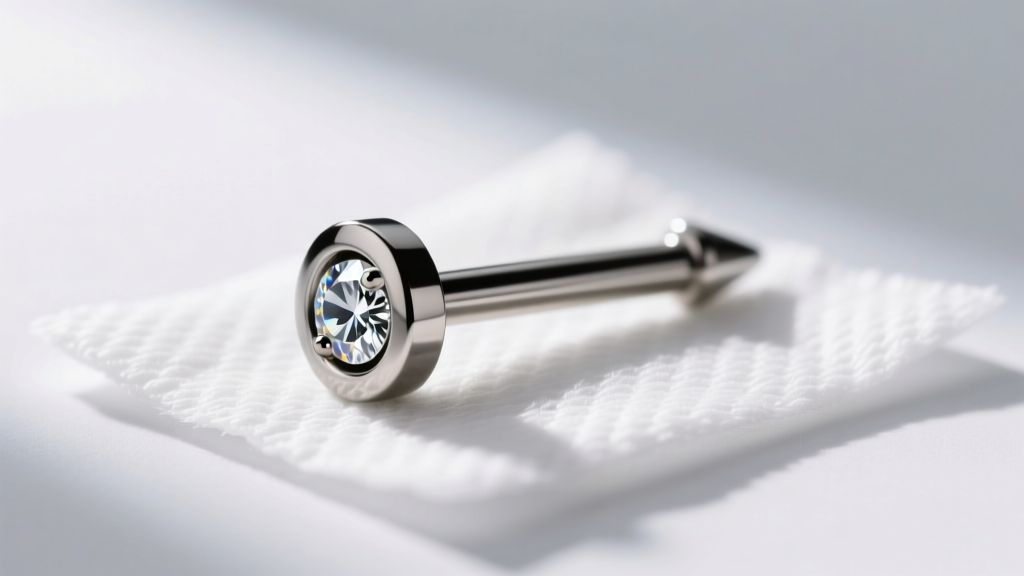
If you are currently wearing a hoop, an L-bend, or a nose screw, you have found your primary troubleshooting target. Hoops introduce a continuous rotational axis that drags dried lymph, bacteria, and debris directly into the healing wound. Furthermore, the curvature of a hoop puts uneven pressure on the piercing channel, often causing the hole to heal at an awkward angle. To troubleshoot an irritation bump, you must immediately downsize to a flat back labret post. The flat disc sits flush against the inner mucosal lining of the nostril, eliminating the "pendulum effect" and allowing the fistula to rest completely still.
Material Matters: Upgrading Your Metal to Stop Reactions
If you have switched to a flat back labret and the bump persists, your next troubleshooting step is to evaluate your metal. The term "surgical steel" is largely a marketing myth when it comes to sensitive piercings. Most commercial 316L stainless steel contains between 8% and 10% nickel. As the National Center for Biotechnology Information (NCBI) notes, nickel is the most common cause of allergic contact dermatitis worldwide, and prolonged exposure in a moist, healing wound can trigger chronic inflammation.
To eliminate metal sensitivity as a variable, you must upgrade to one of the following APP-approved implant-grade materials:
- Implant-Grade Titanium (ASTM F-136): The gold standard for troubled piercings. It is entirely nickel-free, highly biocompatible, and features a mirror-polish finish that prevents bacteria from adhering to microscopic scratches on the metal surface.
- Niobium (99.99% Pure): An elemental metal that is highly malleable and completely biocompatible. It is an excellent alternative for those who cannot find a titanium post in their exact required length, as professional piercers can safely cut and thread niobium in the studio.
- 14k or 18k Solid Gold (Nickel-Free): Ensure the gold is alloyed with palladium or silver, not nickel. Avoid white gold unless its exact alloy composition is verified by the manufacturer, as white gold is frequently alloyed with nickel for color and hardness.
Avoid all plated jewelry (gold-plated, rose gold-plated, or vermeil). The plating on a post will eventually wear away due to the friction of the fistula, exposing the base metal—usually brass or low-grade steel—directly to your internal tissue.
Sizing and Gauge: The Hidden Culprits of Migration
Even with the correct style and material, improper sizing will guarantee a persistent irritation bump. Troubleshooting requires precise attention to both gauge (thickness) and post length.
The Cheese-Cutter Effect
Many commercial mall kiosks and fast-fashion brands sell nose studs in 22-gauge or 20-gauge thicknesses. In the context of body piercing, thinner is not more delicate; it is more dangerous. A 22-gauge wire is so thin that any accidental snag on a shirt or towel will cause the wire to slice through the tissue like a cheese cutter through a block of cheddar. This micro-trauma leads to migration and rejection. For a stable, bump-free healing process, you should be wearing an 18-gauge (1.0mm) or 16-gauge (1.2mm) post. The thicker surface area distributes pressure evenly and provides structural stability to the fistula.
Post Length and the Swelling Window
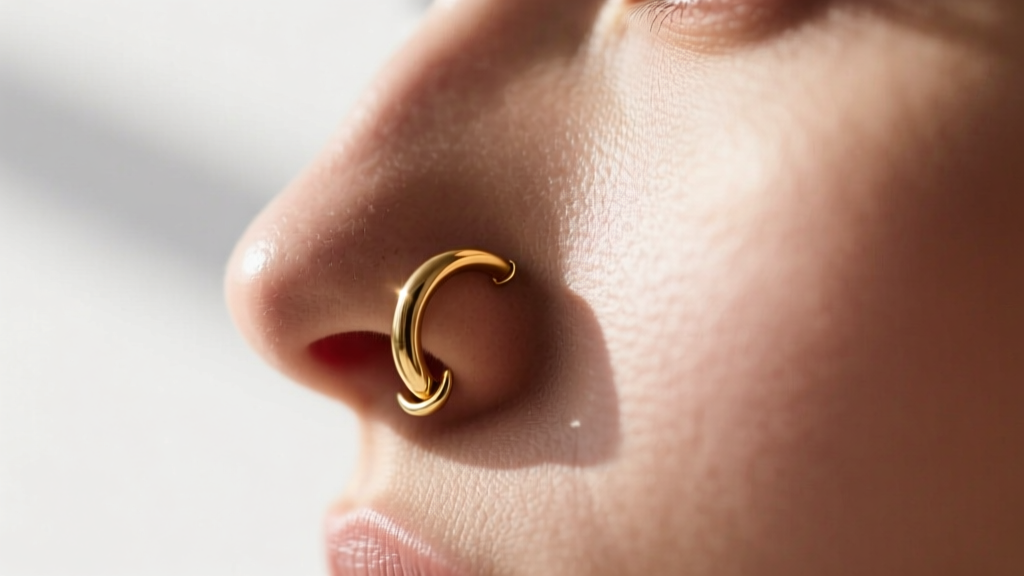
If your flat back labret is pressing tightly into the skin, causing the decorative end to sink into the tissue, your post is too short. This restricts blood flow and traps lymph fluid, immediately forming a bump. Conversely, if the post is excessively long, it will catch on objects and move too much.
Standard Post Lengths:
• 8mm (5/16"): Used for initial piercings or actively swollen, irritated piercings to accommodate fluid buildup.
• 6mm (1/4"): The standard length for a fully settled, healed piercing.
• 5mm (3/16"): Used for very thin nasal tissue, but only after all swelling has completely subsided.
If you are troubleshooting a bump, you likely need to visit a professional piercer to be fitted with an 8mm post to allow the tissue room to breathe and drain, followed by a "downsize" appointment to a 6mm post once the bump has flattened.
Step-by-Step Troubleshooting Protocol
Once you have secured an 18-gauge, ASTM F-136 titanium flat back labret with an appropriate post length, implement this strict aftercare protocol to encourage the bump to reabsorb:
- Sterile Saline Only: Spray the area twice daily with a sterile 0.9% sodium chloride wound wash. Ensure the can contains no additional preservatives, fragrances, or benzalkonium chloride.
- Warm Compresses: After spraying, apply a warm, damp, sterile gauze pad to the piercing for 3-5 minutes. The gentle heat increases localized blood circulation, encouraging the trapped lymph fluid inside the bump to drain naturally.
- Ban the Harsh Chemicals: Immediately cease the use of tea tree oil, aspirin pastes, hydrogen peroxide, or rubbing alcohol. These caustic substances cause chemical burns on the delicate mucosal tissue, exacerbating the bump and delaying cellular repair.
- LITHA (Leave It The Hell Alone): Do not touch, twist, or pick at the crusties. Allow the saline to soften them, and gently wipe them away with non-woven gauze. Cotton swabs leave behind microscopic fibers that can become embedded in the healing wound.
By systematically eliminating mechanical movement, upgrading to implant-grade titanium, and ensuring precise gauge and post sizing, you will resolve the vast majority of nose piercing irritation bumps. If the bump does not show significant improvement within 14 days of switching to proper jewelry, consult a professional piercer or a dermatologist to rule out keloid scarring or localized infection.


