Troubleshooting Fit Issues With Different Types Of Nose Jewelry
Discover how to solve common piercing issues like irritation bumps and lost studs by choosing the correct types of nose jewelry for your anatomy.

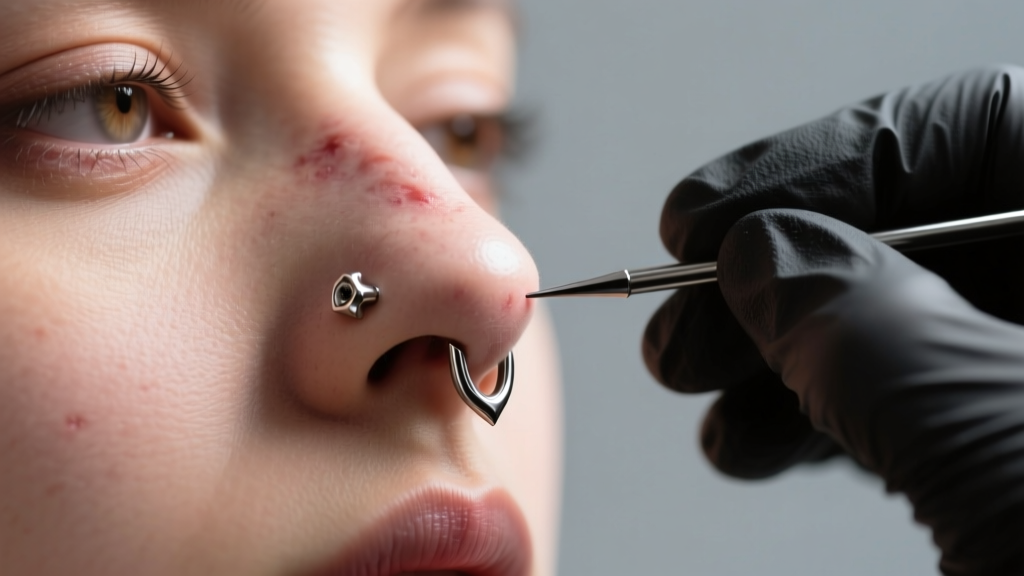
The Anatomy of a Bad Fit: Why Your Jewelry is Failing
As we navigate the advanced body modification landscape of 2026, the standard for nostril and septum piercings has shifted dramatically away from generic, one-size-fits-all accessories. When you experience endless irritation, sinking studs, or migrating angles, the root cause is almost always a mismatch between your unique fistula anatomy and the specific types of nose jewelry you are wearing. Troubleshooting these issues requires a clinical understanding of gauge, post length, threading, and metal composition.
The most common failure point is ignoring the three-dimensional reality of the nostril. A standard nostril piercing is not a straight, uniform tunnel; it is a curved channel through cartilage and tissue that swells, shifts, and changes angle. According to the Association of Professional Piercers, using rigid or improperly angled jewelry forces the fistula to conform to the metal, resulting in chronic inflammation and rejection.
Diagnostic Chart: Matching Symptoms to Jewelry Types
Before swapping your jewelry, diagnose the exact mechanical failure. Use this troubleshooting matrix to identify why your current setup is failing and which types of nose jewelry will resolve the complication.
| Symptom | Likely Culprit (Wrong Type) | The Fix (Correct Type) |
|---|---|---|
| Stud sinking into the nostril | Standard 6mm post with a large gem | 8mm or 10mm flat-back labret post |
| Jewelry falling out during sleep | Nostril screw or L-bend | Threadless push-pin or internally threaded flat-back |
| Persistent irritation bump | Too-tight seamless hoop (8mm) | 10mm Captive Bead Ring or flat-back stud |
| Tearing of the piercing hole | Nose bone (bulbous end stud) | Flat-back labret with a beveled end |
Troubleshooting Specific Types of Nose Jewelry
Nostril Screws and L-Bends (The "Falling Out" Problem)
Nostril screws and L-bends are legacy jewelry types that rely on the tension of the bend to stay inside the nostril. The primary problem? Every human nostril has a different internal curvature. An off-the-rack L-bend will either sit too far away from the skin (creating a gap that catches on towels and masks) or press too tightly into the tissue, causing localized necrosis. If your L-bend constantly falls out, the issue is not the gauge; it is the lack of a custom bend. A professional piercer must use non-marring jewelry pliers to adjust the drop length and the curve of the wire to match your exact septal wall thickness.
Bone Studs and Nose Pins (The "Tearing" Problem)
Nose bones feature a straight post with a bulbous, unthreaded end that pops through the piercing. While easy to insert, they are a troubleshooting nightmare. The bulbous end forces the fistula to stretch unnaturally every time the jewelry is removed or shifted. Over time, this micro-trauma leads to a stretched, sloppy piercing hole that can no longer hold smaller gauge jewelry. If you are dealing with a stretched fistula, immediately retire all nose bones and switch to a flat-back labret with a smooth, beveled insertion end.
Seamless Hoops and Captive Bead Rings (The "Irritation Bump" Problem)
Hoops are the most frequently misused types of nose jewelry during the healing and settling phases. An irritation bump (hypertrophic scarring) on the exterior of the nostril is almost always caused by a hoop with an incorrect diameter. If an 8mm hoop is placed on a nostril that requires a 10mm diameter to sit flush, the ring will pull upward at an angle. This angular pressure irritates the exit hole, triggering the body to produce excess collagen (a bump).
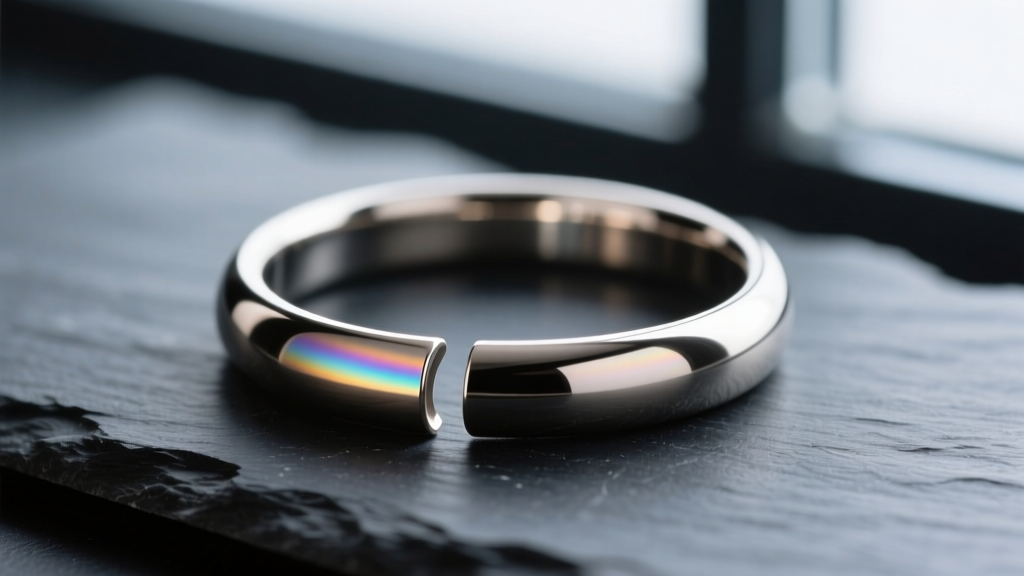
To troubleshoot hoop-related bumps, you must measure the distance from the piercing hole to the edge of the nostril wing. If the distance is 7mm, you need a minimum 9mm or 10mm inner diameter hoop to allow for swelling and natural movement. Furthermore, seamless hoops often have a microscopic burr where the metal meets; if this seam catches inside the fistula, it will cause relentless irritation. Always opt for a continuous ring with a polished, flush closure or a Captive Bead Ring (CBR) for problematic piercings.
Material Reactions: When the Metal is the Problem
Sometimes the fit is perfect, but the biology rejects the material. If your piercing is weeping clear fluid, intensely itchy, or surrounded by a flaky rash, you are likely experiencing a contact allergy rather than a mechanical fit issue. The vast majority of cheap nose studs are made from 316L surgical stainless steel, which contains up to 10% nickel. As noted by the Mayo Clinic, nickel allergies can develop suddenly, even if you have worn steel jewelry for years without issue.
The Solution: Upgrade exclusively to Implant-Grade Titanium (ASTM F-136). This specific alloy is entirely nickel-free and features a mirror-polish surface finish that prevents bacterial biofilm from adhering to the metal. Avoid "titanium-plated" or "titanium-coated" jewelry, as the plating will eventually wear off inside the moist environment of the fistula, exposing the reactive base metal underneath.
Advanced Solutions: Threadless and Internally Threaded Systems
If you have exhausted all other troubleshooting steps and your jewelry still shifts, sinks, or irritates, it is time to adopt the 2026 industry gold standard: threadless (push-pin) and internally threaded flat-back labrets.
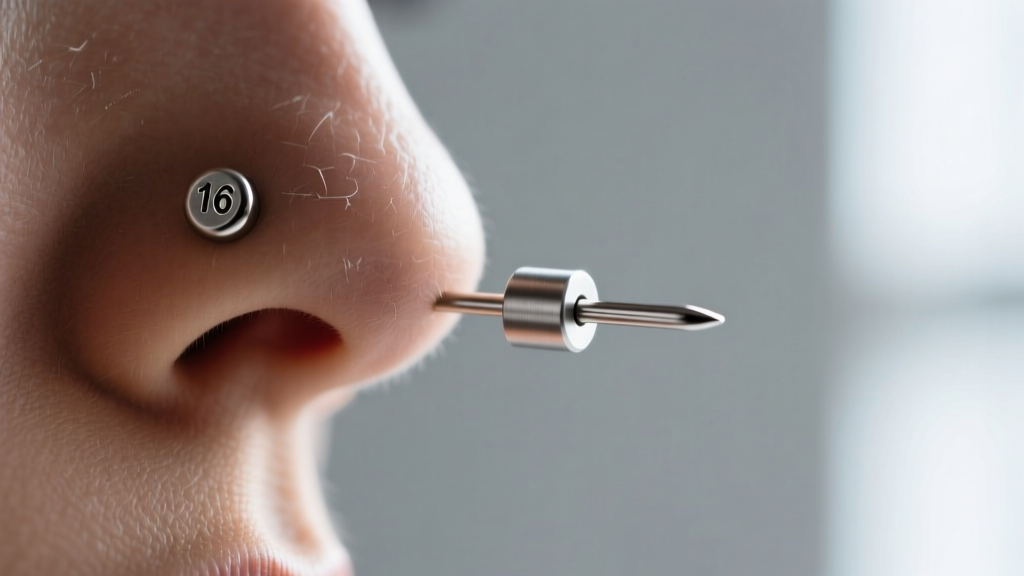
Threadless (Push-Pin) Jewelry: This system uses a decorative end with a slightly bent pin that inserts into a hollow post. The tension of the bent metal against the inner wall of the post locks the jewelry in place. It is entirely seamless on the exterior, meaning it will never snag, and the flat back sits flush against the inside of the nostril, eliminating the "sinking" problem entirely. To troubleshoot a loose threadless end, simply remove the decorative top and increase the angle of the pin bend slightly with your fingers before reinserting.
Internally Threaded Flat-Backs: Unlike externally threaded jewelry (where the screw threads scrape through the delicate fistula upon insertion), internally threaded posts have the screw mechanism inside the decorative end. The smooth post glides through the tissue without causing micro-tears. For nostrils, an 18-gauge (1.0mm) or 20-gauge (0.8mm) internally threaded flat-back with a 6mm to 8mm post length solves 95% of all fit-related complications.
Final Checklist for Resolving Piercing Complications
Before booking a piercing appointment or ordering new jewelry online, run through this rapid troubleshooting checklist:
- Verify the Gauge: Never force a 20G stud into an 18G piercing, or vice versa. Measure your current jewelry with a digital caliper if unsure.
- Check the Post Length: If the back of your stud is pressing into your nasal cavity, downsize from an 8mm to a 6mm post. If the gem is swallowing into the skin, upsize to an 8mm or 10mm post.
- Ditch the Hoops for Healing: If you have an active irritation bump, remove the hoop immediately and insert a flat-back titanium labret to stabilize the angle of the fistula.
- Inspect the Threading: Throw away all externally threaded and nose-bone jewelry. They cause irreversible tissue damage over time.
- Cleanse Correctly: Use only sterile 0.9% sodium chloride wound wash. Avoid tea tree oil, alcohol, and harsh soaps, which cause chemical burns that mimic mechanical irritation.
By understanding the biomechanics behind the different types of nose jewelry, you can transition from endlessly fighting your piercing to enjoying a comfortable, stable, and perfectly fitted aesthetic.


