The Ultimate Bangle Jewelry Buying Guide: Metals, Sizing & Fit
Discover what to look for when buying bangle jewelry. Learn about metal grades, precise sizing techniques, and clasp mechanisms in our expert guide.

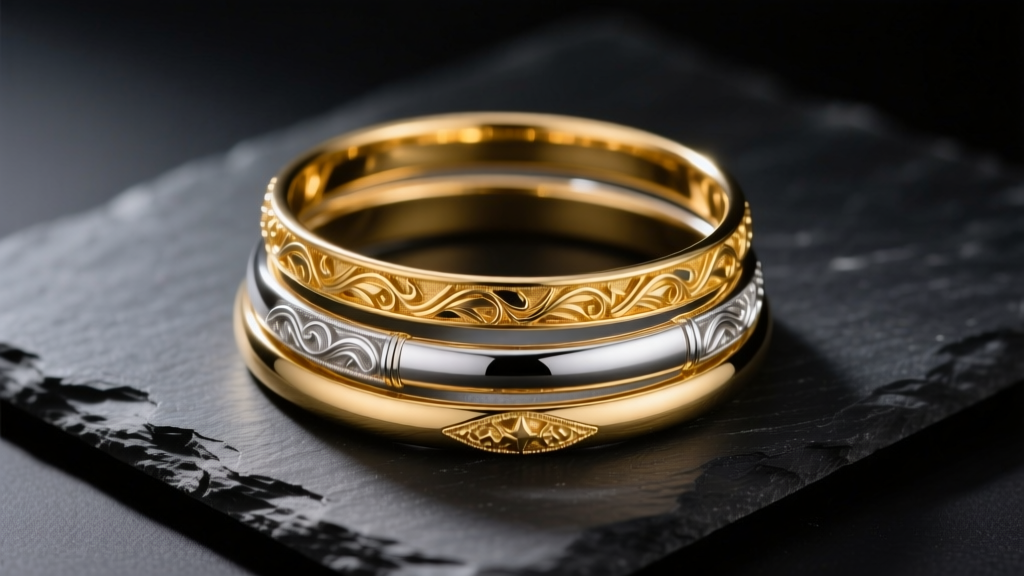
Introduction to Rigid Wristwear
When investing in rigid wristwear, understanding the structural integrity and precise fit of your pieces is paramount. Unlike chain bracelets that drape, adjust, and forgive minor sizing errors, a bangle is an unyielding circle of metal. It must navigate the complex topography of your hand—specifically the knuckles and thumb joint—before resting securely on your wrist. Buying bangle jewelry requires a shift in perspective: you are not just purchasing a decorative item, but a piece of precision-engineered metalwork. This comprehensive buying guide will walk you through the critical metallurgical choices, the mathematics of proper sizing, and the mechanical nuances of clasps and hinges that separate heirloom-quality pieces from disposable fast fashion.
Decoding Metal Grades and Durability
The longevity of your wristwear is entirely dependent on the metallurgical composition. Because bangles are subjected to constant impact against desks, doorframes, and steering wheels, the hardness and tensile strength of the metal dictate its survival rate. The Federal Trade Commission's Jewelry Guides strictly regulate how these metals are stamped and marketed, but understanding the real-world implications of these alloys is up to the informed buyer.
Gold: Karats vs. Structural Integrity
Gold purity is measured in karats, but higher purity does not equal higher durability. 24k gold (99.9% pure) is far too malleable for rigid jewelry; a 24k bangle will bend out of shape within a week of daily wear. 18k gold (75% gold) offers a rich, buttery yellow hue but is still relatively soft, prone to deep scratching and denting. For everyday bangle jewelry, 14k gold (58.5% gold) is the undisputed champion. The higher concentration of alloy metals like copper, zinc, and silver increases the Vickers hardness, allowing the bangle to maintain its perfect circular geometry and resist hinge deformation over decades of use.
Silver, Platinum, and Alternative Metals
Sterling silver (925) is an accessible entry point, but it is highly susceptible to oxidation and tarnishing. If you are buying a silver bangle, look for pieces that have been flash-plated with rhodium to delay tarnish and provide a harder outer shell. Platinum (usually stamped 950 or Pt950) is incredibly dense and heavy. While it scratches easily, it does not lose metal volume when scratched; instead, it develops a satin-like patina that many collectors desire. Titanium and tungsten carbide are modern alternatives offering extreme scratch resistance, but they cannot be resized or easily repaired by a traditional jeweler if the hinge mechanism fails.
| Metal Type | Vickers Hardness (HV) | Best Use Case | Maintenance Level |
|---|---|---|---|
| 14k Yellow Gold | ~140 HV | Everyday wear, hinged styles | Low |
| 18k Yellow Gold | ~125 HV | Occasional wear, solid slip-on | Medium |
| 925 Sterling Silver | ~65 HV | Seasonal trends, budget-friendly | High (Polishing) |
| 950 Platinum | ~130 HV | Luxury heirlooms, heavy weight | Low (Patina accepted) |
| Tungsten Carbide | ~1500 HV | Men's styles, extreme durability | None (Cannot repair) |
The Mathematics of Bangle Sizing
The most frequent point of failure in purchasing rigid wristwear is improper sizing. A common novice mistake is measuring the wrist circumference and attempting to match it to the bangle's inner diameter. This will result in a piece that physically cannot pass over your hand. Bangle sizing is dictated by the widest part of your hand, not the narrowest part of your arm.
Measuring Hand vs. Wrist
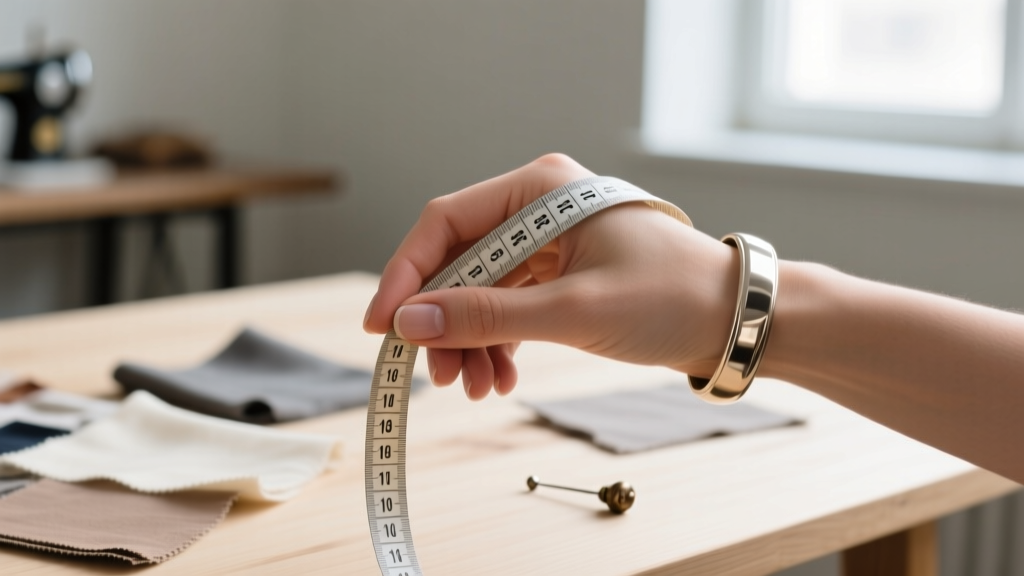
To find your true size, you must measure the knuckle circumference. Bring your thumb and pinky finger together, mimicking the motion of slipping on a bracelet. Wrap a flexible tailor's measuring tape around the widest part of your hand, encompassing the knuckles and the base of the thumb. Note this circumference in inches or millimeters. To find the required inner diameter of the bangle, divide your circumference measurement by Pi (3.14). For example, if your knuckle circumference is 8.25 inches, dividing by 3.14 yields an inner diameter of approximately 2.62 inches. According to Jewelers of America, standard medium sizes typically hover around a 2.625-inch (67mm) inner diameter, but custom or half-sizes are highly recommended for a bespoke fit.
Oval vs. Round Profiles
The shape of the bangle's cross-section dramatically affects both comfort and visual proportion. Traditional round bangles are perfect circles. Because the human wrist is naturally elliptical (flatter on the top and bottom, wider on the sides), a perfectly round bangle will spin continuously and slide up the forearm when the arm is raised. Oval bangles, often called 'contoured' or 'ergonomic' bangles, are engineered with a major and minor axis that mimics the natural anatomy of the wrist. An oval profile allows you to size the bangle tighter over the knuckles while ensuring it rests flush against the wrist bone, eliminating the annoying 'bangle slide' and reducing impact damage.
Clasp Mechanisms and Hinge Engineering
If a bangle is hinged, the hinge and clasp are its most vulnerable structural points. A failure here means the bangle slides off the wrist and is lost. Evaluating the mechanical engineering of the clasp is a non-negotiable step in the buying process.
Tongue-and-Groove vs. Push-Button
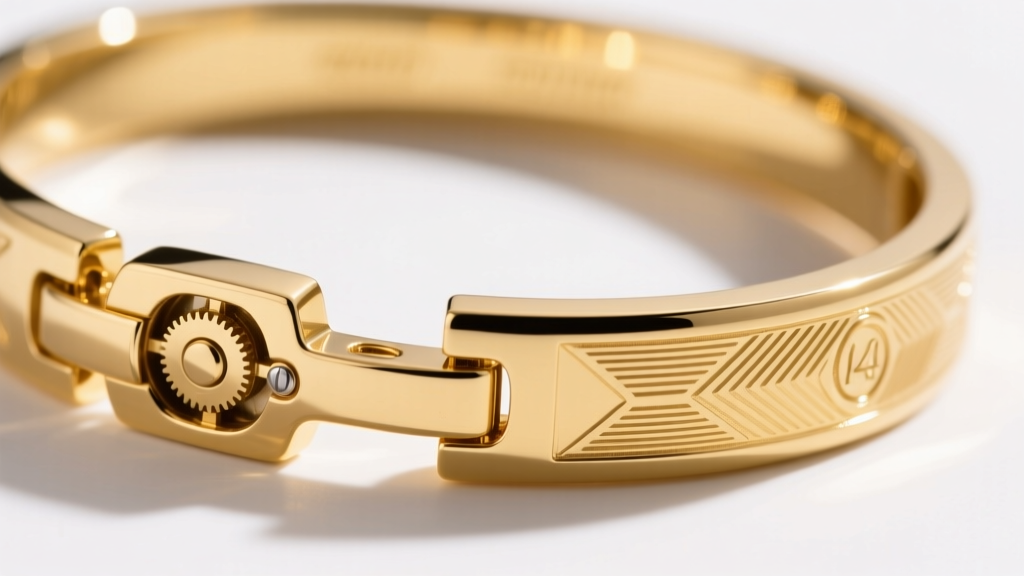
The traditional tongue-and-groove clasp relies on friction and the natural spring tension of the metal tongue locking into a recessed groove. It is highly secure but requires two hands to operate and can loosen over years of repetitive opening and closing. Push-button clasps feature an internal spring-loaded mechanism that releases the tongue when depressed. While convenient for one-handed operation, the internal springs are prone to accumulating lint, dead skin, and lotion, which can eventually jam the mechanism. If opting for a push-button, ensure the housing is sealed and easy to clean with a soft brush and isopropyl alcohol.
The Hidden Failure Points: Pins and Safeties
Inspect the hinge pin. High-end manufacturers use hardened steel pins to connect the two halves of the bangle. Lower-tier manufacturers use brass or copper pins, which are softer and will eventually sheer or bend under lateral stress, causing the bangle to snap open unexpectedly. Furthermore, any hinged bangle jewelry crafted from precious metals must feature a figure-eight safety catch. This secondary wire loop snaps over a small peg on the opposite side of the clasp, ensuring that even if the primary locking mechanism fails, the bangle remains tethered to your wrist.
Final Pre-Purchase Checklist
Before finalizing your investment, run the piece through this rigorous quality assurance checklist to ensure you are getting a structurally sound product:
- Verify the Stamp: Look for the hallmark (e.g., 14k, 585, 925, Pt950) and the maker's mark. Unstamped precious metals should be treated with extreme skepticism.
- The Hinge Tension Test: Open the bangle and let go. The top half should not droop or swing loosely; the hinge should have enough internal friction to hold its position, indicating tight, well-machined tolerances.
- The Clasp Snap: Close the clasp and listen. It should produce a crisp, metallic 'click', not a dull thud. A dull sound indicates poor alignment or a weak internal spring.
- Interior Finish: Run your finger along the inside of the band. It should be perfectly smooth. Any seams, rough edges, or porosity (tiny pits in the metal) will cause friction burns on your skin over time.
- Weight Verification: Precious metals are dense. If a gold or platinum bangle feels suspiciously light or hollow, it may be heavily electroplated base metal or feature an overly thin wall construction that will easily dent.
By prioritizing metallurgical hardness, anatomical sizing, and robust mechanical engineering, you ensure that your bangle jewelry transcends seasonal trends and becomes a permanent, reliable fixture in your personal style arsenal.


