Is Baking Soda for Tarnished Jewelry Safe? Expert Guide
Discover if baking soda for tarnished jewelry is safe. Learn exact ratios, material risks, and expert-approved methods to restore silver and gold.

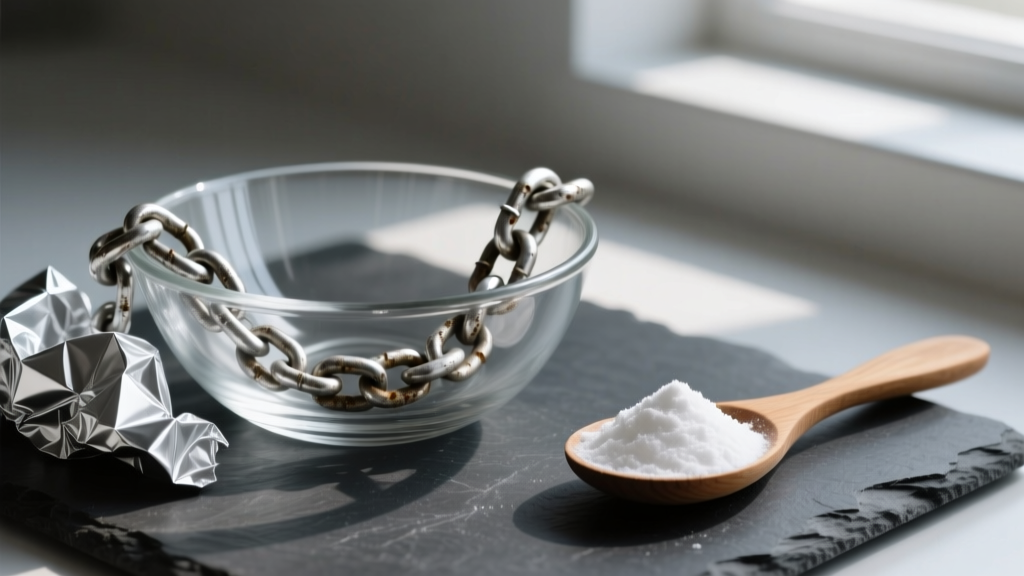
The internet is flooded with viral cleaning hacks, but when it comes to using baking soda for tarnished jewelry, the line between a brilliant restoration and irreversible damage is incredibly thin. As a staple in DIY jewelry care, sodium bicarbonate (baking soda) is highly effective for specific metals, yet it remains a notorious culprit for destroying porous gemstones and soft finishes. In this comprehensive guide, we break down the metallurgical science, exact chemical ratios, and material-specific risks you must know before reaching for the pantry staple.
The Electrochemistry of Tarnish Removal
To understand why baking soda works, you must first understand tarnish. Silver tarnish is not dirt; it is a chemical compound called silver sulfide (Ag2S) that forms when silver reacts with sulfur compounds in the air. When you combine baking soda, hot water, and aluminum foil, you are not simply 'washing' the jewelry—you are triggering an electrochemical reduction reaction.
Baking soda acts as an alkaline electrolyte, facilitating the flow of ions. Because aluminum is more anodic (reactive) than silver, the sulfur atoms are pulled off the silver sulfide and bond with the aluminum instead. The silver is left pure, and the aluminum foil turns black. This method removes tarnish without physically removing any of the underlying precious metal, making it vastly superior to abrasive polishing cloths when used correctly.
Material Compatibility Matrix
Before applying any DIY solution, verify your jewelry's composition. Using baking soda for tarnished jewelry is not a universal fix. Below is a definitive compatibility chart based on Mohs hardness scales and chemical reactivity.
| Material / Gemstone | Baking Soda Safe? | Expert Notes & Risks |
|---|---|---|
| Sterling Silver (925) | Yes | Highly effective via the foil bath method. Avoid paste on high-polish finishes. |
| 14k / 18k Gold | Yes (Mildly) | Gold does not tarnish, but alloyed metals can. Use only the diluted bath, never paste. |
| Platinum | Yes | Platinum develops a patina, not tarnish. Baking soda will not remove patina. |
| Oxidized Silver | NO | The electrochemical bath will strip the intentional black oxidation detailing. |
| Pearls & Coral | NO | Alkaline solutions will dissolve the calcium carbonate nacre, ruining the luster. |
| Turquoise & Opal | NO | Highly porous. Baking soda and water will seep into the stone, causing discoloration and structural cracking. |
According to the Gemological Institute of America (GIA), organic gems like pearls and coral are exceptionally sensitive to both acids and alkalis. Never submerge these materials in any baking soda solution.
The Aluminum Foil Electrochemical Bath (Step-by-Step)
This is the safest and most effective way to use baking soda for tarnished jewelry, specifically for sterling silver chains, intricate filigree, and pieces with hard, non-porous stones (like diamonds or sapphires).
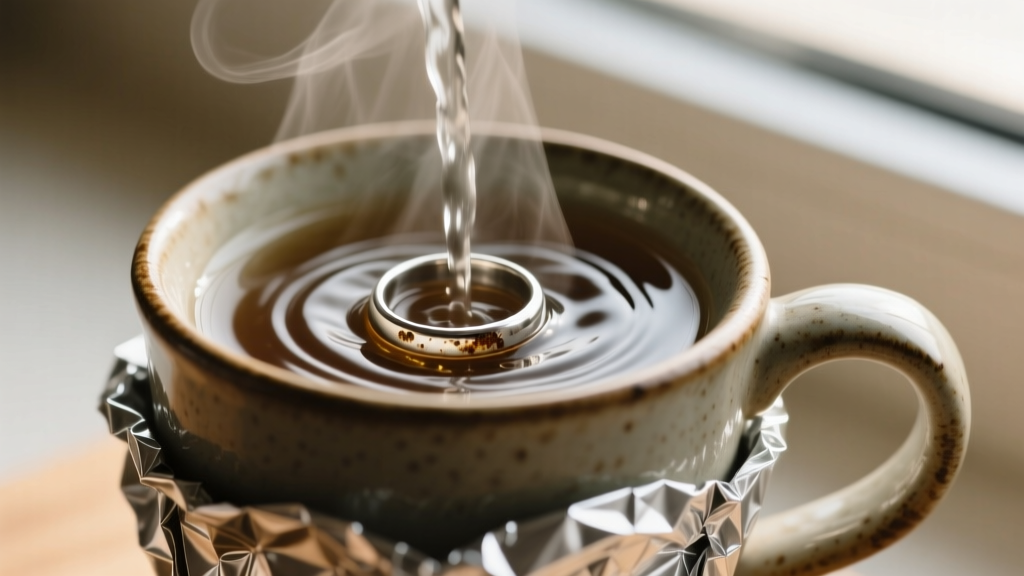
- Prepare the Vessel: Line a heat-safe glass or ceramic bowl with aluminum foil, shiny side facing up. The jewelry must physically touch the foil for the ion exchange to occur.
- Measure the Electrolytes: Add 1 tablespoon of baking soda and 1 tablespoon of kosher salt per cup of water. The salt increases the conductivity of the solution.
- Activate with Heat: Pour near-boiling water (approximately 190°F / 88°C) into the bowl. You will see immediate bubbling as the sodium bicarbonate reacts.
- Submerge the Jewelry: Using plastic or wooden tongs, lower the silver into the solution. Ensure it rests directly on the aluminum foil.
- Monitor the Reaction: Leave the piece in the bath for 3 to 5 minutes. You may notice a faint sulfur (rotten egg) smell—this is the silver sulfide breaking down.
- Rinse and Dry: Remove the jewelry, rinse thoroughly under warm distilled water to halt the chemical reaction, and pat dry with a lint-free microfiber cloth.
The Baking Soda Paste Method (For Localized Tarnish)
If you are dealing with heavy, localized tarnish on a solid silver bangle or a piece without gemstones, a paste can be used. However, this method relies on mechanical abrasion, which carries inherent risks.
Expert Warning: Baking soda has a Mohs hardness of roughly 2.5. Sterling silver sits between 2.5 and 3. This means baking soda crystals are hard enough to leave micro-scratches on high-polish silver surfaces if rubbed aggressively.
To create the paste, mix three parts baking soda with one part distilled water until a thick, spreadable consistency forms. Apply the paste using a damp, ultra-soft microfiber cloth or a cotton swab. Never use a toothbrush, as the bristles will pack the abrasive powder into crevices and scratch flat surfaces. Rub gently in a single direction, rinse immediately with distilled water, and dry completely.
Critical Failure Modes and Micro-Abrasion Risks
The most common mistake enthusiasts make when using baking soda for tarnished jewelry is treating it as a universal scrub. Here are the specific failure modes to avoid:
- Stripping Plating: If your jewelry is silver-plated or gold-vermeil over brass, the abrasive nature of a baking soda paste will strip the microscopic outer layer, exposing the base metal beneath.
- Dulling Gemstone Facets: While diamonds are safe, softer stones like garnet, peridot, and amethyst (Mohs 6.5-7) can suffer surface dulling if the paste is scrubbed directly over their facets.
- Leaving Residue: Baking soda leaves a chalky white film if not rinsed with warm, distilled water. Tap water contains minerals that can leave secondary water spots on the metal.
Post-Cleaning Neutralization and Storage
Once your jewelry is restored, proper storage is critical to delay the reformation of silver sulfide. Do not store freshly cleaned silver in humid environments like bathrooms. Instead, place the pieces in an airtight polyethylene bag alongside activated charcoal or specialized anti-tarnish strips (such as 3M Anti-Tarnish Strips), which absorb ambient sulfur gases. For long-term storage, wrap the jewelry in Pacific Silvercloth, a specialized flannel embedded with microscopic silver particles that intercept sulfur before it reaches your jewelry. By understanding the chemistry and respecting material limits, you can safely leverage this common household ingredient to keep your collection brilliant for decades.


