How to Clean Metal Jewelry: An Expert Metallurgical Guide
Master how to clean metal jewelry with our expert metallurgical guide. Learn alloy-specific protocols for silver, gold, titanium, and surgical steel.

The Metallurgy of Tarnish: Why Metals Degrade
Understanding how to clean metal jewelry requires moving beyond generic DIY hacks and examining the metallurgical realities of the alloys we wear. Jewelry metals are rarely pure; they are complex crystalline structures engineered for durability, color, and malleability. When jewelry loses its luster, it is usually not just 'dirty'—it is undergoing a chemical or electrochemical reaction with its environment.
Surface grime, consisting of sebum, dead keratinocytes, and environmental particulates, forms a biofilm that traps moisture against the metal. This localized moisture acts as an electrolyte, accelerating oxidation and galvanic corrosion. To properly maintain your pieces, you must tailor your cleaning protocol to the specific elemental composition of the alloy. What safely removes silver sulfide will catastrophically strip the anodized oxide layer from implant-grade titanium.
How to Clean Metal Jewelry: Alloy-Specific Protocols
Below is a deep dive into the exact chemical and mechanical requirements for the most common jewelry metals, referencing material science standards and gemological best practices.
Sterling Silver (925) and the Redox Reaction
Sterling silver is an alloy of 92.5% silver and 7.5% copper. The tarnish you see is not silver oxide, but silver sulfide (Ag2S), which forms when silver reacts with hydrogen sulfide (H2S) in the atmosphere. According to The Silver Institute, this dark layer is highly stable and cannot be washed away with surfactants.
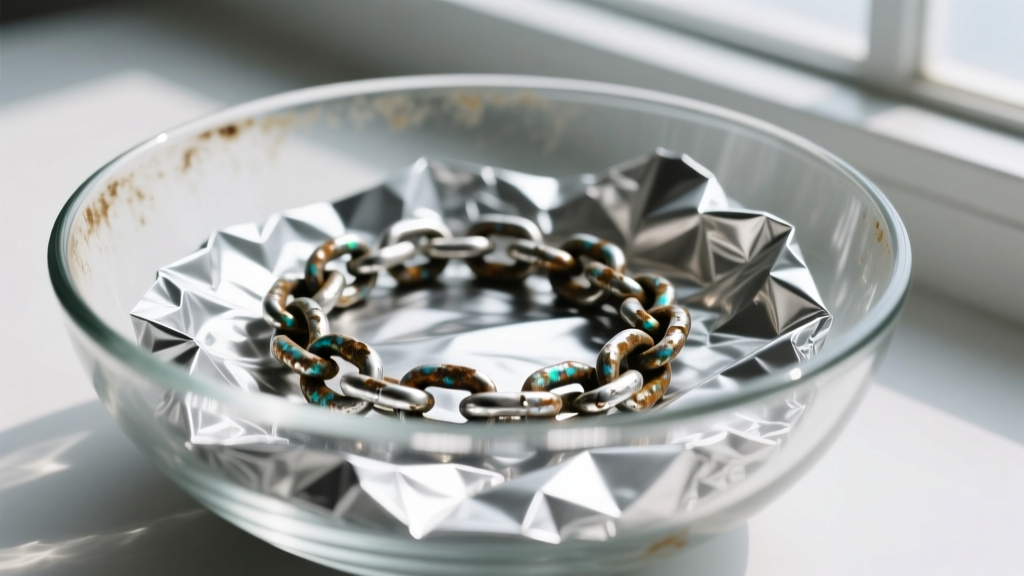
Instead of abrasive polishing, which removes microns of precious metal over time, use an electrochemical reduction bath. This reverses the tarnishing process by transferring the sulfur from the silver to a sacrificial anode.
- The Setup: Line a glass bowl with aluminum foil (shiny side up). The aluminum acts as the anode.
- The Electrolyte: Add 1 tablespoon of sodium bicarbonate (baking soda) per cup of water.
- The Catalyst: Pour near-boiling water (approx. 90°C) into the bowl to activate the ion exchange.
- The Reaction: Submerge the silver so it physically touches the aluminum. The redox reaction (3Ag2S + 2Al → 6Ag + Al2S3) will pull the sulfur off the jewelry, leaving pure silver behind. Rinse thoroughly and dry immediately.
Karat Gold Alloys (14k vs. 18k) and Copper Oxidation
Pure 24k gold is virtually inert, but it is too soft for daily wear. Jewelry is therefore alloyed with copper, silver, zinc, and nickel. 14k gold contains only 58.5% gold, meaning 41.5% of the metal is susceptible to oxidation. The copper content in rose and yellow gold alloys can react with chlorides and sulfur, leading to surface darkening.
To clean karat gold, use a mild, phosphate-free dish soap and a soft-bristled brush. However, you must strictly avoid chlorine. As noted by the Gemological Institute of America (GIA), exposure to chlorine (from swimming pools or harsh household cleaners) causes stress corrosion cracking in karat golds. This microscopic degradation targets the alloyed metals, eventually causing prongs to snap and shanks to fracture under normal mechanical stress.
Implant-Grade Titanium (ASTM F136) and Anodized Layers
Titanium, specifically Ti-6Al-4V ELI (ASTM F136), is the gold standard for body jewelry due to its biocompatibility and high strength-to-weight ratio. Titanium does not tarnish; instead, it naturally forms a passive titanium dioxide (TiO2) layer that prevents corrosion.
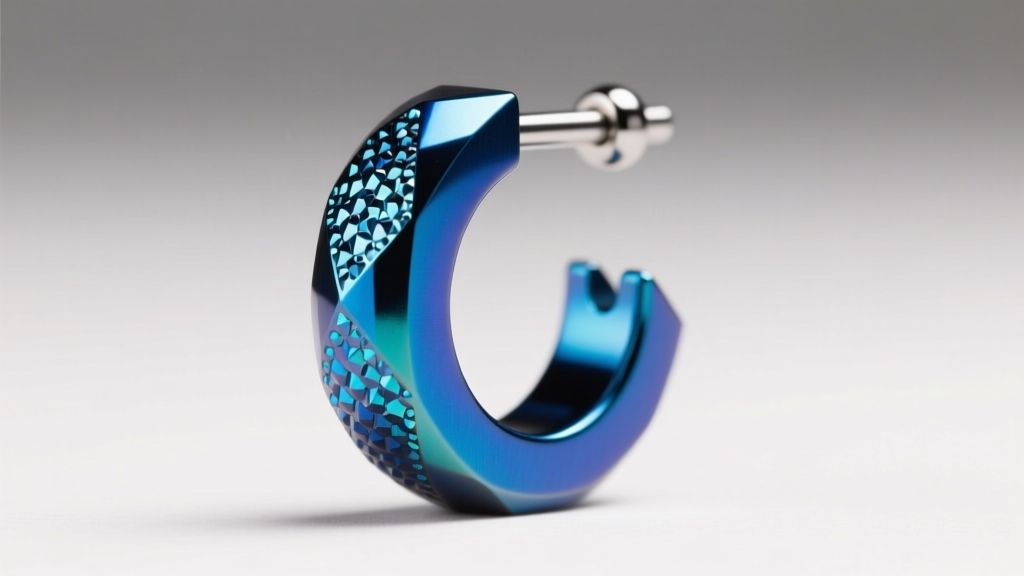
Many titanium pieces are anodized—an electrolytic process that thickens this oxide layer to create structural colors via light interference. These colors are not dyes or paints. If you are wondering how to clean metal jewelry with an anodized finish, the rule is strict: no ultrasonics and no harsh chemicals. The microscopic cavitation bubbles generated by ultrasonic cleaners (which collapse at temperatures exceeding 5,000 Kelvin locally) can fracture the delicate oxide layer, causing the vibrant colors to flake or dull. Clean anodized titanium using only warm water, a mild surfactant, and a microfiber cloth.
316L Surgical Steel and the Passivation Layer
316L stainless steel contains iron, chromium (16-18%), nickel (10-14%), and molybdenum (2-3%). The 'L' denotes low carbon, which prevents carbide precipitation during welding. The chromium reacts with oxygen to form a self-healing, invisible passivation layer of chromium oxide. The addition of molybdenum specifically protects against chloride pitting.
While highly resistant to rust, 316L can still suffer from localized corrosion if the passivation layer is deprived of oxygen. This happens when thick biofilm (trapped skin cells and lotion) seals the metal surface. To clean 316L, use isopropyl alcohol (70% or higher) or an ultrasonic cleaner with a mild alkaline detergent to strip the biofilm and re-expose the metal to atmospheric oxygen, allowing the passivation layer to instantly reform.
Chemical, Mechanical, and Ultrasonic Compatibility Matrix
Use the following technical matrix to determine the safest cleaning methodology for your specific jewelry alloys. Incorrect pairing can result in irreversible metallurgical damage.
| Metal Alloy | Primary Degradation Mechanism | Safe Chemical Agents | Ultrasonic Safe? | Mechanical Polishing Safe? |
|---|---|---|---|---|
| Sterling Silver (925) | Silver Sulfide (Tarnish) | Aluminum/Baking Soda Redox Bath | Yes (without gemstones) | Yes (removes metal) |
| 14k / 18k Yellow Gold | Copper Oxidation / Chloride Cracking | Mild Surfactants (pH Neutral) | Yes (avoid fracture-filled stones) | Yes |
| Rose Gold (14k/18k) | High Copper Oxidation | Mild Surfactants, Ammonia-free | Yes | Yes (may alter surface hue) |
| Titanium (ASTM F136) | Biofilm accumulation | Isopropyl Alcohol, Mild Soap | No (risks surface scratching) | No (scratches easily) |
| Anodized Titanium | Oxide layer fracture / color loss | Distilled Water, Mild Soap ONLY | Strictly No | Strictly No |
| 316L Surgical Steel | Chloride Pitting / Anaerobic Biofilm | Alkaline Detergents, IPA | Yes | Yes |
| Platinum (950) | Surface Patina (Displacement) | Jewelry-specific Solvents | Yes | Yes (highly recommended) |
Advanced Troubleshooting: Pitting, Galvanic Corrosion, and Biofilm
Even with proper cleaning, complex environmental factors can cause stubborn degradation. Here is how to diagnose and treat advanced metallurgical issues.
Galvanic Corrosion in Multi-Metal Pieces
If your jewelry features multiple metals (e.g., a sterling silver chain with a brass clasp), wearing it against sweaty skin creates a galvanic cell. The more reactive metal (brass/zinc) becomes the anode and corrodes rapidly, while the nobler metal (silver) acts as the cathode. If you notice severe, localized pitting near the clasp of a chain, galvanic corrosion is the culprit. The only prevention is keeping multi-metal pieces completely dry or having a jeweler replace the clasp with a matching alloy.
Chloride Pitting in Stainless Steel
If you wear 316L steel jewelry in the ocean or hot tubs, chloride ions can penetrate the chromium oxide passivation layer, creating microscopic, deep pits that look like tiny black specks. Unlike surface tarnish, pitting is physical material loss. It cannot be cleaned or chemically reversed. The piece must be mechanically polished by a professional using a buffing wheel and aluminum oxide compound to physically grind away the pitted layer.
Expert Warning: Never use toothpaste to clean metal jewelry. Modern toothpastes contain hydrated silica and calcium carbonate abrasives with a Mohs hardness of 3 to 4. While this is safe for enamel, it will permanently micro-scratch precious metals like gold (Mohs 2.5-3) and silver (Mohs 2.5), destroying the mirror polish and creating microscopic grooves where future tarnish will rapidly accumulate.
Professional vs. At-Home: When to Stop DIY Cleaning
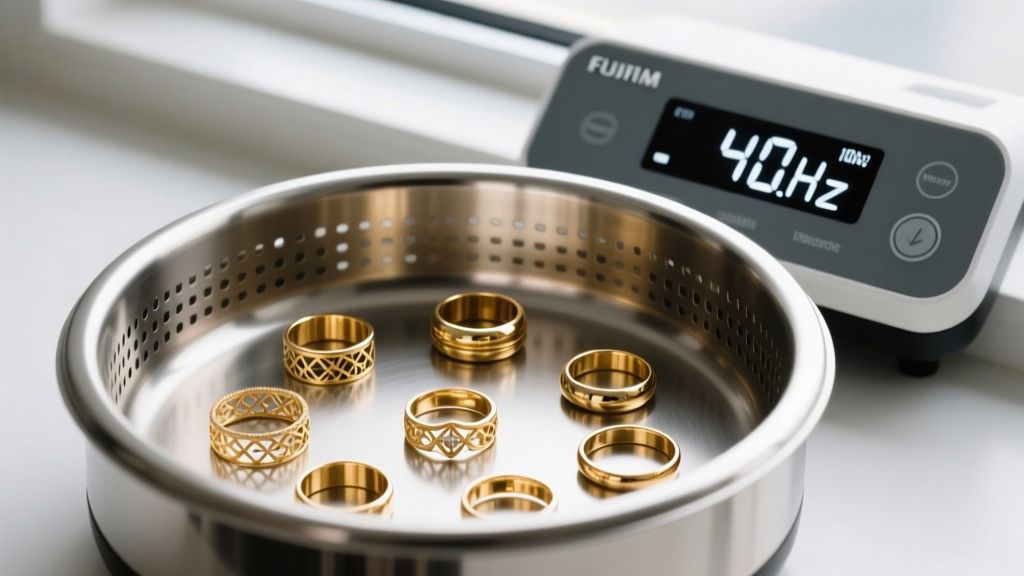
Knowing how to clean metal jewelry at home is essential for maintenance, but certain scenarios demand professional intervention. If your gold or platinum settings feature micro-pave diamonds, the prongs are often less than 0.2mm thick. Repeated ultrasonic cleaning at 40kHz can cause harmonic resonance that fatigues these microscopic prongs, leading to stone loss. Furthermore, if a piece has severe galvanic corrosion, deep chloride pitting, or structural stress cracking from chlorine exposure, chemical cleaning will not suffice. A master jeweler must assess the structural integrity, potentially re-tipping prongs or re-shanking the band using laser welding to restore both the metallurgy and the security of the piece.


