How to Clean Old Costume Jewelry: Safe Vintage Restoration
Learn how to clean old costume jewelry without damaging fragile rhinestones, pot metal, or Bakelite. Expert vintage restoration tips.

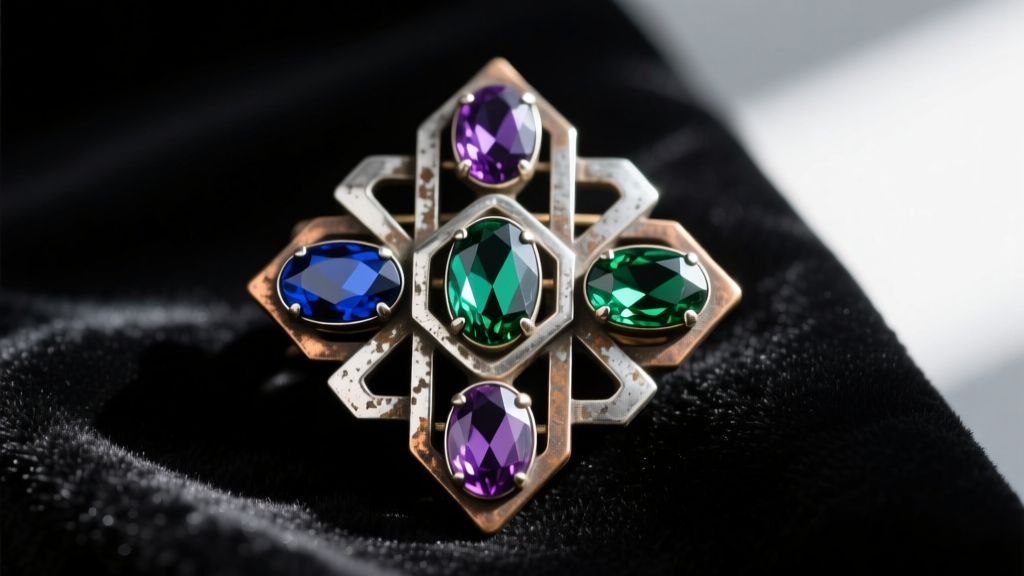
The Golden Rule of Vintage Costume Jewelry: Less is More
When collectors and enthusiasts ask how to clean old costume jewelry, the most critical advice is often what not to do. Vintage costume pieces from the 1920s through the 1980s—crafted by legendary houses like Trifari, Coro, and Miriam Haskell—were not manufactured with modern waterproof adhesives or solid precious metals. They are complex composites of base metals, organic glues, plated finishes, and fragile glass. According to the American Institute for Conservation (AIC), the primary cause of irreversible damage to vintage costume jewelry is the improper use of water and commercial liquid cleaners. Moisture seeps into closed-back settings, destroying the delicate silver or gold foil backing that gives rhinestones their sparkle, and dissolves the shellac-based glues used to secure pave stones.
Before applying any cleaning agent, you must accurately identify the materials. A treatment that safely restores a 1950s Lucite bangle will instantly ruin a 1930s Art Deco pot metal brooch. Below is a comprehensive, material-specific guide to safely restoring your vintage treasures without stripping their historical value or original patina.
Material Identification and Vulnerability Matrix
Understanding the chemical composition of your piece is the first step in safe restoration. Use this matrix to identify your jewelry and its specific failure modes before attempting to clean it.
| Material | Common Eras | Primary Vulnerabilities | Safe Cleaning Agents |
|---|---|---|---|
| Pot Metal (Zinc/Lead/Tin Alloys) | 1920s - 1950s | Pitting, intergranular corrosion, plating loss | Dry brushing, mild soap paste |
| Bakelite (Phenolic Resin) | 1920s - 1940s | Blooming (white powder), chemical melting | Simichrome polish, Novus #2 |
| Foil-Backed Rhinestones | 1890s - 1970s | Foil blackening, glue dissolution, stone loss | Ammonia-free glass cleaner (indirect) |
| Lucite / Acrylic | 1940s - 1960s | Micro-scratching, clouding, cracking | Mild dish soap, microfiber cloth |
Step-by-Step: How to Clean Old Costume Jewelry by Material
Restoring Foil-Backed Rhinestones and Pave Settings
Rhinestones in vintage jewelry are typically glass with a delicate metallic foil glued to the back to reflect light. If water or harsh chemicals penetrate the prong setting, the foil oxidizes and turns black, permanently killing the stone's brilliance. To clean these pieces, you must use a 'dry' or 'damp' method, never a 'wet' one.
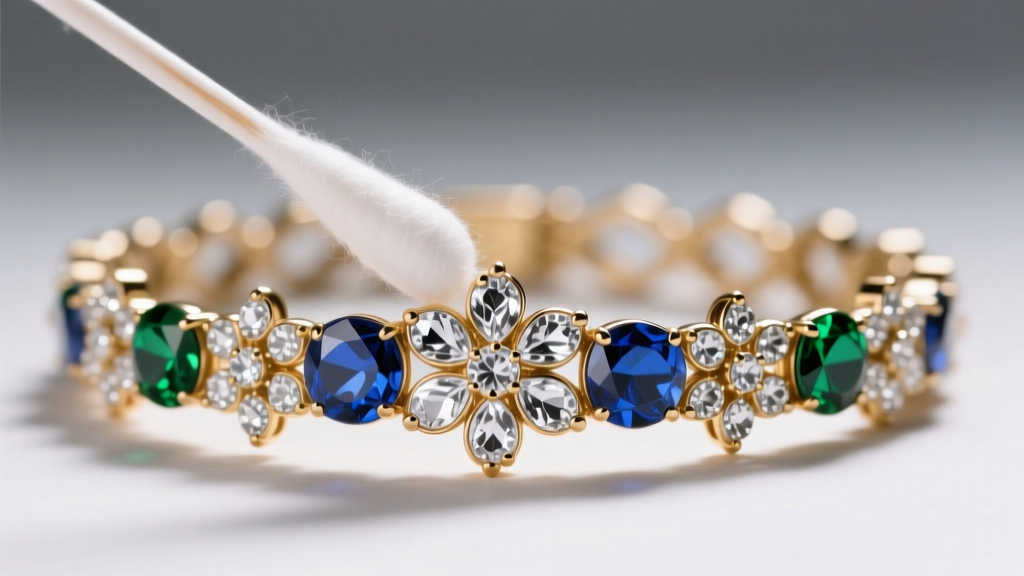
The Dry Brush Technique: Use a clean, ultra-soft makeup brush (like a goat-hair blending brush) to gently sweep away dust, skin oils, and cosmetic residue from between the pave settings. Brush at a 45-degree angle to avoid catching the prongs.
The Damp Swab Method: For stubborn grime, use a cotton swab lightly misted with an ammonia-free, alcohol-free glass cleaner. Never spray the liquid directly onto the jewelry. Roll the damp swab over the surface of the glass stone, avoiding the metal prongs and the base where the stone meets the setting. Immediately dry the stone with a separate, dry cotton swab to prevent any moisture migration.
Polishing Bakelite and Early Plastics
Bakelite, a heavily cross-linked phenolic resin popular in the 1930s, is prized for its deep, carved designs and vibrant colors. However, Bakelite is prone to 'blooming'—a chemical reaction where formaldehyde and other plasticizers off-gas and react with airborne pollutants, leaving a chalky, white, powdery residue on the surface. The Gemological Institute of America (GIA) notes that organic materials and early synthetics require specialized, non-abrasive care to prevent micro-scratching.
Do not use baking soda or toothpaste on Bakelite; these are far too abrasive and will leave permanent swirl marks. Instead, apply a small amount of Simichrome metal polish or Novus Plastic Polish #2 to a soft microfiber cloth. Rub the plastic in small, circular motions. The mild chemical solvents in these polishes safely dissolve the oxidized layer without damaging the stable resin underneath. Wipe away the yellowish residue with a clean cloth to reveal the original, glossy color.
Managing Pot Metal and Base Alloys
Pot metal—an informal term for inexpensive, low-melting-point alloys of zinc, lead, tin, and copper—was the backbone of mid-century costume jewelry. It is highly susceptible to 'pot metal rot,' a form of intergranular corrosion where the metal expands, cracks, and pits from the inside out. If your piece is pitted, no amount of polishing will restore a smooth surface.
For surface tarnish on plated pot metal, avoid liquid dips. Create a thick paste of baking soda and a few drops of water. Apply it only to the bare metal areas using a soft cloth, avoiding any glued-in stones. Gently buff the tarnish, then wipe clean with a barely damp cloth and dry immediately. Note that many collectors prefer the original, aged patina on vintage pot metal; stripping it down to bright, shiny metal can actually decrease the piece's resale value.
Critical Mistakes That Destroy Vintage Pieces
When researching how to clean old costume jewelry, you will encounter countless 'life hacks' that are actually recipes for disaster. Avoid these fatal errors at all costs:
- Ultrasonic Cleaners: The high-frequency vibrations will shatter fragile glass rhinestones, shake loose glued-in pearls, and strip gold-wash plating right off the base metal.
- Boiling Water or Steam: Heat will melt the shellac and early synthetic glues used in vintage settings, causing stones to fall out instantly.
- Ammonia and Bleach: Ammonia will dissolve the metallic foil backing on rhinestones and cause copper alloys to turn a permanent, mottled pink. Bleach will pit and corrode base metals.
- Toothpaste and Baking Soda Scrubs: These are highly abrasive. They will scratch soft plastics like Lucite and wear through the microscopic layers of gold or rhodium plating on vintage pieces.
- Submerging in Liquid: Never drop vintage costume jewelry into a bowl of soapy water. Capillary action will draw the water deep into the closed-back settings, ruining the foil and rusting the internal iron springs of clasps.
Addressing the 'Green Skin' Phenomenon
A common issue with vintage copper-alloy costume jewelry is the green or black residue it leaves on the skin. This is not a sign of poor quality, but rather a natural chemical reaction between the copper in the base metal and the acids and salts in your sweat. To clean the jewelry, wipe the inside of the band or clasp with a soft cloth dampened with pure isopropyl alcohol to remove the built-up copper salts. To prevent future reactions, apply a thin coat of clear, hypoallergenic nail polish or a specialized jewelry barrier coating to the areas of the metal that touch the skin. Reapply the barrier every few months as it wears off.
Proper Storage and Maintenance for Longevity
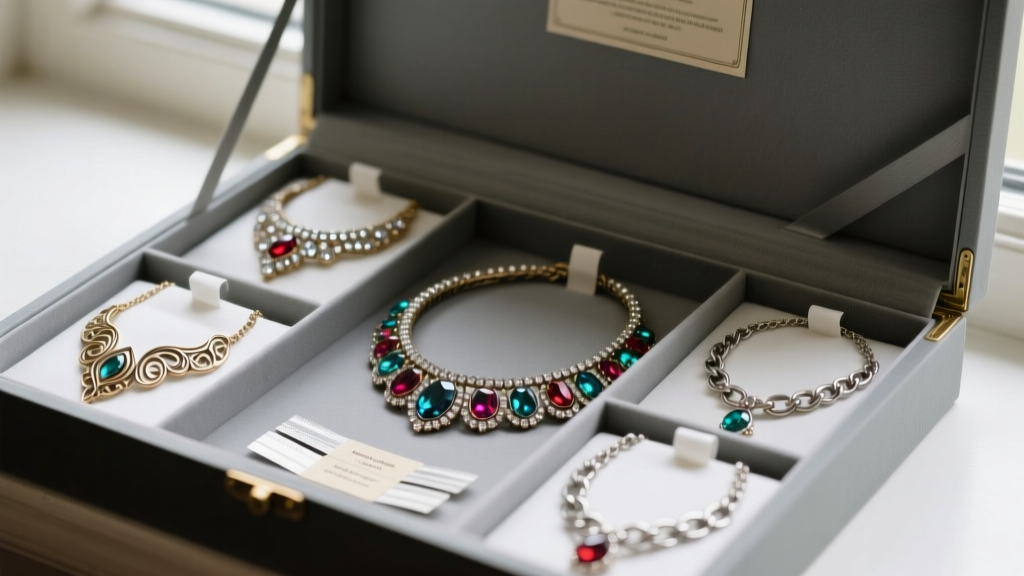
Cleaning is only half the battle; proper storage is essential to minimize the need for aggressive cleaning in the future. Vintage costume jewelry should never be stored in humid environments like bathrooms. Humidity accelerates the oxidation of base metals and causes foil backing to deteriorate.
Store each piece individually in acid-free tissue paper or unbleached cotton muslin bags. Plastic zip-top bags are generally discouraged for long-term storage, as they can trap moisture and emit volatile organic compounds (VOCs) that degrade early plastics like Bakelite and celluloid. Place 3M anti-tarnish strips inside your storage boxes or drawers to absorb airborne sulfur and hydrogen sulfide, the primary culprits behind silver and gold plating tarnish. By controlling the environment, you can preserve the structural integrity and historical brilliance of your vintage collection for decades to come.


