Flitz Ultrasonic Jewelry Cleaner: A Technical Deep Dive
Explore the technical mechanics of the Flitz ultrasonic jewelry cleaner, including cavitation physics, surfactant chemistry, and gemstone safety limits.


When evaluating high-end jewelry maintenance, the intersection of acoustic physics and chemical surfactants defines the boundary between a pristine finish and catastrophic gemstone damage. The Flitz ultrasonic jewelry cleaner represents a specialized approach to this problem, moving beyond generic vibrating basins to offer a calibrated system designed specifically for fine metallurgy and complex pavé settings. In this 2026 technical deep dive, we bypass the marketing fluff to examine the piezoelectric transducers, cavitation dynamics, and proprietary surfactant chemistry that make the Flitz system a staple in professional bench jeweler environments.
The Physics of Cavitation: Transducer Dynamics and Bubble Implosion
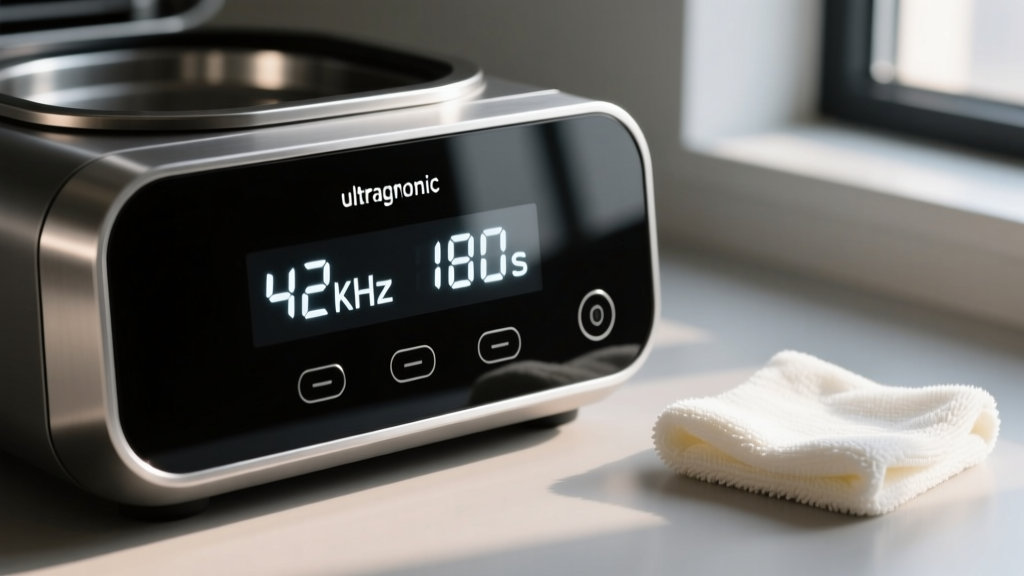
At the core of the Flitz ultrasonic jewelry cleaner is a 42kHz piezoelectric transducer array bonded directly to a SUS304 stainless steel tank. Unlike cheaper magnetostrictive transducers that operate at lower frequencies and generate excessive bulk heat, piezoelectric ceramics convert high-frequency electrical pulses into precise mechanical vibrations. At 42,000 cycles per second, the acoustic waves create alternating high-pressure and low-pressure zones within the cleaning fluid.
During the low-pressure cycle, microscopic vacuum bubbles form. When the high-pressure cycle hits, these bubbles violently collapse—a process known as cavitation. According to acoustic chemistry metrics, the localized implosion of a single cavitation bubble generates temperatures approaching 5,000 Kelvin and pressures of 1,000 atmospheres. However, because this occurs on a sub-micron scale and lasts only nanoseconds, the bulk liquid remains at a safe ambient temperature, effectively blasting away sebum, polishing compound residue, and environmental grime from beneath gallery wires without thermally shocking the metal.
The Role of Degassing in Acoustic Efficiency
A critical, often overlooked step in ultrasonic cleaning is degassing. Tap water contains dissolved oxygen and nitrogen, which cushion the implosion of cavitation bubbles, reducing the mechanical shearing force by up to 40%. The Flitz system protocol mandates a 5-minute degassing cycle before introducing jewelry. This allows the dissolved gases to coalesce and rise to the surface, ensuring that the subsequent cavitation implosions are unbuffered and maximally effective against hardened tarnish and impacted dirt in 1mm prong settings.
Chemical Synergy: Flitz Concentrate vs. Generic Surfactants
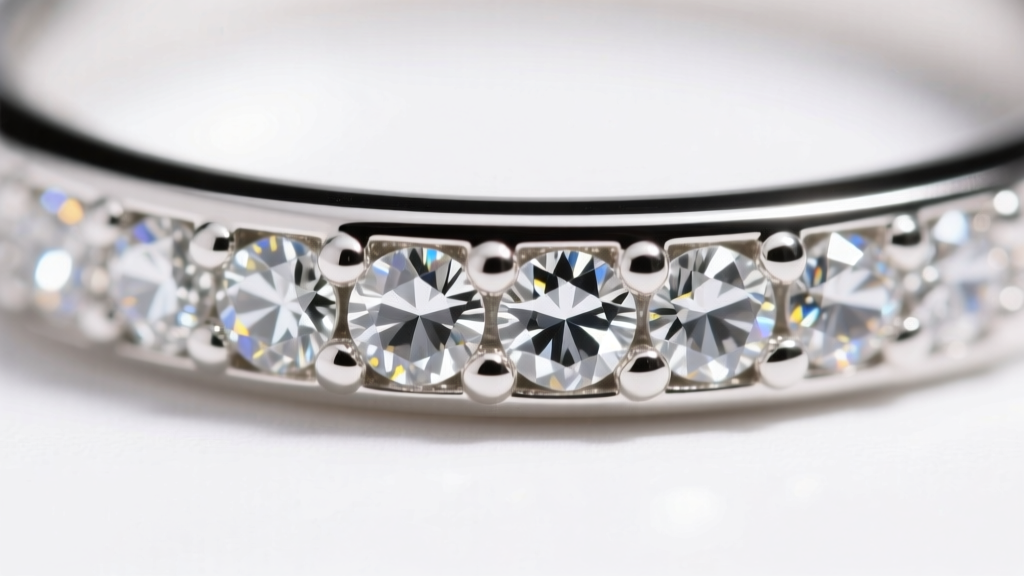
The mechanical force of cavitation is only half the equation; the fluid dynamics dictate how deeply the acoustic energy penetrates. Standard household dish soaps typically lower the surface tension of water from 72 mN/m to roughly 45 mN/m. While adequate for macro-cleaning, this is insufficient for capillary action in micro-crevices.
The Flitz ultrasonic cleaning concentrate utilizes a blend of non-ionic surfactants and mild chelating agents that drop the surface tension to approximately 28 mN/m. This extreme reduction allows the fluid to penetrate sub-millimeter gaps beneath V-prongs and flush-mounted bezels. Furthermore, the chelating agents bind to oxidized silver ions (tarnish), suspending them in the solution and preventing them from redepositing onto the gold or platinum substrate during the cleaning cycle.
"The use of specialized ultrasonic solutions is non-negotiable for porous settings. Generic alkaline soaps can leave a microscopic film that dulls the refractive index of diamonds and sapphires." — Jewelers of America Bench Guidelines
Material Compatibility Matrix: What Can Survive 42kHz?
While the Flitz ultrasonic jewelry cleaner is exceptionally safe for hard metals and durable gems, the violent nature of cavitation demands strict adherence to material limits. The Gemological Institute of America (GIA) frequently warns against ultrasonic cleaning for stones with internal fractures or low Mohs hardness. Below is the technical compatibility matrix for the Flitz 42kHz system.
| Material / Gemstone | Mohs Hardness | Porosity / Fracture Risk | Flitz Ultrasonic Safety Rating |
|---|---|---|---|
| Platinum (950/50) | 4.5 (Metal) | Non-porous, high density | Optimal (Unlimited Cycles) |
| 18k White Gold | 3.5 (Metal) | Non-porous, rhodium plated | Safe (May degrade rhodium over time) |
| Diamond (Untreated) | 10 | Low porosity, cleavage planes | Safe (Avoid if heavily included) |
| Sapphire / Ruby | 9 | Low porosity, heat treated | Safe (Avoid fracture-filled stones) |
| Emerald | 7.5 - 8 | Highly included, oil-treated | DANGER (Will strip oils and shatter) |
| Opal / Pearl / Coral | 2.5 - 6 | Highly porous, water-sensitive | DANGER (Will cause irreversible cracking) |
Step-by-Step Technical Protocol for Pavé and Prong Settings
To maximize the efficacy of the Flitz ultrasonic jewelry cleaner without compromising structural integrity, professional bench jewelers follow a strict operational protocol. This is particularly vital for micro-pavé settings where 0.8mm to 1.2mm melee diamonds are held by microscopic beads of metal.
- Preparation: Mix 1 part Flitz concentrate to 15 parts distilled water. Avoid tap water to prevent calcium carbonate scaling on the transducer plate.
- Thermal Calibration: Heat the solution to exactly 40°C (104°F). This temperature optimizes the vapor pressure inside the cavitation bubbles, maximizing implosion force without risking thermal expansion mismatches between gemstones and metal prongs.
- Suspension: Never rest jewelry directly on the SUS304 tank floor. This dampens the transducer vibrations and can scratch the metal. Always use the provided suspended wire mesh basket.
- Timing: Run the cycle for exactly 180 seconds. Extended exposure beyond 5 minutes can cause metal fatigue in already worn prong tips, leading to stone loss.
- Rinsing: Immediately rinse under a pressurized stream of deionized water to remove suspended particulates before they can dry and spot the metal.
Troubleshooting Common Ultrasonic Failures
The "Shadowing" Effect in Cluster Rings
When cleaning dense cluster rings or multi-stone halos, you may encounter the "shadowing" effect. This occurs when a large center stone blocks the acoustic waves from reaching the smaller melee stones beneath it, creating a dead zone where cavitation cannot occur. To resolve this, reposition the ring in the basket halfway through the 180-second cycle, or utilize a rotating ultrasonic basket accessory to ensure 360-degree acoustic exposure.
Transducer Delamination and Audio Diagnostics
A healthy Flitz ultrasonic cleaner emits a consistent, high-pitched hiss. If the machine begins to emit a low, irregular humming or rattling sound, it indicates transducer delamination—the epoxy bond between the piezoelectric ceramic and the steel tank has failed. This drastically reduces cavitation efficiency and requires immediate professional recalibration. Running the machine in this state will not clean the jewelry and will eventually burn out the internal generator board.
Final Verdict and Maintenance Metrics
The Flitz ultrasonic jewelry cleaner is not a consumer-grade novelty; it is a precision acoustic tool. By pairing a calibrated 42kHz piezoelectric array with a low-surface-tension non-ionic surfactant, it achieves a level of microscopic cleanliness that manual brushing simply cannot replicate. For jewelers and serious collectors managing high-value platinum and diamond pieces, the system pays for itself by restoring optical brilliance and revealing hidden structural flaws before they result in stone loss. However, strict adherence to the material compatibility matrix and degassing protocols is mandatory to ensure the longevity of both the jewelry and the machine itself.


