Does House of Harlow Jewelry Tarnish? Expert Care Guide
Does House of Harlow jewelry tarnish? Discover the metallurgical reasons behind oxidation and learn expert cleaning methods for plated metals and porous stones.

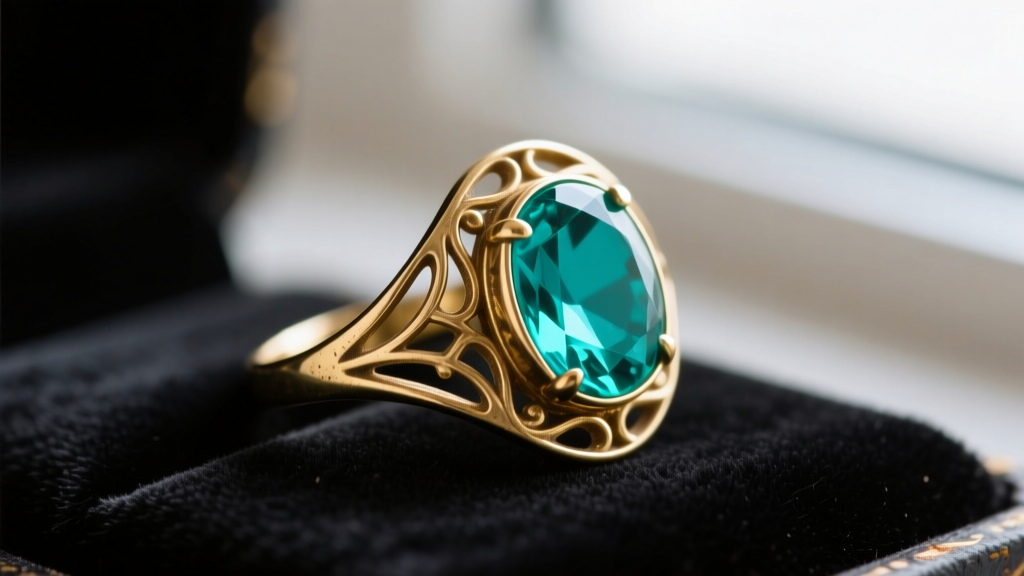
House of Harlow 1960 is celebrated for its bohemian, vintage-inspired aesthetic, heavily featuring intricate metalwork and striking cabochon stones. However, a frequent question among collectors and new buyers alike is: does house of harlow jewelry tarnish? The short, metallurgical answer is yes. Because the brand primarily utilizes fashion and bridge jewelry manufacturing techniques—relying on plated base metals rather than solid gold or platinum—oxidation and tarnish are inevitable over time. To properly care for these pieces, we must look past the aesthetic and examine the specific material compositions, plating thicknesses, and the chemical reactions that cause degradation.
The Metallurgy of House of Harlow 1960: Why Tarnish Happens
Most House of Harlow gold-tone and silver-tone pieces are crafted from a brass or zinc alloy core. Brass is an alloy of copper and zinc. To achieve the brand's signature vintage gold or oxidized silver look, these base metals are electroplated with a microscopically thin layer of gold, rhodium, or silver. In fashion jewelry, this plating typically ranges from 0.5 to 1.5 microns in thickness.
Tarnish occurs when this protective plating wears down due to friction, exposing the reactive base metal beneath. When copper in the brass core is exposed to oxygen, moisture, and the chlorides found in human sweat, it undergoes a chemical reaction that forms copper chloride or copper carbonate (commonly known as verdigris). Similarly, silver-plated or solid sterling silver elements react with hydrogen sulfide in the atmosphere to form silver sulfide, which presents as a dull, dark gray or black film on the surface. Understanding this chemical reality is the first step in proper preservation.
Material Breakdown: Tarnish Susceptibility Chart
Not all House of Harlow pieces degrade at the same rate. The susceptibility to tarnish depends heavily on the specific materials used in the collection. Below is a technical breakdown of how different components react to environmental stressors.
| Material Component | Tarnish Risk | Primary Chemical Culprit | Common Failure Mode |
|---|---|---|---|
| Gold-Tone Plated Brass | High (if plated) | Sweat (Chlorides), Cosmetics | Copper bleed-through, green skin residue |
| Silver-Tone Plated Brass | Medium-High | Sulfur compounds, Humidity | Dark spotting, pitting of base metal |
| Solid Sterling Silver | Medium | Hydrogen Sulfide (Air) | Uniform dark patina (easily reversible) |
| Porous Stones (Turquoise) | N/A (but stains) | Oils, Chemicals, Water | Color shifting, matrix darkening |
The Porous Stone Problem: Turquoise, Howlite, and Mother-of-Pearl
House of Harlow is famous for its extensive use of turquoise, howlite, and mother-of-pearl inlays. From a gemological standpoint, these are highly porous, organic, or semi-porous materials. The most critical mistake owners make is applying standard liquid silver dips or ultrasonic cleaners to these pieces.
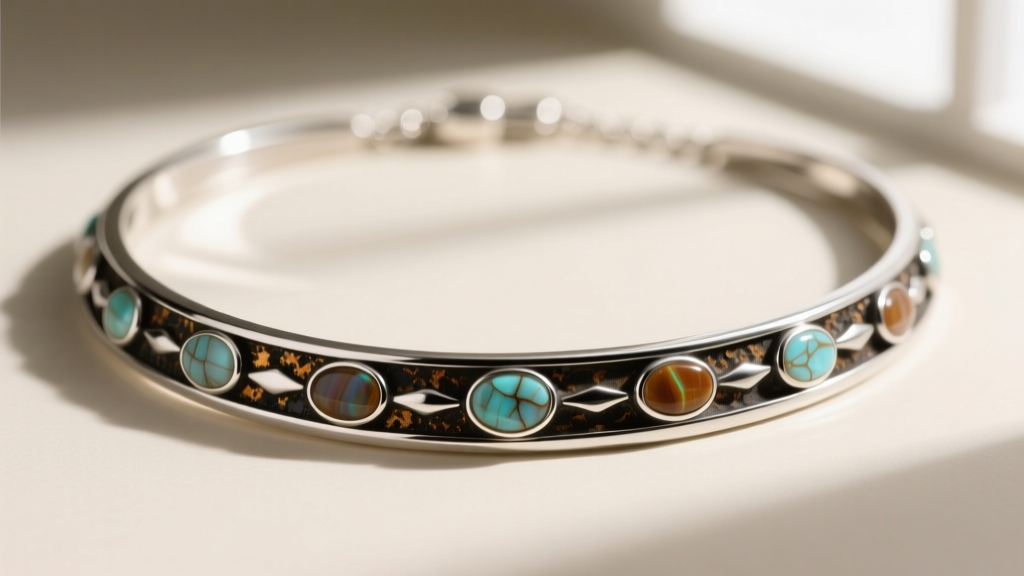
Liquid tarnish removers typically contain thiourea, a toxic organosulfur compound that dissolves silver sulfide. If this chemical seeps into the microscopic pores of turquoise or howlite, it will permanently alter the stone's color and degrade its structural integrity. Furthermore, ultrasonic cleaners use high-frequency cavitation bubbles that can easily shatter the delicate layers of mother-of-pearl or loosen the adhesive securing the cabochons in their metal bezels. The Gemological Institute of America (GIA) explicitly warns against using ultrasonic cleaners or harsh chemicals on turquoise, noting that the stone's porosity makes it highly susceptible to chemical damage and color alteration.
Safe Cleaning Protocol for Porous Inlays
When cleaning House of Harlow pieces featuring porous stones, you must isolate the metal cleaning process from the stone. Follow this strict protocol:
- Dry Brushing: Use a clean, ultra-soft baby toothbrush to gently dislodge dust and dead skin cells from the metal bezels without touching the stone.
- Targeted Polishing: Fold a dry, treated silver polishing cloth into a small point. Carefully run the edge of the cloth along the metal bezel, applying zero pressure to the adjacent turquoise or howlite.
- Stone Wiping: If the porous stone has accumulated skin oils, wipe it gently with a dry, lint-free microfiber cloth. Never use water or surfactants on untreated turquoise.
Restoring Gold-Tone and Silver-Tone Plating Safely
For pieces without porous stones, or for solid metal components, a gentle wet-cleaning method is often required to remove built-up lotions, perfumes, and sebum. Baking soda pastes and abrasive toothpastes are strictly prohibited, as their Mohs hardness will scratch the soft 0.5-micron gold plating, accelerating future tarnish.
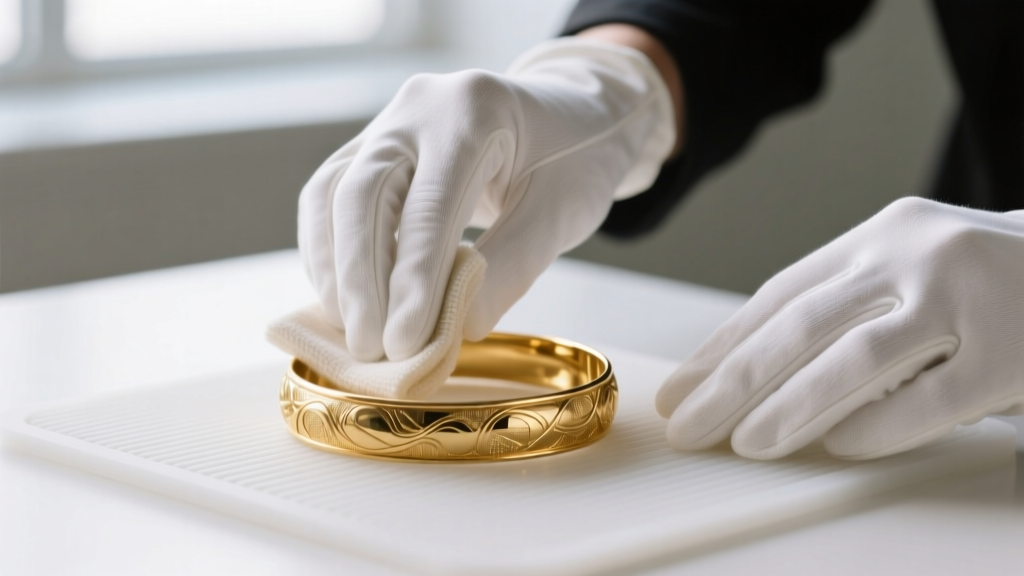
Instead, formulate a mild cleaning bath. Mix three drops of a non-detergent, phosphate-free liquid dish soap (such as Dawn Free & Clear) into a bowl of lukewarm distilled water. Tap water contains chlorine and dissolved minerals that can leave microscopic hard water spots on polished metal. Submerge the jewelry for no more than three minutes. Gently agitate the water, then use a soft-bristled brush to clean intricate filigree work. Rinse thoroughly under a slow stream of distilled water, and immediately dry the piece using compressed air (like a camera lens blower) to force water out of tiny crevices, followed by a final buff with a dry microfiber cloth.
Preventative Care: The Storage Standard
Because tarnish is a chemical reaction driven by environmental factors, proper storage is your most effective defense. The goal is to control humidity and neutralize airborne sulfur compounds. According to The Silver Institute, moisture acts as a catalyst for tarnish, meaning high-humidity environments will rapidly degrade silver and base metals.
Store your House of Harlow jewelry in an airtight, zip-lock style polyethylene bag. Inside the bag, include two things: a small packet of silica gel desiccant to maintain a relative humidity (RH) below 45%, and a 3M anti-tarnish strip. These strips contain copper-based particles that act as a sacrificial anode, absorbing hydrogen sulfide and other corrosive gases before they can reach your jewelry. Replace the anti-tarnish strips every six months for optimal protection.
When to Seek Professional Replating
There is a distinct difference between surface tarnish and plating failure. If your gold-tone House of Harlow ring has developed a patchy, brassy, or pinkish hue that does not wipe away with a polishing cloth, the gold plating has completely worn through, exposing the brass core. No amount of cleaning will restore the gold color.
At this stage, the piece requires professional electroplating. A qualified jeweler can polish out minor scratches and apply a new layer of 18k gold or rhodium plating. Expect to pay between $45 and $85 per piece for professional replating, depending on the surface area and the complexity of the filigree. For pieces with significant sentimental value or discontinued vintage House of Harlow designs, this investment is highly recommended to restore the piece to its original bohemian glory.
Proper jewelry care is not about preventing all wear, but about understanding the metallurgical limits of your pieces and intervening with the correct, science-backed methods before permanent damage occurs.


