How to Clean Costume Jewelry Safely Without Ruining the Finish
Learn how to clean costume jewelry safely using gentle, expert-approved methods. Protect plating, glue, and rhinestones from damage with our step-by-step guide.

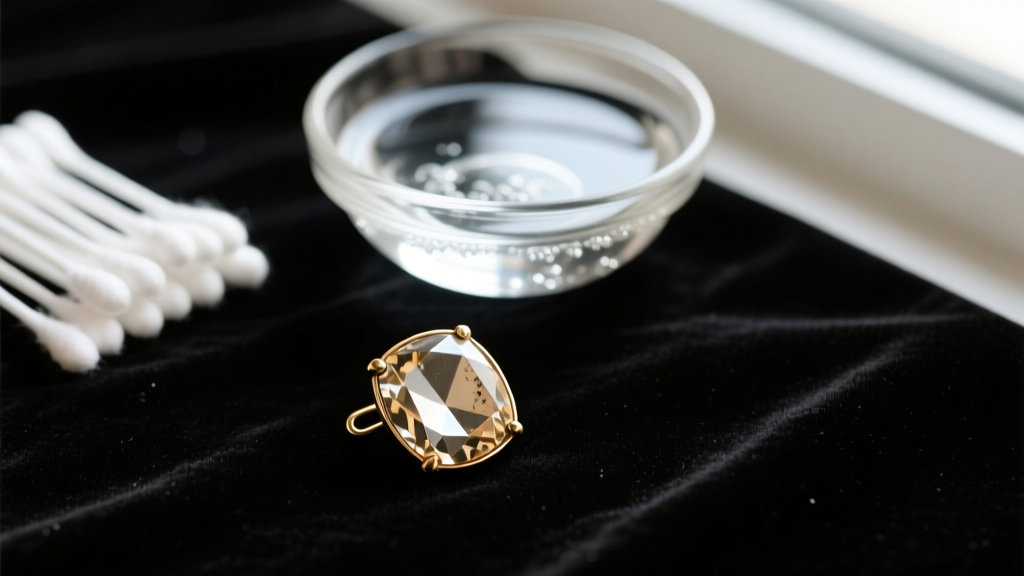
Costume jewelry offers incredible versatility and high-fashion aesthetics at a fraction of the price of fine jewelry. However, when it comes time to clean costume jewelry, the standard rules of jewelry care go out the window. Treating a gold-plated zinc alloy ring or a foil-backed rhinestone brooch with the same methods you use for solid 14k gold or diamonds is a guaranteed way to destroy the piece. Flash plating can strip in seconds, and water can permanently ruin vintage adhesives.
In this comprehensive guide, we break down the exact chemistry, material vulnerabilities, and step-by-step techniques required to safely restore your favorite fashion pieces without causing irreversible damage.
The Hidden Dangers of Standard Jewelry Cleaners
Many well-meaning jewelry owners reach for ultrasonic cleaners, baking soda pastes, or rubbing alcohol when tackling tarnish. On costume jewelry, these are destructive forces:
- Ultrasonic Cleaners: These machines operate at high frequencies (typically 40,000 Hz). While great for solid diamond settings, the intense microscopic vibrations will shatter glass stones, crack acrylic, and violently shake loose the cheap epoxy used to set cubic zirconia in mass-produced rings.
- Baking Soda & Toothpaste: Baking soda has a Mohs hardness of about 2.5 to 3. Acrylic and resin stones sit right around a 3 on the Mohs scale. Scrubbing with these abrasives will leave a cloudy, permanently scratched surface on any plastic or resin gems.
- Rubbing Alcohol & Acetone: Solvents dissolve the shellac, UV resins, and two-part epoxies used in costume jewelry manufacturing. Furthermore, alcohol will strip the protective lacquer top-coat often applied over plated base metals to prevent tarnishing.
Material Breakdown: Know What You Are Cleaning
Before applying any moisture, you must identify the materials. The Federal Trade Commission (FTC) regulates jewelry plating terminology, but understanding the physical reality of your piece is crucial for proper care.
| Component | Common Materials | Cleaning Vulnerability |
|---|---|---|
| Base Metal | Zinc Alloy, Brass, Pewter | Highly porous; oxidizes rapidly (turns black/green) when exposed to moisture and skin acids. |
| Plating | Flash Gold/Silver, Rhodium | Flash plating is only 0.1 to 0.3 microns thick. Polishing cloths will strip it instantly. |
| Stones | Cubic Zirconia, Glass, Acrylic | CZ is durable, but glass can scratch. Acrylic melts or clouds under chemical solvents. |
| Rhinestones | Foil-backed Glass or Crystal | Water seeping under the bezel will oxidize the foil backing, turning the stone black permanently. |
| Adhesives | Jeweler's Epoxy, UV Resin | Degrades when submerged in warm water or exposed to alcohol-based cleaners. |
Step-by-Step: The Wet Method for CZ and Glass
If your piece features securely set cubic zirconia, unfoiled glass, or enamel without exposed base metal, you can use a gentle wet cleaning method. According to guidelines referenced by the Gemological Institute of America (GIA), mild surfactants are the safest route for manufactured gemstones.
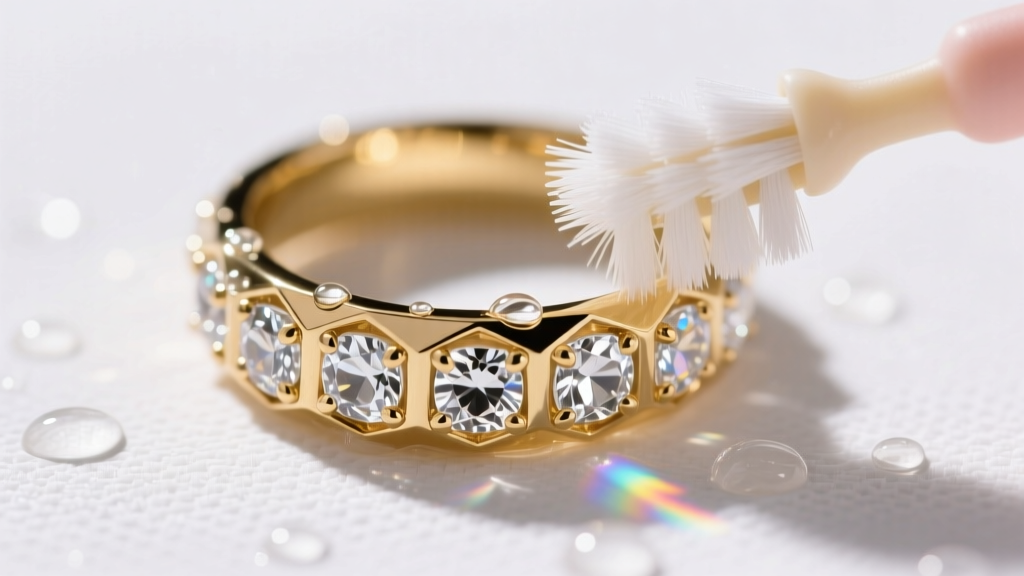
The Distilled Water Technique
- Mix the Solution: In a small glass bowl, mix 1 cup of distilled water (never tap water, as chlorine and hard minerals leave spots) with 2 drops of mild, lotion-free dish soap (like original Dawn).
- The Dip and Swish: Submerge the jewelry for no more than 3 to 5 minutes. Prolonged soaking weakens adhesives.
- Agitate Gently: Using an extra-soft baby toothbrush, gently brush the backs of the stones where lotion and dead skin accumulate. Do not scrub the metal prongs aggressively.
- Rinse and Dry: Rinse quickly under a light stream of distilled water. Pat dry with a lint-free microfiber cloth. Use a can of compressed air to blow water out from under the stone settings to prevent hidden rusting.
The 'Dry Method': Cleaning Rhinestones and Glued Settings
Vintage brooches, rhinestone earrings, and pieces with glued-in acrylic stones must never see a drop of water. The foil backing on rhinestones (a thin layer of metallic paint or actual metal leaf applied to the back of the glass to increase refraction) is incredibly fragile.
Restoring Dull Rhinestones
Over time, rhinestones accumulate a film of skin oils and hairspray, making them look cloudy. To restore their sparkle:
- Use a clean, dry, soft-bristled makeup brush (like a fluffy eyeshadow blending brush) to dust away loose debris from the bezels.
- For stubborn grime on the face of the stone, spray a tiny amount of ammonia-free glass cleaner onto a cotton swab—never directly onto the jewelry.
- Carefully wipe the top facet of the rhinestone, ensuring the swab does not touch the metal bezel where water could seep underneath.
- Buff immediately with a dry microfiber cloth.
Expert Tip: If a rhinestone has already turned black or gray, the foil backing has oxidized. No amount of surface cleaning will fix this. The stone must be carefully removed with a jeweler's prong lifter, the old foil cleaned out, and a new piece of foil tape applied before re-seating the stone.
Tackling Green Skin and Tarnished Base Metals
The dreaded "green finger" is caused by a chemical reaction between the copper or zinc in the base metal alloy and the lactic acid and salts in your sweat. This creates copper chloride, which transfers to your skin.
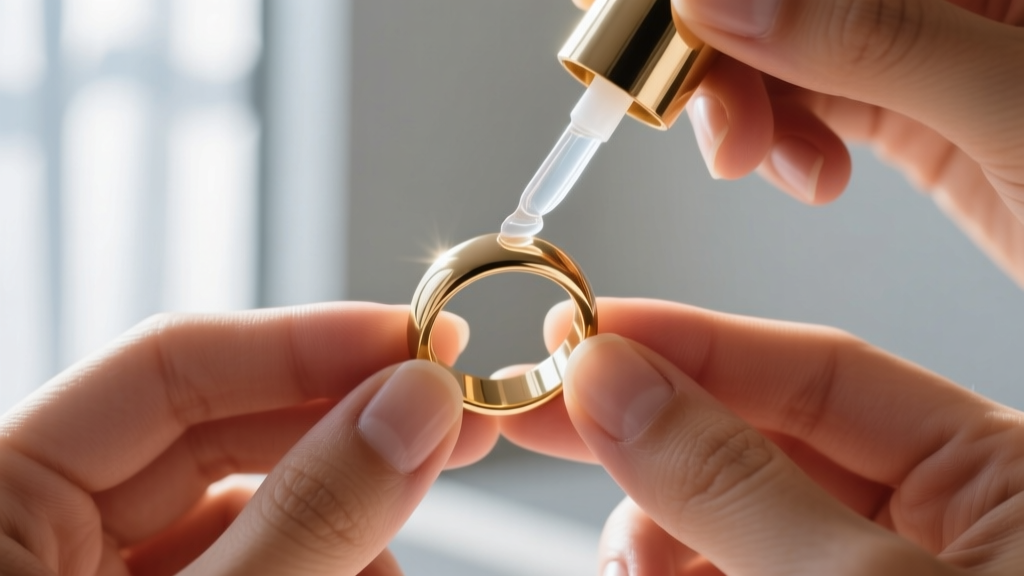
The Clear Polish Barrier
To stop this reaction and protect the interior band from further tarnish, apply a thin coat of clear nail polish (such as Sally Hansen Hard As Nails) to the inside of the ring band. Let it cure for 24 hours before wearing. Reapply every few months as the polish wears away from friction.
Why You Should Avoid Polishing Cloths
Never use treated jewelry polishing cloths (like Sunshine cloths) on gold- or silver-plated costume jewelry. These cloths are embedded with micro-abrasives and chemical tarnish removers designed for solid metals. On a piece with 0.2-micron flash plating, a polishing cloth will strip the gold layer entirely, exposing the dull gray or brassy base metal underneath in just a few wipes. Instead, use a plain, untreated microfiber cloth to gently buff away surface oils.
Storage and Maintenance to Prevent Future Tarnish
Prevention is vastly superior to restoration when dealing with costume jewelry. Base metals begin to oxidize the moment they are exposed to oxygen and ambient humidity.
- Anti-Tarnish Strips: Store pieces in airtight ziplock bags with 3M anti-tarnish strips. These strips absorb sulfur compounds and hydrogen sulfide from the air, which are the primary culprits of silver and brass tarnish.
- Silica Gel Packets: Toss a few silica gel packets into your jewelry box to control ambient moisture.
- Individual Bagging: Never toss costume jewelry into a shared box. The harder cubic zirconia stones (Mohs 8) will easily scratch softer glass stones and acrylic beads during transit.
Expert Troubleshooting: Loose Stones and Flaking Plating
Even with meticulous care, costume jewelry suffers from structural fatigue. Here is how to handle common failures:
Re-Gluing Loose Stones
Do not use Super Glue (cyanoacrylate). It dries brittle, leaves a white frosty residue, and can shatter glass stones as it cures and shrinks. Instead, use GS Hypo Cement for small, precise applications, or a clear, two-part jeweler's epoxy for larger stones. Apply a microscopic dot to the bezel seat, set the stone, and secure it with painter's tape while it cures for 24 hours.
Dealing with Flaking Plating
Once flash plating begins to flake or wear through to the brass, you cannot polish it back. Your options are to embrace the "distressed" vintage look, or take the piece to a professional jeweler who offers electroplating services. Be aware that re-plating a costume piece with a thick layer of gold vermeil can sometimes cost more than the original retail price of the jewelry, so reserve this service for highly sentimental or designer-signed vintage pieces.


