How to Clean Oxidized Jewelry: Preserve Patina or Strip Tarnish
Learn how to clean oxidized jewelry safely. Discover step-by-step methods to preserve intentional dark patinas or strip heavy accidental tarnish.

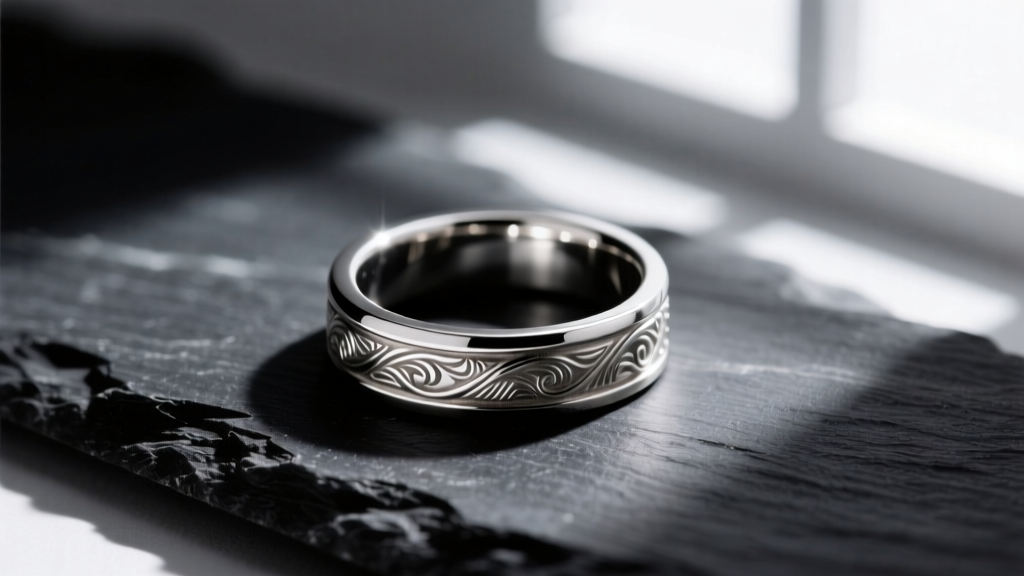
Learning how to clean oxidized jewelry requires a fundamental understanding of what you are actually looking at. In the jewelry industry, 'oxidation' refers to two entirely different phenomena: the intentional application of a dark patina (usually via liver of sulfur) to highlight textures and recesses, and the accidental environmental tarnishing (silver sulfide) that dulls bright metals over time. Treating an intentionally oxidized artisan ring with a harsh chemical dip will strip away hours of a jeweler's meticulous work, leaving you with a flat, gray, lifeless piece. Conversely, trying to polish a heavily tarnished vintage chain with a soft cloth will take hours and yield uneven results.
In this comprehensive 2026 guide, we break down the exact chemistry, tools, and step-by-step methodologies required to safely clean your jewelry based on whether your goal is to preserve a dark patina or completely strip away environmental tarnish.
The Chemistry: Intentional Patina vs. Accidental Tarnish
Before touching your jewelry with any cleaning solution, you must identify the type of oxidation present. According to the Gemological Institute of America (GIA), silver reacts with sulfur compounds in the environment to form silver sulfide (Ag2S), which presents as a yellowish, brown, or black film. This is accidental tarnish.
Intentional oxidation, however, is typically achieved by jewelers using Liver of Sulfur (potassium sulfide) or specialized commercial oxidizing solutions. This forces a rapid, controlled layer of dark patina into the crevices of the metal. The high points are then polished bright, creating a striking three-dimensional contrast. Your cleaning method must be chosen based on which of these two states your jewelry is currently in.
How to Clean Oxidized Jewelry (Preserving the Dark Patina)
If your piece features intentional blackened recesses—common in artisan sterling silver, gothic designs, and textured cuffs—your primary goal is to remove skin oils, lotions, and dirt without disturbing the dark patina. Ultrasonic cleaners are strictly forbidden here; the high-frequency cavitation will literally blast the oxidized layer right out of the crevices.
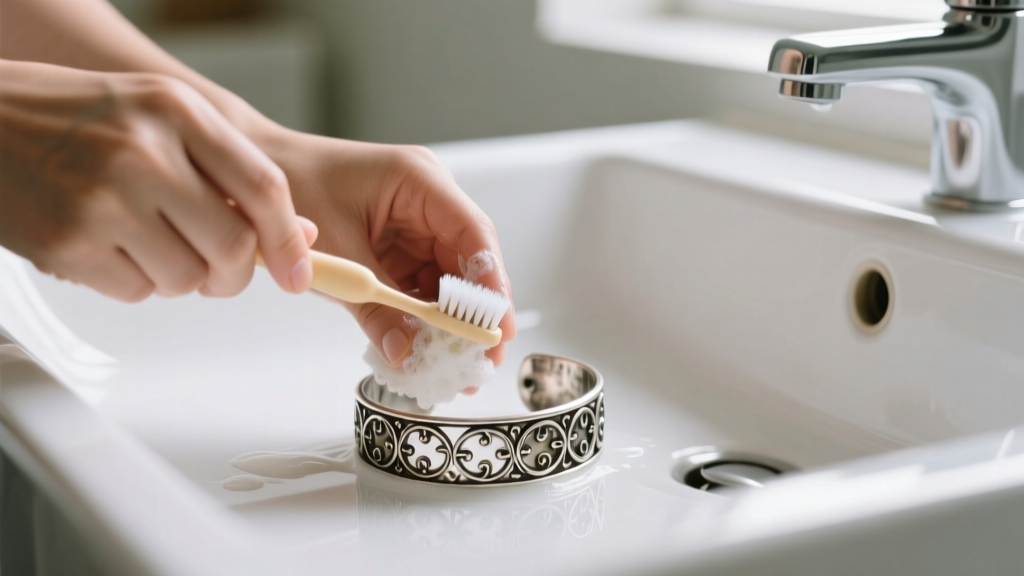
Step 1: The Gentle Surfactant Wash
The safest way to clean intentionally oxidized jewelry is with a mild, phosphate-free dish soap (like Dawn) and lukewarm water. Avoid hot water, as extreme heat can sometimes alter chemically applied patinas.
- Mix a few drops of mild dish soap into a bowl of lukewarm water.
- Submerge the jewelry for no more than 3 to 5 minutes to loosen sebum and cosmetic buildup.
- Using an extra-soft baby toothbrush, gently agitate the bristles over the textured areas. Do not scrub aggressively; let the surfactant do the heavy lifting.
- Rinse thoroughly under a gentle stream of distilled or filtered water to prevent hard water spots.
- Pat dry immediately with a lint-free microfiber cloth. Do not air dry, as water pooling in recesses can leave mineral deposits.
Step 2: Selective Polishing of High Points
Over time, the bright, raised areas of an oxidized piece will develop a light environmental tarnish. To restore the shine without touching the black recesses, use a treated polishing cloth, such as a Sunshine Cloth. Wrap the cloth tightly around your index finger and gently rub only the raised, high-relief areas of the metal. Never push the cloth into the grooves, as the mild abrasive compounds embedded in the cloth will lighten the dark patina.
How to Strip Heavy Oxidation (Restoring Bright Silver)
If your goal is to remove heavy, accidental environmental tarnish from a piece that should be bright silver, you need a reductive approach. Mechanical polishing (using pastes like Flitz or Simichrome) removes a microscopic layer of the silver itself. A far superior, non-destructive method is electrochemical reduction.
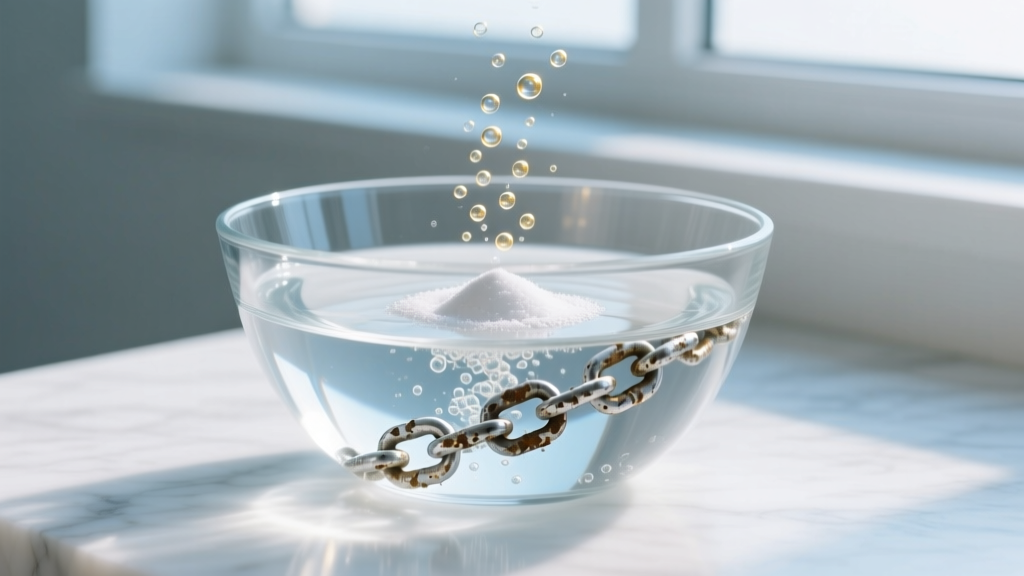
The Aluminum Foil Electrochemical Method
This method uses a simple galvanic cell to convert silver sulfide back into pure silver without removing any of the base metal. It is highly effective for intricate chains and filigree where polishing cloths cannot reach.
- Line a glass or ceramic bowl with aluminum foil, shiny side facing up.
- Place your heavily tarnished sterling silver jewelry directly on the foil. The silver must physically touch the aluminum.
- Sprinkle 1 tablespoon of baking soda (sodium bicarbonate) and 1 tablespoon of non-iodized salt over the jewelry.
- Pour boiling water into the bowl until the jewelry is fully submerged. You will immediately see bubbling and may smell a faint rotten egg odor (hydrogen sulfide gas being released).
- Let it sit for 3 to 5 minutes. Use wooden tongs to flip the piece if necessary.
- Remove the jewelry, rinse thoroughly with warm water, and buff dry with a clean microfiber cloth.
Commercial Dips: A Toxic Warning
Many consumers reach for commercial silver dips (like Tarn-X) to clean oxidized jewelry quickly. While effective, these solutions rely on thiourea, a recognized carcinogen that strips tarnish via a harsh chemical reaction. According to conservation guidelines from the Victoria and Albert Museum, repeated use of acid-based thiourea dips causes micro-pitting on the silver's surface, making it more porous and actually accelerating future tarnishing. Use these only as an absolute last resort for solid metal pieces without gemstones.
Cleaning Methods Comparison Chart
| Cleaning Method | Effect on Intentional Oxidation (Patina) | Effect on Heavy Accidental Tarnish | Gemstone Safety |
|---|---|---|---|
| Mild Soap & Soft Brush | Safe; preserves dark recesses perfectly | Poor; only removes surface dirt, not sulfide | Safe for almost all stones |
| Treated Polishing Cloth | Risky; will strip patina if rubbed in grooves | Good for flat surfaces; poor for chains | Safe (avoid rubbing soft stones) |
| Aluminum Foil Bath | Destructive; will strip intentional patina | Excellent; restores bright silver completely | Dangerous for porous stones |
| Ultrasonic Cleaner | Destructive; cavitation strips dark finish | Good, but requires chemical solution | Shatters emeralds, opals, and pearls |
| Commercial Acid Dips | Destructive; strips all oxidation instantly | Excellent, but causes long-term micro-pitting | Highly dangerous to all organic/porous stones |
Gemstone Warnings: What to Avoid
When figuring out how to clean oxidized jewelry set with gemstones, the stone's Mohs hardness and porosity dictate your limits. The aluminum foil and baking soda bath is highly alkaline and involves boiling water. This will permanently destroy porous and water-sensitive gemstones.
- Never Submerge: Pearls, opals, turquoise, lapis lazuli, malachite, and coral. These stones are porous or contain water. The alkaline bath will strip their luster, cause cracking, or dissolve their surface.
- Avoid Ultrasonics: Emeralds (which are typically oil-filled and will fracture), tanzanite, and moonstone. The vibrations will shatter internal inclusions.
- Safe for Submersion: Diamonds, sapphires, and rubies (corundum) can generally withstand the electrochemical bath, though the heat may weaken older, degraded prong settings.
Expert Insight: If you have an oxidized silver piece set with turquoise or opal, you must clean the metal using a Q-tip dipped in a mild baking soda paste, carefully working around the bezel setting. Never submerge the entire piece, and never use a commercial dip, as the acid will etch the gemstone permanently.
Final Storage Tips to Prevent Unwanted Oxidation
Once you have successfully cleaned your jewelry, preventing future environmental tarnish is paramount. Silver tarnishes when exposed to hydrogen sulfide and high humidity. Store your bright silver pieces in airtight ziplock bags with anti-tarnish strips (such as 3M Silver Protector Strips), which absorb ambient sulfur gases. For intentionally oxidized pieces, store them in a soft flannel pouch to prevent the raised, polished high points from scratching against other jewelry. By understanding the precise chemical nature of your jewelry's finish, you can maintain its artisan contrast or brilliant shine for decades to come.


