How to Clean Tarnish Jewelry: Safe Methods for Silver & Gold
Learn how to clean tarnish jewelry safely at home. Discover expert DIY methods, chemical reactions, and material-specific care for silver, gold, and copper.

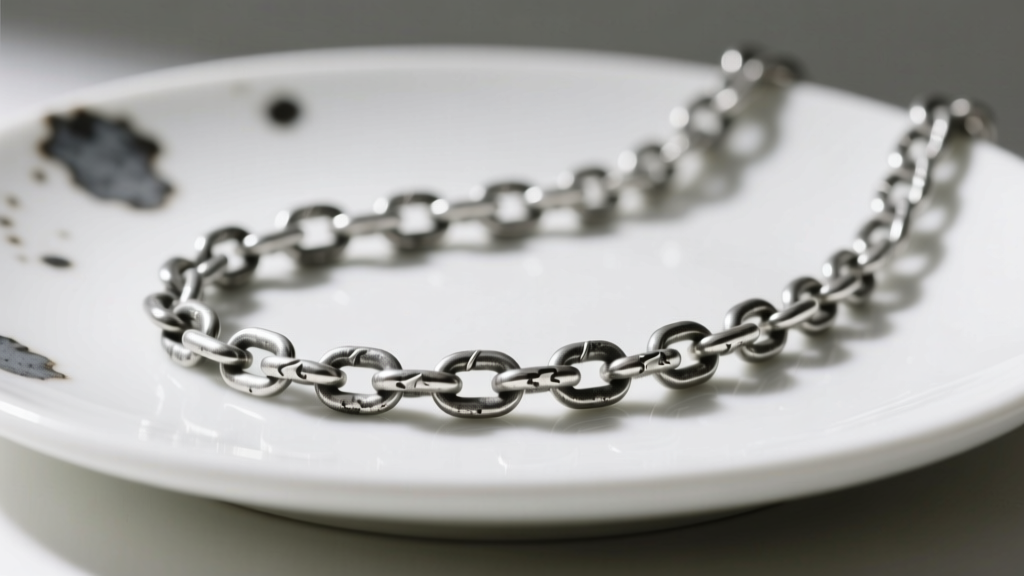
The Science of Tarnish: Why Your Jewelry Darkens
Before exploring how to clean tarnish jewelry, it is crucial to understand what tarnish actually is. Unlike surface dirt or skin oils, tarnish is a chemical reaction—specifically, a form of corrosion that occurs when metals react with sulfur compounds, oxygen, or moisture in the environment. For sterling silver (92.5% silver, 7.5% copper), the primary culprit is hydrogen sulfide in the air, which creates a dark layer of silver sulfide (Ag2S) on the surface. Copper and brass, on the other hand, react with oxygen and moisture to form copper oxide or copper carbonate (the familiar green patina).
Understanding this chemistry is the key to effective jewelry care. Mechanical polishing (scrubbing) physically removes a microscopic layer of the metal along with the tarnish. Chemical reduction, however, reverses the reaction, converting the tarnish back into elemental metal without sacrificing the jewelry's mass. Knowing when to use which method is what separates amateur cleaning from professional conservation.
How to Clean Tarnish Jewelry: Material-Specific Protocols
Different alloys require vastly different approaches. A method that brilliantly restores solid silver can permanently ruin gold vermeil or porous gemstones. Below are the precise, expert-approved protocols for the most common jewelry metals.
Sterling Silver (925) and Argentium: The Electrochemical Bath
For solid sterling silver without porous gemstones, the aluminum foil bath is the gold standard. This method relies on a redox (reduction-oxidation) reaction. Aluminum has a higher oxidation potential than silver. When placed in an electrolyte solution and exposed to heat, the aluminum sacrifices itself, pulling the sulfur away from the silver sulfide and leaving pure silver behind.
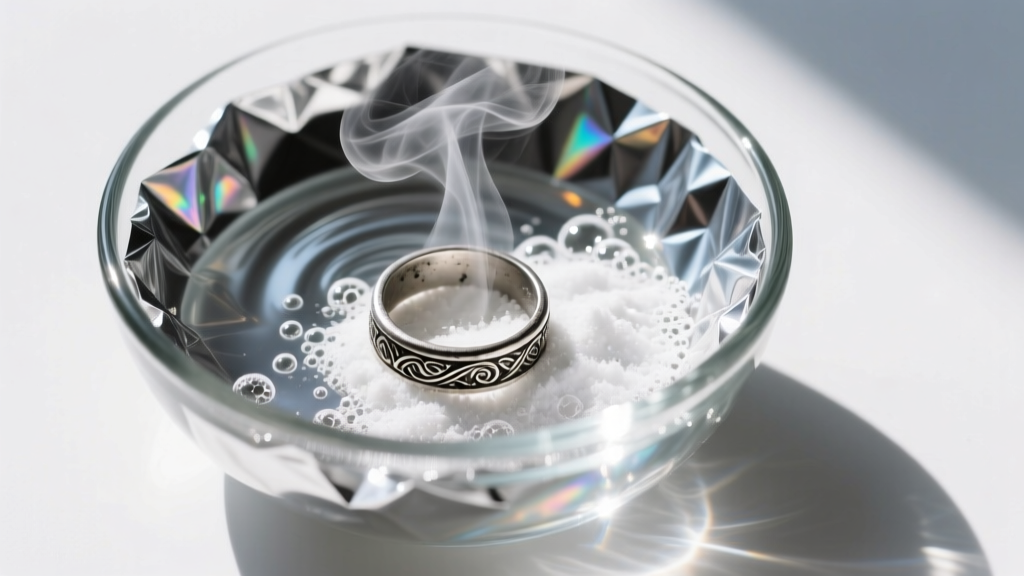
The Exact Protocol:
- Line a glass or ceramic bowl with aluminum foil, shiny side up.
- Place your silver jewelry directly touching the foil.
- Boil 1 liter of distilled water. (Tap water contains chlorine and minerals that can cause spotting).
- Add 15g (1 tablespoon) of baking soda (sodium bicarbonate) and 15g (1 tablespoon) of non-iodized salt. The salt acts as an electrolyte, drastically increasing the water's conductivity.
- Pour the solution over the jewelry. You will immediately smell a faint "rotten egg" odor—this is the sulfur gas releasing from the silver.
- Let it sit for exactly 3 to 5 minutes. Leaving it too long can cause a dull, milky finish.
- Remove with wooden tongs, rinse in distilled water, and buff dry with a microfiber cloth.
Solid Gold and Gold Vermeil: The Surfactant Method
Pure 24k gold does not tarnish. However, jewelry is typically 14k (58.3% gold) or 10k (41.7% gold), alloyed with copper and silver for durability. These alloyed metals do tarnish. Furthermore, gold vermeil (a thick layer of gold over sterling silver) requires extreme caution; harsh chemicals or electrochemical baths can strip the gold layer or cause it to blister if moisture is trapped in micro-pores.
To clean alloyed gold or vermeil, use a mild, non-detergent surfactant. Mix a few drops of phosphate-free dish soap (like Dawn Free & Clear) into lukewarm distilled water. Soak for 15 minutes, gently agitate with a baby-hair toothbrush (standard toothbrushes have bristles that are too stiff and can cause micro-scratches on high-polish gold), and pat dry. Never use toothpaste; the silica abrasives in toothpaste rank around 3-4 on the Mohs scale, which is harder than gold (2.5-3) and will leave permanent swirl marks.
Copper and Brass: Acidic Chelation
Copper tarnish (cupric oxide) requires a mild acid to break down the oxidation layer. A highly effective DIY solution is a paste made from equal parts lemon juice (citric acid) and fine sea salt. Apply the paste with a soft cloth, rub gently for 60 seconds, and rinse thoroughly. The acid dissolves the oxide, while the salt provides just enough gentle abrasion to lift it away without deeply scratching the copper substrate.
Material Tarnish Data and Cleaning Matrix
Refer to this matrix to ensure you are matching the correct chemical approach to your specific jewelry material. Using the wrong agent can lead to irreversible pitting or plating loss.
| Metal Type | Tarnish Compound | Best DIY Solution | Strict Avoid List |
|---|---|---|---|
| Sterling Silver (925) | Silver Sulfide (Ag2S) | Aluminum Foil + Baking Soda Bath | Bleach, Toothpaste, Hard Bristles |
| 14k / 18k Yellow Gold | Copper/Silver Oxides | Mild Surfactant + Baby-Hair Brush | Electrochemical Baths, Ammonia |
| Gold Vermeil | Surface Oils / Base Metal Bleed | Mild Surfactant Wipe-Down | Ultrasonic Cleaners, Polishing Cloths |
| Copper / Brass | Cupric Oxide (CuO) | Lemon Juice + Salt Paste | Bleach, Ammonia, Prolonged Water Soaks |
What to Avoid: Gemstone and Plating Risks
When researching how to clean tarnish jewelry, most guides fail to adequately warn about gemstone vulnerabilities. The Gemological Institute of America (GIA) explicitly warns against submerging porous, organic, or fractured stones in any liquid solution.
- Pearls and Coral: Composed of calcium carbonate, these will instantly dissolve or etch if exposed to acidic cleaners (like lemon juice) or harsh alkalines (like baking soda). Wipe them only with a damp, lint-free cloth.
- Opals: Opals contain up to 20% water. Submerging them in hot water (like the silver electrochemical bath) can cause "crazing"—a network of permanent internal cracks. Furthermore, ultrasonic cleaners will shatter opals due to high-frequency vibrations.
- Turquoise and Malachite: These are highly porous stones that will absorb chemicals, soap, and even dirty water, leading to permanent internal staining and color shifts.
- Rhodium Plating: White gold is plated with rhodium for a bright white finish. Aggressive polishing cloths will strip this plating, exposing the pale yellow gold underneath and requiring expensive professional re-plating.
"Polishing is inherently a destructive process; you are removing metal to achieve a shine. Chemical reduction is always preferred over mechanical abrasion for heavily tarnished silver to preserve the artifact's original mass and detailing." — Conservation Lab Guidelines, Victoria and Albert Museum
The Role of Impregnated Polishing Cloths
For localized tarnish or items that cannot be submerged (like pearl-and-silver necklaces), jeweler's impregnated polishing cloths (such as the industry-standard Sunshine Cloth) are highly effective. These cloths are embedded with micro-abrasives and chemical polishing agents (jeweler's rouge).
Crucial Warning: Because these cloths rely on micro-abrasion, they physically remove a microscopic layer of metal. They are excellent for solid sterling silver and solid gold. However, you must never use an impregnated polishing cloth on gold-plated, gold-filled, or vermeil jewelry, as it will instantly rub the thin gold layer off, exposing the base metal beneath. Use a plain, untreated microfiber cloth for plated items.
Preventative Maintenance and Storage Metrics
The most effective way to manage tarnish is to prevent the chemical reaction from occurring in the first place. Tarnish requires sulfur and moisture. By controlling your storage environment, you can reduce the need for cleaning by up to 90%.
Humidity Control
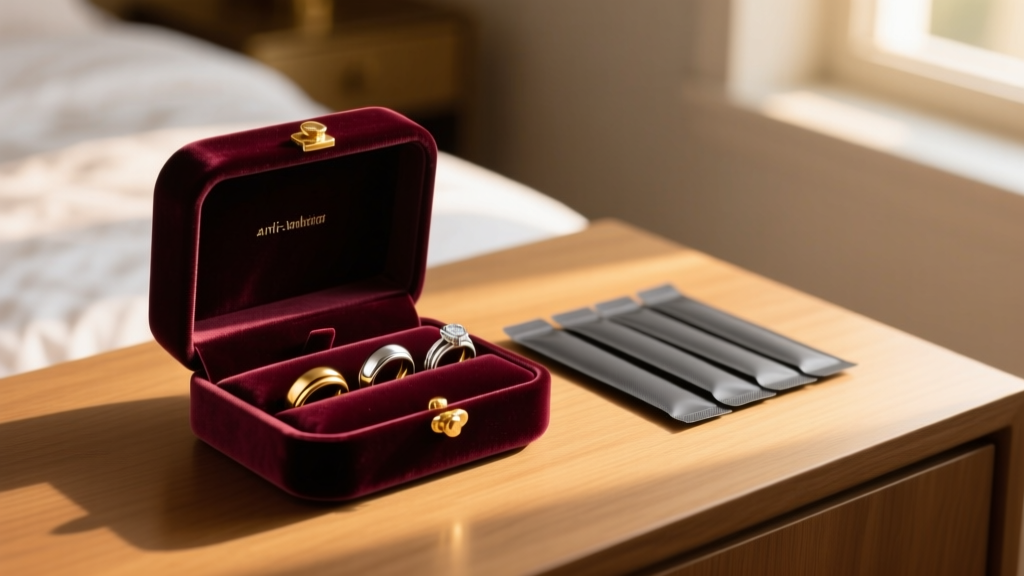
Moisture acts as a catalyst for both silver sulfide and copper oxide formation. Store your jewelry in a room where the Relative Humidity (RH) is kept below 45%. If you live in a humid climate, place silica gel desiccant packets inside your jewelry boxes and replace them every 3 months. Avoid storing jewelry in bathrooms, where steam from showers causes rapid RH spikes.
Active Sulfur Absorption
Invest in 3M Anti-Tarnish strips. These small, treated paper strips contain copper particles that act as a "sacrificial anode," absorbing airborne hydrogen sulfide gases before they can reach your silver. Place one strip in every enclosed jewelry box or drawer; they remain active for approximately 6 months. Additionally, never store silver in direct contact with rubber bands, latex gloves, or certain types of cardboard, as these materials off-gas high levels of sulfur.
Professional vs. DIY: When to Seek a Jeweler
While DIY methods are highly effective for routine maintenance, certain situations require professional intervention. If your silver jewelry features heavy oxidation that has pitted the metal, or if intricate filigree work is packed with hardened polishing compound from previous cleanings, a professional jeweler will use a mild ultrasonic bath combined with a steam cleaner to blast out debris without damaging the metal structure.
Furthermore, if your white gold rings are beginning to look yellowish, no amount of cleaning will fix this. The rhodium plating has worn thin, and you must take the piece to a jeweler for electrochemical re-plating. By understanding the exact chemistry of your metals and adhering to material-specific protocols, you can safely maintain your collection's brilliance for decades without causing micro-abrasions or chemical damage.


