How Do I Clean Tarnished Jewelry? Technical Silver & Gold Care
Learn how do I clean tarnished jewelry using metallurgical science. Discover exact chemical baths, polishing grits, and safe formulas for silver and gold.

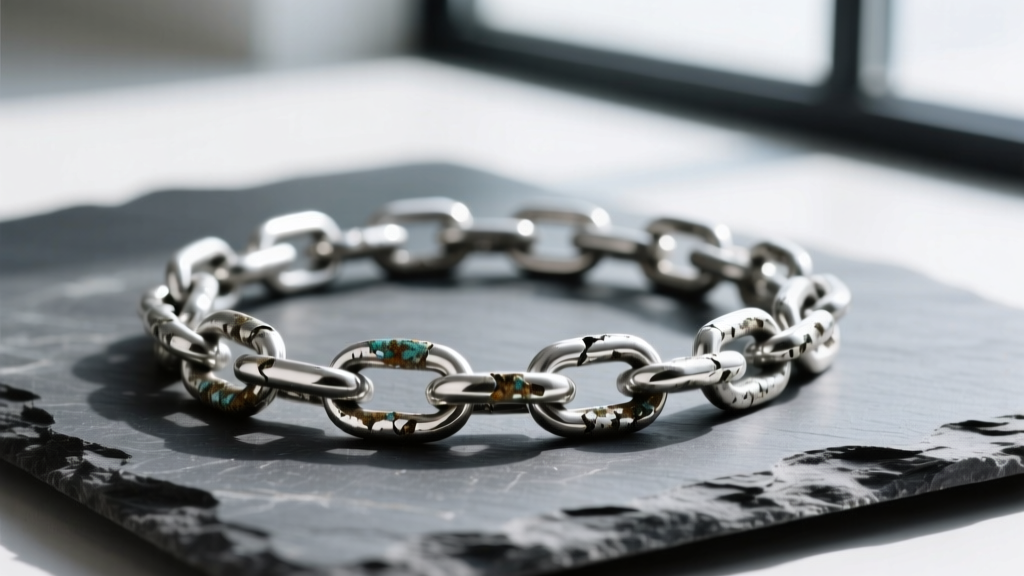
When collectors and everyday wearers ask, "how do I clean tarnished jewelry," the answer requires far more than a generic kitchen hack. It demands a fundamental understanding of metallurgy, surface chemistry, and the specific alloy composition of your pieces. Tarnish is not merely accumulated dirt or skin oils; it is a chemical transformation of the metal's surface layer. In this technical deep dive, we bypass superficial advice and explore the precise electrochemical, mechanical, and surfactant-based protocols used by professional bench jewelers to restore sterling silver, gold alloys, and platinum group metals without compromising structural integrity or gemstone settings.
The Chemistry of Tarnish: Why Your Jewelry Darkens
Before attempting restoration, you must identify the chemical compound causing the discoloration. Pure silver (Ag) does not react with oxygen at room temperature. Instead, the dark layer on sterling silver (92.5% Ag, 7.5% Cu) is primarily silver sulfide (Ag2S). This forms when silver reacts with trace amounts of hydrogen sulfide (H2S) in the atmosphere, which is emitted by industrial processes, decaying organic matter, and even certain foods like eggs and onions.
Gold, conversely, is a noble metal. Pure 24k gold will never tarnish. However, jewelry is rarely pure gold. The copper, silver, and zinc used to create 14k (58.5% gold) and 18k (75% gold) alloys are highly reactive. When a 14k yellow gold ring darkens, you are actually looking at copper oxide or copper sulfide forming on the surface matrix. Understanding this distinction is critical, as the solvent required to strip silver sulfide will not effectively remove copper oxidation, and vice versa.
How Do I Clean Tarnished Jewelry? The Electrochemical Method
For heavy silver sulfide buildup on sterling silver pieces without porous gemstones, the most effective, non-abrasive technique is galvanic reduction. This method reverses the chemical reaction, converting silver sulfide back into elemental silver without removing any base metal.
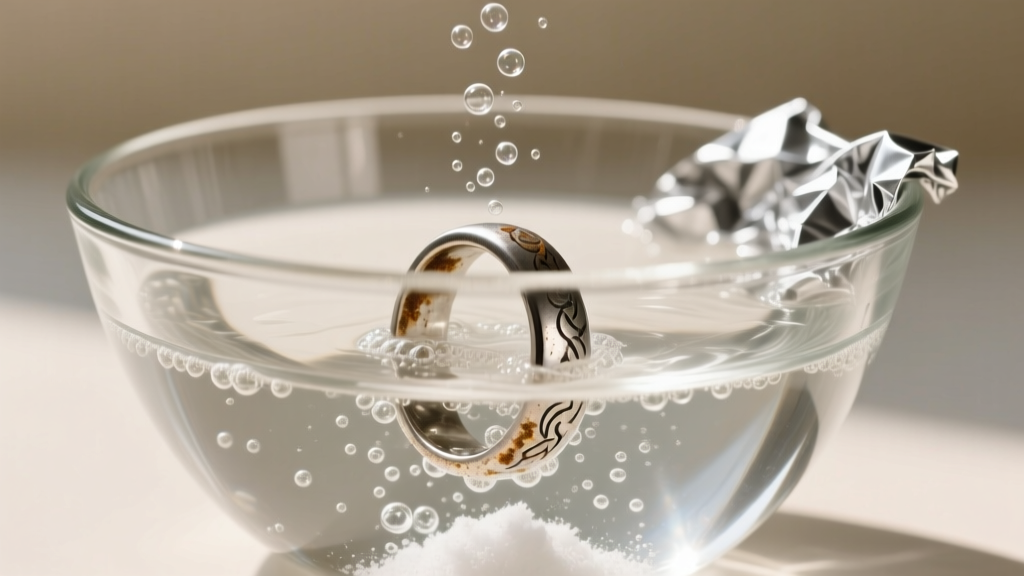
To execute this, you are essentially building a weak galvanic cell. Aluminum has a standard electrode potential of -1.66V, making it highly anodic (willing to give up electrons) compared to silver (+0.80V). When connected in an electrolyte solution, the aluminum sacrifices itself, forcing the sulfur to detach from the silver and bond with the aluminum.
The Professional Electrochemical Protocol
- Vessel: Use a glass or ceramic bowl. Never use metal, which will short-circuit the reaction.
- Anode: Line the bowl completely with heavy-duty aluminum foil, shiny side up.
- Electrolyte: Add exactly 1 tablespoon of sodium bicarbonate (baking soda) and 1 teaspoon of non-iodized salt per 1 cup of boiling water. The salt increases the electrical conductivity of the solution.
- Reaction: Submerge the jewelry so it physically touches the aluminum foil. You will immediately see micro-bubbles and smell a faint sulfur (rotten egg) odor.
- Duration: Leave for 3 to 5 minutes. Remove with plastic tongs, rinse in distilled water, and dry with a microfiber cloth.
"Electrochemical cleaning is miraculous for intricate filigree where polishing cloths cannot reach, but it will strip intentional oxidized antiquing. Always test a small area first." — Master Bench Jeweler
Mechanical Polishing: Abrasive Grits and Compound Selection
When dealing with intentional patinas, oxidized finishes, or severe pitting where electrochemical methods fail, mechanical abrasion is required. According to technical guidelines from Rio Grande, a leading jewelry supply manufacturer, selecting the correct polishing compound based on micron size is vital to avoid scratching softer alloys or wearing away hallmarks.
| Compound Color | Abrasive Type | Approx. Micron Size | Best Application |
|---|---|---|---|
| Brown (Tripoli) | Pumice / Silica | 15 - 20 µm | Cutting, removing light scratches, initial prep for gold and silver. |
| Red (Jeweler's Rouge) | Iron Oxide | 1 - 5 µm | Final high-luster coloring and polishing for precious metals. |
| White (Zam) | Aluminum Oxide | 5 - 10 µm | Polishing softer stones (turquoise, lapis) and platinum alloys. |
| Black (Emery) | Emery / Corundum | 20 - 30 µm | Heavy cutting, removing deep scratches, deburring castings. |
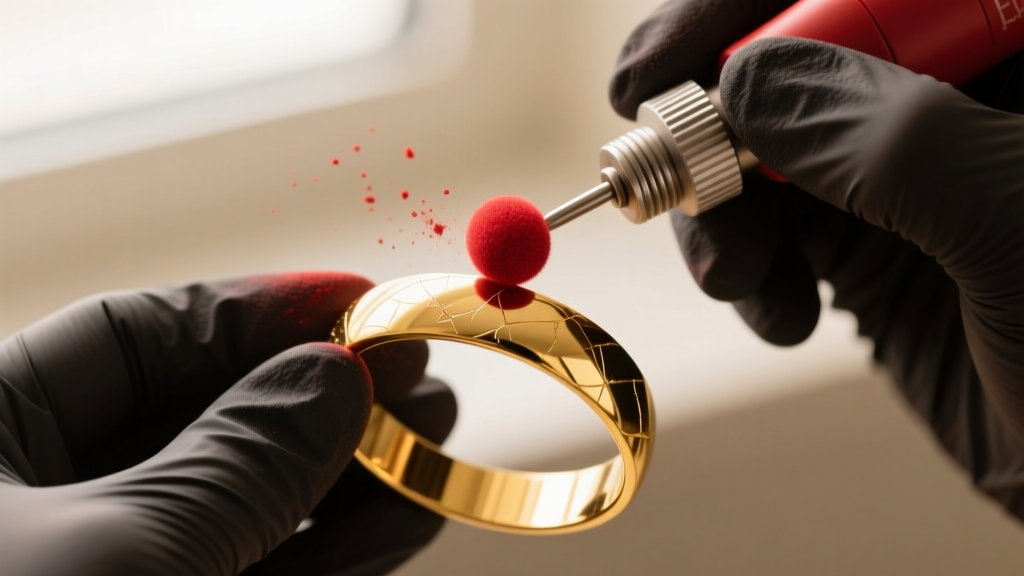
When hand-polishing, always use a dedicated, clean microfiber or untreated flannel cloth. Impregnated polishing cloths (like the popular Sunshine Polishing Cloths) contain micro-abrasives and chemical tarnish inhibitors. They are excellent for maintenance but should never be used on matte, brushed, or sandblasted finishes, as they will burnish the texture into a shiny, uneven mess.
Gold Alloys, Gemstones, and Ultrasonic Safety Protocols
Cleaning tarnished gold alloys (10k, 14k, 18k) requires a different approach. Because the tarnish is usually copper-based, a mild surfactant combined with gentle mechanical agitation is safest. Mix a few drops of pH-neutral dish soap (like Dawn) into warm distilled water. Use a soft-bristled baby toothbrush to gently agitate the surface. Avoid toothpaste at all costs; modern toothpastes contain hydrated silica with a Mohs hardness of 7, which will permanently micro-scratch 14k gold (Mohs 2.5-3) and silver.
The Gemological Institute of America (GIA) strongly warns against using ultrasonic cleaners or chemical dips on jewelry featuring porous or fractured gemstones. The high-frequency cavitation bubbles generated by ultrasonic machines (typically operating at 40 kHz) can easily shatter emeralds, which are almost universally fracture-filled with cedar oil or resins. Similarly, pearls, opals, turquoise, and malachite will absorb chemical cleaning solutions, leading to irreversible internal discoloration and structural degradation.
Failure Modes of Improper Cleaning
- Cavitation Erosion: Leaving jewelry in an ultrasonic cleaner for more than 3-5 minutes can pit the surface of softer metals like high-karat gold.
- Friction-Setting Loosening: Chemical dips can dissolve the oxidized layer that provides friction in certain tension or flush settings, causing stones to drop out.
- Galvanic Corrosion: Using the aluminum foil method on jewelry with mixed metals (e.g., silver set with steel springs in clasps) can cause rapid, destructive corrosion of the lesser metal.
Preventative Storage: Anti-Tarnish Technology
The most effective way to manage tarnish is to halt the chemical reaction before it begins. Silver sulfide formation requires both hydrogen sulfide and moisture. By controlling the micro-climate of your jewelry storage, you can reduce the need for abrasive cleaning to near zero.
For high-value collections, invest in Pacific Silvercloth. This material is embedded with microscopic silver particles that act as a sacrificial anode, absorbing ambient H2S gases before they reach your jewelry. For everyday storage, utilize activated charcoal packets or 3M Anti-Tarnish Strips inside airtight polyethylene zip-lock bags. These strips contain copper-based compounds that preferentially react with sulfur gases. Remember to replace these strips every 6 to 12 months, as they become saturated and lose efficacy. By combining precise electrochemical reduction for heavy tarnish with rigorous environmental controls, you can maintain the metallurgical integrity and brilliance of your collection for generations.


