Material Guide: What to Put in a Jewelry Cleaner Ultrasonic
Discover which metals and gemstones can safely handle a jewelry cleaner ultrasonic wave bath, and which porous or fractured stones to keep out.

The Physics of Cavitation: Beyond Simple Vibration
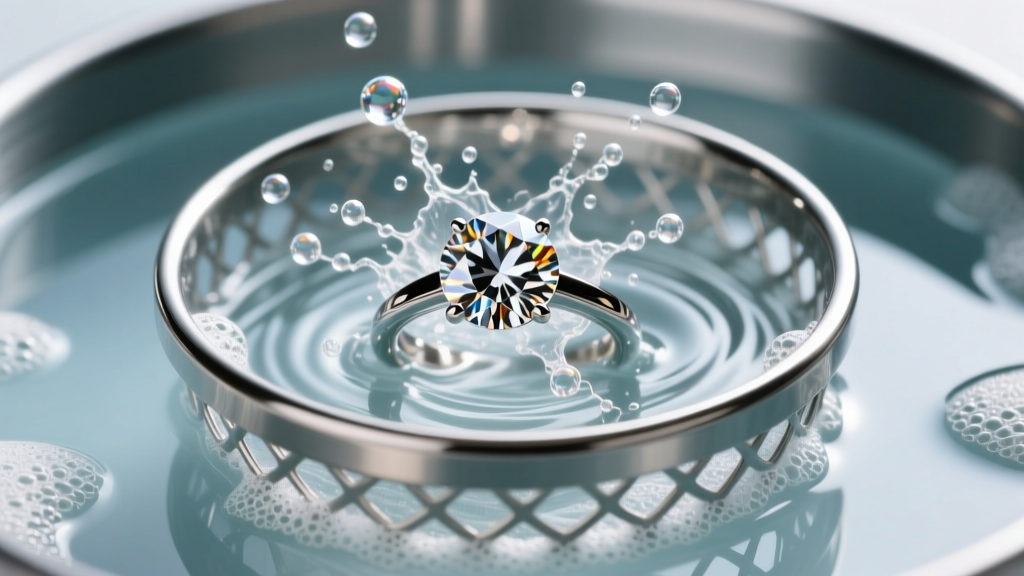
When evaluating whether a piece of jewelry can survive a jewelry cleaner ultrasonic bath, it is critical to understand that these machines do not merely vibrate dirt loose. They rely on a violent physical process called cavitation. Ultrasonic transducers bonded to the base of the stainless steel tank emit high-frequency sound waves, typically between 40,000 Hz and 50,000 Hz (40-50 kHz). These waves create alternating high-pressure and low-pressure cycles in the cleaning solution.
During the low-pressure cycle, millions of microscopic vacuum bubbles form. In the high-pressure cycle, these bubbles implode with astonishing force. While the bulk liquid remains near room temperature, the localized implosion of a single cavitation bubble generates temperatures exceeding 10,000°F (5,500°C) and pressures of 10,000 psi. This microscopic shockwave acts like a high-pressure power washer, blasting away sebum, polishing compound, and environmental grime from microscopic crevices. However, this exact same localized shockwave is what fractures brittle gemstones, strips chemical platings, and shatters organic materials.
Metals That Thrive in Ultrasonic Baths
High-tensile, solid metals with high melting points and uniform crystalline structures are the ideal candidates for ultrasonic cleaning. The shockwaves of cavitation cannot disrupt the metallic bonds of these materials.
Platinum and High-Karat Gold
Solid 950 Platinum and 18k to 24k gold are exceptionally safe. Platinum, in particular, is highly dense and lacks the microscopic porosity sometimes found in cast alloys. Because platinum is rarely plated (unlike white gold), there is no risk of a surface layer delaminating under ultrasonic stress. 14k and 18k yellow gold alloys also perform beautifully, provided they do not contain structural defects from poor casting practices.
Titanium and Tungsten Carbide
Grade 5 Titanium (Ti-6Al-4V), the standard for high-end aerospace and premium body jewelry, is virtually indestructible in an ultrasonic environment. Its high strength-to-density ratio and corrosion resistance mean it will not pit, oxidize, or warp. Similarly, tungsten carbide rings—which boast a Mohs hardness of 8.5 to 9—can withstand prolonged ultrasonic exposure without surface degradation, making them ideal for aggressive cleaning cycles.
The Danger Zone: Metals and Alloys to Keep Out
While solid precious metals are safe, surface treatments and specific alloy compositions can be ruined in minutes inside an ultrasonic tank.
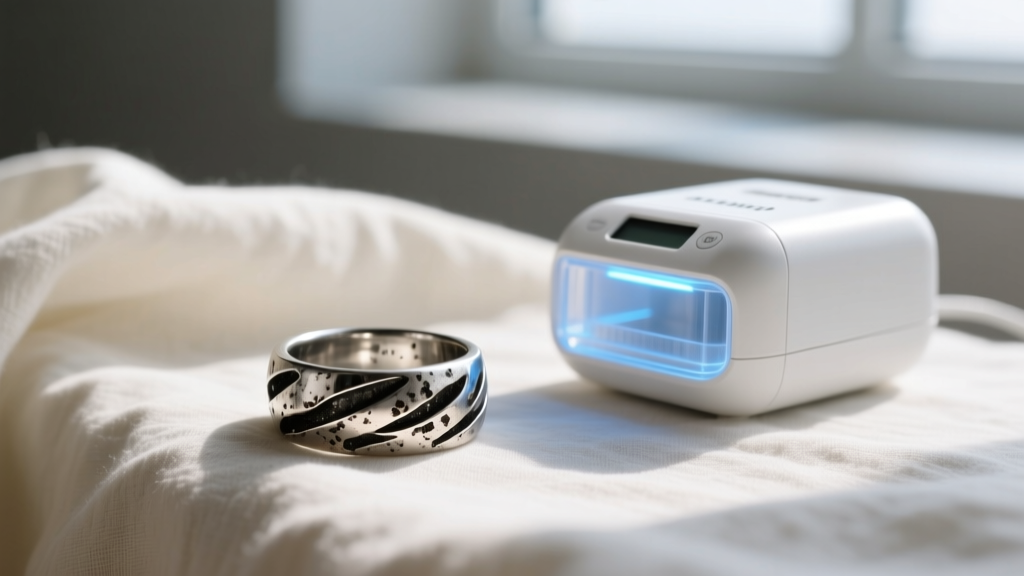
- Oxidized (Antiqued) Silver: The darkened crevices on sterling silver (925) are created using liver of sulfur or silver sulfide. The cavitation implosions will strip this intentional patina, leaving the ring looking flat, bright, and ruined.
- Rhodium-Plated White Gold: White gold is alloyed with nickel or palladium but plated with rhodium for a bright white finish. If the underlying gold has micro-porosity from the casting process, ultrasonic waves can penetrate these microscopic voids, causing the rhodium plating to blister and flake off.
- Gold Vermeil and Gold-Filled Brass: Any jewelry featuring a base metal core with a thin electroplated layer of gold is at high risk. The differing acoustic impedance between the brass core and the gold plating causes the shockwaves to reflect at the boundary layer, effectively shearing the gold plating away from the base metal.
Gemstone Hardness vs. Tenacity: The Ultrasonic Matrix
A common and dangerous misconception is that a gemstone's Mohs hardness dictates its ultrasonic safety. Mohs hardness only measures scratch resistance. Ultrasonic safety is dictated by tenacity (toughness) and cleavage (the tendency of a crystal to break along specific structural planes). A diamond is a 10 on the Mohs scale, but it has perfect cleavage in four directions; a sharp cavitation implosion against a surface-reaching feather inclusion can cleave the diamond in half.
| Gemstone | Mohs Hardness | Tenacity / Cleavage | Ultrasonic Verdict |
|---|---|---|---|
| Diamond | 10 | Perfect Cleavage | Safe (unless heavily included or fracture-filled) |
| Ruby / Sapphire | 9 | No Cleavage / Tough | Generally Safe (avoid if heavily fractured) |
| Emerald | 7.5 - 8 | Brittle / Highly Included | DANGER: Strips oils, causes clouding |
| Opal | 5.5 - 6.5 | Brittle / High Water Content | DANGER: Causes crazing and cracking |
| Tanzanite | 6.5 - 7 | Perfect Cleavage | Avoid: High fracture risk under shockwaves |
| Morganite | 7.5 - 8 | Brittle | Use Caution: Short cycles only |
For a comprehensive breakdown of gemstone durability and structural vulnerabilities, the Gemological Institute of America (GIA) provides extensive guidelines on how inclusions interact with thermal and acoustic shock.
Organic and Fracture-Filled Materials: The Absolute "No" List
Certain materials possess chemical or structural properties that make them fundamentally incompatible with cavitation physics.
Emeralds and Fracture-Filled Stones
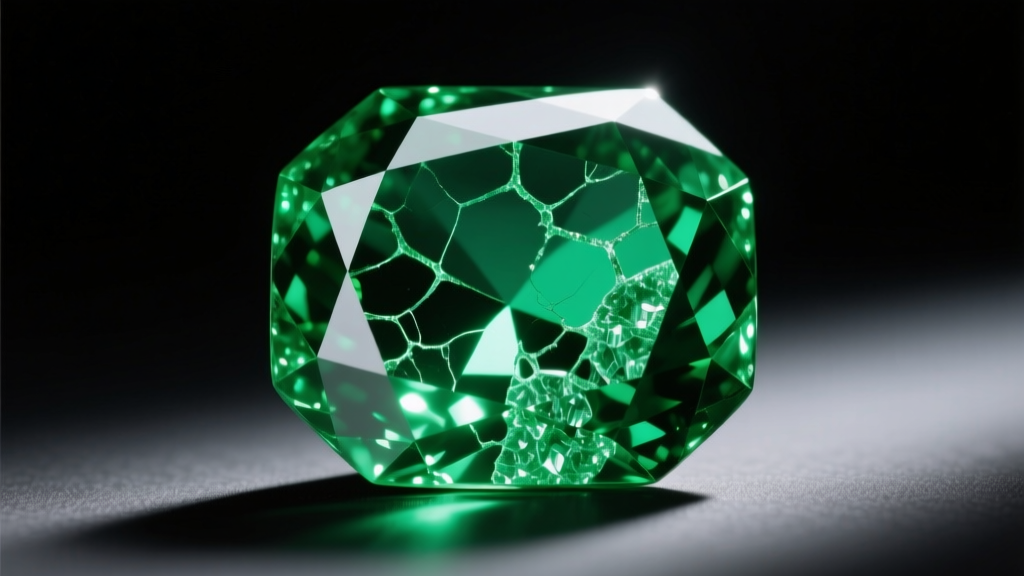
Nearly 90% of emeralds on the market are fracture-filled with cedar oil, Opticon, or synthetic resins to mask internal fissures and improve clarity. The localized heat and aggressive solvent action of an ultrasonic bath will dissolve or dislodge these fillers. Once the oil is stripped, the emerald will appear heavily included, cloudy, and significantly less valuable. As noted in the GIA Emerald Quality Factors report, thermal shock and ultrasonic vibrations are the primary causes of filler degradation.
Opals and Hydration Loss
Opals are non-crystalline silica containing between 5% and 10% water. The rapid, localized temperature spikes from cavitation implosions can cause this internal water to flash-boil or evaporate, leading to "crazing"—a permanent network of microscopic cracks that destroys the stone's structural integrity and play-of-color.
Pearls, Coral, and Amber
Organic gems are exceptionally soft and porous. Pearls are composed of aragonite platelets held together by conchiolin (an organic protein). Ultrasonic waves will delaminate the nacre layers, causing the pearl to peel, chalk, or dissolve entirely, especially if the drilling hole allows the cleaning solution to penetrate the bead's core.
Pro Tips for Safe Ultrasonic Operation
If you are cleaning approved materials (like solid platinum, titanium, or clean diamonds), adherence to strict operational parameters is required to prevent secondary damage.
- Never Drop Jewelry to the Bottom: The transducers are located on the tank floor. Jewelry resting directly on the bottom will be subjected to the raw, unmitigated acoustic energy, which can pit soft metals and scratch stones. Always use the provided suspension basket.
- Control the Temperature: While heat improves the efficacy of cleaning surfactants, it also increases the risk of thermal shock to gemstones. Never exceed 120°F (49°C). For diamond and platinum, a lukewarm 90°F (32°C) is the optimal sweet spot.
- Use Proper Chemistry: Distilled water with a few drops of mild, ammonia-free dish soap is ideal for most metals. Avoid harsh alkaline solutions on aluminum or titanium, and never use bleach, which will permanently pit gold alloys and destroy silver.
- Limit Cycle Times: Most consumer jewelry cleaner ultrasonic machines default to 3-minute cycles. For delicate settings or older prongs, limit exposure to 60 seconds, inspect the piece, and repeat only if necessary. Prolonged exposure can fatigue metal prongs, leading to stone loss.
Expert Verdict
A jewelry cleaner ultrasonic machine is an indispensable tool for maintaining the brilliance of durable, solid-metal jewelry and hard, un-treated gemstones. However, it is not a universal panacea. By understanding the material science of your jewelry—specifically the difference between Mohs hardness and structural tenacity, and recognizing the presence of surface treatments or organic fillers—you can leverage cavitation physics to restore your pieces to factory-new condition without causing catastrophic, irreversible damage. When in doubt regarding a gemstone's internal stability, defer to a professional jeweler who can assess the stone under magnification before subjecting it to acoustic shockwaves.


