Choosing a Tarnish Resistant Jewelry Box: Technical Material Guide
Discover the science behind a tarnish resistant jewelry box. We analyze Pacific Cloth, activated carbon, and humidity control for optimal silver care.

The Electrochemistry of Tarnish: Why Standard Boxes Fail
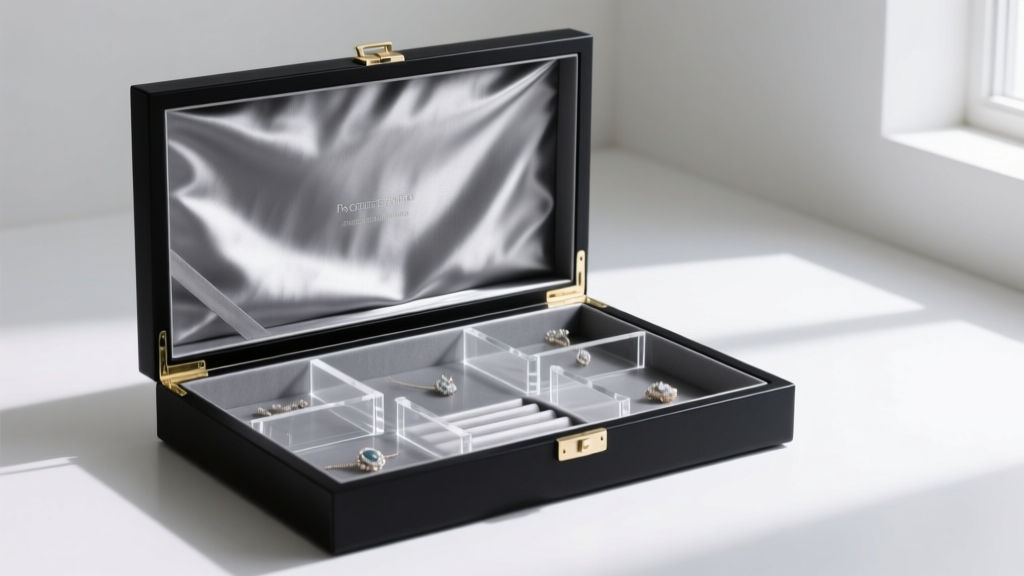
When evaluating a tarnish resistant jewelry box, most consumers focus on aesthetics rather than the underlying chemical environment. Tarnish is not merely dirt; it is a corrosive electrochemical reaction. Sterling silver (92.5% silver, 7.5% copper) is highly susceptible to hydrogen sulfide (H2S) and sulfur dioxide (SO2) present in ambient air. According to the Library of Congress, silver can begin to tarnish when exposed to sulfur compounds at concentrations as low as 10 parts per billion (ppb). The copper alloyed within sterling silver acts as a galvanic catalyst, accelerating the formation of black silver sulfide (Ag2S) and copper sulfide (Cu2S) on the surface.
Standard wooden or cardboard jewelry boxes often exacerbate this process. Wood naturally emits acidic vapors, peroxides, and trace sulfur compounds. Furthermore, the adhesives used in mass-produced boxes—particularly cyanoacrylates and certain polyvinyl acetate (PVA) formulations—off-gas volatile organic compounds (VOCs) that actively promote oxidation. A truly effective tarnish resistant jewelry box must function as a controlled microclimate, neutralizing airborne sulfides and managing relative humidity (RH).
Core Anti-Tarnish Technologies Explained
To engineer a genuinely protective environment, archival storage relies on three distinct mechanisms: sacrificial anodes, chemical scavengers, and physical barriers. Understanding these technologies is critical for anyone managing high-value silver, copper, or brass collections.
Zinc-Infused Cotton (Pacific Silvercloth)
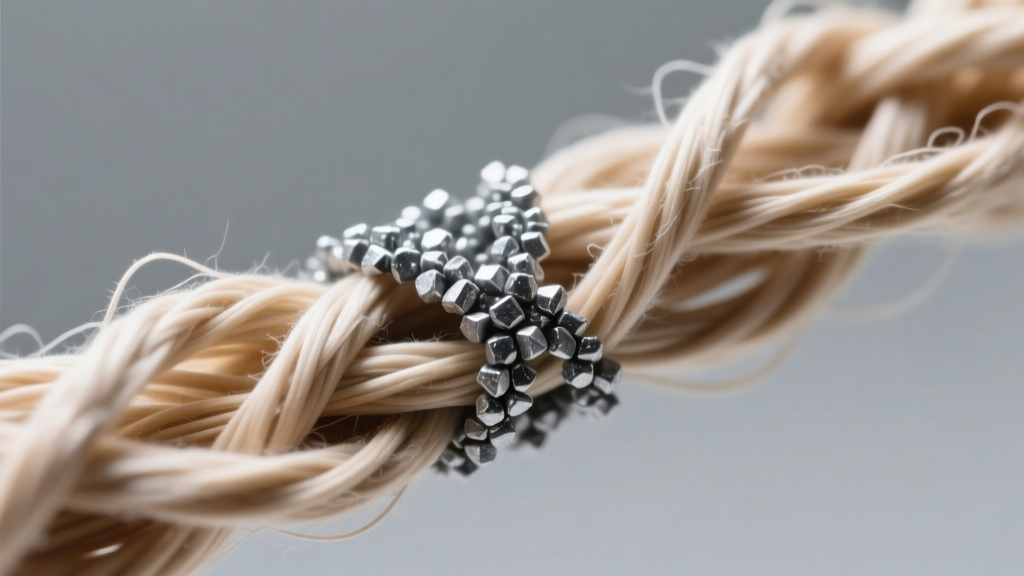
Pacific Silvercloth represents the gold standard in reactive textile linings. During manufacturing, thousands of microscopic zinc particles are embedded directly into the cotton fibers. Zinc is more electrochemically active than silver or copper. When ambient H2S penetrates the box, the zinc acts as a sacrificial anode, oxidizing and forming zinc sulfide before the sulfur can reach your jewelry. As the zinc reacts, the cloth gradually turns from a bright silver-gray to a dull brown, providing a visual indicator of its remaining protective lifespan. Unlike surface-sprayed anti-tarnish cloths, the embedded zinc will not wash out or rub off onto your gemstones.
Copper-Polymer Scavengers (3M Anti-Tarnish Strips)
Often placed inside the compartments of a tarnish resistant jewelry box, 3M Anti-Tarnish Strips utilize a proprietary copper-based chelating polymer. These strips do not emit any protective gases; rather, they aggressively adsorb and bind airborne sulfides and ozone. Because they rely on a finite chemical binding capacity, they must be replaced precisely every six months in a standard residential environment, or every three months in high-pollution urban areas.
Activated Carbon and Silica Gel Desiccants
Moisture acts as an electrolyte, dramatically accelerating the electrochemical reactions that cause tarnish. Maintaining an internal RH of 40% to 50% is critical. While standard silica gel packets absorb water vapor, they do nothing to stop sulfur gases. High-end archival boxes utilize activated carbon impregnated with silver nitrate, which simultaneously adsorbs moisture and neutralizes sulfur compounds. As of 2026, advancements in metal-organic frameworks (MOFs) are beginning to appear in premium archival storage, offering unprecedented surface areas for gas adsorption, though activated carbon remains the accessible standard.
Material Comparison Matrix: Lining vs. Inserts
Not all fabrics and foams are safe for long-term metal storage. The following table categorizes common jewelry box materials based on their chemical stability and archival safety.
| Material | Archival Safety | Mechanism of Action | Lifespan / Maintenance |
|---|---|---|---|
| Pacific Silvercloth | Excellent | Sacrificial zinc anode | 3-5 years (replace when brown) |
| 3M Anti-Tarnish Strips | Excellent | Sulfide chelation | 3-6 months (replace regularly) |
| Acid-Free Unbuffered Tissue | Good | Physical barrier, pH neutral | 1 year (replace if discolored) |
| Polyethylene (PE) Foam | Excellent | Inert physical barrier | Indefinite |
| Polyurethane (PU) Foam | Poor | N/A (Off-gasses VOCs) | Degrades, causes tarnish |
| Standard Felt / Flannel | Poor | N/A (Traps moisture/sulfur) | Accelerates corrosion |
For a comprehensive breakdown of how environmental pollutants affect historical metals, the Getty Conservation Institute provides extensive metallurgical data confirming that polyethylene and polypropylene are the only universally safe plastics for archival enclosures, whereas PVC and polyurethane must be strictly avoided.
The Hidden Threat: Off-Gassing and Adhesive Failures
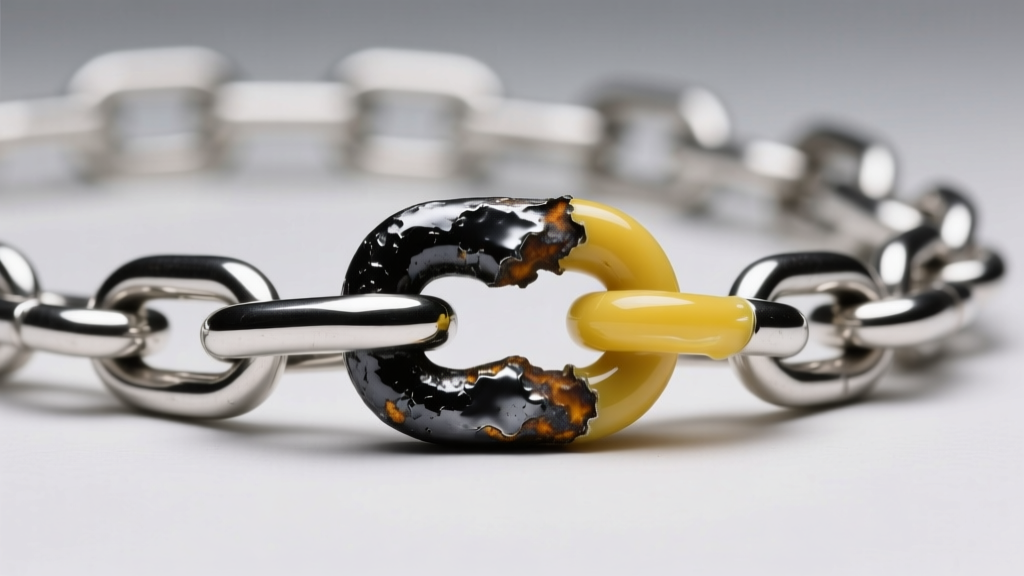
A common failure mode in commercial jewelry boxes is localized tarnish caused by structural adhesives. If you have ever noticed a silver chain developing heavy black tarnish in one specific spot, it is likely resting against a glue joint or a rubberized hinge. Rubber bands, elastic linings, and cheap hot-melt glues contain sulfur accelerators used in the vulcanization process. When confined in a dark, unventilated box, these materials create a concentrated micro-environment of sulfur gas.
Conservation best practices dictate that any adhesive used inside a storage enclosure must be fully cured and chemically inert. Archival box makers utilize hot animal glues, starch pastes, or specialized acrylic emulsions that have been tested via the Oddy Test to ensure zero off-gassing of corrosive volatiles.
Furthermore, the structural wood of the box matters. Medium-density fiberboard (MDF) and raw oak emit high levels of acetic acid and formaldehyde. A premium tarnish resistant jewelry box will either be constructed from powder-coated steel, anodized aluminum, or ABS plastic, or it will use archival woods that have been hermetically sealed with multiple coats of water-based polyurethane or acrylic barrier varnish before the anti-tarnish lining is applied.
Maintaining the Microclimate: Actionable Protocols
Even the most technically advanced tarnish resistant jewelry box requires strict maintenance protocols to remain effective. Implement the following schedule to ensure your storage environment remains chemically stable:
- Bi-Annual Strip Replacement: Mark your calendar to replace 3M anti-tarnish strips every six months. Do not wait for them to turn black; their chemical binding capacity is often exhausted before a visible color change occurs.
- Silica Gel Recharging: If your box utilizes indicating silica gel beads (which turn from orange to green, or blue to pink when saturated), remove them every three months. Recharge them by baking in an oven at 250°F (120°C) for two hours to drive off adsorbed moisture.
- Pre-Cleaning Protocol: Never place jewelry into an archival box with residual skin oils, lotions, or chlorides from tap water. These salts are hygroscopic (they attract moisture) and will cause localized pitting and tarnish even in a low-RH environment. Always wipe pieces with a clean, dry microfiber cloth before storage.
- Avoid PVC Plastics: Never store silver in flexible, clear plastic bags unless they are explicitly labeled as polyethylene (PE) or polypropylene (PP). Standard zip-top bags are often made with PVC plasticizers that emit corrosive gases.
- Climate Control: Keep the jewelry box in a climate-controlled interior room. Attics, basements, and exterior walls experience thermal cycling, which causes the air inside the box to expand and contract, actively pumping ambient, sulfur-laden air through the microscopic gaps in the lid.
By understanding the metallurgical and chemical realities of silver oxidation, you can move beyond marketing buzzwords and select a storage solution that genuinely preserves the luster and structural integrity of your collection for decades.


