Technical Guide: Using an Ultrasonic Cleaner for Jewelry Safely
Master cavitation science and gemstone safety with our technical deep dive into selecting and using an ultrasonic cleaner for jewelry at home.

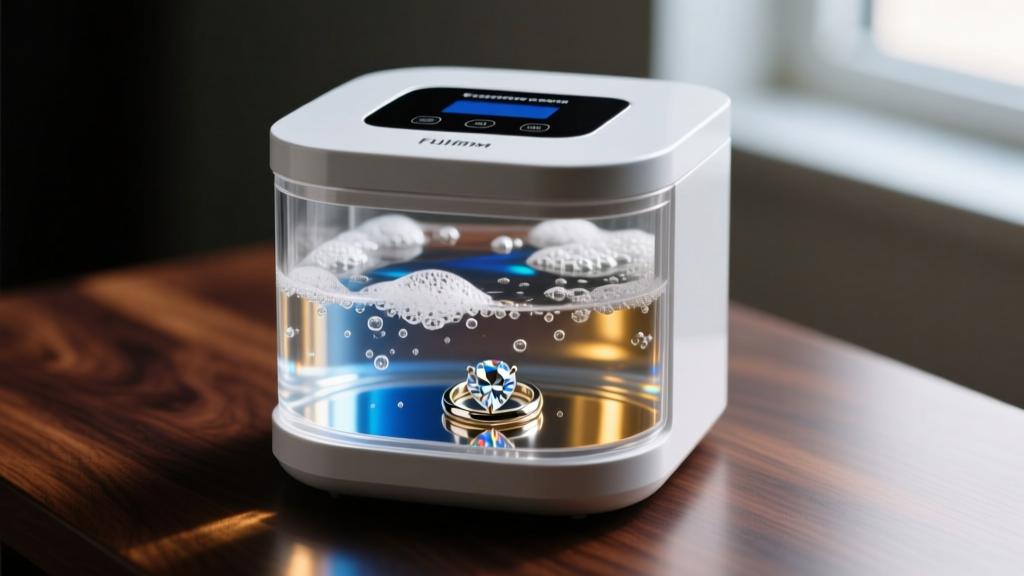
The Physics of Cavitation: How Ultrasonic Waves Clean
When professionals discuss an ultrasonic cleaner for jewelry, they are referring to a device that harnesses the destructive power of microscopic implosions. At the core of the machine are piezoelectric transducers bonded to the underside of the stainless steel tank. These transducers convert high-frequency electrical energy into mechanical sound waves, typically ranging from 35 kHz to 120 kHz. As these acoustic waves propagate through the liquid medium, they create alternating cycles of high and low pressure. During the low-pressure cycle, microscopic vacuum bubbles form. In the subsequent high-pressure cycle, these bubbles violently collapse—a process known as cavitation.
This implosion generates localized temperatures exceeding 5,000 Kelvin and pressures up to 1,000 atmospheres, albeit on a microscopic scale. It is this sheer mechanical force that dislodges sebum, cosmetic residues, and environmental particulates from the microscopic crevices of a pavé setting or the underside of a gemstone's girdle. However, misunderstanding the physics of cavitation is the primary reason consumers damage their fine jewelry. According to the SharperTek Ultrasonic Frequency Guide, selecting the incorrect frequency can either fail to clean intricate filigree or literally shake stones out of their mounts.
Critical Specifications: Frequency, Wattage, and Tank Depth
Not all ultrasonic cleaners are engineered equally. The consumer market is flooded with underpowered novelty devices that merely vibrate the water without achieving true cavitation thresholds. To evaluate a professional-grade unit, you must analyze three distinct metrics:
| Frequency (kHz) | Bubble Size | Penetration Level | Best Jewelry Application |
|---|---|---|---|
| 35 - 40 kHz | Large | Aggressive | Heavy grime, solid gold chains, diamond solitaires without inclusions. |
| 45 - 60 kHz | Medium | Moderate | Everyday fine jewelry, standard prong settings, sapphire and ruby. |
| 80 - 120 kHz | Micro | Deep & Gentle | Micro-pavé, intricate filigree, milgrain detailing, fragile antique mounts. |
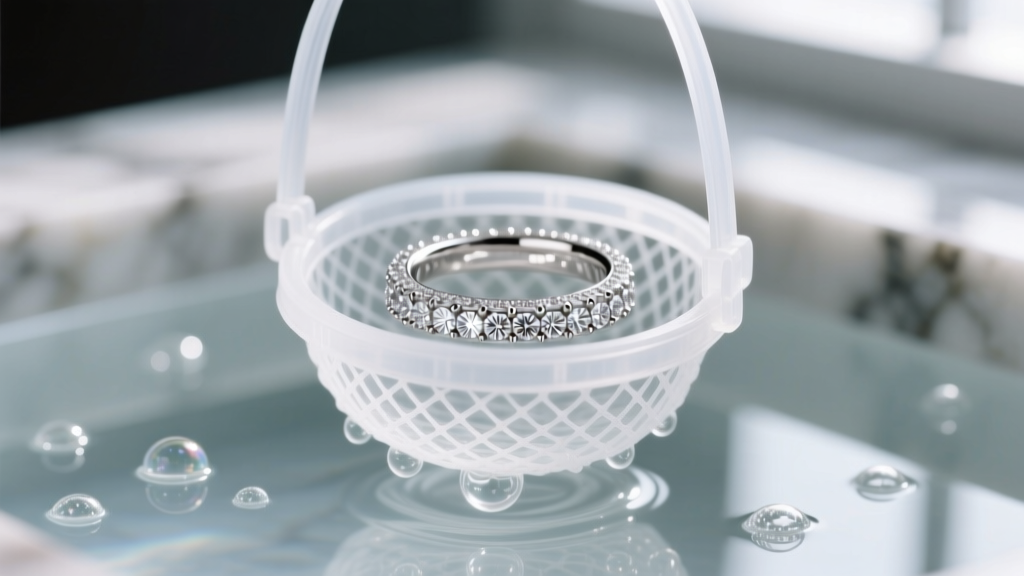
Wattage is equally critical. A reliable unit should deliver at least 50 watts of true ultrasonic power (not heating power) per gallon of tank capacity. Furthermore, tank depth dictates the harmonic resonance of the waves. Shallow tanks (under 3 inches) often suffer from dead zones where standing waves fail to form, resulting in uneven cleaning. Always utilize a suspended mesh basket; placing jewelry directly on the tank floor disrupts the transducer's acoustic field and risks scratching the metal against the steel base.
Gemstone and Metal Vulnerability Matrix
The Mohs hardness scale is largely irrelevant when assessing ultrasonic safety. Hardness dictates scratch resistance, whereas ultrasonic cavitation exploits structural vulnerabilities, cleavage planes, and chemical treatments. The GIA Gem Encyclopedia explicitly warns against ultrasonic cleaning for several major gemstone categories due to their internal characteristics and enhancement histories.
- Emeralds: Over 90% of commercial emeralds are fracture-filled with cedar oil or synthetic resins. Cavitation will strip these fillers, leaving the stone looking cloudy and heavily included. Furthermore, the vibrations can propagate existing fissures, causing catastrophic cleavage.
- Opals: Opals contain up to 20% water. The localized heat and pressure of implosions can cause crazing (a network of fine cracks) or completely shatter the stone.
- Tanzanite & Topaz: Both possess perfect cleavage planes. Ultrasonic shockwaves can cause the gemstone to split cleanly along these structural fault lines.
- Pearls & Coral: Organic gems are composed of calcium carbonate. They are highly porous and will dissolve or suffer severe surface pitting when exposed to ultrasonic waves and alkaline cleaning solutions.
- Rhodium-Plated White Gold: While the gold alloy is safe, prolonged exposure to heated ultrasonic baths will degrade the microscopic rhodium flash plating, causing the jewelry to yellow prematurely.
Formulating the Ideal Ultrasonic Cleaning Solution
Water alone is an ineffective ultrasonic medium due to its high surface tension (approx. 72 dynes/cm). Cavitation bubbles cannot form efficiently, and the water cannot penetrate the microscopic gaps between a gemstone's pavilion and the setting. You must introduce a surfactant to lower the surface tension to roughly 30 dynes/cm.

Commercial jewelry concentrates typically utilize non-ionic surfactants paired with mild alkaline builders (like sodium metasilicate) to saponify human sebum and cosmetic oils. Avoid ammonia-based solutions when cleaning porous stones or specific copper-alloys like rose gold, as ammonia will rapidly oxidize the copper, resulting in irreversible darkening. For a safe, highly effective DIY alternative, a 1:10 ratio of clear, unscented dish soap (free of lotions or citrus degreasers) to distilled water provides adequate surface tension reduction without risking chemical reactions with noble metals.
Advanced Operational Protocols for Fine Jewelry
To maximize cleaning efficacy while mitigating mechanical fatigue on prongs, follow this precise operational workflow:
- Degas the Solution: Freshly poured tap water contains dissolved atmospheric gases that absorb acoustic energy, dampening the cavitation effect. Run the cleaner empty for 5-10 minutes to degas the liquid before introducing jewelry.
- Control the Temperature: If your unit features a heater, restrict the temperature to a maximum of 140°F (60°C). Higher temperatures soften certain gemstone treatments and accelerate the degradation of rhodium plating.
- Utilize Sweep Mode: Advanced units feature a "Sweep" function, which slightly modulates the frequency to prevent the formation of standing wave dead-zones. This ensures uniform cleaning across the entire basket.
- Limit Exposure Time: Three to five minutes is sufficient for maintenance cleaning. Prolonged exposure (15+ minutes) induces metal fatigue in delicate prongs, particularly in older or vintage settings, eventually leading to stone loss.
Troubleshooting Common Ultrasonic Failures
Even with perfect technique, anomalies occur. If a diamond emerges from the bath looking cloudy, the issue is rarely the ultrasonic process itself. Cloudiness is typically caused by hard water mineral deposits (calcium carbonate) baking onto the stone's surface if the jewelry is heat-dried or air-dried without a distilled water rinse. Always perform a final rinse in distilled water and dry immediately with a high-velocity air blower or a lint-free microfiber cloth.
Conversely, if a stone is loose post-cleaning, the ultrasonic cleaner did not cause the damage; it merely revealed pre-existing structural failure. Vibrations will easily dislodge a diamond if the prong's metal memory has already been compromised by years of wear, impact, or improper re-tipping. Always inspect prongs under 10x magnification before introducing heirloom pieces to an ultrasonic bath.
Expert Insight: Never use an ultrasonic cleaner to remove heavy silver tarnish (silver sulfide). Ultrasonic waves only remove physical particulates and organic oils. Tarnish is a chemical oxidation layer that requires a chemical reduction process, such as an electrolytic aluminum foil and baking soda bath, followed by ultrasonic cleaning to remove the residual chemical salts.
Maintaining the transducers is vital for long-term efficacy. Over time, mineral scale from tap water can calcify on the interior tank floor, creating an acoustic barrier that insulates the liquid from the transducers. This forces the piezoelectric crystals to work harder, generating excess internal heat that eventually leads to transducer delamination or burnout. To prevent this, always empty and dry the tank after use, and descale the interior monthly using a mild citric acid solution.


