Vinegar Jewelry Cleaner: Safe DIY Hack or Gemstone Destroyer?
Learn if a vinegar jewelry cleaner is safe for your rings and necklaces. Discover which metals and gems survive acetic acid and which are ruined.

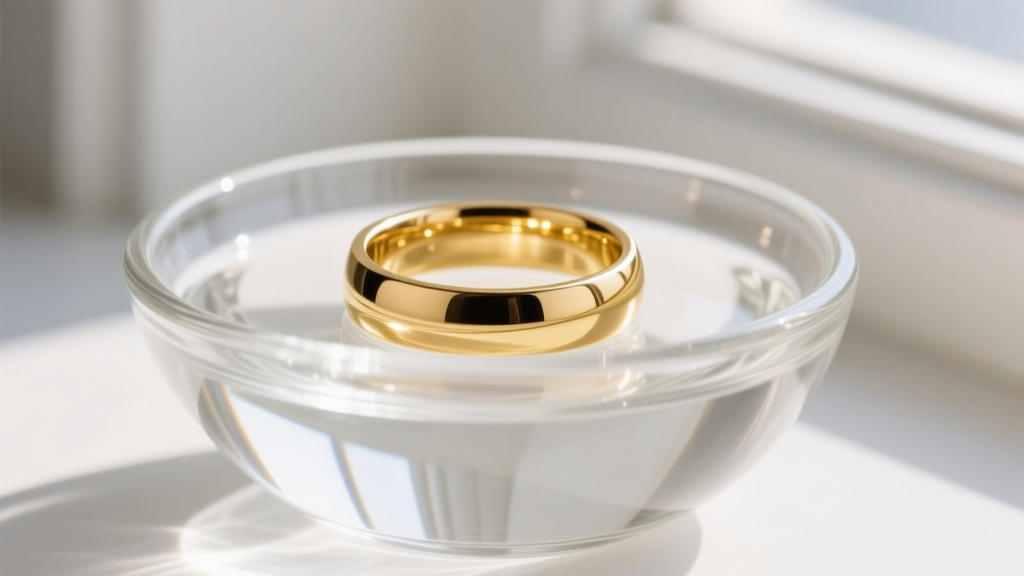
Social media is flooded with DIY life hacks, and the idea of using a vinegar jewelry cleaner has become one of the most popular at-home remedies for restoring shine to tarnished metals. It is cheap, accessible, and seemingly effective. But as any gemologist will tell you, treating your jewelry cabinet like a kitchen science experiment can lead to irreversible, catastrophic damage. While distilled white vinegar can safely cut through grease and light oxidation on certain durable metals, its active ingredient—acetic acid—is a chemical wrecking ball to dozens of common gemstones and metal platings.
In this beginner-friendly explainer, we are breaking down the exact chemistry of a vinegar jewelry cleaner, mapping out which pieces can survive a soak, and detailing the specific failure modes that occur when you use this DIY solution on the wrong materials. Whether you are wearing a solid 18k gold wedding band or a delicate turquoise cocktail ring, understanding these boundaries will save you hundreds of dollars in professional restoration fees.
The Chemistry of a Vinegar Jewelry Cleaner (And Why It Matters)
Household distilled white vinegar is typically a 5% solution of acetic acid (CH3COOH) in water. Acetic acid is a weak organic acid, but in the context of jewelry metallurgy and gemology, "weak" is a relative term. When you submerge jewelry in vinegar, the acid actively seeks out alkaline compounds, carbonates, and reactive metal oxides to break down.
This is why a vinegar jewelry cleaner works so well on heavy tarnish. Tarnish on silver is primarily silver sulfide, and while vinegar alone isn't strong enough to dissolve heavy silver sulfide instantly, it easily strips away the oily sebum, hard water spots, and alkaline soap scum that trap dirt against the metal. However, this exact same chemical mechanism is what destroys porous and carbonate-based gemstones. The acid does not discriminate between the grime you want to remove and the structural integrity of the stone you want to keep.
The Danger Zone: Gems and Metals to Keep Away From Vinegar
Before you ever mix a DIY cleaning solution, you must identify your materials. The following table outlines the specific failure modes that occur when vulnerable jewelry meets acetic acid.
| Material | Chemical / Structural Vulnerability | Reaction to Vinegar | Permanent Result |
|---|---|---|---|
| Pearls (Natural & Cultured) | Calcium Carbonate (CaCO3) | Acid dissolves the nacre, releasing CO2 gas. | Etching, loss of luster, structural disintegration. |
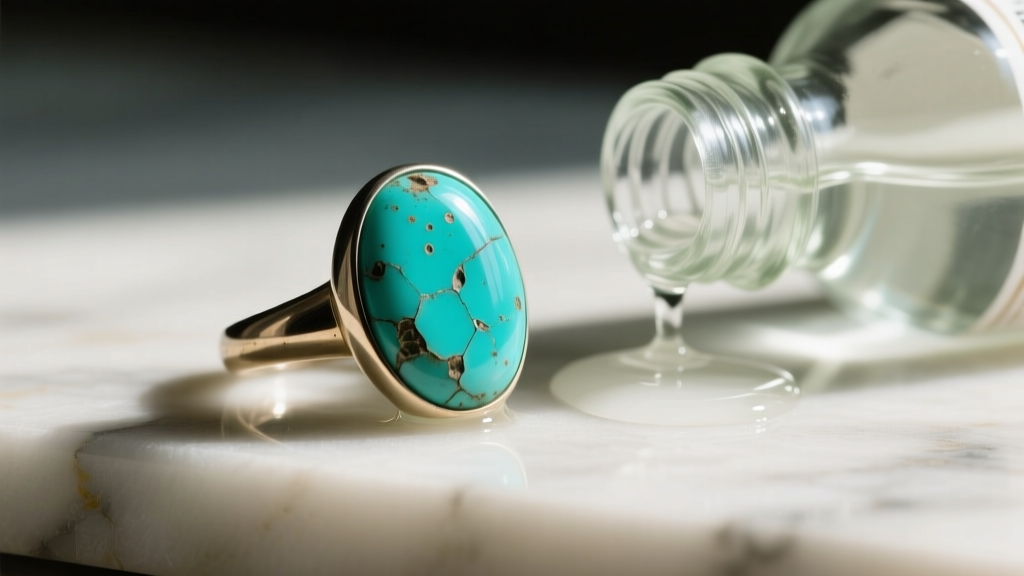
| Turquoise & Malachite | Porous copper-aluminum phosphates / carbonates | Absorbs acid, altering the stone's chemical matrix. | Chalky texture, permanent color fading, and pitting. |
| Oxidized / Patinated Silver | Intentional surface darkening (Silver Sulfide) | Strips the intentional contrast and darkening. | Loss of antique finish; flat, overly bright appearance. |
| Gold Vermeil & Plated Brass | Micro-thin gold layers (0.5 to 2.5 microns) | Acid penetrates micro-pores, causing galvanic corrosion. | Peeling, flaking, and exposure of the base metal. |
As the Gemological Institute of America (GIA) explicitly warns, organic gems like pearls, coral, and amber are highly sensitive to acidic solutions. Even a brief 60-second soak in a vinegar jewelry cleaner can permanently dull the orient and luster of a pearl strand by microscopically etching the outer layers of nacre.
The Safe List: What You Can Actually Clean With Vinegar
Despite the risks, a vinegar jewelry cleaner is not entirely useless. If you have durable, non-porous materials, a properly diluted acetic acid bath can be a highly effective degreaser. You can safely use this method on:
- Solid Gold (14k, 18k, 22k): Gold is a noble metal and does not react with weak acetic acid. Vinegar will safely remove lotion buildup and skin oils.
- Platinum: Highly inert and completely immune to household acids.
- Diamonds, Sapphires, and Rubies: These stones rank 9 to 10 on the Mohs hardness scale and possess excellent chemical stability. According to GIA's Diamond Care guidelines, diamonds are highly resistant to chemical corrosion, making them safe for acidic soaks.
Critical Caveat: Never use vinegar on fracture-filled or clarity-enhanced diamonds. The acid can dissolve the glass-like resins used to fill internal fissures, leaving the stone looking cloudy and heavily included.
Step-by-Step: How to Mix and Use a Vinegar Jewelry Cleaner
If your jewelry passes the safety check above, follow this exact protocol to ensure a safe, effective clean without risking your prongs or settings.
- The Mix: Combine 1 part distilled white vinegar with 2 parts lukewarm distilled water in a glass or ceramic bowl. Never use metal bowls, as the acid can react with the container. Avoid apple cider or balsamic vinegars; their natural sugars and tannins will leave a sticky, difficult-to-remove film.
- The Soak: Submerge your solid gold or platinum jewelry for exactly 5 to 10 minutes. Do not exceed this window. Prolonged exposure can weaken the alloyed metals (like copper or zinc) mixed into 14k gold.
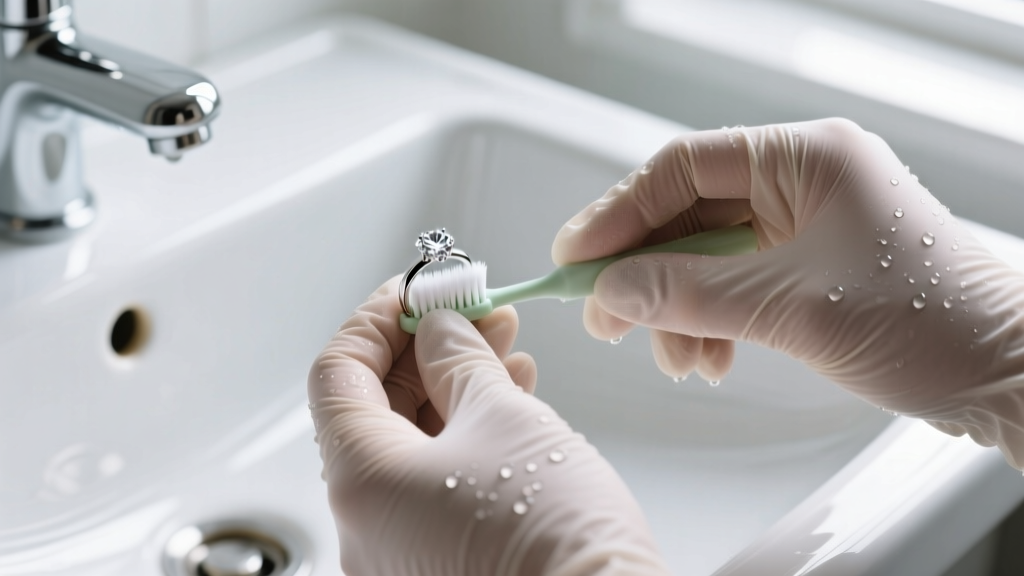
- The Agitation: Remove the piece and gently scrub the back of the setting (the pavilion) using an extra-soft baby toothbrush with 0.1mm nylon bristles. Standard adult toothbrushes are too abrasive and will leave micro-scratches on high-polish gold.
- The Rinse: Rinse thoroughly under lukewarm running water to halt any residual acidic activity.
- The Dry: Pat dry with a lint-free microfiber cloth. Avoid paper towels, as their wood-pulp fibers can scratch soft metals like 22k gold.
Vinegar vs. Commercial Cleaners: A Cost and Efficacy Breakdown
Is a DIY vinegar jewelry cleaner actually better than buying a commercial solution? Let us look at the data.
- Cost: A gallon of distilled white vinegar costs roughly $3.00, yielding hundreds of cleaning sessions. A standard 8oz bottle of commercial liquid jewelry cleaner (like Connoisseurs or Hagerty) costs between $8.00 and $15.00.
- Efficacy on Grease: Commercial cleaners utilize specialized surfactants that break down sebum and cosmetics at a molecular level. Vinegar relies on mild acidity. Commercial cleaners are vastly superior for removing heavy makeup and lotion buildup from diamond pavilions.
- Efficacy on Tarnish: Neither vinegar nor standard liquid dips will remove heavy silver sulfide tarnish. For that, you need a chemical reduction bath (the aluminum foil, boiling water, and baking soda method) or a professional ultrasonic polish.
- Safety Profile: Commercial cleaners are pH-balanced specifically for jewelry alloys and often contain mild corrosion inhibitors. Vinegar is a blunt instrument. While cheaper, it requires strict adherence to time limits and material knowledge.
Troubleshooting: What to Do If You Accidentally Soak a Porous Gem
Accidents happen. If you mistakenly drop a turquoise ring or a pearl pendant into a vinegar jewelry cleaner, immediate triage is required to minimize the chemical burn.
First, remove the item immediately and rinse it under cold, distilled water for a full 60 seconds to dilute the surface acid. Do not attempt to neutralize the acid by dumping baking soda directly onto the wet stone; the resulting fizzing reaction (releasing carbon dioxide) can force microscopic abrasive particles into the porous surface of stones like turquoise or malachite. Instead, gently pat the stone dry with a microfiber cloth. For porous stones like turquoise, which rely on natural oils for their color saturation, you may need to take the piece to a professional jeweler to have it safely re-oiled or re-stabilized, as noted in GIA's Turquoise Care Guide.
Final Verdict: Should You Use a Vinegar Jewelry Cleaner?
A vinegar jewelry cleaner is a highly effective, zero-cost degreaser for solid gold, platinum, diamonds, and corundum (sapphires and rubies). However, it demands a strict 10-minute time limit and a thorough understanding of your jewelry's material composition. If your collection includes pearls, opals, turquoise, emeralds, or gold-plated vermeil, keep the vinegar in the kitchen and invest in a pH-neutral, gem-specific cleaning solution. Treating your jewelry with chemical respect is the cornerstone of long-term style preservation.


