What Is Good to Clean Jewelry? Troubleshooting Safe DIY Solutions
Discover what is good to clean jewelry safely. Our troubleshooting guide exposes damaging DIY hacks and provides science-backed cleaning solutions.

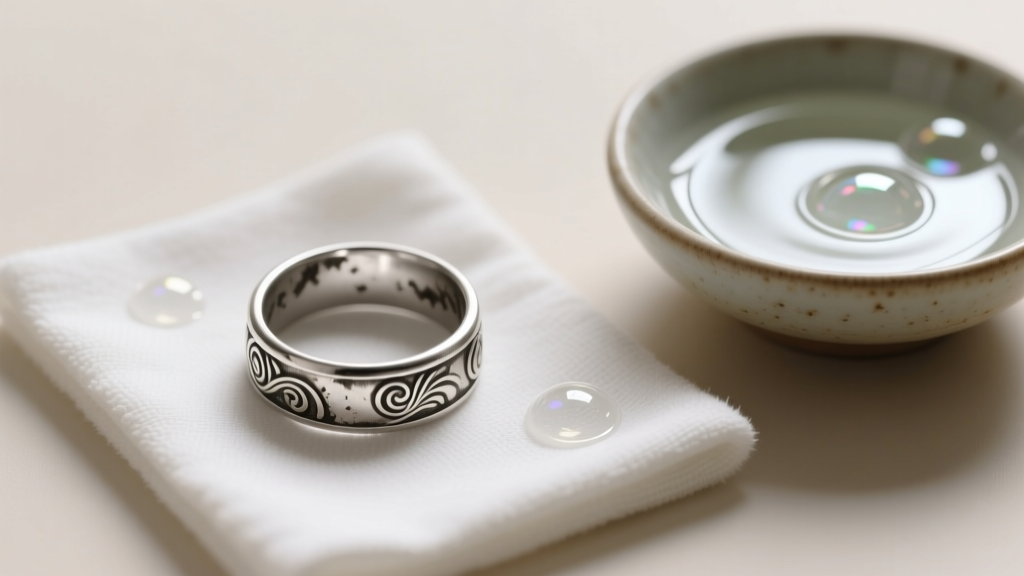
When your favorite ring loses its sparkle or a necklace chain turns dull, the immediate instinct is to search the internet for quick fixes. However, the most common search query—what is good to clean jewelry—often yields a minefield of destructive DIY advice. From abrasive kitchen pastes to harsh chemical baths, well-meaning but scientifically flawed "hacks" cause millions of dollars in gemstone and metal damage every year. As a domain expert in jewelry metallurgy and gemology, I see the aftermath of these internet trends daily: micro-scratched gold, clouded opals, and fractured emeralds.
This troubleshooting guide bypasses the fluff and dives into the chemistry and physics of jewelry care. We will dissect why popular home remedies fail, explain the science of proper surfactants, and provide a definitive matrix for safely cleaning your most prized possessions.
The "Internet Hacks" That Are Secretly Destroying Your Jewelry
Before we establish what is actually safe, we must troubleshoot the destructive methods that dominate social media. Understanding the failure modes of these hacks is crucial for long-term jewelry preservation.
Why Baking Soda and Toothpaste Fail (The Abrasion Problem)
Baking soda (sodium bicarbonate) and toothpaste are frequently recommended for scrubbing tarnished metals. The fatal flaw here lies in the Mohs Hardness Scale. Pure 24k gold has a Mohs hardness of just 2.5, and even alloyed 14k or 18k gold rarely exceeds a 3.5. Toothpaste contains hydrated silica, an abrasive with a Mohs hardness of 7. Baking soda, while softer, forms sharp crystalline structures when dried or concentrated.
When you scrub a gold ring or a soft gemstone with these substances, you are essentially sanding the surface. This creates microscopic grooves that not only ruin the mirror polish but actually trap more sebum, dead skin, and dirt over time, accelerating future tarnishing. Furthermore, the alkaline nature of baking soda (pH 9) can chemically etch porous, acid-sensitive gemstones like turquoise, malachite, and pearls.
The Boiling Water and Aluminum Foil Trap
The electrochemical reaction of boiling water, baking soda, and aluminum foil is highly effective at reducing silver sulfide (tarnish) back into pure silver. However, this method is a blunt instrument. It strips away all oxidation, including the intentional dark patina applied by jewelers to highlight intricate filigree or engraving details. It also subjects heat-sensitive stones to thermal shock, which can shatter treated diamonds or crack vintage glass paste gems.
What Is Good to Clean Jewelry? The Science of Surfactants
If abrasives and harsh chemicals are out, what is good to clean jewelry effectively? The answer lies in anionic and nonionic surfactants—specifically, mild, phosphate-free dish detergents.
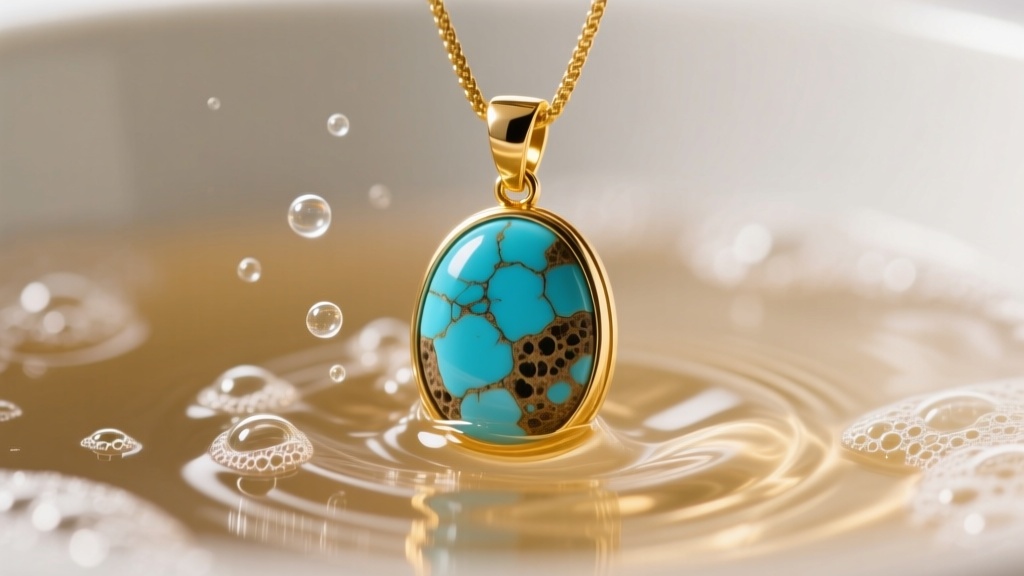
Products like original Dawn Ultra dish soap are the gold standard in professional jewelry workshops. Why? Because they utilize a precise blend of surfactants that drastically lower the surface tension of water. This allows the liquid to penetrate the microscopic gaps beneath pavé-set diamonds and under prongs where skin oils and lotions accumulate.
The surfactant molecules feature a hydrophilic (water-loving) head and a lipophilic (oil-loving) tail. The lipophilic tails attach to the sebum and cosmetic oils gripping your gemstones, while the hydrophilic heads attach to the rinse water, lifting the grime away without requiring any mechanical scrubbing. For optimal results, mix three drops of mild dish soap into one cup of distilled water heated to roughly 100°F (37°C). Distilled water is critical here, as tap water contains dissolved minerals like calcium and magnesium that leave hard water spots on high-refractive-index stones like diamonds and moissanite.
Troubleshooting Matrix: Gemstone Porosity vs. Cleaning Agents
The most critical variable in jewelry cleaning is not the metal, but the gemstone. Gemstones vary wildly in porosity, structural integrity, and chemical sensitivity. Below is a troubleshooting matrix to help you identify the correct cleaning protocol based on material science.
| Material | Mohs Hardness | Porosity / Structure | Safe Cleaning Agent | Fatal Cleaning Agent |
|---|---|---|---|---|
| Diamond | 10 | Non-porous, cleavage planes | Mild Surfactant, Ultrasonic | Chlorine Bleach (attacks alloys) |
| Emerald | 7.5 - 8 | Highly included, fracture-filled | Damp microfiber cloth only | Ultrasonic, Steam, Acids |
| Opal | 5.5 - 6.5 | Water-bearing, amorphous silica | Mild soap, quick wipe | Ultrasonic, Heat, Dry environments |
| Pearl | 2.5 - 4.5 | Organic, calcium carbonate | Damp cloth, specialized pearl wash | Ammonia, Vinegar, Ultrasonic |
| Sterling Silver | 2.5 - 3 | Alloy (92.5% Ag, 7.5% Cu) | Silver dip (thiourea based), polish | Chlorine, Salt water |
As noted by the Gemological Institute of America (GIA), emeralds are almost universally treated with cedarwood oil or synthetic resins to mask natural surface-reaching fractures. Ultrasonic waves and steam cleaners will vaporize or dissolve these fillers, leaving the stone looking cloudy, heavily fractured, and structurally compromised.
Advanced Troubleshooting: When to Use Ultrasonic vs. Steam
For durable stones like diamonds, sapphires, and rubies set in platinum or 14k/18k gold, mechanical cleaning is often necessary to restore brilliance. This is where ultrasonic and steam cleaners come into play, but they require precise operational knowledge.
Frequency Matters: 42kHz vs. 80kHz
Ultrasonic cleaners work through a process called cavitation. High-frequency sound waves create millions of microscopic vacuum bubbles in the cleaning solution. When these bubbles collapse against the jewelry, they create localized shockwaves that blast away dirt.
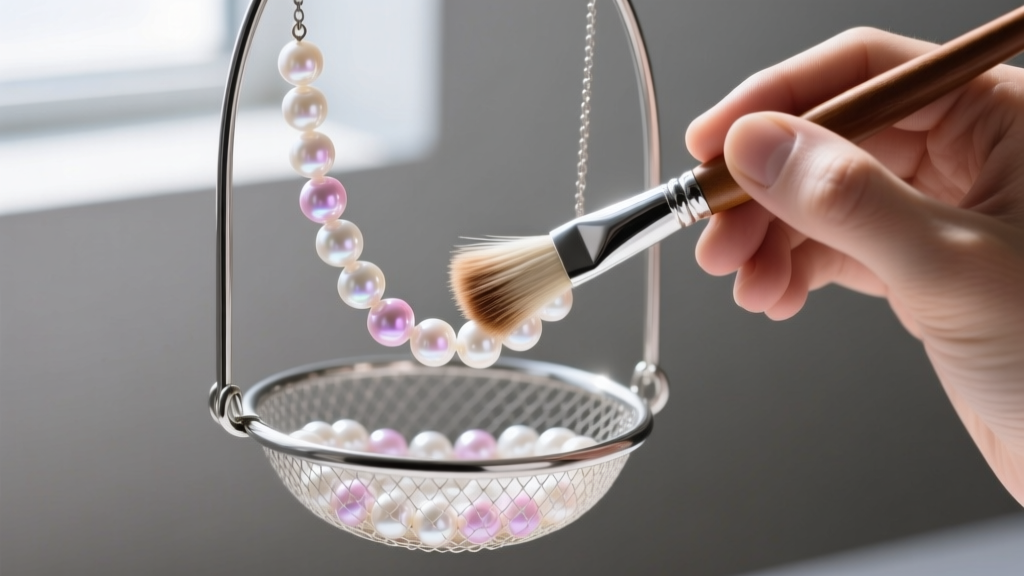
Standard commercial ultrasonics operate at 40kHz to 42kHz. This frequency provides aggressive cavitation, perfect for heavily soiled diamond solitaires or solid gold chains. However, if you are cleaning micro-pavé settings (stones under 1.5mm) or jewelry with fragile tension settings, 42kHz can vibrate the stones right out of their mounts. For delicate items, you must use an 80kHz or higher ultrasonic generator. The higher frequency produces smaller, gentler cavitation bubbles that clean intricate crevices without generating enough shear force to loosen micro-prongs.
The Steam Cleaner Caveat
Steam cleaners use pressurized, superheated water vapor to blow out debris from under settings. While excellent for diamonds, steam is the enemy of temperature-sensitive gems. Thermal shock from sudden temperature changes can cause synthetic moissanite to temporarily change color, and can instantly shatter treated rubies or glass-filled sapphires. Always use steam only on verified, untreated, high-clarity diamonds and corundum.
"When troubleshooting dull jewelry, always examine the stone under 10x magnification before applying any liquid. If you see surface-reaching fractures or signs of oil treatment, abandon liquid cleaners entirely and rely on dry, soft-bristle dusting." — Master Gemologist Appraiser Protocol
Step-by-Step Recovery: Fixing Jewelry Damaged by Bad Cleaners
If you have already used a harsh DIY hack and your jewelry looks worse, there are specific recovery protocols you can follow:
- Micro-scratched Gold (from baking soda/toothpaste): You cannot "buff" this out at home with a cloth. The metal has been physically displaced. The piece requires professional repolishing by a jeweler using a motorized buffing wheel and jeweler's rouge, which will safely remove a microscopic layer (approx. 0.01mm) of the alloy to restore the mirror finish.
- Cloudy Emeralds (from ultrasonic/dish soap): The cleaning agent has likely stripped the fracture-filling oil. The troubleshooting fix is to have a lapidary re-oil the stone. They will submerge the emerald in a vacuum chamber with warm cedarwood oil, forcing the oil back into the microscopic fractures to restore transparency.
- Stripped Patina on Silver (from electrochemical baths): If your vintage silver piece has lost its antique contrast, a jeweler can re-apply oxidation using a liver of sulfur solution, followed by selective hand-polishing to leave the dark recesses intact.
Final Verdict on Safe Jewelry Cleaning
So, what is good to clean jewelry? The ultimate answer relies on abandoning aggressive kitchen chemistry in favor of mild, pH-neutral surfactants, soft horsehair brushes, and an understanding of your specific gemstone's physical properties. For everyday maintenance, a simple soak in warm distilled water and a drop of premium dish soap, followed by a gentle rinse and a pat-down with a lint-free microfiber cloth, will safely maintain 90% of your jewelry collection. For the remaining 10%—your organic gems, heavily included stones, and antique pieces—dry dusting and professional annual servicing remain the only scientifically sound troubleshooting methods.


