What to Use to Clean Jewelry: Step-by-Step Metal & Gem Guide
Discover exactly what to use to clean jewelry based on your specific metals and gemstones with our step-by-step expert material guide.

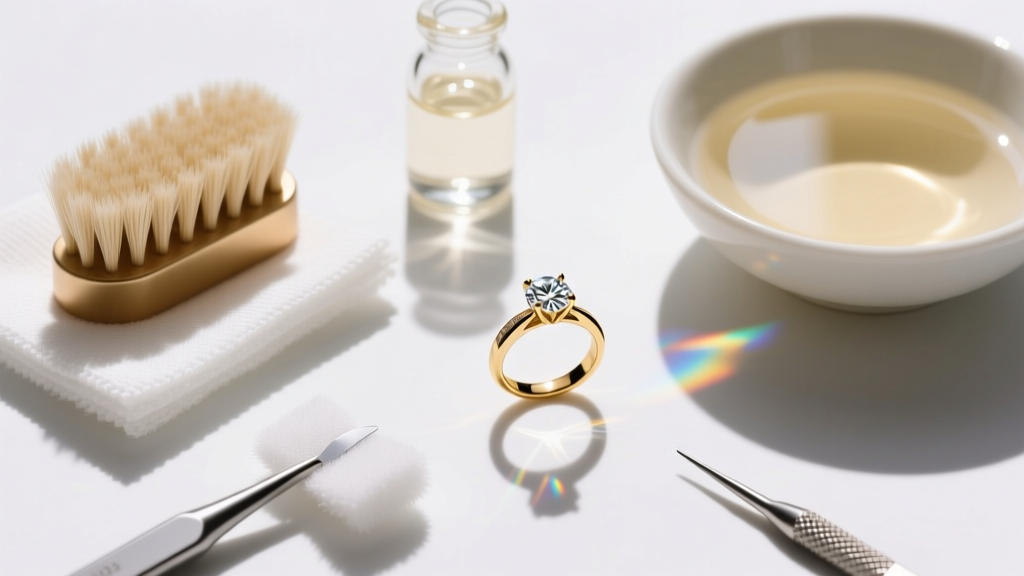
Knowing exactly what to use to clean jewelry is the difference between restoring a brilliant shine and permanently damaging a cherished heirloom. The internet is flooded with conflicting DIY hacks, from abrasive toothpaste pastes to harsh chemical dips, leaving many collectors and everyday wearers confused. The truth is that there is no universal jewelry cleaner. The porosity of the metal, the Mohs hardness of the gemstone, and the presence of fracture fillings all dictate a highly specific cleaning protocol.
In this comprehensive guide, we break down the exact solutions, tools, and step-by-step techniques you need to safely clean every major category of jewelry, ensuring your pieces remain pristine for decades to come.
The Golden Rule: Matching the Cleaner to the Material
Before reaching for a bottle of commercial cleaner, you must identify both the metal and the gemstone. Metals like platinum and 18k gold are relatively non-porous and resilient, while sterling silver is prone to oxidation (tarnish). Gemstones introduce a second layer of complexity. A diamond (Mohs 10) can withstand ultrasonic vibrations and mild ammonia, but an emerald (Mohs 7.5-8) is almost always treated with cedar oil or synthetic resins to mask natural fractures. Submerging an emerald in an ultrasonic cleaner or a harsh degreaser will strip this filler, leaving the stone cloudy and heavily fractured.
According to the Gemological Institute of America (GIA), the safest baseline for most durable jewelry is a neutral pH liquid dish soap mixed with lukewarm water. However, as we will explore below, specific materials require specialized chemical reactions or purely mechanical cleaning methods.
What to Use to Clean Jewelry: The Master Comparison Chart
Use this quick-reference matrix to determine the safest cleaning agents and tools for your specific jewelry materials before beginning any step-by-step process.
| Material Category | Safe Cleaners | Strictly Avoid | Recommended Tool |
|---|---|---|---|
| Diamonds, Sapphires, Rubies | Mild dish soap, 1:6 ammonia solution | Chlorine bleach, abrasive powders | Extra-soft nylon baby brush |
| Gold, Platinum, Palladium | Mild dish soap, commercial non-abrasive dips | Toothpaste, baking soda pastes | Microfiber cloth, soft brush |
| Sterling Silver (Unoxidized) | Baking soda & aluminum foil bath, silver polish | Chlorine, salt water, rubber bands | 100% cotton flannel, polishing mitt |
| Pearls, Coral, Amber | Damp microfiber cloth, distilled water | Ultrasonics, ammonia, vinegar, steam | Lint-free microfiber cloth |
| Emeralds, Opals, Turquoise | Lukewarm water, mild soap (quick wipe only) | Ultrasonics, steam, prolonged soaking | Soft damp cloth, wooden toothpick |
Step-by-Step: Cleaning Precious Metals and Durable Gems
For everyday pieces like diamond engagement rings, sapphire tennis bracelets, and plain gold or platinum bands, the dish soap method remains the gold standard. It effectively breaks down the sebum, lotions, and environmental oils that accumulate on the pavilion (underside) of gemstones, which is the primary cause of a dull appearance.
The Dish Soap & Warm Water Method
- Prepare the Solution: Mix one teaspoon of mild, phosphate-free liquid dish soap (like Dawn or Palmolive) into one cup of lukewarm distilled water. Avoid hot water, which can cause thermal shock to certain treated stones.
- Soak: Submerge the jewelry for 15 to 20 minutes. This allows the surfactants in the soap to loosen the lipid bonds holding dirt to the metal and stone.
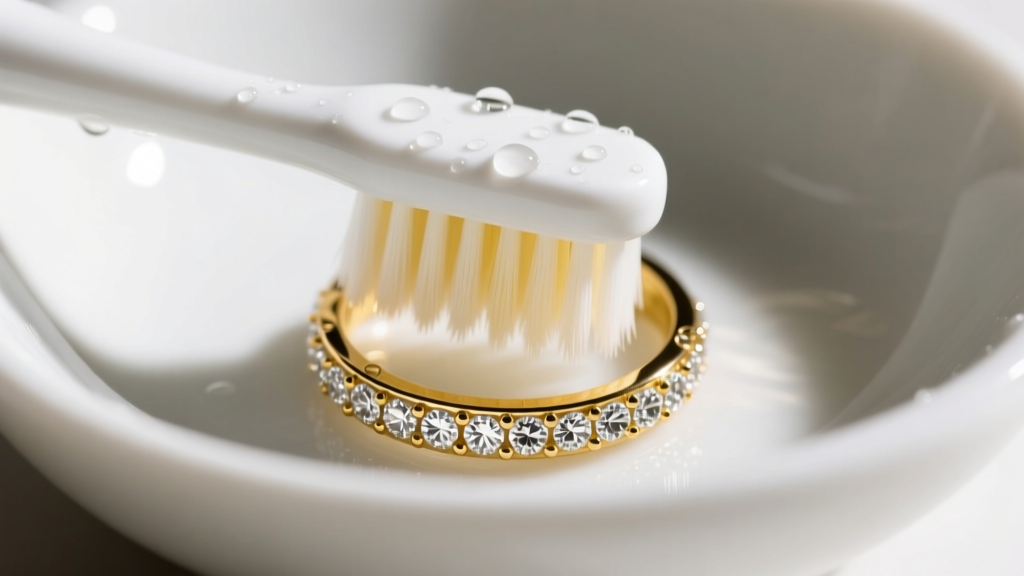
- Agitate: Using an extra-soft baby toothbrush (bristle diameter under 0.05mm), gently brush the jewelry. Focus heavily on the back of the gemstone and the prong settings where dead skin and lotion accumulate.
- Rinse and Dry: Rinse thoroughly under a gentle stream of lukewarm water. Always ensure the drain is plugged. Pat dry with a clean, lint-free microfiber cloth.
Step-by-Step: Removing Silver Tarnish via Electrochemistry
Sterling silver (92.5% silver, 7.5% copper) reacts with hydrogen sulfide in the air to form silver sulfide, the blackish layer we call tarnish. While commercial silver polishes physically abrade this layer away (removing microscopic amounts of silver in the process), you can use an electrochemical reaction to reverse the tarnish without scratching the metal.
The Aluminum Foil & Baking Soda Bath
- Line a Bowl: Line the inside of a glass or ceramic bowl with aluminum foil, shiny side up.
- Add the Agents: Place your tarnished silver jewelry on the foil, ensuring it touches the metal. Sprinkle two tablespoons of baking soda and one tablespoon of non-iodized salt over the pieces.
- Pour Boiling Water: Carefully pour boiling water into the bowl until the jewelry is fully submerged. You will immediately see bubbling and may smell a faint sulfur (rotten egg) odor. This is the sulfur transferring from the silver to the aluminum.
- Extract and Polish: After 5 to 10 minutes, remove the silver with wooden tongs (never metal, which can scratch). Rinse with distilled water and buff to a high shine with a dedicated silver polishing cloth.
Expert Warning: Never use this electrochemical bath on antiqued or intentionally oxidized silver jewelry, as it will strip the dark patina from the recessed design elements, ruining the piece's contrast and value.
Step-by-Step: Caring for Delicate and Organic Gemstones
Organic gems (pearls, amber, coral) and porous or treated stones (opals, turquoise, emeralds) require a completely different approach. These materials are highly sensitive to chemicals, extreme heat, and ultrasonic vibrations. For instance, the GIA strongly advises against submerging pearls in water, as it can weaken the silk thread they are strung on and degrade the nacre over time.
The Damp Microfiber Wipe-Down Technique
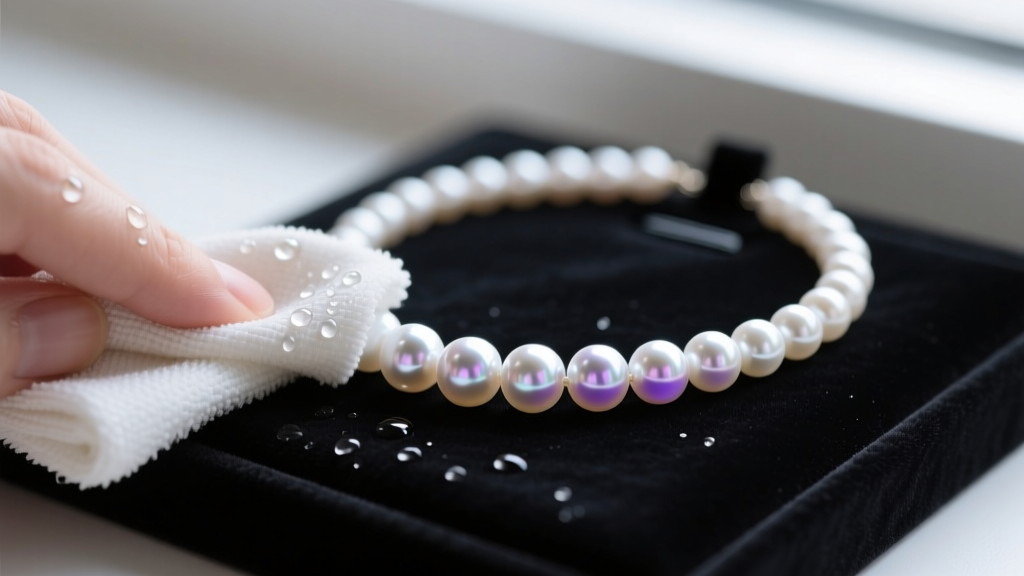
- Dampen the Cloth: Lightly mist a clean microfiber cloth with distilled water. The cloth should be barely damp, never dripping wet.
- Wipe Gently: Gently wipe the surface of the pearls, opals, or emeralds to remove surface oils and sweat. Do not apply heavy pressure to opals, as their high water content makes them susceptible to crazing (micro-cracking) if scratched.
- Air Dry Flat: Lay pearl necklaces flat on a dry towel to air dry completely before storing. Hanging a wet pearl necklace will stretch the silk thread permanently.
- Apply the 'Last On, First Off' Rule: Always put pearls and porous gems on after applying perfumes, hairsprays, and lotions, and take them off first when returning home to minimize chemical exposure.
Tools of the Trade: What to Actually Buy
Beyond household items, investing in the right professional tools will elevate your jewelry care routine.
- Ultrasonic Cleaners (42-45 kHz): Excellent for diamonds and hard metals. The high-frequency sound waves create microscopic cavitation bubbles that blast dirt out of settings. Never use for emeralds, opals, pearls, or fracture-filled rubies.
- Jeweler's Rouge Cloths: These dual-layer cotton cloths feature an inner layer impregnated with microscopic jeweler's rouge (iron oxide) for polishing out micro-scratches in gold and silver, and an outer layer for buffing to a mirror finish.
- Wooden Toothpicks: The safest tool for dislodging hardened grime from delicate prong settings without risking the metal scratching that a steel needle would cause.
What NOT to Use: Dangerous DIY Myths
When researching what to use to clean jewelry, you will inevitably encounter dangerous DIY advice. Avoid these common household items at all costs:
- Toothpaste: Toothpaste contains hydrated silica, an abrasive with a Mohs hardness of around 3 to 4. While softer than a diamond, it is harder than gold, silver, and platinum, and will leave microscopic scratches that dull the metal's polish over time.
- Chlorine Bleach: Chlorine attacks the alloy metals in karat gold (like copper and zinc), causing structural weakness and eventual prong failure. It will also permanently pit and discolor platinum.
- Boiling Water: While boiling water is safe for plain platinum or diamond solitaires, it can cause severe thermal shock to sapphires and rubies that have been fracture-filled with lead glass, causing the glass to melt or cloud.
By matching your cleaning method to the specific metallurgical and gemological properties of your jewelry, you ensure that your collection remains as structurally sound and visually stunning as the day it was acquired. When in doubt, stick to mild soap, lukewarm water, and a soft brush, or consult a certified gemologist for professional servicing.


