Essential Supplies for Making Jewelry: A Beginner Starter Guide
Discover the exact supplies for making jewelry as a beginner. Learn wire gauges, bead materials, and essential tools to start your DIY craft today.

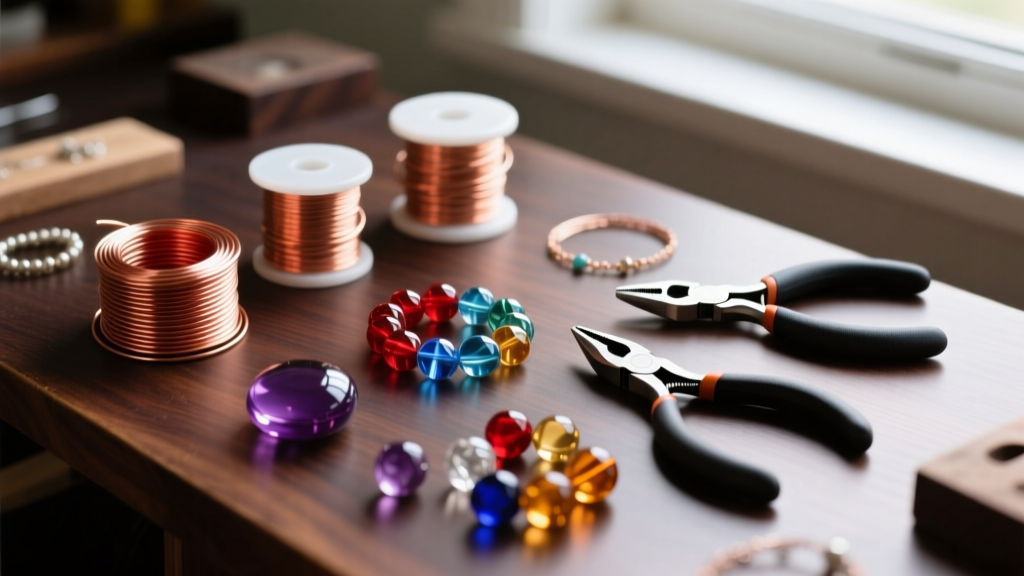
The Core Philosophy: Buy Quality Tools, Experiment with Materials
When you first start gathering supplies for making jewelry, the sheer volume of options can be paralyzing. Walk into any craft store or browse online marketplaces, and you will find thousands of SKUs ranging from questionable mystery-metal kits to professional-grade lapidary equipment. As a beginner in 2026, your primary goal is to build a foundation that allows for skill development without breaking the bank. The golden rule of jewelry fabrication is simple: invest heavily in ergonomic, precision hand tools, but experiment aggressively with inexpensive raw materials like bare copper and glass until your muscle memory is locked in.
Cheap tools will mar your wire, leave pinch marks on your beads, and cause hand fatigue that leads to repetitive strain injuries. Conversely, cheap copper wire behaves almost identically to expensive sterling silver when it comes to bending and wrapping, making it the ultimate practice medium. Let us break down the exact metallurgical grades, tool specifications, and material sources you need to build a highly capable starter bench.
The Non-Negotiable Hand Tool Trio
Forget the 15-piece jewelry tool kits sold in blister packs for $19.99. Those pliers feature rough, machine-stamped jaws that will scratch your metal and cutters that will crush wire rather than shear it. You only need three high-quality tools to execute 90% of beginner wire wrapping and beading projects.
- Chain-Nose Pliers (Smooth Jaw): Look for a 5-inch to 6-inch model with completely smooth, untextured inner jaws. The Tronex 501 or a comparable Wubbers model provides the flat gripping surface needed to open jump rings and create sharp 90-degree bends without leaving tool marks on your metal.
- Round-Nose Pliers: Essential for creating consistent loops and ear wires. The key here is the taper of the jaws. A standard round-nose plier allows you to use the base of the jaw for large, structural loops (like a clasp loop) and the tip for tiny, delicate rosettes.
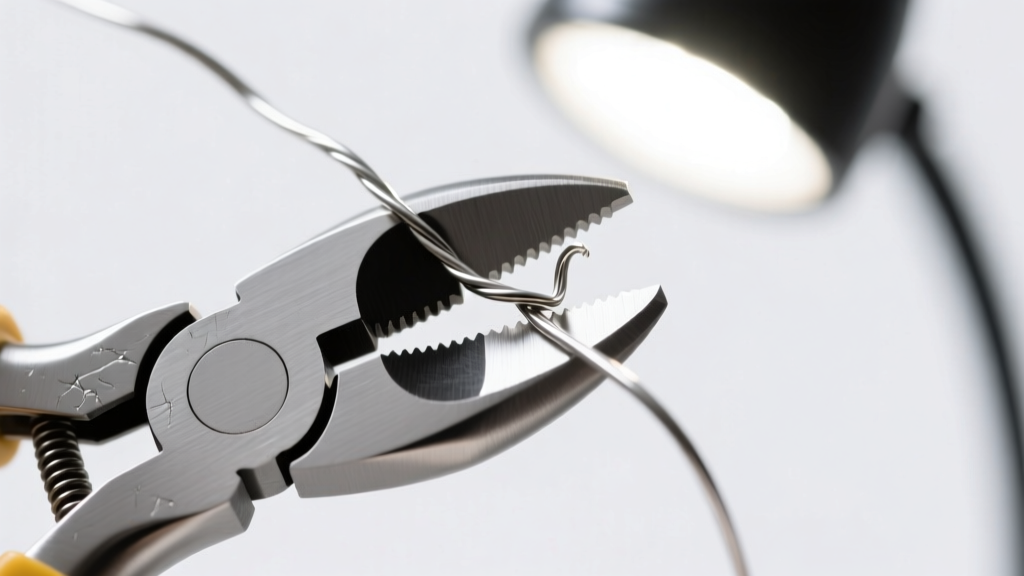
- Flush Cutters: This is where most beginners fail. Standard diagonal cutters leave a 'pinch' or 'V' shape on the cut wire, which is sharp and unprofessional. You need a micro-shear flush cutter, like the Xuron 410, which leaves one side of the wire completely flat and flush. This is critical for safe ear wires that won't snag on clothing or scratch the ear.
Demystifying Wire Gauges and Hardness
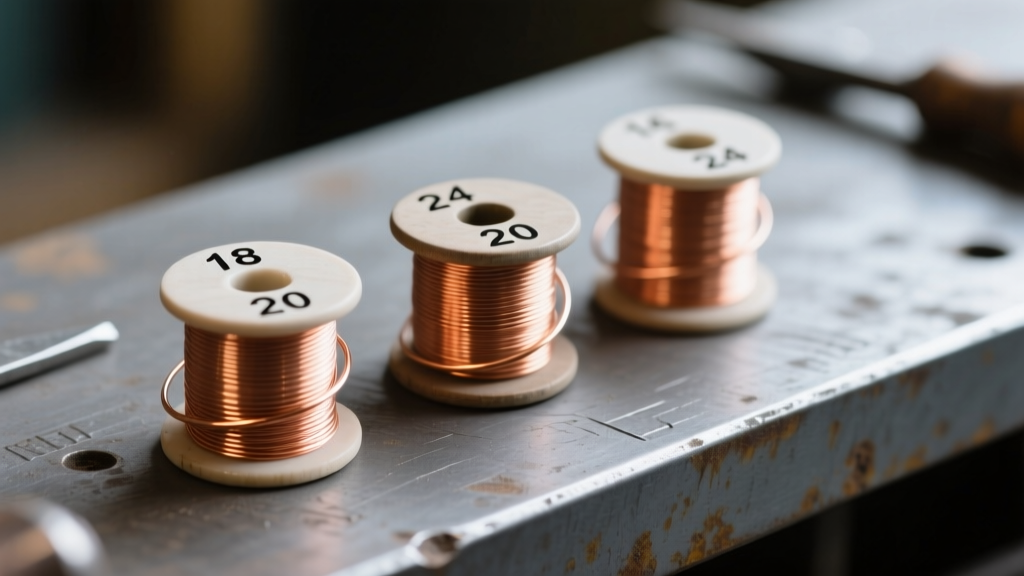
Wire is the backbone of DIY jewelry, and misunderstanding the American Wire Gauge (AWG) system is the most common reason beginner projects fail structurally. In the AWG system, the higher the number, the thinner the wire. Furthermore, wire is sold in different 'tempers' or hardness levels, which dictate how easily it bends and how well it holds its shape.
| AWG Size | Millimeter (mm) | Primary Application | Recommended Temper |
|---|---|---|---|
| 18 Gauge | 1.02 mm | Heavy clasps, structural jump rings, bangle frameworks | Half-Hard |
| 20 Gauge | 0.81 mm | Standard ear wires, headpins, general wire wrapping | Half-Hard or Dead Soft |
| 22 Gauge | 0.64 mm | Linking beads, lightweight jump rings, wire weaving | Dead Soft |
| 24 Gauge | 0.51 mm | Fine wire wrapping, securing briolettes, coiling | Dead Soft |
Understanding Wire Temper
Dead Soft: This wire has been annealed (heated and cooled) to remove internal stresses. It bends like butter and is perfect for intricate wire weaving or wrapping around cabochons. However, it will not hold a structural shape on its own until you 'work-harden' it by manipulating it or tumbling it.
Half-Hard: This wire has been slightly work-hardened at the mill. It offers a balance of malleability and structural integrity, making it the undisputed king of ear wires and simple hooks. It will spring back slightly when bent, which is exactly what you want for a tension clasp.
Full-Hard: Avoid this as a beginner. It is extremely stiff, difficult to bend without specialized heavy-duty pliers, and prone to snapping if bent at a sharp angle.
Material Grades: Copper vs. Argentium vs. Niobium
When transitioning from practice to finished pieces, the metal you choose dictates the longevity and wearability of your jewelry. Standard sterling silver (.925) is a classic, but it tarnishes rapidly due to its copper content. Instead, look into Argentium Silver. This modern alloy replaces some of the copper with germanium, resulting in a metal that is highly tarnish-resistant, brighter than traditional sterling, and can be fused to itself with a torch without the mess of solder or flux.
For colorful, hypoallergenic options, Niobium is a spectacular choice for beginners. Niobium is a reactive metal that contains absolutely no nickel, making it safe for severe metal allergies. By using a simple anodizing setup (a battery, a saline solution, and a dimmer switch), you can permanently change the color of niobium wire and ear wires to vibrant blues, purples, and golds without using toxic paints or platings.
Beads and Findings: Avoiding the 'Cheap Alloy' Trap
The fastest way to ruin a beautifully wrapped pendant is to hang it on a mystery-metal chain from an online marketplace. In 2026, consumer awareness regarding nickel and lead in imported base-metal jewelry is at an all-time high. Always verify your findings (clasps, jump rings, ear wires, and chains).
Expert Troubleshooting Tip: Never use round crimp beads if you can avoid them. They tend to split or crack under the pressure of crimping pliers. Instead, use sterling silver or gold-filled 2x2mm crimp tubes. The tubular shape folds cleanly into a neat, bead-like cylinder when crushed with a micro-crimping tool, providing vastly superior tensile strength for beaded necklace strands.
When sourcing gemstone beads, beware of 'dyed howlite' sold as turquoise, or 'fracture-filled glass' sold as emerald. Stick to reputable suppliers who grade their stones accurately and provide clear origin information. Authentic semi-precious stones like amethyst, garnet, and lapis lazuli are surprisingly affordable in standard 4mm to 8mm rondelle shapes.
Where to Source Authentic Materials
To ensure you are getting genuine metals and properly sized beads, bypass general e-commerce giants and order directly from established jewelry supply houses. These companies cater to professional bench jewelers and enforce strict quality control on their inventory.
- Rio Grande: The industry standard for precious metals, Argentium silver, and professional-grade fabrication tools. Their technical support and catalog are invaluable educational resources.
- Fire Mountain Gems: A massive distributor ideal for bulk bead purchases, stringing materials (like Accu-Flex beading wire), and base-metal practice findings.
- Halstead Bead: Excellent for wholesale quantities of finished sterling silver and gold-filled findings, chains, and clasps.
Your First $120 Budget Breakdown
You do not need a massive budget to start creating professional-looking pieces. Here is a highly optimized, realistic shopping list to get your bench operational for around $120, prioritizing quality where it matters most.
| Item Category | Specific Recommendation | Estimated Cost |
|---|---|---|
| Flush Cutters | Xuron 410 Micro-Shear | $22.00 |
| Chain-Nose Pliers | Wubbers 5.5" Smooth Jaw | $18.00 |
| Round-Nose Pliers | Wubbers 5" Standard Taper | $18.00 |
| Practice Wire | 24oz Spool of 20g & 24g Bare Copper | $25.00 |
| Precious Wire | 2 Feet of 20g Argentium Silver (Half-Hard) | $14.00 |
| Findings & Beads | Sterling Crimp Tubes, Glass Beads, Ear Wires | $23.00 |
| Total | Complete Beginner Bench Setup | $120.00 |
By focusing on precision tooling and understanding the fundamental properties of wire gauges and metal tempers, you bypass the frustrating trial-and-error phase that plagues most novices. Gather these specific supplies for making jewelry, set up a well-lit workspace, and begin mastering the foundational wraps and loops that will define your unique jewelry-making style.


