How Do I Make Jewelry on a Budget? Real Cost Guide
Wondering how do I make jewelry without overspending? Discover real costs for tools, wire, and beads, plus budget hacks for beginners.

When aspiring creators ask, "how do i make jewelry without draining my bank account?", the answer requires looking past the misleading $20 starter kits sold at big-box craft stores. In 2026, with precious metal markets fluctuating and global supply chains shifting, building a functional, high-quality jewelry workspace requires strategic capital allocation. DIY jewelry making is inherently cost-effective compared to buying artisan pieces, but it is not entirely free. Understanding the true cost of materials, the metallurgy of wire, and the longevity of hand tools is the difference between a frustrating, expensive hobby and a profitable, sustainable craft.
The Tool Trap: Carbon Steel vs. Stainless Steel
The most common budget mistake beginners make is purchasing ultra-cheap, unbranded tool sets from online marketplaces. These kits often include carbon steel pliers with thick, clumsy jaws that mar soft metals and leave deep scratches on your work. Furthermore, carbon steel is highly susceptible to oxidation; without rigorous oiling, the jaws will rust, transferring iron oxide directly onto your silver or copper wire.
The Pliers Upgrade Path
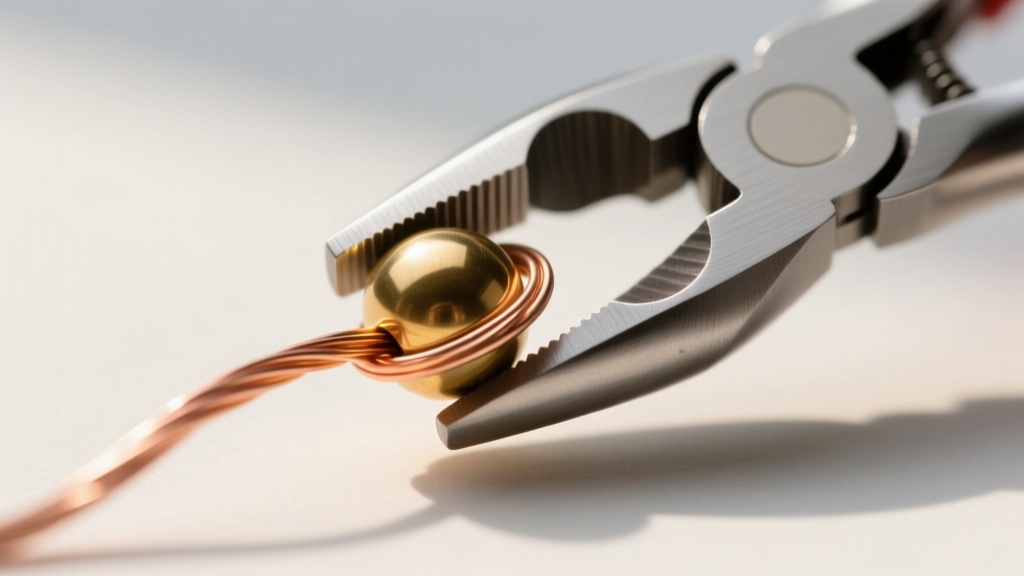
For a strict budget, The Beadsmith offers reliable entry-level tools. Their Econo-pliers are decent for heavy bending, but for precision wire wrapping, you need stainless steel. Stainless steel resists rust and maintains a smoother jaw surface. If you are budgeting around $50 for your initial tool kit, prioritize a high-quality pair of chain-nose and round-nose pliers over a 10-piece set of mediocre tools.
- Budget Pick ($8-$12 per pair): Beadsmith stainless steel micro-pliers. Excellent for 24g to 20g wire work.
- Mid-Tier Pick ($25-$35 per pair): Wubbers Classic series. Ergonomic handles reduce hand fatigue during long wire-wrapping sessions.
- Pro Investment ($60+ per pair): Tronex or Lindstrom. Tungsten-carbide inserts and flawless lap joints. Buy these only after you have mastered basic techniques.
Flush Cutters and the Burr Problem
Cheap flush cutters do not cut flush; they pinch the wire, leaving a sharp, protruding burr. This burr will scratch glass beads, snag on clothing, and poke the wearer's skin. The Fire Mountain Gems catalog consistently highlights the Xuron 410 Micro-Shear flush cutter (around $22). While not a true 'flush' cutter on both sides, it leaves one perfectly flat side and a manageable pinch point that can be easily filed smooth with a $3 diamond nail file.
Material Sourcing: Understanding Wire Tempers and Alloys
Wire is the backbone of DIY jewelry, and buying the wrong temper or alloy is a massive waste of money. Wire temper refers to its hardness, which dictates how it behaves when bent.
Decoding Wire Temper
- Dead Soft: Extremely malleable. Ideal for intricate wire weaving, sculpting, and wrapping around cabochons. It work-hardens as you manipulate it but will not hold a structural shape on its own.
- Half-Hard: The most versatile temper. It offers a balance of malleability and stiffness. Use half-hard wire for making jump rings, ear wires, and simple clasps that need to retain their shape under light tension.
- Full-Hard: Very stiff and brittle. Rarely used by beginners except for specific structural components or heavy-duty clasps. It will snap if bent too sharply.
Strategic Alloy Selection for 2026
With silver prices remaining elevated in 2026, prototyping directly in Sterling Silver (.925) is a fast way to burn through your budget. Instead, adopt a two-tier material strategy:
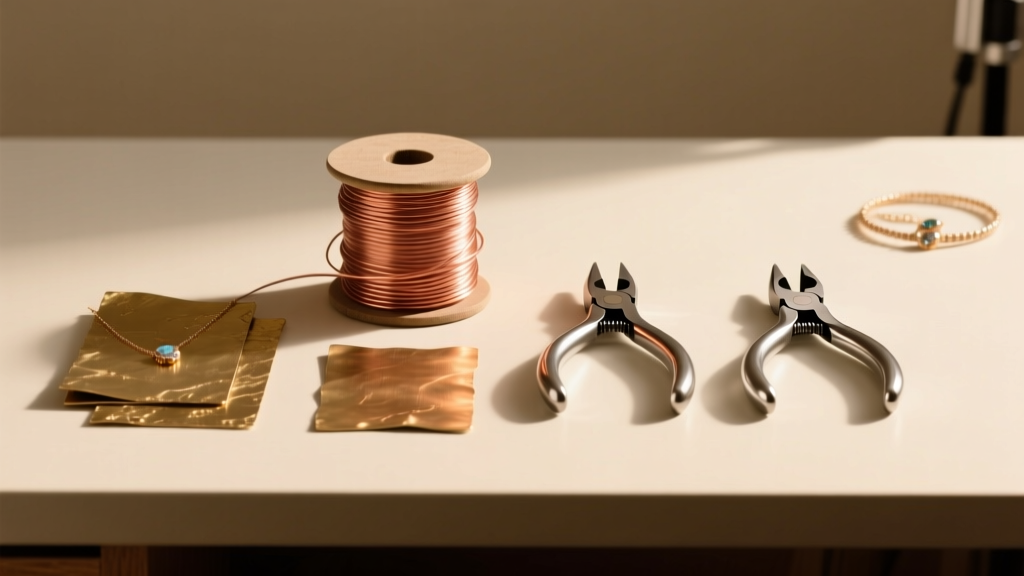
- Prototyping Phase: Use bare copper ($12-$18 per 4oz spool) or raw brass ($15-$22 per 4oz spool). Copper is softer and easier on your tools, allowing you to practice complex weaves without financial anxiety.
- Production Phase: Transition to Argentium Silver or 14/20 Gold-Filled wire. Argentium Silver contains germanium, which drastically slows tarnishing compared to traditional Sterling. This saves you money on polishing compounds and anti-tarnish storage solutions over time.
Pro Tip: Never buy 'silver-plated' copper wire for permanent jewelry pieces. The plating is microscopic and will flake off within weeks of wear, exposing the copper core and causing skin discoloration. Always opt for solid base metals or precious metals.
Budget Breakdown: Your First $50 vs. $150
To answer the question of how much it actually costs to start, we have broken down two realistic shopping carts based on current market pricing from major suppliers like Rio Grande and independent distributors.
| Category | The $50 'Strict Budget' Kit | The $150 'Serious Beginner' Kit |
|---|---|---|
| Pliers (3 pairs) | $24 (Carbon steel, basic jaws) | $65 (Stainless steel, smooth jaws) |
| Cutters | $8 (Generic flush cutters) | $24 (Xuron 410 Micro-Shears) |
| Wire (Base Metal) | $12 (1 spool 20g brass) | $35 (Copper & brass in 20g, 22g, 24g) |
| Findings & Clasps | $4 (Assorted plated lot) | $18 (Solid brass & stainless steel) |
| Files & Mandrels | $2 (Emery boards) | $8 (Diamond nail file & steel ring mandrel) |
| Total Estimated Cost | $50.00 | $150.00 |
While the $50 kit gets you on the bench, the frustration of slipping jaws, rusty tools, and limited wire gauges often causes beginners to quit. The $150 kit provides a professional foundation that will last for years, ultimately saving you money by preventing ruined materials and tool replacements.
Sourcing Hacks to Maximize Your Budget
Where you buy is just as important as what you buy. Retail craft stores charge a premium for small quantities, often marking up wire spools by 300% compared to wholesale jewelry suppliers.
1. Leverage Volume Pricing on Beads
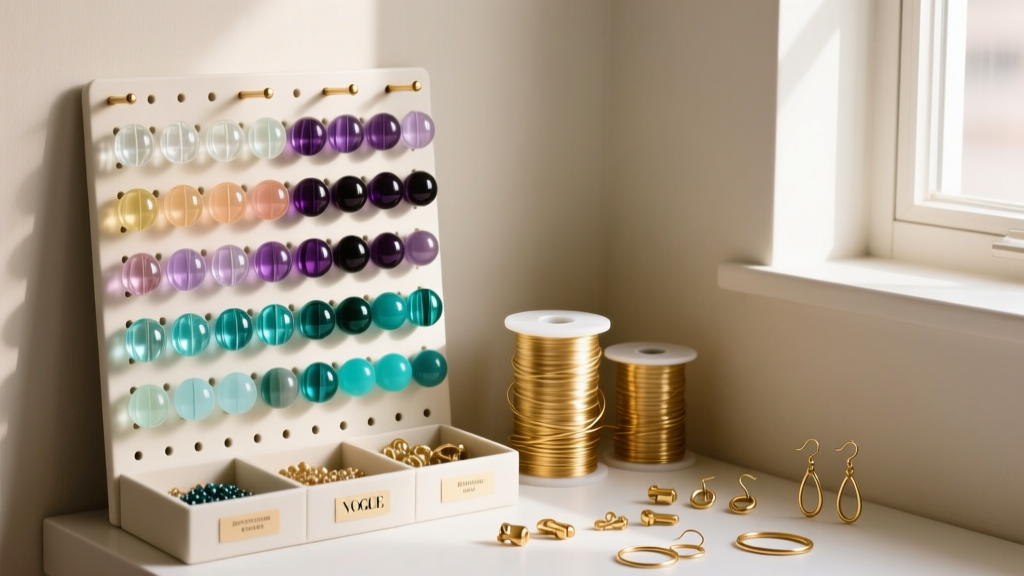
If you are incorporating glass, gemstone, or seed beads into your wire work, avoid buying single-strand hanks. Suppliers like Fire Mountain Gems offer aggressive tiered pricing. Buying a full hank (usually 12 strands) of Czech glass beads can drop the per-strand cost from $4.50 down to $1.80. Store the excess in compartmentalized plastic organizers to keep your workspace efficient.
2. The Scrap Silver Market
For those ready to work with precious metals, do not buy brand new Sterling Silver wire until you have exhausted the scrap market. Local pawn shops, estate sales, and online bullion forums often sell broken silver chains and tarnished flatware by the Troy ounce at a fraction of the retail wire markup. You can melt this down or use the heavier gauge chains as structural elements in mixed-media pendants.
3. Gold-Filled over Gold-Plated
If your brand aesthetic requires gold, you must understand the difference between plated and filled. Gold-plated wire has a microscopic layer of gold electroplated onto a brass core; it wears off quickly. 14/20 Gold-Filled wire, however, contains a mechanical bond where 1/20th of the total weight is solid 14k gold. It costs roughly three times more than brass, but it is 1/5th the cost of solid gold and will not tarnish or wear through under normal wear conditions, allowing you to charge premium prices for your finished DIY pieces.
Final Verdict: Is DIY Jewelry Worth the Investment?
Learning how to make jewelry on a budget is entirely feasible, provided you view your initial purchases as capital investments rather than disposable expenses. By prioritizing stainless steel tools, understanding wire tempers, and sourcing base metals for prototyping, you can build a highly capable studio for under $150. Avoid the temptation of ultra-cheap plated materials and generic tool sets, and focus your budget on precision and durability. The true value of DIY jewelry making lies not just in the money saved, but in the unparalleled ability to create custom, high-quality pieces that reflect your unique artistic vision.