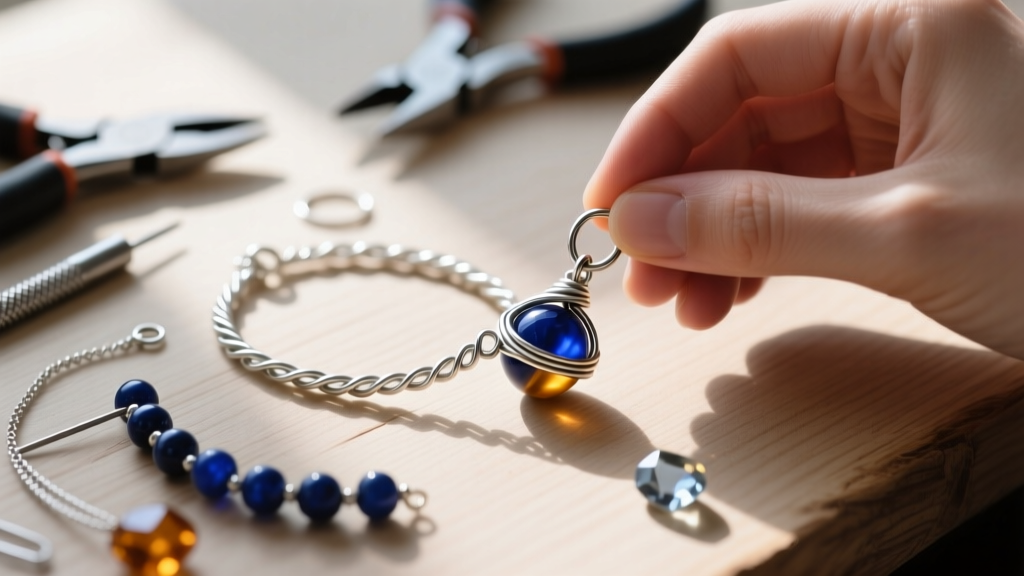
Ultimate Care Guide for Jewelry Making with Beads and Wire
Learn expert cleaning and maintenance tips for jewelry making with beads and wire. Protect your DIY pieces from tarnish, breakage, and wear.

When you invest dozens of hours into jewelry making with beads and wire, the last thing you want is for your finished pieces to degrade, tarnish, or snap after a few wears. Unlike solid cast metals, wire-wrapped and beaded jewelry presents a unique matrix of vulnerabilities. The intersection of porous gemstones, reactive base metals, and work-hardened wire requires a highly specific approach to maintenance. In this comprehensive guide, we will break down the exact chemical, mechanical, and environmental protocols required to preserve your handmade beaded wire jewelry for decades.
The Hidden Vulnerabilities of Beaded Wire Jewelry
To properly care for your creations, you must first understand how they fail. The structural integrity of wire jewelry relies on the tension and friction of the wraps. Over time, environmental factors and improper cleaning can compromise this delicate balance.
Galvanic Corrosion
Galvanic corrosion occurs when two dissimilar metals—such as a copper wire frame and silver-plated bead caps—come into contact in the presence of an electrolyte (like human sweat or saltwater). The less noble metal (copper) will rapidly oxidize and degrade. If you are mixing metal types in your designs, you must be hyper-vigilant about removing sweat and moisture immediately after wear.
Work Hardening and Metal Fatigue
Wire wrapping inherently work-hardens the metal. While a 20-gauge half-hard wire frame provides excellent structural support, the 24-gauge or 26-gauge dead-soft wire used for weaving and binding becomes brittle at the exact points where it is bent. Aggressive polishing or tumbling can introduce micro-fractures in these high-stress wrap zones, leading to catastrophic wire failure.
Material-Specific Cleaning Protocols
There is no universal 'jewelry cleaner' that is safe for both metal wire and natural gemstone beads. You must tailor your cleaning solutions to the most delicate component in the piece.
Copper, Brass, and Bronze Wire
Raw copper and brass oxidize quickly, developing a dark patina. If you want to maintain a bright finish, avoid commercial liquid dips, which can strip the metal and leave a chalky residue. Instead, create a gentle paste using equal parts lemon juice and baking soda. Apply it with a soft-bristled baby toothbrush, carefully avoiding any porous stone beads. Rinse thoroughly with distilled water and dry immediately with a microfiber cloth to prevent water spots.
Sterling Silver and Argentium Wire
Sterling silver (92.5% silver, 7.5% copper) tarnishes due to the copper content reacting with sulfur in the air. Argentium silver, however, contains germanium, which forms a transparent, anti-tarnish oxide layer. For standard sterling silver wire wraps, use a dedicated silver polishing cloth impregnated with micro-abrasives. Never use paper towels, as the wood fibers can scratch high-polish wire finishes.
Delicate and Porous Beads
Organic and porous beads require extreme caution. According to the Gemological Institute of America (GIA), pearls, turquoise, malachite, and opals should never be submerged in water or exposed to ultrasonic cleaners. The high-frequency vibrations of an ultrasonic bath can shatter opals and cause micro-fractures in turquoise. For these stones, use a barely damp cloth with a drop of mild, phosphate-free Castile soap, wiping only the surface of the bead and carefully navigating around the wire wraps.
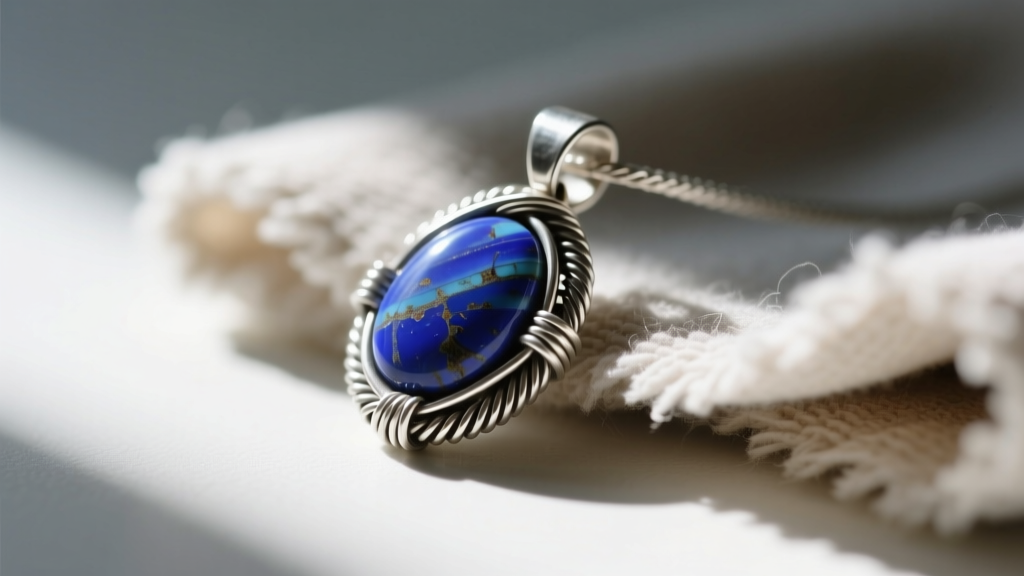
The DIY Jewelry Maintenance Toolkit
Building a specialized cleaning kit is essential for any serious wire jewelry artist. Below is a comparison chart detailing which cleaning agents and tools are safe for specific material combinations.
| Cleaning Agent / Tool | Best Used For | Danger / Warning |
|---|---|---|
| Mild Castile Soap & Water | Sterling silver, gold-filled wire, quartz, agate, glass beads | Do not soak; dry immediately to prevent water spotting on wire. |
| Commercial Silver Dip | Heavily tarnished bare sterling silver chains | Destroys pearls, turquoise, and oxidized (blackened) wire details. |
| Rotary Tumbler w/ Steel Shot | Bare metal jump rings and thick structural wire frames | Will shatter glass beads, scratch soft stones, and snap thin weaving wire. |
| Baking Soda & Lemon Paste | Raw copper and brass wire frames | Highly acidic; will etch the surface of calcite and marble beads. |
| Impregnated Polishing Cloth | All finished wire jewelry, light tarnish removal | Cannot reach deep into tight wire-weave crevices. |
Preventative Storage and Anti-Tarnish Strategies
Proper storage is arguably more important than cleaning. Tarnish is a chemical reaction that requires sulfur and moisture. By controlling the environment, you can halt the degradation process before it begins.
Expert Tip: Never store beaded wire jewelry in cardboard boxes or wrapped in newspaper. The acids and sulfur compounds in paper products will accelerate the tarnishing of your silver and copper wire frames. Always opt for acid-free, archival-quality tissue paper.
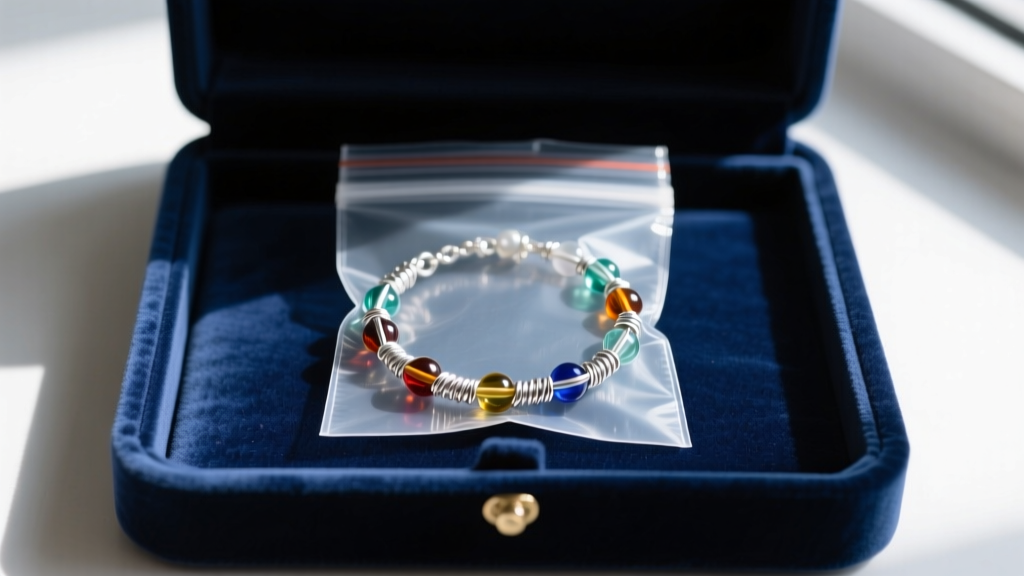
For long-term storage, place your finished pieces in airtight ziplock bags alongside specialized anti-tarnish strips. Brands like 3M produce treated paper strips that absorb airborne sulfur and chlorides. As noted in Rio Grande's metallurgical guides, these strips remain effective for up to six months in a sealed environment. If you are selling your jewelry, including a small anti-tarnish tab in the packaging elevates the customer experience and prevents the piece from arriving tarnished.
Troubleshooting Common Wire and Bead Failures
Even with meticulous care, handmade jewelry requires occasional maintenance. Here is how to troubleshoot the most common issues encountered in beaded wire designs.
- Loose Beads on a Wire-Wrapped Link: If a bead rattles or slides on a handmade headpin or wrapped loop, the wire has likely stretched or the bead hole is too large. The Fix: Carefully open the wrap using chain-nose pliers, add a microscopic spacer bead or a tiny coil of 28-gauge wire to act as a cushion, and re-tighten the wrap.
- Cloudy or Hazy Gemstones: Natural skin oils and lotions can build up on the back of faceted beads, dulling their sparkle. The Fix: Use a wooden toothpick wrapped in a microfiber cloth dampened with isopropyl alcohol to gently clean the pavilion (bottom) of the stone, being careful not to let the alcohol touch any glued components or porous beads.
- Snapped Weaving Wire: If your 24-gauge or 26-gauge weaving wire snaps near a sharp bend, it has suffered from metal fatigue. The Fix: You cannot simply solder or glue fine weaving wire. You must carefully unwind the broken section with a pair of flush cutters and re-weave the section using fresh, dead-soft wire, tucking the new tail seamlessly into the existing pattern.
Final Thoughts on Longevity
Mastering the care and maintenance of your pieces is just as crucial as mastering the techniques of jewelry making with beads and wire. By understanding the chemical interactions between your metals and the physical limitations of your gemstones, you transition from a hobbyist to a true artisan. Equip your studio with the right micro-cleaning tools, implement strict anti-tarnish storage protocols, and educate your clients on how to wear and store their custom pieces. When you respect the materials, your wire-wrapped jewelry will retain its structural integrity and visual brilliance for generations.