Choosing the Best Cord for Jewelry Making: A Buyer's Guide
Discover how to choose the perfect cord for jewelry making. Compare silk, nylon, waxed cotton, and elastic for your next beading or macramé project.

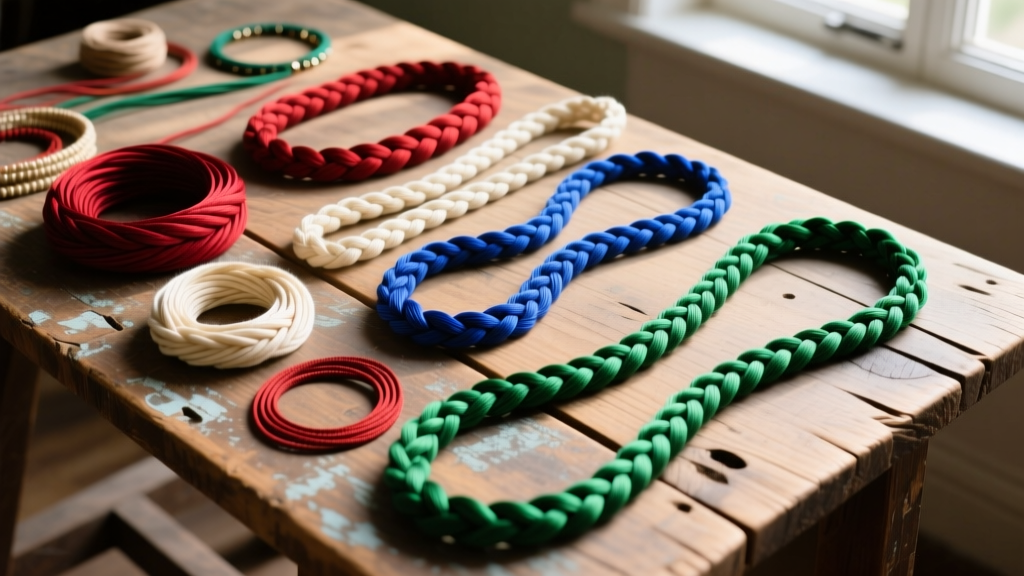
Introduction: Why Cord Choice Dictates Project Success
When sourcing materials for a new beading, knotting, or macramé project, beginners often obsess over gemstone quality or metal finishes while treating the stringing material as an afterthought. This is a critical mistake. The cord for jewelry making is the literal structural foundation of your piece. A poorly chosen cord will lead to fraying, stretched-out necklines, broken knots, and ultimately, lost beads and disappointed customers. As a jewelry maker, understanding the tensile strength, UV resistance, and friction tolerance of different cord materials is just as important as your color theory or wire-wrapping techniques.
In this comprehensive buyer's guide, we break down the core categories of stringing cords available on the market today. Whether you are stringing heavy 12mm lapis lazuli beads, weaving delicate micro-macramé bracelets, or creating stretch bracelets for quick retail sales, selecting the exact right cord for jewelry making will dictate the longevity and professional finish of your work.
The Big Four: Core Cord Materials Explained
While there are dozens of niche stringing materials on the market, 95% of professional jewelry designs rely on one of four primary cord categories. Each material possesses distinct chemical and physical properties that dictate how it interacts with beads, adhesives, and human skin.
Chinese Knotting Cord (Nylon)
Often referred to generically as C-Lon or S-Lon (Super-Lon), this braided nylon cord is the undisputed king of macramé and micro-knotting. Standard Chinese knotting cord is typically available in 0.8mm and 1.0mm diameters, while micro-cords range from 0.4mm to 0.9mm. Nylon is highly prized for its exceptional tensile strength and its unique thermal property: it melts. When you finish a knot, you can use a thread burner or a lighter to melt the nylon tail into a smooth, hard bead that locks the knot permanently in place. According to the Fire Mountain Gems Encyclopedia, nylon cord is also colorfast and highly resistant to water, making it ideal for surf and beach jewelry.
Waxed Cotton and Linen
Waxed cotton provides a rustic, organic aesthetic that pairs beautifully with turquoise, bone, wood, and seed beads. The wax coating (usually paraffin or beeswax) stiffens the cord, making it easier to pass through bead holes without a needle, and provides a slight tackiness that helps knots hold before they are fully tightened. However, cotton is a natural cellulose fiber. It is highly susceptible to dry rot, UV degradation, and breakdown from the acidic pH of human sweat. If you are designing high-end, heirloom-quality pieces, avoid cotton and opt for synthetic alternatives or silk.
Silk Thread (Griffin and Beadalon)
Silk remains the gold standard for pearl knotting. Griffin silk threads are graded by size, ranging from Size 0 (0.30mm) up to Size FFF (0.90mm). Silk has a beautiful, luminous drape that allows pearls to sit elegantly against the collarbone. However, silk is a protein fiber that is vulnerable to friction. When stringing heavy beads on silk, you must use French wire (gimp) at the clasp ends to prevent the metal from sawing through the delicate fibers over time. For detailed sizing, the Beadalon Stringing Guide offers excellent charts matching silk sizes to pearl hole diameters.
Elastic Cords (Polyurethane vs. Woven Elastane)
Elastic cords are divided into two distinct camps: solid-core polyurethane (like Stretch Magic) and woven elastane multi-strand cords (like Opelon). Solid-core polyurethane is incredibly strong and easy to knot, but it degrades rapidly when exposed to UV light and body oils, eventually becoming brittle and snapping without warning. Woven elastane, on the other hand, is composed of dozens of tiny rubber strands wrapped in a nylon or polyester sheath. If one strand breaks, the others hold the bead, providing a crucial fail-safe. For heavy gemstone stretch bracelets, woven elastane in a 1.0mm thickness is the professional standard.
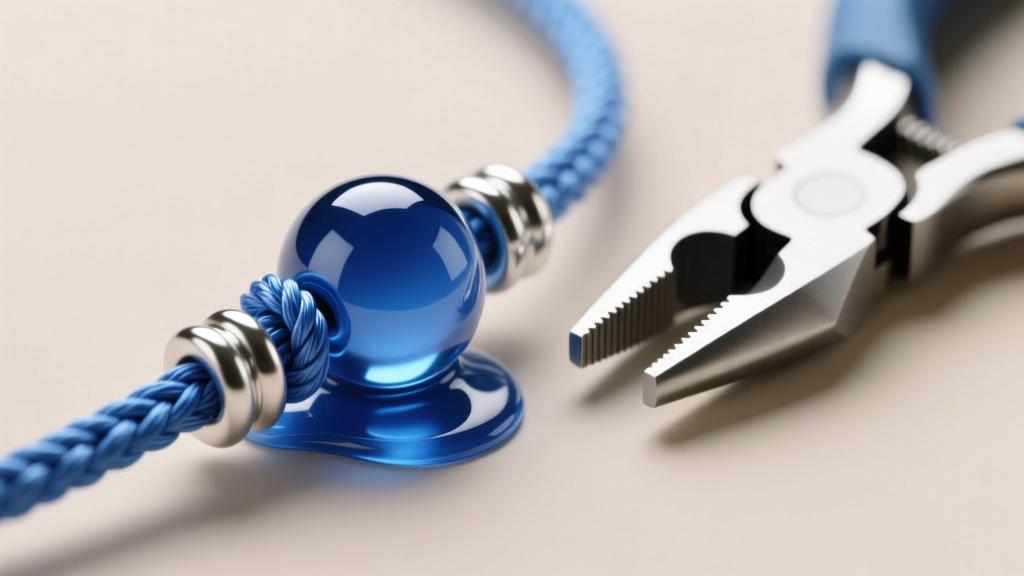
Diameter and Thickness: Matching MM to Bead Holes
One of the most common points of failure in DIY jewelry is forcing a thick cord through a bead hole that is too small, which strips the cord's outer sheath and compromises its structural integrity. Conversely, using a cord that is too thin for a large bead hole results in sloppy drape and excessive friction at the drill hole edges. Below is a quick-reference matrix for matching your cord for jewelry making to standard bead sizes.
| Cord Type | Recommended Diameter | Best Bead Hole Match | Knot Security | Water Resistance |
|---|---|---|---|---|
| Micro Nylon (C-Lon) | 0.4mm - 0.5mm | Seed beads, 2mm gems | High (Melted) | Excellent |
| Standard Nylon | 0.8mm - 1.0mm | 4mm - 8mm glass/stone | High (Melted) | Excellent |
| Waxed Cotton | 1.0mm - 2.0mm | Large hole beads, wood | Medium (Glue needed) | Poor |
| Silk Thread (Size E) | 0.65mm | Freshwater pearls | High (Surgeon knot) | Poor |
| Woven Elastic | 0.8mm - 1.0mm | 6mm - 10mm stone | Medium (Surgeon knot) | Medium |
Tensile Strength and Real-World Failure Modes
Tensile strength—the maximum load a material can withstand while being stretched before breaking—is only half the story. In jewelry making, abrasion resistance is often the true point of failure. A 0.8mm braided nylon cord might have a static break strength of 15 pounds, but if it is pulled back and forth through the sharp, unpolished edge of a cheap glass bead, it will fray and snap under just 2 pounds of dynamic tension.
Expert Troubleshooting: If you notice your cord fraying near the clasp or a specific bead, inspect the drill holes. Many mass-produced gemstone beads have sharp, jagged edges inside the hole. Use a diamond bead reamer to smooth the interior of the hole, or switch to a cord with a tougher outer sheath, like Kevlar-blended threads, to prevent microscopic sawing.
Another critical failure mode is 'creep'—the tendency of a material to slowly deform under constant mechanical stress. Polyurethane elastic cords are notorious for creep. If you design a stretch bracelet and leave it hanging on a display stand for three months, the polyurethane will permanently stretch out, resulting in a loose, gap-filled bracelet that no longer fits the customer's wrist tightly. Woven cords and nylon do not suffer from creep, making them vastly superior for pieces that will be stored under tension.
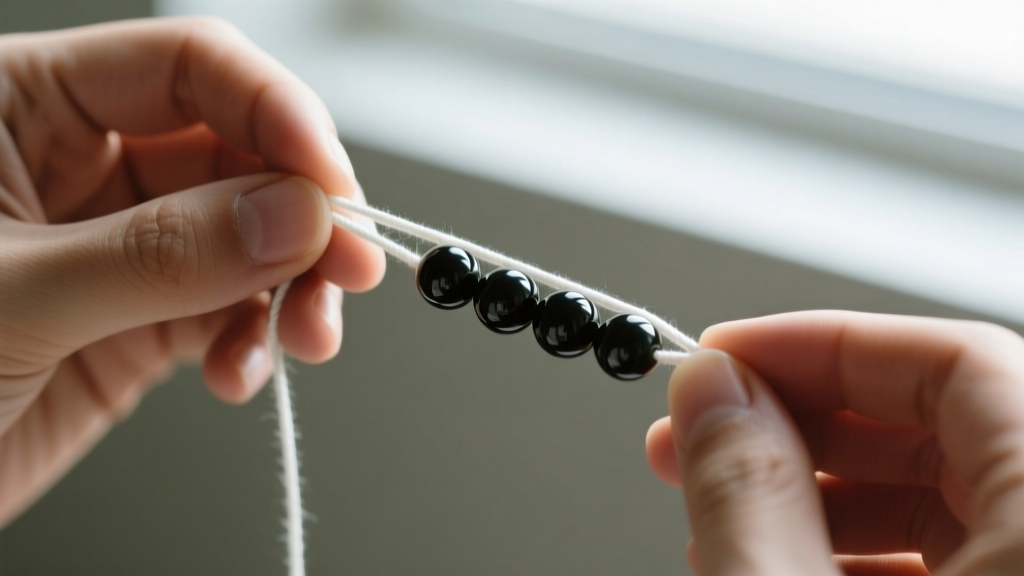
Finishing Techniques: Knots, Crimps, and Adhesives
The best cord for jewelry making is only as strong as its finish. Securing the ends of your cord requires matching the finishing technique to the material's physical properties.
- Melting (Nylon): As mentioned, nylon melts cleanly. Use a specialized thread burner rather than a standard Bic lighter, as lighters leave soot that discolors light-colored cords. A thread burner provides a precise, clean heat source that fuses the nylon into a microscopic ball.
- Knotting (Silk and Elastic): For silk, always use a surgeon's knot (a square knot with an extra twist on the first throw) to create bulk and prevent slipping. For elastic, a surgeon's knot is also recommended, followed by a drop of adhesive.
- Adhesives: The choice of glue is paramount. Avoid cyanoacrylate (Super Glue) on flexible cords; it dries hard and brittle, creating a sharp micro-edge that will eventually cut the cord from the inside out. Instead, use G-S Hypo Cement. Its fine needle applicator allows you to wick the glue directly into the fibers of the knot, and it dries with a slight flexibility that moves with the cord. For heavy waxed cotton ends going into metal end caps, E6000 Jewelry Adhesive provides the necessary gap-filling strength and flexibility.
Dye Lots and UV Resistance
When buying cord for jewelry making in bulk, always pay attention to dye lots. Nylon and cotton cords are dyed in large vats, and slight variations in temperature or dye concentration can result in noticeable color shifts between batches. If you are making a multi-strand necklace or fulfilling a large wholesale order, ensure all your spools come from the same manufacturing batch to maintain color uniformity.
Furthermore, consider the UV resistance of your cord if you are designing for outdoor wear. Fluorescent and neon dyes, particularly in cotton and lower-grade nylons, are highly susceptible to photodegradation. A vibrant neon pink waxed cotton cord will fade to a dull, dusty rose after just a few weeks of direct sunlight exposure. For outdoor or beach jewelry, stick to solution-dyed synthetics where the color is embedded in the polymer before it is extruded, ensuring lifelong colorfastness.
Expert Verdict: Which Cord Should You Buy?
There is no single 'best' cord for jewelry making; there is only the right cord for the specific application. For intricate macramé, micro-knotting, and durable everyday wear, stock up on 0.8mm braided nylon (S-Lon/C-Lon). Its ability to be melted and its high abrasion resistance make it the most versatile synthetic on the market. For traditional pearl knotting and high-end drape, invest in Griffin 100% silk thread and learn to use French wire properly. For quick, profitable stretch bracelets, bypass the solid-core polyurethanes entirely and buy 1.0mm woven Opelon elastane, finishing your knots with G-S Hypo Cement. By matching the material science of the cord to the mechanical demands of your design, you will elevate your jewelry from amateur crafts to professional, retail-ready wearables.
For further reading on professional stringing techniques and material tolerances, consult the Halstead Bead Stringing Materials Guide, which offers excellent wholesale insights into material longevity and clasp integration.


