Best Handmade Jewelry Ideas: 2026 Occasion Gift Guide
Discover top handmade jewelry ideas for every occasion in our 2026 DIY gift guide. Master wire wrapping, resin, and metal clay for unforgettable presents.

When it comes to gifting, the thought truly does count, but the execution is what leaves a lasting legacy. In 2026, mass-produced accessories are taking a backseat to deeply personal, artisan-crafted pieces. If you are looking for handmade jewelry ideas that transcend the ordinary, this occasion-matching guide will help you select the right materials, techniques, and structural designs for every major life event. From milestone anniversaries to sympathetic memorials, we break down the exact gauges, material grades, and failure modes you need to know to craft professional-grade gifts.
The Psychology of Gifting: Why Handmade Wins
According to consumer behavior studies, experiential and personalized gifts foster significantly stronger emotional bonds than generic retail purchases. Handmade jewelry bridges the gap between a tangible object and a personal narrative. However, the difference between a 'craft project' and an 'heirloom gift' lies entirely in material selection and structural integrity. A beautifully woven wire pendant will snap if the wrong temper is used, and a resin ring will yellow if the wrong UV stabilizers are present. Let us explore the best handmade jewelry ideas tailored to specific occasions, ensuring your gifts are as durable as they are meaningful.
Milestone Anniversaries: Heirloom-Quality Wire Wrapping
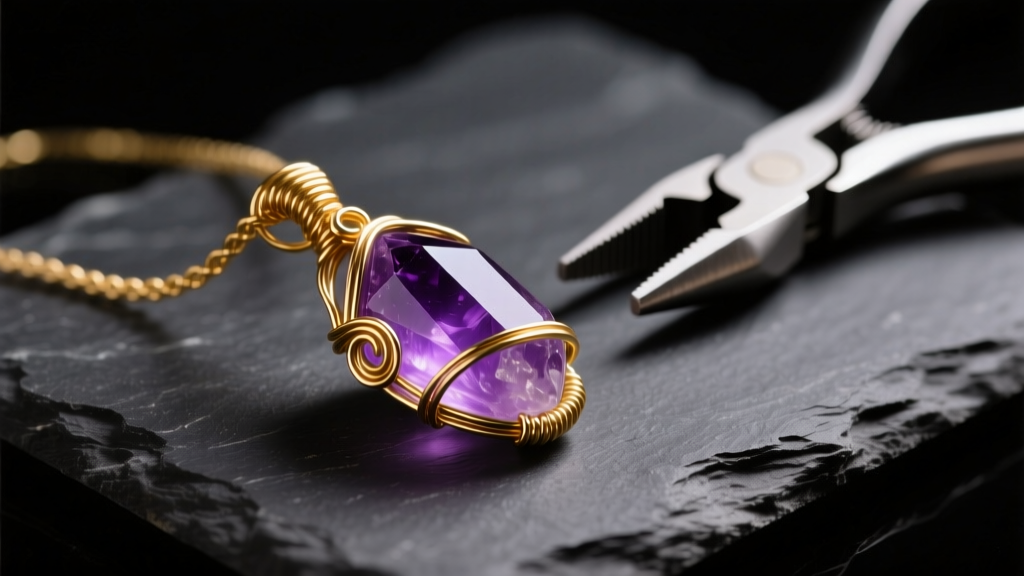
For 10th, 25th, or 50th anniversaries, wire wrapping offers an elegant, solder-free way to encase precious gemstones. The key to a professional finish is understanding wire hardness and gauge pairing.
Material Specifications
- Base Wire (Frame): Use 20-gauge, half-hard 14k gold-filled wire. Half-hard wire has been partially work-hardened, providing the structural rigidity needed to hold a bezel shape without collapsing. Avoid gold-plated wire, as the plating will flake off when manipulated with pliers.
- Weaving Wire: Use 24-gauge or 26-gauge dead-soft wire. Dead-soft wire is highly malleable and will naturally work-harden as you weave it around the base frame, locking the structure in place.
- Gemstone Selection: Consult the GIA Gem Encyclopedia for Mohs hardness ratings. For daily-wear pendants, stick to stones rated 7 or higher (e.g., amethyst, quartz, sapphire) to prevent scratching.
Pro-Tip for Clean Finishes
Always use nylon-jaw pliers when straightening your base wire to prevent marring the gold-filled surface. After completing the wrap, tumble the piece in stainless steel shot for 20 minutes to burnish the wire and work-harden the entire structure uniformly.
Graduations & Career Milestones: Permanent-Style Bracelets
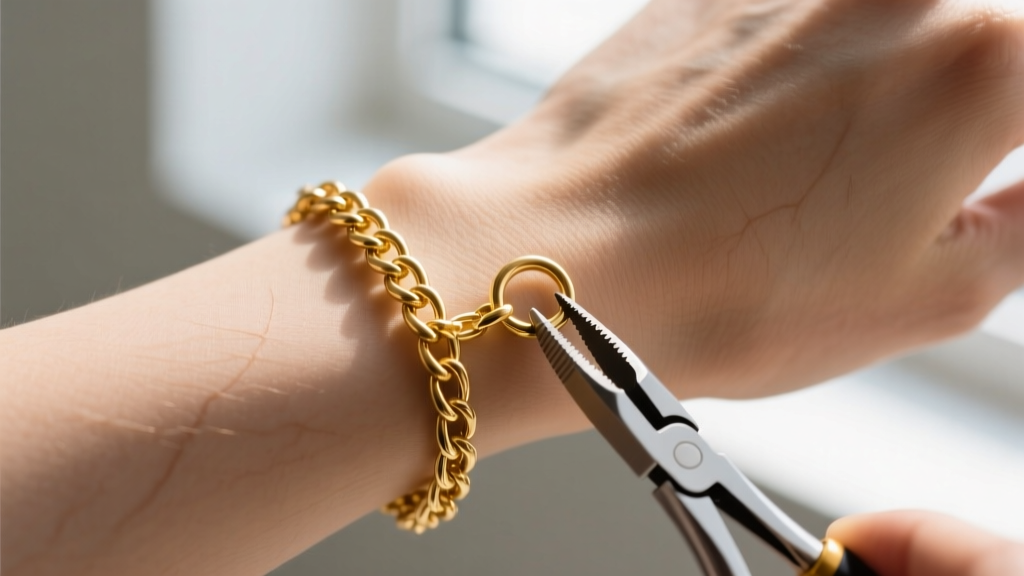
Permanent jewelry has evolved from a fleeting trend into a staple for milestone gifting. For graduations or major career promotions, a delicate, clasp-less chain bracelet symbolizes an unbroken new chapter.
Sourcing the Right Chain
Do not use gold-filled or plated chains for permanent jewelry; the friction and constant exposure to water and lotions will degrade the outer layer over time. Source solid 14k yellow or white gold cable chains, ideally between 1.0mm and 1.5mm in width. Suppliers like Rio Grande offer high-quality solid gold chains by the inch, which is crucial for keeping your initial overhead low while maintaining premium material standards.
Closure Techniques
The hallmark of permanent jewelry is the seamless closure. While professional studios use orbital laser welders to fuse the jump ring flush, DIY makers can achieve a highly secure alternative using soldered jump rings. Use a 4mm, 20-gauge solid 14k gold closed-and-soldered jump ring. Attach it to the chain ends using two small 3mm open jump rings, ensuring the split in the open jump rings is oriented vertically (parallel to the chain) to prevent the chain from slipping through the gap.
Birthdays & Holidays: Birthstone Resin Inclusions
Resin jewelry allows for infinite color customization, making it the ultimate medium for birthstone-themed birthday gifts. However, not all resins are created equal, and improper curing leads to sticky, yellowed gifts.
UV Resin vs. Two-Part Epoxy
| Feature | UV Resin (1-Part) | Epoxy Resin (2-Part) |
|---|---|---|
| Cure Time | 2-4 minutes under 36W UV lamp | 24-48 hours at room temp |
| Yellowing Resistance | Moderate (requires HALS stabilizers) | High (if formulated with UV inhibitors) |
| Best For | Small bezels, thin layers (<5mm) | Deep pours, large statement rings |
| Shore D Hardness | ~80 (Very rigid, can be brittle) | ~75 (Slight flex, better for rings) |
Preventing Inclusion Bleed
If you are incorporating dried birth flowers or porous natural elements, you must seal them first. Unsealed botanicals will absorb the resin, turning dark and translucent. Coat your inclusions in a thin layer of PVA glue or clear nail polish and let them dry for 24 hours before embedding them in the resin.
Sympathy & Memorial Gifts: Fingerprint Metal Clay
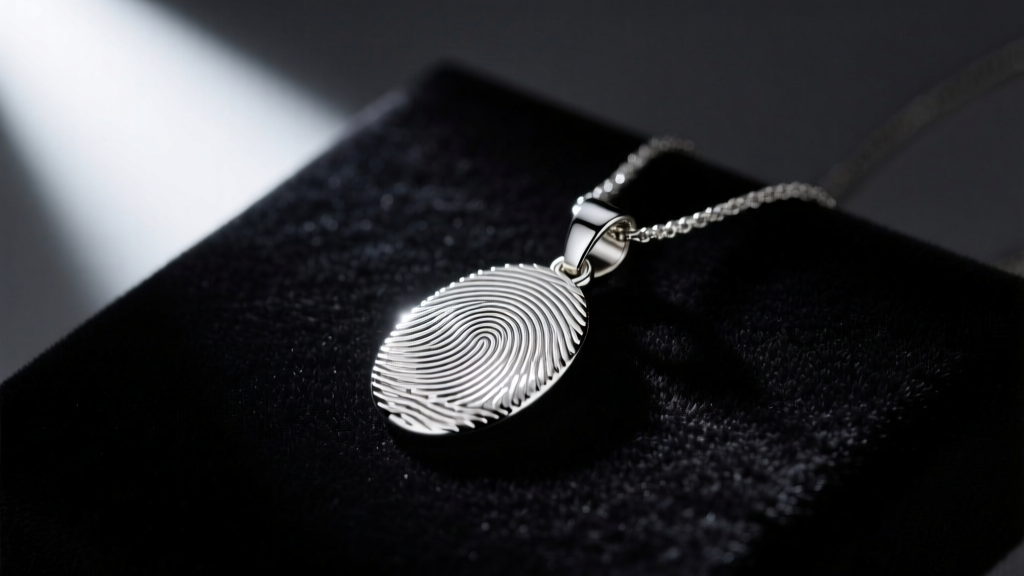
When words fail, a tangible memory speaks volumes. Metal clay (such as Art Clay Silver or PMC) allows you to capture exact fingerprint impressions or incorporate small amounts of cremation ashes into solid silver jewelry.
Working with Metal Clay
Metal clay consists of microscopic silver particles suspended in an organic binder. It molds like ceramic clay but fires into solid .999 fine silver. The critical factor to remember is shrinkage. Art Clay Silver shrinks by 8% to 10% during firing. When taking a fingerprint impression, press the thumb firmly into the clay, then scale up your pendant size by roughly 10% to account for the kiln or torch shrinkage.
Firing and Finishing
For fine silver clay, you can use a standard butane torch. Fire the piece until it glows a dull cherry red, and maintain that color for exactly 2 minutes. Do not let it turn bright orange, or the silver will melt into a puddle. After cooling and quenching, the piece will look white and chalky. Use a brass wire brush and soapy water to burnish the surface, revealing the brilliant, polished silver beneath.
Sizing, Packaging, and Troubleshooting
The final 10% of the gifting experience is how the piece is presented and protected. A brilliant DIY piece can be ruined by poor packaging or a failed clasp.
Troubleshooting Common Failures
- Clasp Fatigue: Avoid spring-ring clasps for heavy pendants; the internal spring mechanism fails quickly under tension. Always opt for lobster clasps or toggle clasps for structural security.
- Resin Tackiness: If your epoxy resin remains tacky after 48 hours, your mixing ratio was off. Epoxy must be measured by volume or weight strictly according to the manufacturer's instructions—never guess. Use a digital jewelry scale accurate to 0.1g.
- Wire Unraveling: If your wire wraps loosen over time, you likely used dead-soft wire for the base frame. Always use half-hard or full-hard wire for structural elements.
Archival Packaging
Silver and copper alloys tarnish when exposed to hydrogen sulfide in the air. Never package handmade jewelry in PVC plastics, as the chlorine accelerates tarnishing. Use polyethylene or polypropylene zip bags, and include a 3M anti-tarnish strip. These strips intercept corrosive gases and will keep your gifted pieces pristine for up to 12 months in a standard jewelry box.
True craftsmanship in DIY jewelry is not just about the initial aesthetic; it is about engineering a piece that survives the rigors of daily wear while carrying the emotional weight of the occasion it was gifted for.


