Material Properties Guide For DIY Heart Beads Jewelry
Compare glass, gemstone, resin, and metal for DIY heart beads jewelry. Learn Mohs hardness, wire wrapping tensions, and drilling tips for flawless designs.

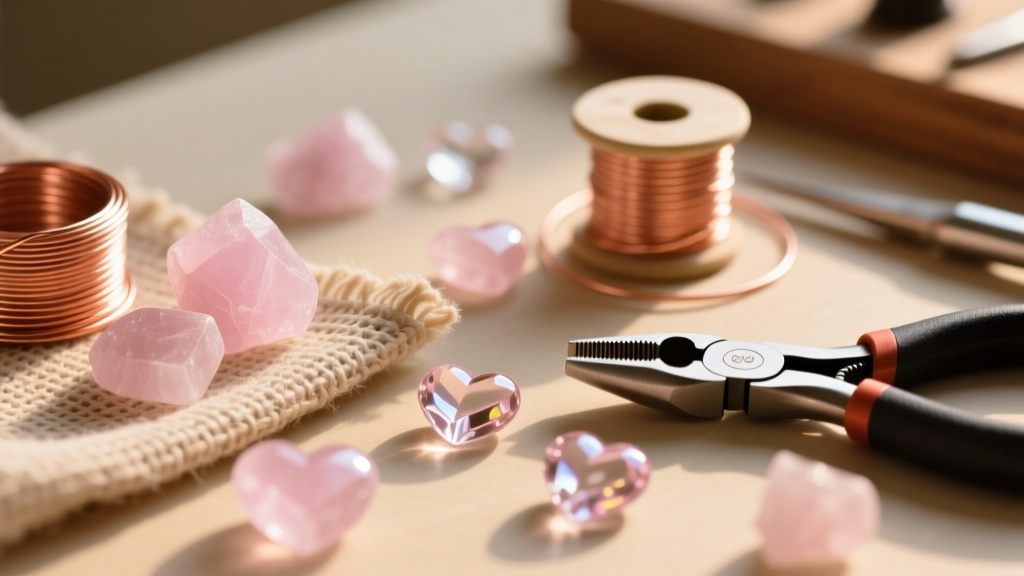
Creating stunning heart beads jewelry requires more than just an eye for color and symmetry. The bilateral geometry of a heart shape introduces unique structural stress points—specifically the top cleft and the bottom nadir—that dictate how different materials behave during drilling, stringing, and wire wrapping. In 2026, as DIY jewelers gain access to a wider array of synthetic and natural materials, understanding the physical properties of your beads is the difference between a durable heirloom and a fractured disappointment.
This comprehensive guide breaks down the material science behind heart-shaped beads, providing actionable data on hardness, density, and tensile tolerance to elevate your jewelry making projects.
The Physics of Heart Shapes: Why Material Matters
Unlike round or cylindrical beads, heart beads feature a sharp inner V (the cleft) and a concentrated bottom point. When you apply radial pressure—such as forcing a thick wire through a drilled hole or tightening a wrapped loop—the stress vectors converge at the cleft. Materials with distinct crystalline cleavage planes, like certain gemstones, are highly susceptible to 'cleft fracture' if the wrong wire temper or gauge is used. Conversely, amorphous materials like glass distribute stress more evenly but are vulnerable to thermal shock during the drilling process.
Comprehensive Material Comparison Matrix
Before sourcing your supplies, consult this matrix to match your material with the correct tools and techniques. Data based on standard lapidary and metalsmithing benchmarks.
| Material | Mohs Hardness | Density (g/cm³) | Best Drill Bit | Ideal Wire Gauge & Temper |
|---|---|---|---|---|
| Lampwork Glass | 5.5 - 6.5 | 2.50 | Diamond Twist (0.8mm) | 26g - 28g Dead Soft |
| Rose Quartz | 7.0 | 2.65 | Sintered Diamond Bur | 24g - 26g Dead Soft |
| Epoxy Resin | 2.0 - 3.0 | 1.15 | Standard HSS (1mm) | 20g - 24g Half-Hard |
| Cast Brass | 3.0 - 4.0 | 8.50 | Carbide Micro-Bur | 22g - 24g Half-Hard |
| Polymer Clay | 1.5 - 2.5 | 1.20 | Pin Vise / HSS | 20g - 22g Dead Soft |
Deep Dive: Gemstone vs. Glass Heart Beads
When designing heart beads jewelry using premium materials, the choice between natural gemstones and artisan lampwork glass fundamentally alters your assembly approach.
Mohs Hardness and Wire Wrapping Tension
Natural gemstones like amethyst or rose quartz rank at a 7 on the GIA Gem Encyclopedia Mohs scale. While they are hard enough to resist scratching from everyday wear, their crystalline structure means they possess natural fault lines. If you attempt to wire-wrap a 6mm rose quartz heart bead using 22-gauge half-hard wire, the outward pressure at the cleft will likely cause a micro-fracture, eventually splitting the bead in half. Always use 24-gauge or 26-gauge dead-soft wire for gemstone hearts, allowing the metal to yield before the stone does.
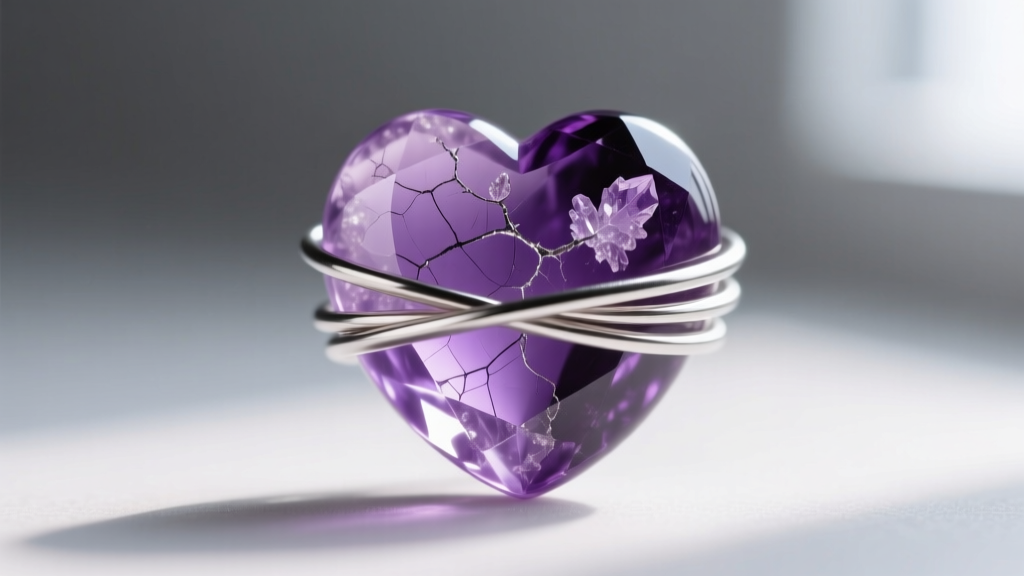
Glass, being amorphous, lacks cleavage planes. However, pressed glass heart beads often have microscopic stress bubbles near the cleft from the molding process. When drilling secondary holes for multi-strand designs, always use a diamond-coated twist drill bit under continuous water lubrication to prevent thermal shattering.
Resin and Polymer Clay: The Lightweight Contenders
For oversized, statement heart beads jewelry, weight becomes a critical factor. A 30mm solid glass heart can weigh upwards of 15 grams, causing discomfort on delicate earlobes or thin necklace chains. Resin and polymer clay offer a high-volume, low-density alternative.
Curing Shrinkage and Hole Drilling
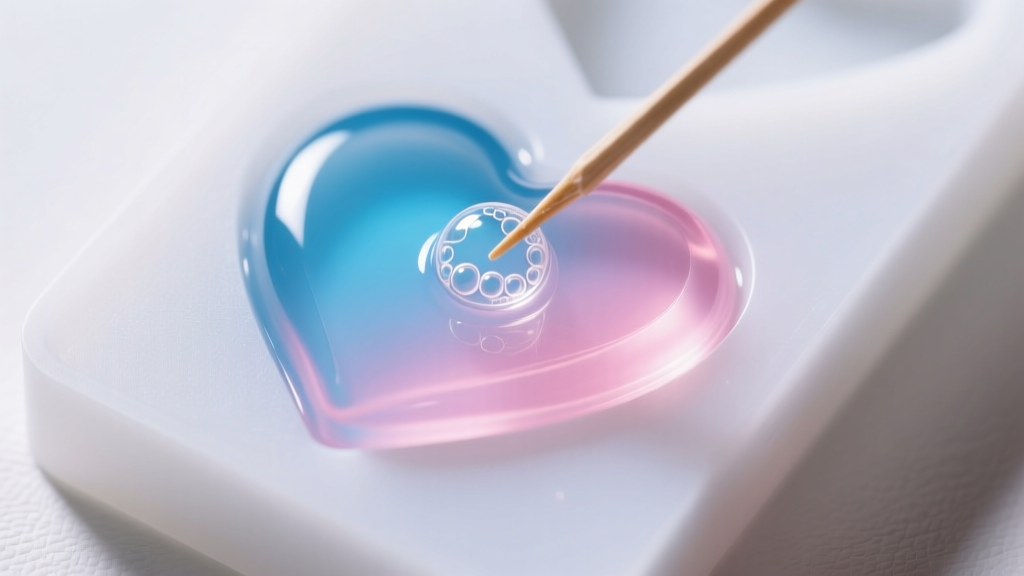
When casting UV or epoxy resin hearts, be aware of volumetric shrinkage, which typically ranges from 2% to 5% depending on the brand's monomer formulation. This shrinkage often pulls away from the sharp bottom point of the silicone mold, leaving a 'divot' or rounded tip. Pro Tip: Overfill your mold slightly and cure with a flat glass plate pressed on top to maintain a razor-sharp bottom nadir. When drilling resin, use standard High-Speed Steel (HSS) bits, but clear the flutes frequently; resin dust can melt and re-fuse inside the hole if friction heat builds up.
Metal Heart Beads: Enameling and Oxidation Properties
Metal heart beads—whether cast in brass, stamped from sterling silver sheet, or enameled—bring an entirely different set of mechanical properties to the bench.
If you are sourcing enameled metal heart beads, pay close attention to the vitreous enamel application at the bottom point. Enamel is essentially fused glass; it has high compressive strength but very low tensile strength. A drop on a hard surface will transmit shockwaves through the metal base, causing the enamel at the sharpest geometric angle (the bottom point) to chip or craze. For DIY projects involving enameled metal hearts, always incorporate a protective wire cage or a bezel setting that absorbs impact shock, rather than relying on a simple top-drilled stringing hole.
Troubleshooting Common Material Failures
Even experienced makers encounter structural failures when working with complex shapes. Here is a diagnostic framework for troubleshooting your heart beads jewelry builds:
- Failure: Wire slipping and unspooling on polished glass hearts.
Fix: Glass offers zero friction. Use nylon-jaw pliers to create a microscopic 'kink' in your 26-gauge wire before wrapping the cleft, or apply a microscopic drop of cyanoacrylate (CA) glue to the wire tail to lock it against the glass. - Failure: Polymer clay hearts cracking at the top cleft after baking.
Fix: This is caused by uneven thermal mass. The thick lobes of the heart cure and shrink at a different rate than the thin cleft. Condition your clay with a 10% addition of translucent liquid polymer clay to increase flexibility, and bake on a ceramic tile to ensure even heat distribution. - Failure: Gemstone heart beads chipping during the tumbling process.
Fix: Never tumble gemstone heart beads with stainless steel shot. The impact will instantly bruise the bottom point. Use a vibratory tumbler with soft walnut shell media and a mild burnishing compound instead.
Final Sourcing and Tool Pairing Recommendations
To execute flawless heart beads jewelry, your tool kit must be calibrated to your chosen material. For gemstones and glass, invest in high-quality Rio Grande Jewelry Making Resources diamond-coated micro-drills and dead-soft precious metal wires. For resin and clay, prioritize precision silicone molds with reinforced edges to prevent warping during the curing phase.
By respecting the unique physical properties of each material, you can transform the challenging geometry of the heart shape from a structural liability into the defining masterpiece of your jewelry portfolio.


