Troubleshooting Headpins for Jewelry Making: Fix Bending & Breakage
Fix common issues with headpins for jewelry making. Learn how to prevent bending, breakage, and bead slip-through with expert gauge and material tips.

The Anatomy of a Headpin Failure
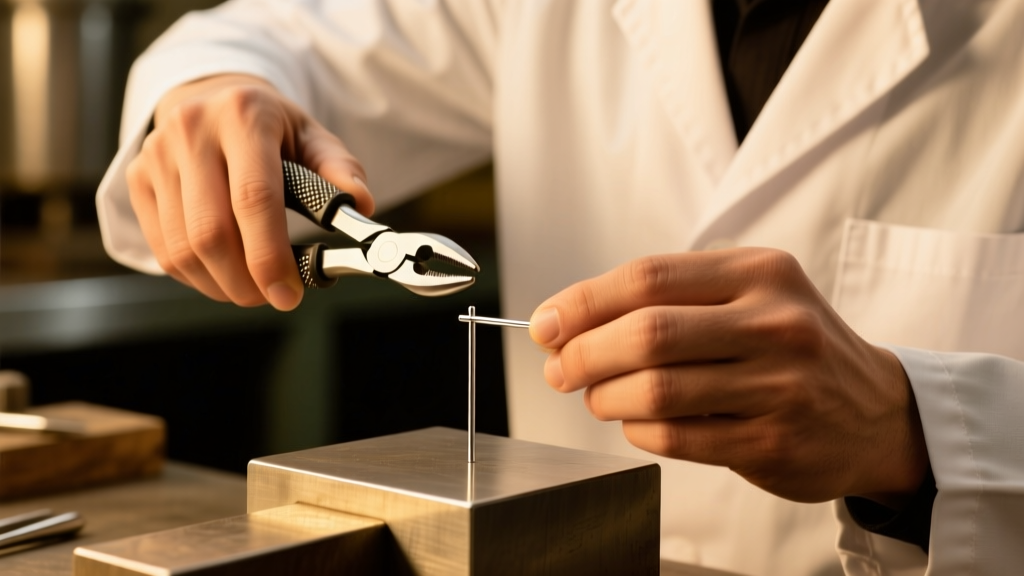
Every jewelry maker has experienced the sudden, frustrating snap of a headpin right as they are finishing a wrapped loop. When working with headpins for jewelry making, failures rarely happen by accident; they are almost always the result of a mismatch between the wire's metallurgical properties, the gauge thickness, and the mechanical stress applied during formation. To troubleshoot effectively, we must first understand where and why these findings fail.
The most common failure points on a headpin are the "neck" (the sharp 90-degree bend where the head meets the shaft) and the loop itself. The neck is a natural stress riser. If the wire was stamped or cut with microscopic burrs during manufacturing, or if the metal is too brittle, any lateral pressure from pliers will cause a clean fracture. Conversely, shaft bending is usually a structural issue, occurring when the bead's weight exceeds the tensile strength of the chosen wire gauge.
Troubleshooting Matrix: Symptom, Cause, and Fix
Before discarding a ruined component, diagnose the exact failure mode using this troubleshooting matrix. Identifying the root cause will save you hours of wasted materials and prevent structural failures in your finished jewelry pieces.
| Symptom | Root Cause | Technical Fix |
|---|---|---|
| Loop snaps cleanly at the neck | Wire is too hard (brittle) or pliers have sharp jaws that scored the metal. | Switch to "dead soft" temper or use nylon-jaw pliers to prevent marring and micro-fractures. |
| Head pulls through the bead hole | Bead hole diameter exceeds the headpin's stopper width. | Use a flat-head, paddle-head, or cup-head pin, or add a metal bead cap to bridge the gap. |
| Shaft bends under bead weight | Wire gauge is too thin for the mass of the focal bead. | Upgrade from 24-gauge to 22-gauge or 20-gauge wire to increase structural rigidity. |
| Paddle head warps or folds inward | Excessive downward pressure when seating heavy beads on soft metals like pure copper. | Use half-hard brass or sterling silver paddle heads, which offer higher yield strength. |
Deep Dive: Gauge vs. Bead Weight Mismatches
Selecting the correct wire thickness is the most critical decision when sourcing headpins for jewelry making. Wire gauge dictates the load-bearing capacity of your dangle earrings, charms, and rosary links. Using a gauge that is too thin results in drooping jewelry; using one that is too thick risks cracking delicate beads during insertion.
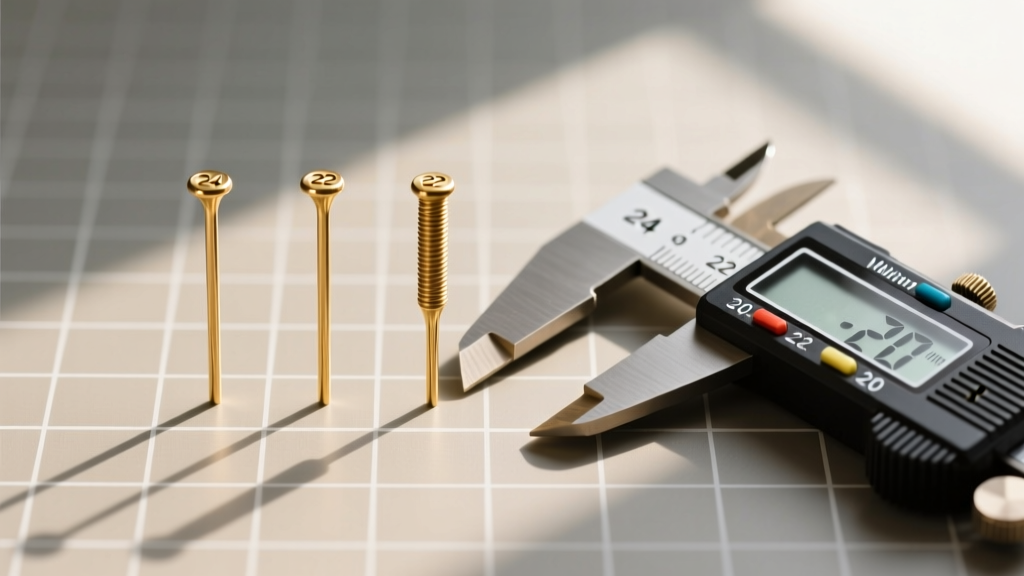
24-Gauge (0.51mm) Headpins
Best for lightweight materials such as small freshwater pearls, seed beads, and delicate glass crystals (like 4mm Preciosa bicones). Because 24-gauge wire is highly malleable, it is prone to bending if used with heavy stone beads. Pro Tip: Never use 24-gauge wire for heavy focal beads, as the wire will permanently deform under the dynamic movement of a necklace or earring.
22-Gauge (0.64mm) Headpins
The industry workhorse. 22-gauge headpins offer the perfect balance of flexibility for wrapped loops and rigidity for structural support. They easily pass through the standard 0.8mm to 1.0mm holes found in most semi-precious gemstone beads (like 8mm round amethyst or jade) while providing enough tensile strength to hold beads weighing up to 15 grams without bowing.
20-Gauge (0.81mm) Headpins
Reserved for heavy, large-scale focal beads, such as oversized lampwork glass, large turquoise cabs, or heavy metal pendants. The 0.81mm thickness requires more torque to form a wrapped loop, meaning you must use sturdy round-nose pliers. Be cautious: forcing a 20-gauge pin through a bead with a tight 0.6mm hole will cause the bead to crack or the wire to kink.
The Work-Hardening Trap
When you bend a headpin to create a loop, you are manipulating its crystalline structure, causing it to "work-harden." If you start with a "half-hard" headpin and make multiple wraps or adjustments, the wire will quickly become brittle and snap. For complex wrapped loops, always source dead soft headpins. According to metallurgical standards outlined by Rio Grande, dead soft wire has been annealed to relieve internal stresses, allowing for maximum manipulation before reaching its breaking point.
Solving the "Pull-Through" Problem
A bead slipping off the bottom of a headpin is a hallmark of improper finding selection. This issue is particularly rampant when working with beads that have oversized drill holes, such as artisan lampwork beads, large-hole European-style beads, or certain porous natural stones.
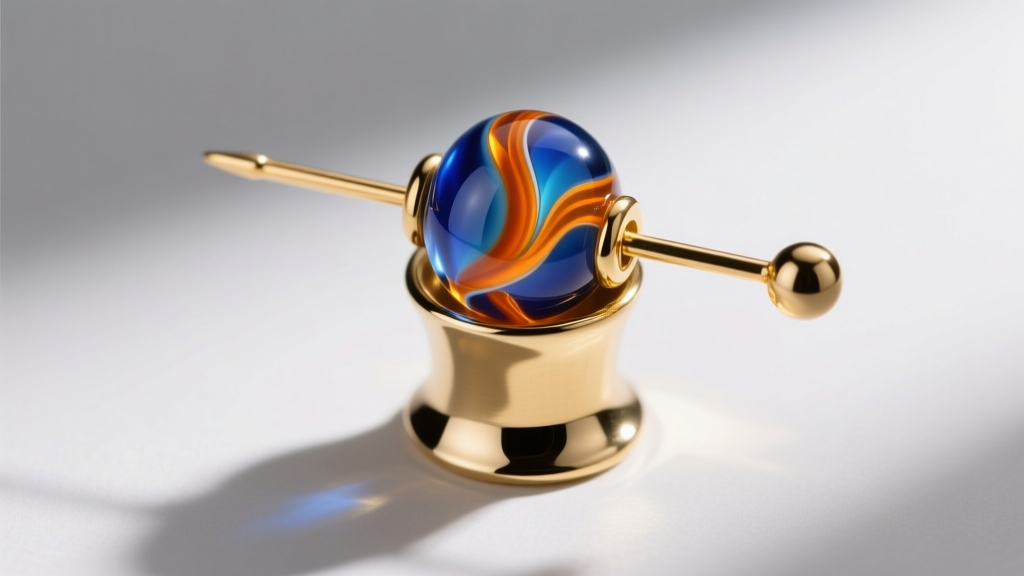
Head Styles and Hole Tolerances
- Ball Head: The standard teardrop or round ball. Typically measures 1.5mm to 2.0mm in diameter. Ideal for standard gemstones but will pull right through a 2.5mm lampwork hole.
- Flat Head: A stamped, flat disc base (usually 2.0mm to 3.0mm wide). Excellent for freshwater pearls, which often have large, irregularly drilled holes but require a flush, invisible finish at the bottom.
- Paddle Head: Features a wide, flat, spatula-like base (up to 4.0mm wide). Essential for heavy beads with wide drill channels where a ball head would easily slip through.
- Cup Head: Incorporates a built-in metal cup that acts as both a stopper and a decorative bezel. This is the ultimate failsafe for large-hole beads, as the cup can span up to 6.0mm or more, completely covering the hole and preventing any slip-through.
Material Fatigue and Tarnish Troubleshooting
The base metal of your headpins dictates not only the color but the longevity and structural integrity of the piece. Cheap, imported base-metal headpins often suffer from hidden material fatigue. They may be plated over a brittle zinc alloy core that snaps under minimal pressure.
For professional-grade jewelry, stick to solid metals. Sterling silver (.925) offers excellent spring-back and workability, but it will tarnish if exposed to sulfur or high humidity. 14K Gold-filled headpins feature a thick, mechanically bonded layer of gold over a brass core, providing the workability of brass with the tarnish resistance of solid gold. Niobium and Titanium headpins are increasingly popular for hypoallergenic earrings, but they are notoriously difficult to bend and require specialized, heavy-duty flush cutters to trim, as standard jewelry cutters will chip their blades.
Expert Sourcing and Brand Recommendations
Where you buy your findings matters just as much as how you use them. Mass-market craft stores often sell headpins with inconsistent head sizes and poorly annealed wire that snaps unpredictably. For consistent quality, professional jewelry makers rely on specialized suppliers.
Halstead Bead is a premier wholesale supplier that provides incredibly detailed specifications for their headpins, including exact head diameters and precise wire gauge tolerances. This level of transparency is vital when you are designing production-line jewelry and need every single finding to behave identically on the workbench.
"Never compromise on the temper of your wire. A two-dollar pack of mystery-temper headpins will cost you twenty dollars in wasted gemstone beads when the loops inevitably snap during assembly." — Master Wire-Wrapper Adage
By understanding the interplay between gauge, temper, and head style, you can completely eliminate the most common frustrations associated with headpins for jewelry making. Equip your bench with the right calipers, the right pliers, and the right metallurgical knowledge, and your dangles will remain secure, straight, and structurally sound for a lifetime.


