Material Guide: Kent's Tools Jewelry and Lapidary Tools & Supplies
Explore the metallurgy and material properties of Kent's Tools jewelry and lapidary tools & supplies. Compare steel alloys, burrs, and abrasives.

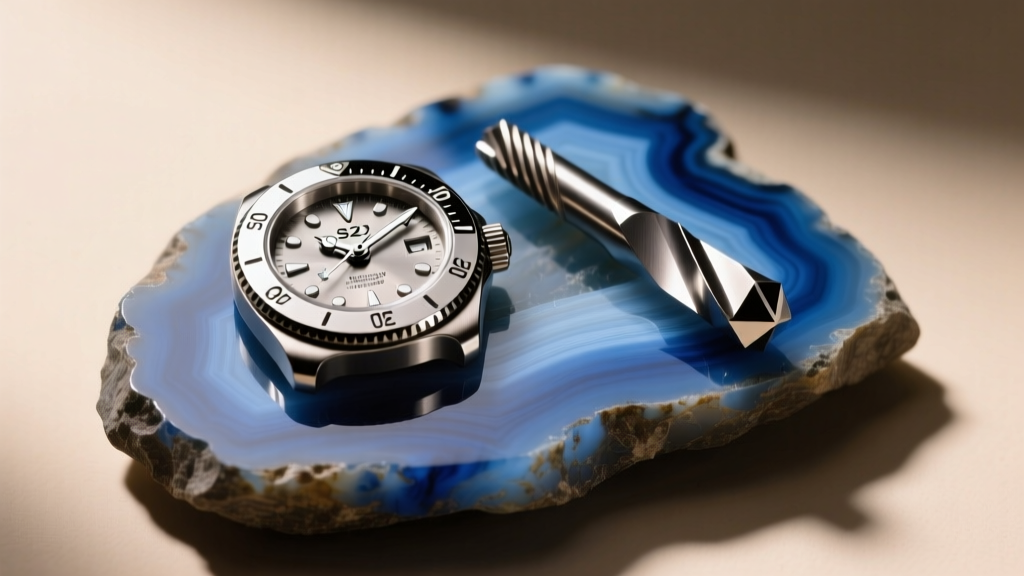
The Metallurgy of Lapidary: Why Material Properties Dictate Success
In the realm of DIY jewelry making, transitioning from basic wire wrapping to true lapidary work—cutting, grinding, and polishing raw stones—requires a fundamental shift in how we think about tools. When working with materials that rank at a 7 or higher on the Mohs hardness scale, such as quartz, agate, and jasper, the physical properties of your tools become the single most critical factor in your success. A tool that is too soft will deform or dull within minutes; a tool that is too hard but lacks toughness will shatter under the lateral pressure of a flex shaft.
For artisans sourcing kent's tools jewelry and lapidary tools & supplies, understanding the underlying metallurgy and abrasive matrices is not just academic—it directly impacts your project's finish, your budget, and your physical safety. This guide breaks down the exact material properties, steel alloys, and abrasive compositions you need to look for when building a professional-grade lapidary and stone-setting bench.
Core Tool Steels: Carbon, S2 Alloy, and Stainless
The foundation of any jewelry bench is its hand tools: prong pushers, bezel rollers, gravers, and carving instruments. The steel alloy used to forge these tools dictates their edge retention, corrosion resistance, and shock tolerance. According to the Gemological Institute of America (GIA), the interaction between metal tools and gemstones requires precise hardness matching to avoid scratching the stone or dulling the tool.
Hardness vs. Toughness Trade-offs
Tool steels are generally measured on the Rockwell C (HRC) scale. Here is how the three most common lapidary steels compare:
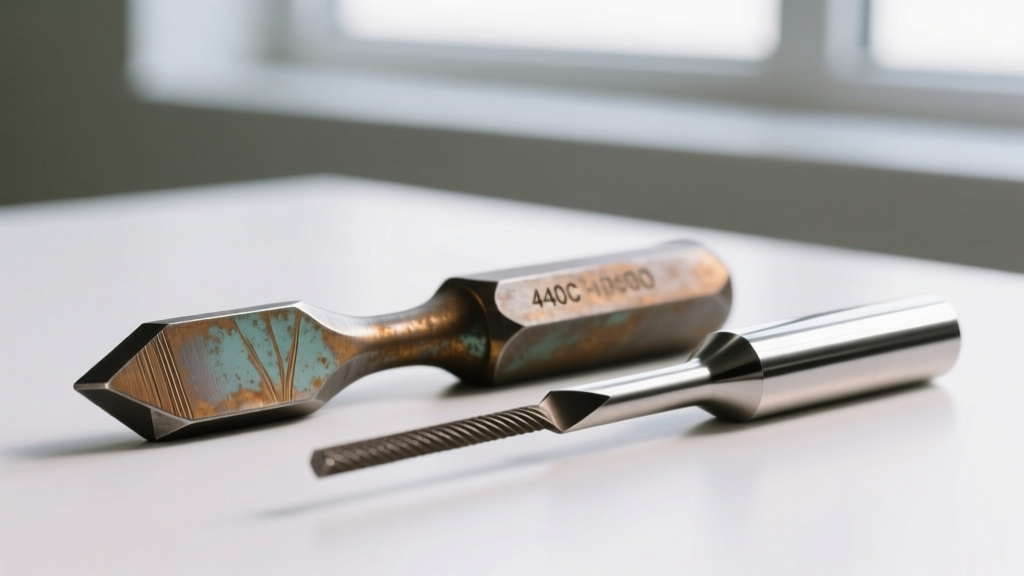
- 1095 High-Carbon Steel (58-62 HRC): Exceptional edge retention and capable of taking a mirror polish. However, it is highly susceptible to oxidation. In a wet lapidary environment (like cabbing or using coolant), 1095 steel will flash-rust if not immediately dried and oiled.
- S2 Shock-Resisting Steel (56-58 HRC): Alloyed with silicon and molybdenum, S2 sacrifices a marginal amount of absolute hardness for massive gains in impact toughness. This is the gold standard for chasing hammers, heavy-duty prong pushers, and stone-setting punches that endure repetitive mallet strikes.
- 440C Stainless Steel (58-60 HRC): With a high chromium content (16-18%), 440C offers excellent corrosion resistance. It is the mandatory choice for burnishers, tweezers, and tools used constantly in water or chemical patinas, though it is slightly more brittle than S2.
Abrasives and Burrs: Diamond Grit vs. Tungsten Carbide
When carving, shaping, or drilling stone, standard high-speed steel (HSS) burrs are entirely useless. Diamond is a 10 on the Mohs scale, making it the only viable abrasive for cutting quartz and beryl. However, not all diamond tools are created equal. The Mindat.org Mineral Database notes that synthetic diamond grit is manufactured under high-pressure, high-temperature (HPHT) conditions to create specific fracture patterns ideal for grinding.
Electroplated vs. Sintered Diamond Matrices
When browsing catalogs for diamond burs, you will encounter two primary manufacturing methods:
| Property | Electroplated Diamond Burrs | Sintered (Metal Bond) Diamond Burrs |
|---|---|---|
| Construction | Single layer of diamond grit glued via nickel plating | Diamond grit mixed into a powdered metal matrix and baked |
| Aggressiveness | High (grit is fully exposed) | Moderate (grit is partially embedded) |
| Lifespan | Short (once the single layer wears, the tool is dead) | Extremely long (can be dressed with an aluminum oxide stick) |
| Best Application | Rough shaping, aggressive carving, soft stones | Precision carving, hard agates, production work |
| Price Range | $5 - $15 per burr | $35 - $90+ per burr |
For beginners, electroplated burrs in 60-grit and 220-grit are sufficient for learning stone removal. However, professionals rely on sintered burrs for their ability to be 'dressed'—a process where a soft abrasive block wears away the metal matrix to expose fresh, sharp diamond crystals underneath.
Evaluating Kent's Tools Jewelry and Lapidary Tools & Supplies
When navigating specialized inventories like kent's tools jewelry and lapidary tools & supplies, one of the most critical material decisions involves trim saw blades. The trim saw is the workhorse of the cabochon maker, used to slab rough and cut out pre-forms. The material composition and geometry of the blade's edge will determine your kerf loss (wasted stone) and the likelihood of fracturing fragile material.
Trim Saw Blades: Notched vs. Continuous Rim
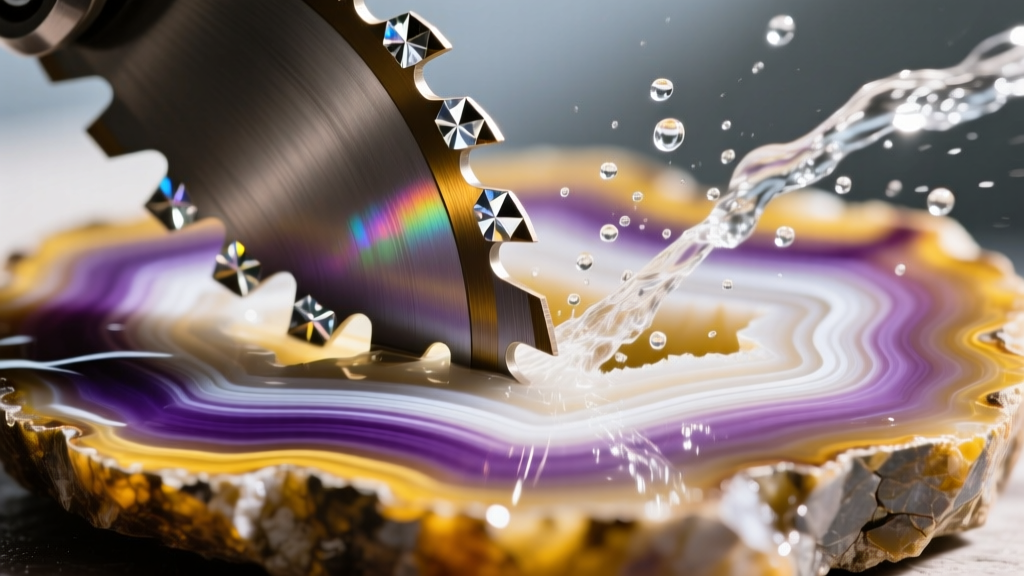
Diamond saw blades for lapidary work typically range from 4 to 6 inches in diameter, with ultra-thin kerfs ranging from 0.004 to 0.020 inches. The rim style is just as important as the diamond concentration:
- Notched Rim (Segmented): Features small gaps in the diamond edge. These gaps allow for better coolant flow and debris clearance. Notched blades are ideal for cutting hard, dense materials like jasper, petrified wood, and agate, where heat buildup could warp the blade or fracture the stone.
- Continuous Rim (Sintered): A solid, uninterrupted edge of diamond-impregnated metal. This provides a remarkably smooth cut with minimal chipping. Continuous rim blades are strictly required for cutting fragile, cleavage-prone, or heat-sensitive stones like opal, fluorite, and turquoise.
Handle Materials: The Overlooked Ergonomic Factor
While the working end of the tool gets all the metallurgical attention, the handle material drastically affects vibration dampening and fatigue during long lapidary sessions. Traditional rosewood handles are aesthetically pleasing and offer a warm grip, but they can crack if exposed to the constant moisture of a lapidary shop. Modern alternatives include Thermoplastic Elastomer (TPE) over-molds, which provide superior shock absorption when using heavy gravers, and knurled 6061-T6 aluminum handles, which are impervious to water, chemical patinas, and ultrasonic cleaning solvents.
Maintenance Protocols for High-Carbon and Diamond Tools
Investing in high-quality tool steels and sintered diamond matrices requires strict maintenance protocols. High-carbon steel tools must be wiped down with a microfiber cloth and lightly coated with camellia oil or a synthetic rust preventative like Renaissance Wax after every use. Never store 1095 steel tools in a leather roll without an oil barrier, as the tannins and ambient moisture in leather will induce rapid pitting.
For diamond tools, the enemy is not rust, but 'glazing.' If a diamond burr or saw blade is pushed too hard against a stone, the metal matrix can smear over the diamonds, rendering the tool completely smooth and useless. To prevent this, always let the tool's RPM and the diamond's hardness do the work, applying only light lateral pressure. If glazing occurs, use a silicon carbide dressing stick to strip the smeared metal and expose fresh diamond grit.
"The longevity of a lapidary tool is rarely determined by its initial purchase price, but rather by the user's understanding of its specific metallurgical limits and abrasive matrix."
Conclusion
Mastering DIY jewelry making and lapidary arts requires looking past the marketing jargon and focusing on raw material science. Whether you are selecting an S2 steel bezel pusher for setting a stubborn sapphire, choosing a sintered diamond burr for carving a quartz cameo, or ordering replacement blades from kent's tools jewelry and lapidary tools & supplies, your success hinges on matching the tool's physical properties to the stone's geological reality. By prioritizing proper steel alloys, understanding diamond grit matrices, and maintaining rigorous cleaning protocols, you will build a bench of tools that can withstand the relentless hardness of the earth's most beautiful minerals.


