How to Get a Permanent Jewelry Certification: Step-by-Step
Learn how to get your permanent jewelry certification with our step-by-step guide. Master welding, safety, and sourcing for a successful business.

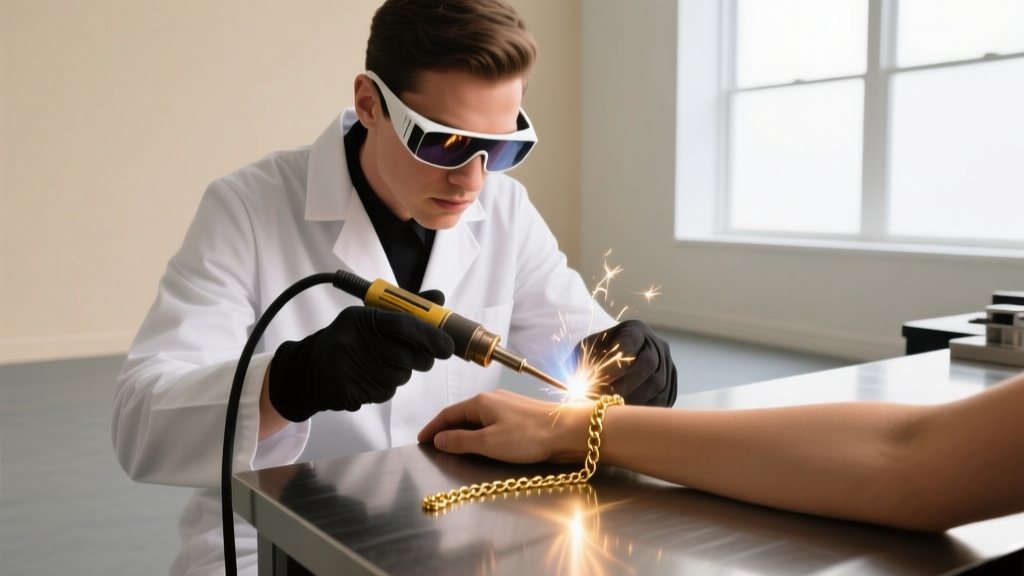
The transition from a DIY jewelry hobbyist to a professional permanent jewelry artist requires far more than a steady hand and a spool of gold chain. As we navigate the highly competitive market of 2026, securing a verified permanent jewelry certification has become the ultimate differentiator. It is the key to unlocking high-end retail partnerships, premium event bookings, and comprehensive liability insurance. Whether you are looking to add micro-welding services to an existing boutique or launch a dedicated mobile welding business, this guide breaks down the exact roadmap to getting certified, mastering pulse arc technology, and building a compliant, profitable business.
What Does Permanent Jewelry Certification Actually Mean?
Unlike a state-issued cosmetology or medical license, a permanent jewelry certification is an industry-recognized credential. It serves as documented proof that you have been formally trained in the safe operation of pulse arc welders, the metallurgy of precious metals, and the strict safety protocols required when welding inches away from a client's skin. Certification programs test your ability to calibrate equipment, select appropriate shielding gases, and execute flawless welds without causing thermal damage to the client or the jewelry. In 2026, major event venues and luxury malls require proof of this certification before granting vendor permits, making it a non-negotiable step for serious entrepreneurs.
Step 1: Choosing the Right Training Program
The first step in your certification journey is selecting an accredited training program. You generally have two paths: attending an intensive in-person workshop or completing a comprehensive online course paired with a practice kit. While online courses offer flexibility, in-person workshops provide immediate feedback on your welding technique, which is critical for passing the final practicum.
| Feature | In-Person Workshop | Online + Practice Kit |
|---|---|---|
| Average Cost | $1,500 - $3,500 | $400 - $800 |
| Hands-On Feedback | Immediate instructor correction | Self-guided or virtual review |
| Equipment Access | Use of studio welders provided | Must purchase or rent your own |
| Certification Speed | 1 to 2 intensive days | 2 to 4 weeks self-paced |
When evaluating a program, ensure they provide a formal certificate of completion that details the specific safety modules and welding techniques covered. This document will be required by your future insurance underwriters.
Step 2: Mastering the Equipment and Safety Protocols
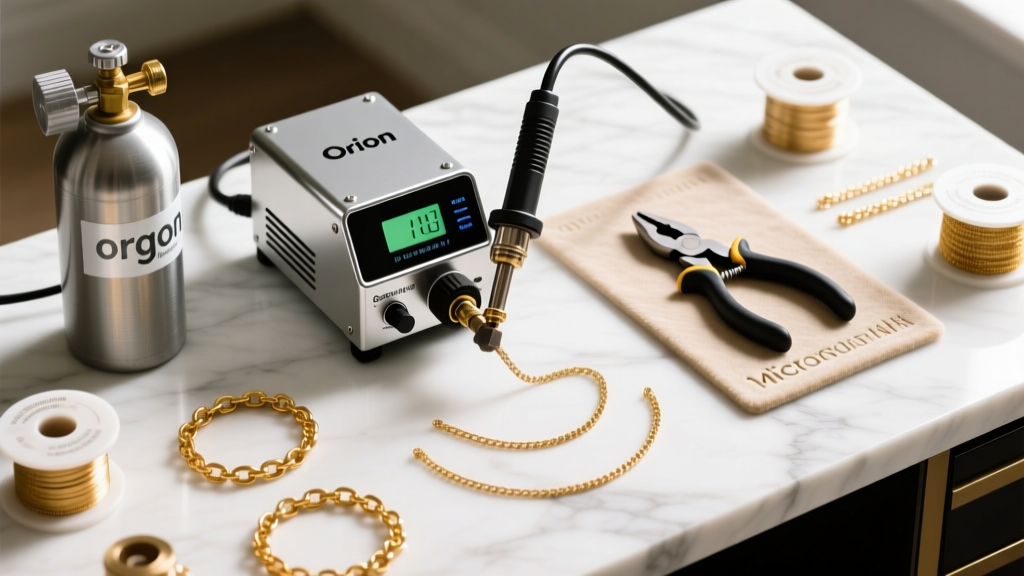
At the core of your certification training is mastering the pulse arc welder. Brands like Sunstone Welders (creators of the Orion line) are the industry standard. These machines use a high-voltage electrical arc to instantly melt the metal at the joint, fusing the chain links together without generating residual heat that could burn the client.
The Role of Argon Shielding Gas
A critical component of your certification exam will be understanding shielding gas. When the electrical arc strikes, it can cause oxidation, leaving a weak, brittle, and discolored weld. You must learn to use an argon gas delivery system, typically set to a flow rate of 2 to 3 Cubic Feet per Hour (CFH). The argon displaces oxygen around the weld zone, ensuring a clean, structurally sound fuse.
Mandatory Safety Gear
Your training will heavily emphasize optical and respiratory safety. The arc flash emits intense broadband UV and IR light. You must be certified in selecting and wearing OD5+ (Optical Density 5 or higher) laser safety glasses specifically rated for the wavelengths emitted by pulse arc welders. Furthermore, you will learn how to set up localized exhaust ventilation to capture microscopic metal particulates and ozone generated during the zap.
Step 3: Sourcing Professional-Grade Materials
You cannot pass a permanent jewelry certification using cheap, plated materials. The intense heat of the pulse arc will instantly vaporize gold plating or gold-filled layers, resulting in a failed weld and a ruined piece. Certified artists must source solid metals. According to major suppliers like Rio Grande and Stuller, the acceptable materials for permanent jewelry include:
- Solid 14k and 18k Gold: The gold standard for durability and weldability. 14k gold requires roughly 15 to 25 Joules of energy depending on the chain gauge.
- Sterling Silver (925): Highly conductive and welds beautifully, though it requires careful heat management to prevent pitting.
- Implant-Grade Titanium (ASTM F138): Hypoallergenic and increasingly popular, though it requires specific welder settings due to its high melting point.
During your certification, you will be tested on your ability to identify metal grades and adjust your welder's Joule output accordingly. Applying 30 Joules to a delicate 1.0mm 14k gold chain will obliterate the link, while 10 Joules will result in a cold, weak weld that snaps under tension.
Step 4: The Hands-On Welding Practicum
The final hurdle of your permanent jewelry certification is the hands-on practicum. You will be evaluated on the complete client workflow, from measurement to the final zap. The standard procedure you must demonstrate includes:
- Precision Measurement: Sizing the chain to the client's wrist with a comfortable drape, accounting for the jump ring.
- Flush Cutting: Using high-quality flush cutters to create perfectly flat ends on the chain and the jump ring, ensuring maximum surface area contact.
- Alignment: Using specialized welding tweezers to hold the jump ring and chain links in perfect alignment, overlapping them slightly to create a strong mechanical bond before the weld.
- The Weld: Positioning the tungsten electrode exactly 1mm to 2mm from the joint, activating the argon gas, and firing the pulse arc. You must demonstrate a clean, smooth weld with no sharp burrs that could scratch the client.
Instructors will perform a tensile strength test on your practice welds. If the jump ring pulls apart before the chain links deform, you pass. If the weld snaps cleanly, you must recalibrate your settings and try again.
Step 5: Navigating Insurance and Business Compliance

Once you have successfully passed your practicum and received your permanent jewelry certification, the final step is legal and financial protection. Operating a micro-welding business without liability insurance is a massive risk. In 2026, insurance providers specifically ask for your certification documents before underwriting a policy for permanent jewelry artists.
You will need a general liability policy that explicitly covers 'permanent jewelry welding' or 'micro-welding services.' Standard craft fair insurance policies often exclude heat-based tools and skin-adjacent procedures. Presenting your certification proves to the underwriter that you have been trained in safety protocols, significantly lowering your premium. Additionally, ensure you have clients sign a digital waiver detailing the nature of the procedure, the materials used, and the fact that the jewelry must be cut off with specialized shears in the event of an emergency.
Final Thoughts on Your Certification Journey
Earning your permanent jewelry certification is an investment in your credibility, your safety, and your bottom line. By mastering the technical nuances of pulse arc welding, understanding the metallurgy of precious metals, and adhering to strict safety protocols, you elevate your craft from a trendy side-hustle to a respected, professional service. Take the time to choose a rigorous training program, practice relentlessly on copper and silver scrap, and approach your practicum with the precision of a master jeweler. Your certification is not just a piece of paper; it is the foundation of a thriving, reputable jewelry business.


