Permanent Jewelry Monterey: 2026 Coastal Material Guide
Discover the best saltwater-resistant alloys and chain styles for DIY permanent jewelry, inspired by the coastal durability standards of Monterey.

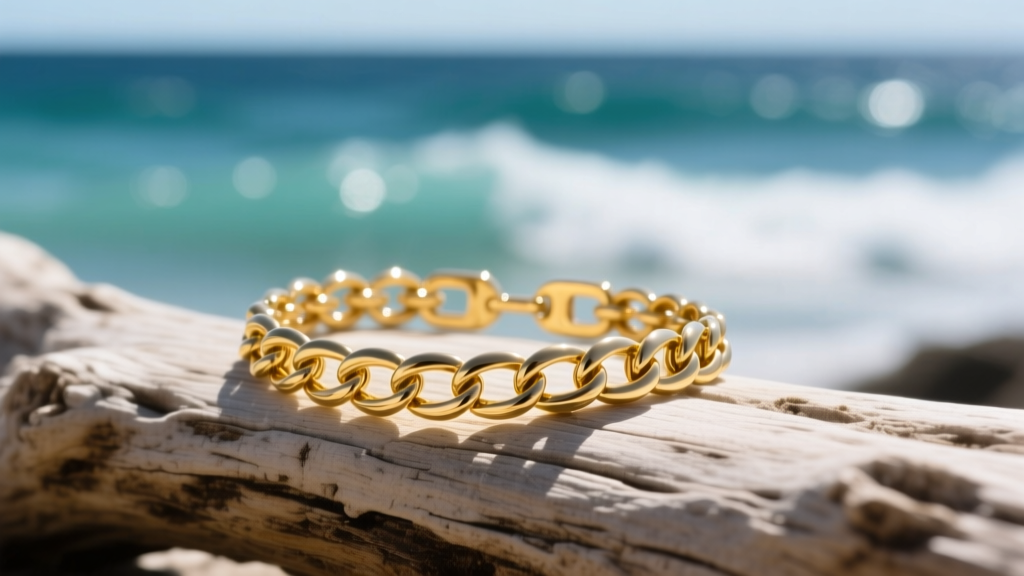
The "Monterey Standard" in Permanent Jewelry
The permanent jewelry trend has swept the nation, but crafting pieces that survive harsh coastal environments requires a deep, technical understanding of metallurgy. When industry professionals discuss the "permanent jewelry Monterey" standard, they are referring to a benchmark of durability necessitated by the Central Coast's high-salinity air, cold Pacific surf, and kelp-rich ocean water. Standard fashion jewelry and poorly welded links degrade rapidly in these conditions. For DIY permanent jewelers, replicating this coastal resilience means selecting the correct alloys, chain profiles, and pulse-welding parameters. If you are setting up a DIY studio or sourcing materials for clients who swim in the ocean, you must move beyond basic aesthetics and engineer for marine survival.
The Chemistry of Coastal Corrosion
Saltwater is a highly conductive electrolyte that accelerates galvanic corrosion and oxidation. To understand why certain metals fail in coastal towns like Monterey, we have to look at their elemental composition. Standard 925 sterling silver contains 92.5% silver and 7.5% copper. In a marine environment, the copper acts as an anode when exposed to saltwater and oxygen, leading to rapid, dark tarnishing and eventual structural pitting. When a client swims in the Pacific with a standard sterling silver permanent bracelet, the salt crystals become trapped in the chain links, creating a micro-environment of constant corrosion.
To combat this, coastal jewelers have largely shifted to Argentium 935 silver. By replacing a portion of the copper with germanium, Argentium silver forms a transparent, self-healing layer of germanium dioxide on the surface. This layer drastically slows down tarnishing and resists the corrosive effects of saltwater, making it a superior choice for DIYers who want to offer a silver-toned permanent chain without the high maintenance of traditional sterling.
Material Comparison for Marine Environments
Choosing the right metal is a balance of saltwater resistance, weldability, and budget. Below is a comparative breakdown of the most common alloys used in permanent jewelry, graded specifically for their performance in high-salinity coastal environments.
| Alloy / Material | Saltwater Resistance | Weldability (Orion mPulse) | Approx. Cost (per ft, 1.2mm) | Best Coastal Application |
|---|---|---|---|---|
| 14k Yellow Gold (Solid) | Excellent | Superior (35-45 Joules) | $45.00 - $65.00 | Everyday ocean wear, luxury anklets |
| Argentium 935 Silver | Very Good | Excellent (20-25 Joules) | $8.00 - $12.00 | Budget-friendly bracelets, layered chains |
| 316L Stainless Steel | Good (Prone to surface rust) | Difficult (Requires high heat) | $2.00 - $4.00 | Temporary wear, non-swimmers |
| Grade 2 Titanium (CP) | Flawless (Marine Grade) | Good (Requires Argon shielding) | $6.00 - $9.00 | Hypoallergenic surfers, active wear |
While 14k gold remains the undisputed champion of ocean wear due to its noble metal properties, Grade 2 Titanium is rapidly gaining traction in 2026 for clients with nickel allergies who still want to surf and swim without worrying about galvanic reactions.
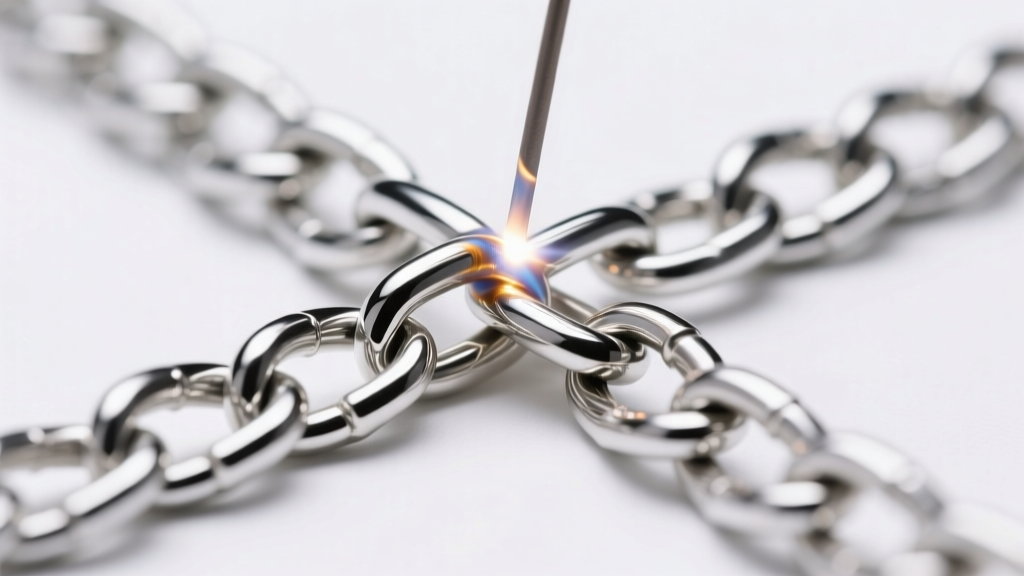
Chain Profiles and Tensile Strength
The structural integrity of a permanent bracelet is just as critical as its chemical resistance. The physical force of ocean waves, combined with the snagging hazards of wetsuits and kelp, demands specific chain profiles. Hollow chains are an absolute liability in permanent jewelry; the thin walls collapse under the heat of a pulse welder and snap under minimal tensile stress.
Cable vs. Curb: The Mechanics of the Link
For coastal durability, the Curb chain is the superior choice. Because curb links lie flat against the skin, they distribute impact forces evenly across multiple links. A 1.2mm solid curb chain offers a tensile strength of approximately 15-18 lbs, which is sufficient to survive a wave's pull but designed to break before injuring the wearer's wrist if caught on a surfboard fin.
Conversely, Cable chains (where links alternate vertically and horizontally) are more prone to snagging. If you must use a cable chain for a client's aesthetic preference, you must increase the wire gauge to 1.5mm to compensate for the uneven force distribution. Always source chains from reputable wholesale suppliers like Stuller or Halstead, ensuring the product description explicitly states "solid link" or "semi-solid" with a defined wire diameter.
Pulse Welding Parameters for Coastal Alloys
Welding jewelry that will be submerged in saltwater requires flawless fusion. A weak weld creates a microscopic crevice where saltwater will pool, leading to crevice corrosion that will eventually snap the bracelet. When using an Orion pulse welder, the energy settings must be dialed in precisely for the specific alloy and wire thickness.
- 14k Gold (1.2mm): Set to 35-40 Joules. Gold's high thermal conductivity requires a sharp, high-energy burst to melt the link without transferring excess heat to the surrounding chain.
- Argentium 935 (1.2mm): Set to 20-25 Joules. Silver reflects light and heat differently; too much energy will cause the germanium to oxidize instantly, resulting in a brittle, black weld spot.
- Argon Gas Purity: This is non-negotiable for coastal jewelry. You must use 99.995% pure argon gas. Any ambient moisture or oxygen mixed into the argon flow will create porosity in the weld pool. Saltwater will immediately exploit these microscopic air pockets.
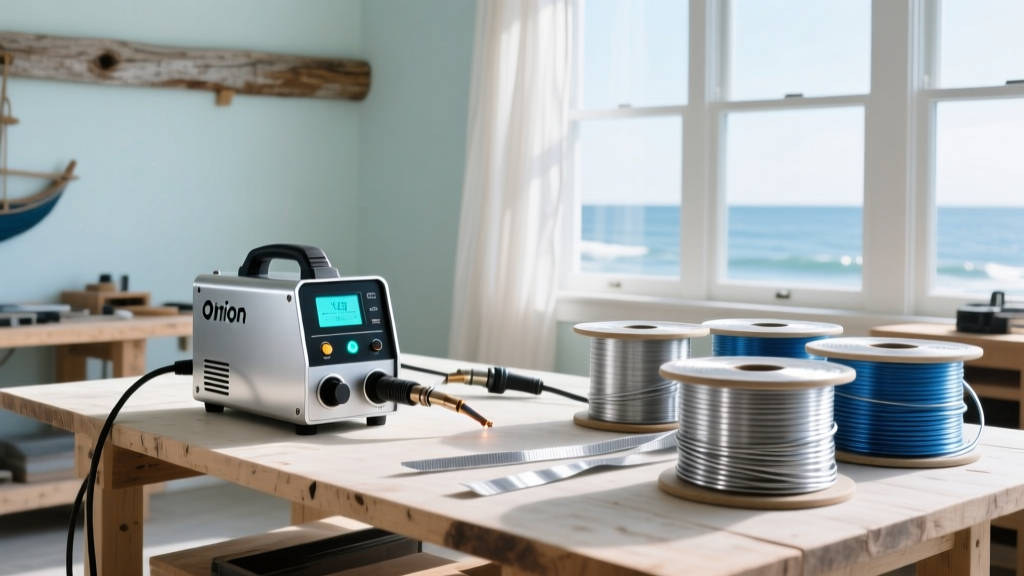
Sourcing Marine-Grade Findings and Storage
Your DIY studio's environment matters. If you are operating in a coastal town, the ambient humidity and salt air will tarnish your inventory before it even reaches the client. Invest in airtight, gasket-sealed storage bins and line them with Pacific Silvercloth or 3M anti-tarnish strips. When sourcing jump rings and clasps for permanent anklets—which endure the harshest friction from sand and surf—avoid standard plated findings. Source solid 14k gold or titanium jump rings with a minimum wire thickness of 1.0mm to ensure the weld holds up against the abrasive action of beach sand.
Troubleshooting Coastal Tarnish and Weld Degradation
Even with the best materials, clients will occasionally return with dulled chains. It is vital to educate your clients on the difference between tarnish and corrosion. If an Argentium chain dulls after a month of ocean swimming, it is likely a buildup of dried salt and microscopic organic matter (like algae) trapped in the links, not permanent metal degradation. Instruct clients to soak their permanent jewelry in a solution of warm water and a few drops of mild, phosphate-free dish soap, gently agitating with a soft baby toothbrush. Avoid ultrasonic cleaners for welded permanent jewelry, as the high-frequency vibrations can fatigue the heat-affected zone of the weld over time, leading to catastrophic failure.
Conclusion
Mastering the permanent jewelry Monterey standard means elevating your DIY practice from simple assembly to true materials engineering. By prioritizing saltwater-resistant alloys like Argentium and 14k gold, selecting structurally sound curb profiles, and maintaining strict argon shielding during the welding process, you can create permanent pieces that withstand the relentless Pacific Ocean. In the coastal jewelry market, durability is the ultimate luxury.


