Fixing Salt Boutique and Permanent Jewelry Welding Issues
Master the art of welding delicate chains. Learn expert troubleshooting for salt boutique and permanent jewelry to prevent burns, weak welds, and snapping.

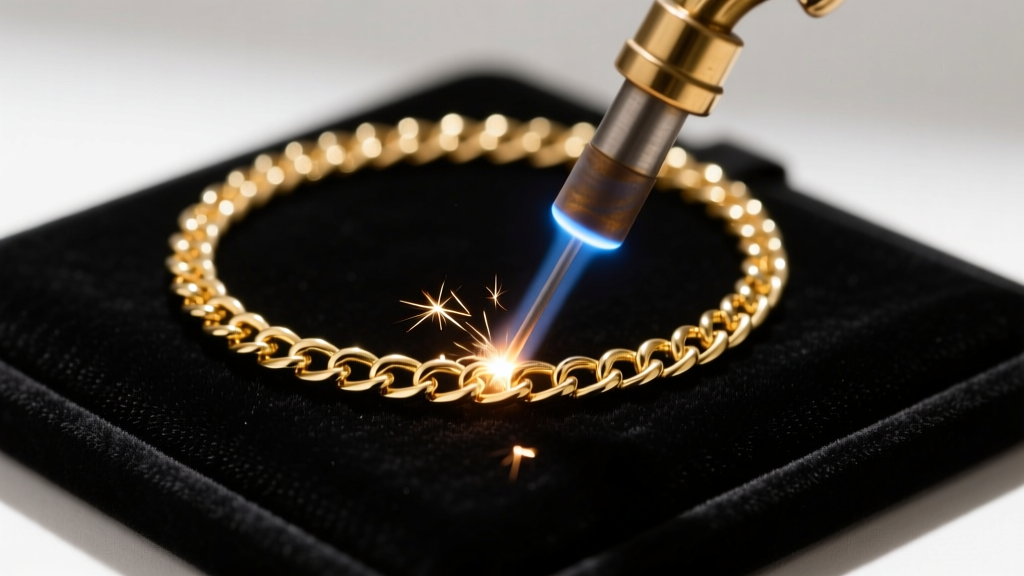
The permanent jewelry industry has evolved dramatically, and as we navigate the trends of 2026, the 'salt boutique and permanent jewelry' aesthetic has firmly taken the spotlight. Characterized by ultra-delicate, textured chains that mimic the look of tiny sea salt crystals or fine sand, these pieces offer a minimalist, high-end boutique appeal. However, for DIY jewelers and studio owners, welding these micro-textured chains presents a unique set of metallurgical and technical challenges. Unlike smooth cable or figaro chains, salt chains suffer from arc scatter, uneven heat distribution, and a high risk of vaporizing the link if the pulse energy is miscalculated by even a fraction of a Watt-second.
If you are struggling with burnt links, weak welds that snap during wear, or unsightly discoloration on your delicate pieces, you are not alone. This comprehensive troubleshooting guide dives deep into the physics of pulse arc welding for textured micro-chains, providing actionable frameworks to perfect your salt boutique and permanent jewelry offerings.
The Metallurgy of Textured Salt Chains
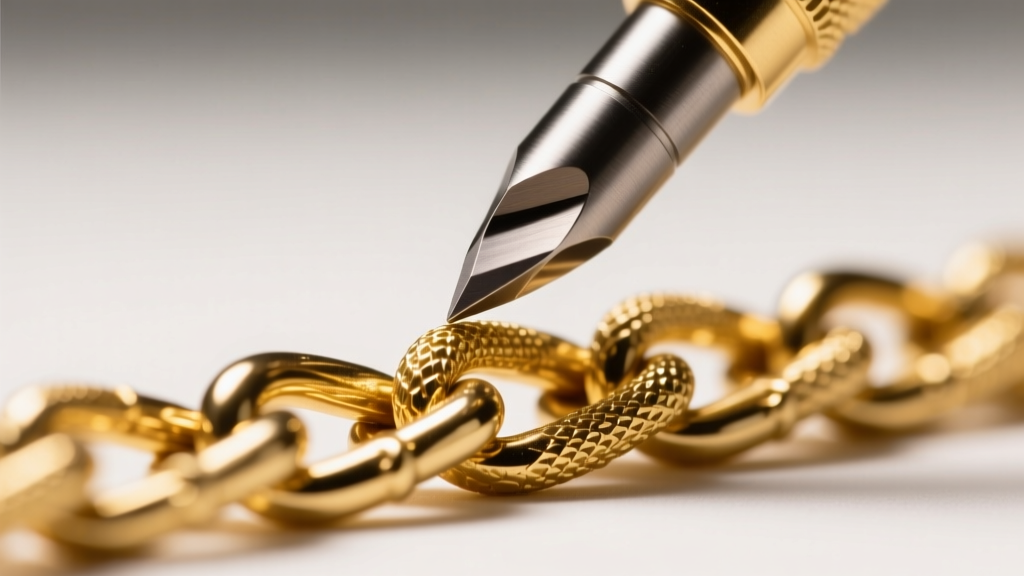
To troubleshoot effectively, we must first understand why salt chains behave differently under a pulse arc welder. A standard 1.2mm cable chain has a relatively smooth surface, allowing the electrical arc to jump predictably from the tungsten electrode to the highest point of the link. Salt chains, however, are heavily textured. The surface is covered in micro-peaks and valleys.
When the welder discharges, the arc naturally seeks the path of least resistance, striking the highest microscopic peak on the chain. This causes 'arc scatter,' where the energy is dispersed unevenly across the textured surface rather than concentrating into a tight, penetrative weld pool. The result? A weld that looks fused on the outside but remains brittle and porous on the inside, leading to catastrophic failure when the client pulls on the bracelet.
Solution: The Tack-and-Blend Technique
Instead of relying on a single high-energy pulse, professional permanent jewelry welders use a two-step process for salt chains:
- The Tack: Use a low-energy pulse (approx. 5-8 Ws) to lightly fuse the top of the link, flattening the micro-texture and creating a smooth surface area.
- The Blend: Immediately follow with a slightly higher energy pulse (approx. 10-15 Ws) to penetrate the joint and create a structural alloy bond.
Troubleshooting Weld Burn and Discoloration
Nothing ruins the aesthetic of a delicate salt boutique and permanent jewelry piece faster than a dark, oxidized halo around the weld spot. This discoloration is almost always a failure of your shielding gas protocol, not the metal itself.
Dialing in Your Argon Gas Flow
Gold and silver oxidize instantly when exposed to atmospheric oxygen at welding temperatures. To prevent this, you must use 99.999% pure Argon gas. However, the flow rate—measured in Cubic Feet per Hour (CFH)—is where most DIY setups fail.
Expert Insight: If your Argon flow is too low (under 2 CFH), oxygen infiltrates the weld pool, causing a dark grey or black burn mark. If the flow is too high (over 7 CFH), the gas turbulence actually pulls ambient room air into the shielding envelope, causing the exact same discoloration while wasting expensive gas.
For delicate 1.2mm to 1.5mm salt chains, set your regulator to a laminar flow of 3.5 to 4.5 CFH. Ensure your argon hose is completely purged of ambient air before your first weld of the day by letting the gas run for 10 seconds with the pedal depressed but the electrode away from the metal.
Fixing Weak Welds and Chain Snapping
A weak weld on a salt chain is usually the result of applying the wrong energy matrix for the specific karat and manufacturing method of the chain. Solid 14k gold requires vastly different energy settings than 14k Gold-Filled (GF), and treating them identically will result in either under-welding or blowing a hole straight through the link.
The Pulse Welder Energy Matrix
The following table provides baseline Watt-second (Ws) settings for Orion-style pulse welders. Always test on a scrap piece of the exact chain batch before welding on a client.
| Chain Type & Thickness | Material Composition | Tack Pulse (Ws) | Weld Pulse (Ws) | Common Failure Mode |
|---|---|---|---|---|
| Salt Chain (1.2mm) | Solid 14k Yellow Gold | 6 - 8 Ws | 14 - 18 Ws | Under-welding due to arc scatter on texture |
| Salt Chain (1.2mm) | 14k Gold-Filled (Brass Core) | 4 - 5 Ws | 9 - 12 Ws | Vaporizing the gold layer, exposing brass |
| Salt Chain (1.5mm) | Solid 14k White Gold | 8 - 10 Ws | 18 - 22 Ws | Cracking due to nickel/palladium alloy hardness |
| Sea-Salt Bead (1.8mm) | Sterling Silver (.925) | 10 - 12 Ws | 25 - 30 Ws | Porosity from rapid cooling and high thermal conductivity |
Note: When welding 14k Gold-Filled salt chains, you are essentially welding a microscopic layer of gold over a brass core. If your Ws setting exceeds 15, you will boil the zinc in the brass core, resulting in a porous, brittle weld that will snap within days. Always err on the side of lower energy and multiple pulses for GF materials.
Electrode Geometry and Maintenance
The physical shape of your tungsten electrode dictates the precision of your arc. A blunt or improperly sharpened electrode will cause the arc to wander, striking the delicate salt texture at an angle and melting the side of the link rather than fusing the joint.
Choosing the Right Tungsten
For boutique-style permanent jewelry, abandon the standard 2% Thoriated (red) tungsten used in heavy industrial TIG welding. Instead, use 1.5% Lanthanated (gold) or 2% Lanthanated (blue) tungsten in a 0.5mm or 0.8mm diameter. Lanthanated electrodes strike an arc at lower voltages, providing the fine control necessary for micro-jewelry.
The Sharpening Protocol
Your electrode must be sharpened to a precise, concentric point. Use a diamond sharpening wheel or a dedicated tungsten grinder. The grind lines must run longitudinally (parallel to the length of the electrode), never circumferentially. Circumferential grind lines act like a staircase for the electrical arc, causing it to spiral around the tip and wander off-target. Maintain a sharp tip for 10-15 welds, then lightly dress the tungsten on a diamond file to remove micro-ablations.
Sourcing Authentic Salt Chains for Your Studio
The market is currently flooded with low-quality, hollow-manufactured chains masquerading as boutique-grade salt chains. Hollow chains will instantly collapse under the pressure of a pulse arc welder. To maintain the integrity of your salt boutique and permanent jewelry brand, you must source solid or heavily plated micro-chains from reputable jewelry supply houses.
Industry leaders like Rio Grande and Stuller offer precision-milled chains with consistent link tolerances. When ordering, specifically request 'solid link' or 'heavy die-struck' variations. According to equipment manufacturers like Sunstone Welders, consistent metal density is the single most important factor in achieving repeatable, high-strength micro-welds.
Final Thoughts on Studio Mastery
Troubleshooting the nuances of salt boutique and permanent jewelry welding requires a shift from a 'one-size-fits-all' pedal press to a highly calibrated, material-specific approach. By mastering your argon flow, respecting the energy thresholds of gold-filled materials, and maintaining surgical precision with your tungsten electrode, you can eliminate weak welds and deliver the flawless, permanent pieces your clients expect. Take the time to calibrate your machine, keep a detailed logbook of your Ws settings for every new chain spool, and your studio's reputation for quality will become as enduring as the jewelry you create.


