Wire Metals for Jewelry Making Tutorials: A Material Comparison
Compare copper, argentium, gold-filled, and titanium wire properties. Essential material data for advanced jewelry making tutorials.

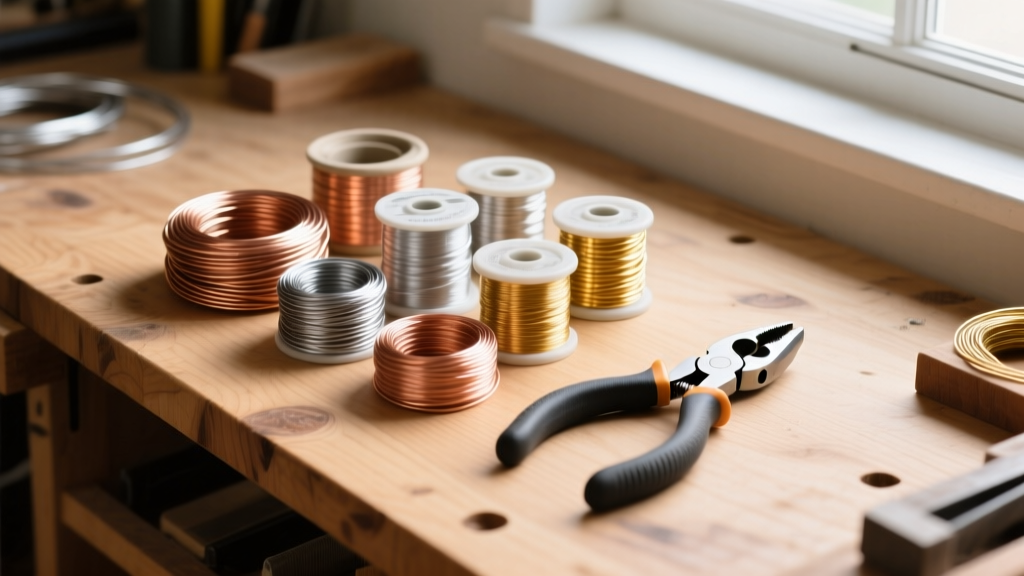
The Metallurgy Behind the Manipulation
Most jewelry making tutorials focus heavily on the physical manipulation of wire—teaching you how to execute perfect wrapped loops, weave intricate Viking knits, or shape structural frames. However, they frequently ignore the underlying metallurgical properties that dictate how those wires behave under stress, how they age, and why they fail. Understanding yield strength, work hardening rates, and crystal lattice structures is what separates a fragile hobbyist piece from a durable, professional-grade garment.
When you bend a piece of wire, you are physically altering its atomic structure. The displacement of atoms creates dislocations in the crystal lattice, which multiply and tangle, making the metal harder but more brittle. This phenomenon, known as strain hardening or work hardening, varies wildly depending on the alloy you choose. In this comprehensive material comparison, we will dissect the four most common wires used in wire wrapping and structural jewelry fabrication, providing the exact data you need to select the right metal for your next project.
Copper: The Practice Standard and Its Limits
Pure copper (specifically C11000 electrolytic tough pitch) is the universal starting point for jewelers. It is highly malleable, affordable, and takes a brilliant patina when treated with liver of sulfur. However, copper work hardens faster than almost any other jewelry metal. A 20-gauge dead soft copper wire will become half-hard after just a few tight bends, and fully hard (brittle) shortly thereafter.
The primary failure mode for copper in jewelry making tutorials is micro-fracturing. If you attempt to unwrap a mistake or over-manipulate a woven section without annealing the metal, it will snap cleanly. Annealing copper requires heating it to a dull cherry red (approximately 700°F or 370°C) and quenching it in water to reset the crystal lattice. While copper is excellent for learning tension and gauge tolerances, its high oxidation rate and low yield strength (around 70 MPa in the annealed state) make it less than ideal for high-wear items like rings or bracelet clasps that require structural memory.
Argentium Silver: The Tarnish-Resistant Upgrade
For those graduating from base metals to precious alloys, Argentium Silver (available in 935 and 960 grades) represents a massive metallurgical leap over traditional Sterling (925). By replacing a portion of the copper alloy with germanium, Argentium forms a transparent, self-healing layer of germanium dioxide on its surface when exposed to oxygen. This makes it virtually immune to the sulfide tarnishing that plagues standard sterling silver.
From a fabrication standpoint, Argentium's most remarkable property is its ability to fuse to itself without the need for solder. When heated to its melting point (around 1650°F for 935 grade), the surface tension draws the molten metal together, creating seamless joints that are stronger than traditional soldered seams. According to the metallurgical guides provided by Rio Grande, Argentium also exhibits superior ductility, meaning it can be work hardened further than sterling before requiring annealing, allowing for tighter, more secure wire wraps around gemstone cabochons without the risk of stress fractures.
14/20 Gold-Filled: Navigating the Bimetallic Core
Gold-filled wire is often misunderstood by beginners following jewelry making tutorials. It is not a plating; it is a bimetallic composite. The "14/20" designation means that exactly 5% (1/20th) of the total weight of the wire is 14-karat gold, which is mechanically bonded to a jeweler's brass core under extreme heat and pressure. This mechanical bond is incredibly durable, but it introduces specific fabrication limitations.
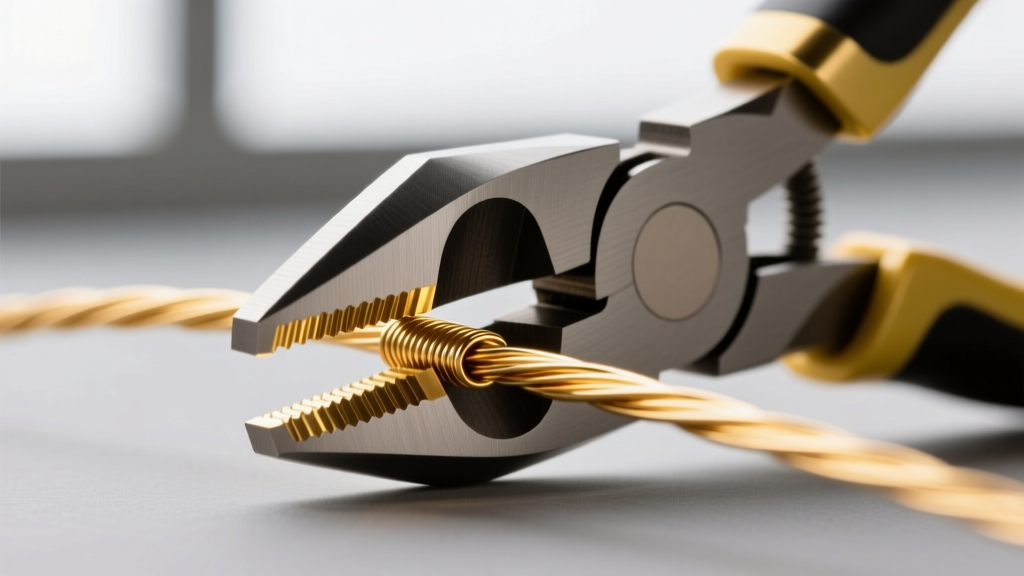
The critical rule of gold-filled wire is that you must never abrade, sand, or aggressively file the surface. Doing so will cut through the microscopic gold layer and expose the brass core. Once exposed, the brass will rapidly oxidize, and the galvanic reaction between the gold and brass in the presence of skin moisture will cause the wire to turn the wearer's skin green and degrade the structural integrity of the piece. As noted by Halstead Bead, all finishing on gold-filled wire must be done with polishing cloths or gentle tumbling with stainless steel shot, avoiding any harsh abrasive compounds that could strip the gold cladding.
Titanium: The Hypoallergenic Challenge
Titanium (specifically Grade 1 Commercially Pure, or CP) is the ultimate choice for hypoallergenic jewelry, particularly for permanent jewelry applications and ear wire hooks. It boasts an exceptional strength-to-weight ratio and is entirely impervious to tarnish and skin acids. However, its physical properties make it notoriously difficult to manipulate in standard wire wrapping scenarios.
Titanium exhibits extreme "springback" or elastic recovery. When you bend a 20-gauge titanium wire around a mandrel, it will spring back several degrees once the pressure is released, requiring you to over-bend the metal to achieve your desired angle. Furthermore, titanium has a high tendency to gall (cold weld to itself under friction). Standard carbon steel flush cutters will be instantly ruined by titanium wire; the metal will dent the cutting edges, leaving a jagged pinch rather than a clean cut. You must use specialized tungsten carbide or hardened titanium-alloy cutters, such as those manufactured by Tronex or Lindstrom, to achieve clean, flush cuts on titanium wire.
Material Properties & Failure Mode Matrix
To help you select the right material for your specific design requirements, refer to the comparative data table below. This matrix highlights the mechanical differences that dictate how each wire performs under the stresses of daily wear and fabrication.
| Material | Yield Strength (Annealed) | Work Hardening Rate | Tarnish / Oxidation | Primary Failure Mode |
|---|---|---|---|---|
| Pure Copper (C11000) | ~70 MPa | Very High | High (Cupric Sulfide) | Micro-fracturing from over-manipulation |
| Argentium 935 | ~120 MPa | Moderate | Extremely Low | Fusing joint failure if overheated |
| 14/20 Gold-Filled | ~150 MPa | Moderate-High | Low (Brass core is high) | Core exposure via abrasion/filing |
| Titanium Grade 1 CP | ~170 MPa | Low (High Springback) | None | Tool destruction and galling |
Tooling Adjustments Based on Material Hardness
Your tooling must adapt to the metallurgical reality of your chosen wire. Using the wrong pliers or cutters will not only ruin your tools but will mar the surface of your metal, creating stress concentrators where cracks will eventually form.
- For Copper and Argentium: Standard hardened steel flush cutters and flat-nose pliers are sufficient. Always use nylon-jaw pliers for the final straightening and tightening of wraps to prevent marring the soft metal surface.
- For Gold-Filled: Avoid serrated or cross-jawed pliers entirely. The teeth will bite through the gold layer and expose the brass core. Use highly polished, mirror-finish flat-nose pliers or wrap your plier jaws in specialized tool tape.
- For Titanium: Invest in tungsten carbide flush cutters. When wrapping, use smooth-jawed chain-nose pliers and expect to apply roughly 30% more physical force to achieve bends compared to sterling silver due to titanium's high elastic modulus.
"The mark of an advanced wire artist is not just the complexity of their weave, but their intimate understanding of how the metal's grain structure responds to the pressure of their pliers. Respect the metallurgy, and the metal will hold its shape forever."
By integrating these material properties into your workflow, you elevate your practice from simple craft to precision fabrication. The next time you sit down to follow or create jewelry making tutorials, consider the atomic reality of the wire in your hands, and design your structural elements to complement the metal's natural strengths rather than fighting its inherent limitations.


