Wire Wrap Jewelry Making: 2026 Supply Cost Breakdown
Discover the true costs of wire wrap jewelry making in 2026. We break down tool, wire, and stone budgets to help beginners maximize value.

The True Barrier to Entry in Wire Wrap Jewelry Making
When evaluating the true barrier to entry for wire wrap jewelry making, most beginner tutorials gloss over the hidden costs of material degradation, tool fatigue, and the so-called "beginner tax." The internet is flooded with claims that you can start crafting professional-grade pendants and rings for under $30. While technically possible, this ultra-budget approach almost always results in marred wire, uneven tension, and stones that slip from their settings within weeks of wear.
As we navigate the 2026 jewelry supply market, inflation and shifting precious metal spot prices have fundamentally altered the cost landscape. To build a sustainable, profitable, or even just personally rewarding hobby, you must approach your supply chain with a value-assessment mindset rather than a pure cost-cutting one. This guide dissects the actual financial requirements of wire wrapping, separating the non-negotiable investments from the marketing fluff, and provides a concrete framework for building a high-value starter kit.
Tiered Tool Investment: Where to Save and Where to Splurge
The most common failure mode for novice wire artists is purchasing a $15 multi-piece plier set from a generic marketplace. These tools typically feature serrated jaws, excessive lateral play in the pivot pins, and poorly aligned flush cutters. Serrated jaws will permanently scar dead-soft wire, ruining the finish before you even begin weaving.
The Non-Negotiables: Pliers and Cutters
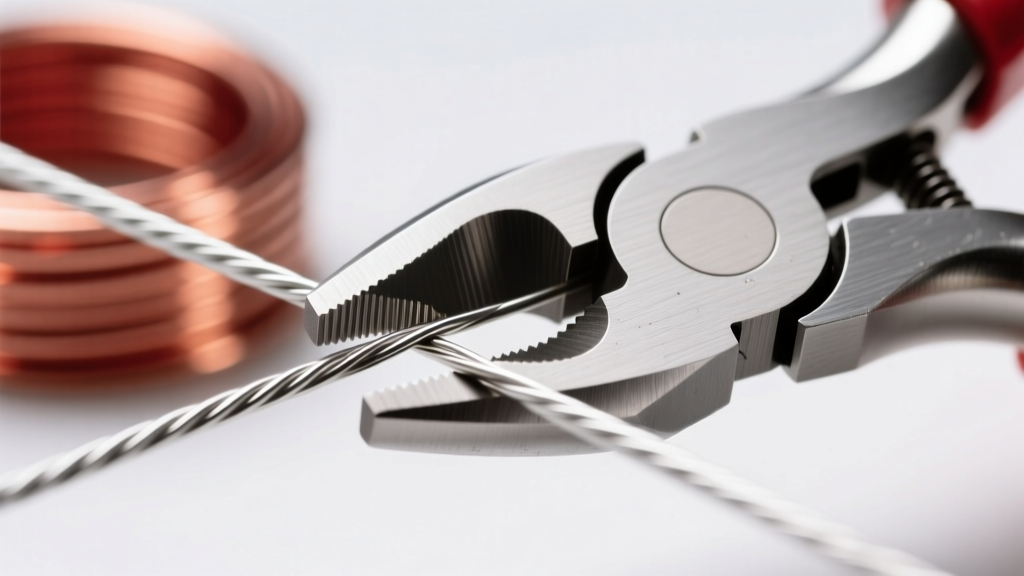
For structural integrity and clean aesthetics, you need three core pliers and one high-quality cutter. According to master jewelers at Ganoksin, the jaw alignment and steel hardness dictate the lifespan of your tools.
- Flat-Nose Pliers (Smooth Jaw): Used for gripping, bending 90-degree angles, and holding structural frames. Invest in a brand like Wubbers or Lindstrom ($25–$45). The jaws must be perfectly flush when closed.
- Chain-Nose Pliers (Smooth Jaw): Tapered for reaching into tight spaces and closing jump rings. Never use serrated chain-nose pliers for wire wrapping; they will gouge 20-gauge base wires.
- Round-Nose Pliers: Essential for creating consistent loops and bails. Look for a stepped round-nose or a high-quality traditional pair ($20–$35) to ensure your loops are perfectly circular, not teardrop-shaped.
- Flush Cutters: A true flush cutter leaves one side of the wire completely flat and the other side pinched. Cheap cutters leave a sharp "V" on both sides, requiring excessive filing. A Tronex or Swanstrom cutter ($40–$60) will hold its edge through thousands of cuts on work-hardened sterling silver.
Mandrels and Jigs: The "Wait to Buy" List
Do not buy expensive steel ring mandrels or complex wire-jig boards until you have mastered freehand tension control. For under $5, a wooden dowel from a hardware store serves perfectly for bails and bracelets, while a simple plastic ring mandrel ($8) is sufficient for early sizing practice.
Wire Materials: Price Per Ounce vs. Tarnish Resistance
The wire you choose dictates both your upfront budget and the longevity of the finished piece. Wire wrap jewelry making relies heavily on the interplay between dead-soft wire (for weaving) and half-hard wire (for structural frames). Understanding metallurgy prevents catastrophic failures, such as prongs that slowly creep open due to metal memory.
Below is a 2026 market assessment of the most common wrapping wires, balancing cost against durability and tarnish resistance.
| Material | Approx. Cost (per oz) | Tarnish Rate | Best Use Case |
|---|---|---|---|
| Pure Copper (H00/H02) | $8 - $12 | High (Oxidizes rapidly) | Practice, patina pieces, bohemian styles |
| Argentium Silver (.935) | $45 - $65 | Extremely Low | High-end bridal, low-maintenance daily wear |
| Sterling Silver (.925) | $35 - $50 | Moderate to High | Traditional fine jewelry, oxidized contrast designs |
| 14/20 Gold-Filled | $35 - $55 | Very Low | Luxury aesthetics on a mid-tier budget |
| Brass / Bronze | $10 - $18 | Moderate (Patina prone) | Steampunk, vintage, and heavy textural wraps |
Expert Insight: Many beginners default to sterling silver, only to become frustrated by its rapid oxidation when handled frequently during the wrapping process. Rio Grande highly recommends Argentium Silver for wire artists. The addition of germanium makes it highly tarnish-resistant and allows it to be fused without solder, a massive advantage for advanced wire weavers who want to lock structural nodes permanently.
Sourcing Cabochons: Avoiding the Beginner Tax
A stunning wire wrap pendant is only as good as the stone it cradles. The "beginner tax" occurs when new artists purchase pre-made, machine-calibrated glass or dyed quartz cabochons from big-box craft stores at a 400% markup.
Direct Sourcing and Mohs Hardness
To maximize value, source directly from lapidary artists or specialized gem shows. When selecting stones for traditional trapping or prong-setting, you must consider the Mohs hardness scale. Wrapping a soft stone like apatite (Mohs 5) or opal (Mohs 5.5-6.5) with rigid half-hard wire often results in chipping or cracking as the wire work-hardens and contracts. Always use a buffer—such as a thin strip of leather or a layer of dead-soft weaving wire—between the structural frame and stones below a Mohs 7.
The Value of Digital Calipers
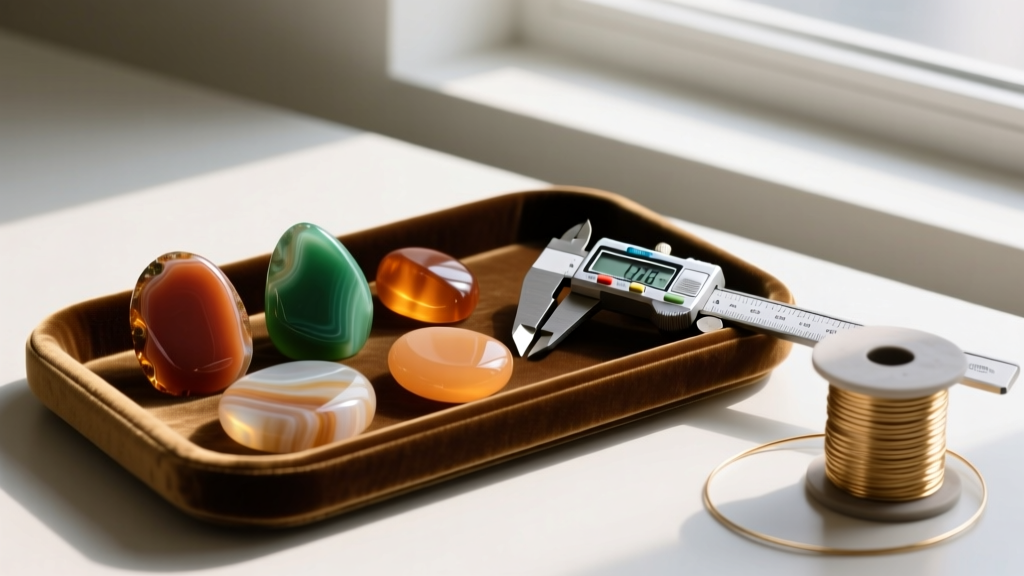
A $12 digital caliper is a non-negotiable budget item. When buying cabochons online from independent cutters on platforms like Etsy or direct-from-miner sites, listings often estimate sizes. Measuring your stones to the exact millimeter allows you to pre-build your base frames with mathematical precision, eliminating the wasted wire and broken prongs that occur when trying to force a 31mm stone into a 30mm frame.
Hidden Costs: Patina, Tumbling, and Finishing
Budget assessments rarely account for the finishing stage. Raw wire wraps often look flat and lack the contrast needed to make intricate weaves pop. To achieve a professional, gallery-ready finish, you must budget for chemical patinas and polishing compounds.
"The difference between an amateur wire wrap and a master's piece is almost entirely in the finishing. A controlled liver of sulfur patina followed by selective polishing on a brass brush brings the wire to life."
- Liver of Sulfur (LOS): A $15 gel pot will last a hobbyist over a year. It forces rapid oxidation on copper and sterling silver, turning the recessed weaves dark brown or black.
- Brass Wire Brushes & Polishing Cloths: Essential for removing the oxidation from the high points of the wire while leaving the crevices dark. Budget $10 for high-quality Pro-Polish cloths.
- Tumbler (Optional but Recommended): A rotary tumbler with stainless steel shot ($60 for a basic Lortone barrel and shot) will work-harden your finished pieces and burnish the wire to a high shine in 45 minutes, saving hours of hand-polishing.
The $150 Optimal Starter Kit Breakdown
If you are ready to commit to wire wrap jewelry making without wasting money on tools you will outgrow in a month, here is the ultimate value-optimized $150 shopping list for 2026:
- Wubbers Flat-Nose & Chain-Nose Pliers (Smooth): $45
- Econo Round-Nose Pliers: $15
- Tronex Standard Flush Cutters: $45
- 1 oz 20g Dead-Soft Copper Wire (Practice): $10
- 1 oz 28g Dead-Soft Copper Wire (Weaving): $12
- Digital Caliper & Liver of Sulfur Gel: $23
By prioritizing smooth-jaw ergonomics and precise cutting over flashy, unnecessary jigs, you build a foundation that respects the metallurgy of the craft. Once your muscle memory adapts to tension control and work-hardening rates with copper, you can seamlessly transition your high-quality tools into Argentium and Gold-Filled territories, ensuring your financial investment scales alongside your artistic expertise.


