Wire Wrap Jewelry Metals: Copper, Silver & Gold Compared
Discover the best metals for wire wrap jewelry. Compare copper, sterling silver, and gold-filled wire properties, gauges, and work-hardening traits.

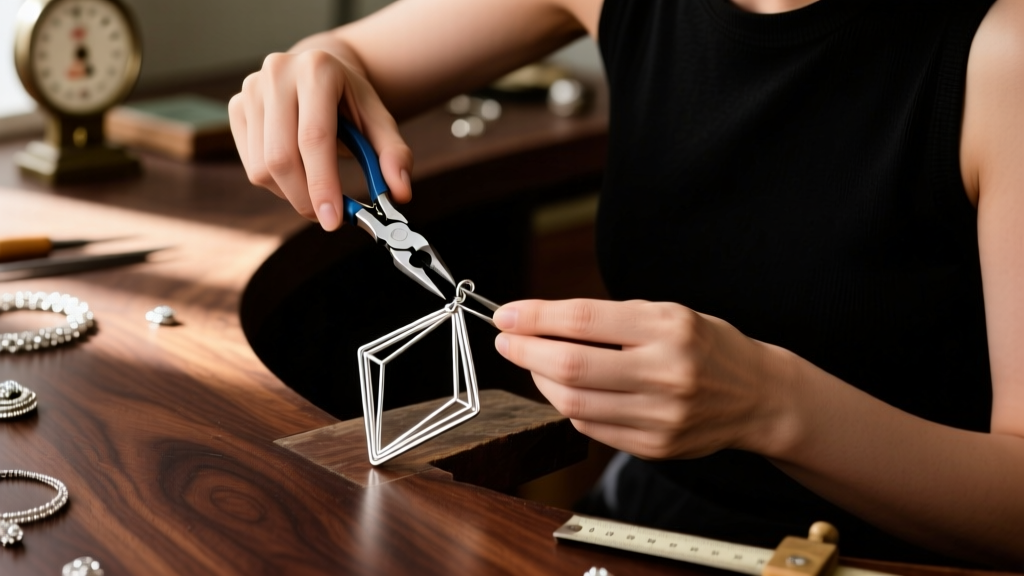
When designing wire wrap jewelry, the aesthetic appeal of the metal is only half the equation. The true mastery of the craft lies in understanding metallurgy. Unlike soldered or cast jewelry, wire wrapping relies entirely on the physical manipulation of the metal itself. The tensile strength, yield point, work-hardening rate, and oxidation properties of your chosen wire will dictate whether a piece holds its structural integrity or collapses under the weight of a gemstone.
In 2026, with precious metal markets experiencing significant volatility and new tarnish-resistant alloys becoming more accessible to independent artisans, selecting the right material is both an artistic and economic decision. This guide breaks down the core metals used in wire wrap jewelry, comparing their physical properties, optimal gauges, and structural limitations.
The Work-Hardening Spectrum: Dead Soft vs. Half-Hard
Before comparing specific alloys, you must understand temper. Temper refers to the hardness and malleability of the wire, which is determined by how it has been processed after annealing (heating to relieve internal stresses).
- Dead Soft: The wire has been fully annealed. Its crystalline structure is relaxed, making it extremely pliable. It is ideal for weaving, tight coiling, and sculpting around irregular cabochons. However, it lacks structural memory and will bend out of shape if used for a pendant bail or ring shank.
- Half-Hard: After annealing, the wire is drawn through a reducing die, which compresses the grain structure and increases its tensile strength. Half-hard wire offers a balance: it is malleable enough to bend with pliers but rigid enough to hold a structural frame or jump ring.
- Full-Hard: Drawn down significantly after annealing, this wire is incredibly stiff and springy. It is rarely used in wire wrapping except for specific structural components like heavy-duty clasps or ear wires that require high tension.
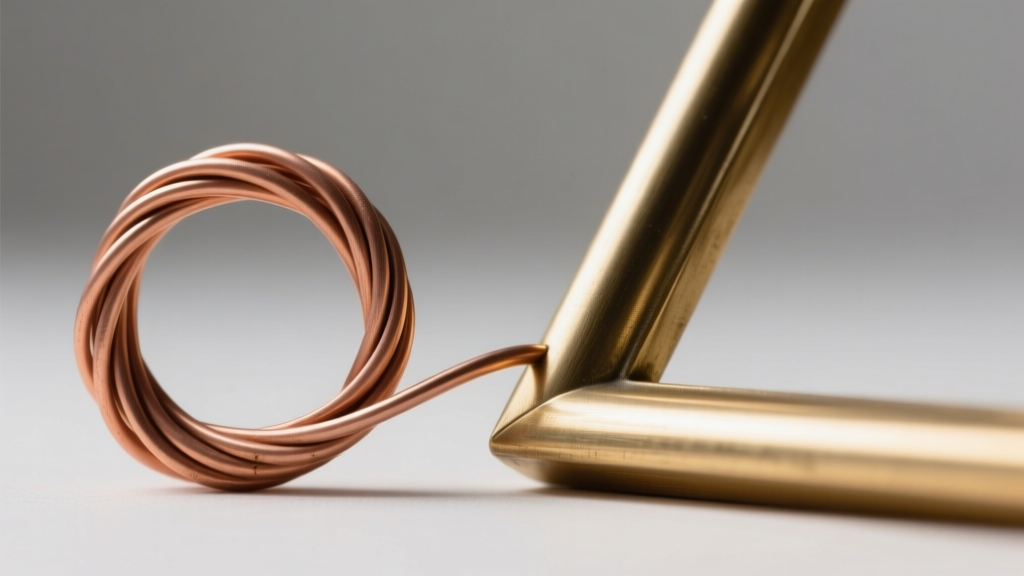
Every time you bend, twist, or hammer wire, you cause work-hardening. The metal's crystal lattice becomes tangled, increasing hardness but decreasing ductility. If you overwork a piece of dead soft wire, it will become brittle and snap. According to metallurgical guides from Rio Grande, if a wire becomes too stiff during a complex weave, you can re-anneal it using a butane torch until it glows a dull cherry red, then quench it in water to restore its dead soft temper.
Copper & Brass: The Practice & Patina Metals
Copper and brass are the foundational metals for wire wrap jewelry. They are forgiving, inexpensive, and excellent for practicing complex weaves like the Mobius or Viking Knit.
Bare Copper (ASTM B152)
Pure bare copper is incredibly soft and takes a beautiful patina when treated with liver of sulfur. However, it oxidizes rapidly from skin oils and humidity. For structural frames, 16-gauge or 14-gauge bare copper is recommended, while 24-gauge to 28-gauge is best for weaving. A major drawback of bare copper is that it can leave a green residue on the wearer's skin due to the formation of copper chelates. Sealing the finished piece with a micro-crystalline wax or a specialized jewelry lacquer is mandatory for wearable pieces.
Enameled Copper (Artistic Wire)
Brands like Artistic Wire coat a copper core in a polyurethane enamel. This prevents tarnishing and skin discoloration. The trade-off is that the enamel coating can chip or scratch if you use standard steel-jaw pliers. You must use nylon-jaw pliers or dip your plier tips in a liquid rubber tool dip to preserve the enamel finish during wrapping.
Jeweler's Brass (Merlin's Gold)
Composed of roughly 70% copper and 30% zinc, jeweler's brass mimics the color of 14k gold. It is slightly stiffer than pure copper and work-hardens faster. It is an excellent choice for structural frames in practice pieces, though it will eventually develop a dark, brassy patina if left unsealed.
Sterling vs. Argentium: The Silver Showdown
When transitioning to fine jewelry, silver is the standard. However, not all silver alloys behave the same way under the pressure of pliers.
| Property | Sterling Silver (.925) | Argentium Silver (.935) |
|---|---|---|
| Composition | 92.5% Silver, 7.5% Copper | 93.5% Silver, Copper, Germanium |
| Tarnish Resistance | Low (Forms black copper sulfide) | Extremely High (Forms clear germanium dioxide) |
| Work-Hardening Rate | Moderate | Slower (Stays malleable longer) |
| Fusing Capability | Requires solder & flux | Can be fused without solder |
| Relative Cost (2026) | Baseline Premium | ~15-20% higher than Sterling |
For wire wrap jewelry, Argentium Silver is rapidly becoming the preferred choice for high-end artisans. The addition of germanium creates a transparent oxide layer that drastically slows tarnishing. Furthermore, Argentium's slower work-hardening rate means you can execute tighter, more complex weaves without the wire becoming brittle and snapping mid-project. While the initial material cost is higher, the reduction in polishing time and the premium you can charge for 'tarnish-resistant' jewelry easily offset the expense.
Pro Tip: When polishing Argentium wire wrap jewelry, avoid harsh abrasive polishes that contain ammonia, as they can strip the protective germanium dioxide layer. Use a dedicated Argentium polishing cloth instead.
Gold-Filled & Rose Gold-Filled: Premium Durability
Many beginners make the costly mistake of using gold-plated wire for wrapping. Gold plating is achieved via electroplating a microscopic layer of gold (often less than 0.05 microns) onto a brass core. The friction of wire wrapping, the pressure of pliers, and the wear of daily use will strip this plating away in weeks, leaving a patchy, discolored mess.
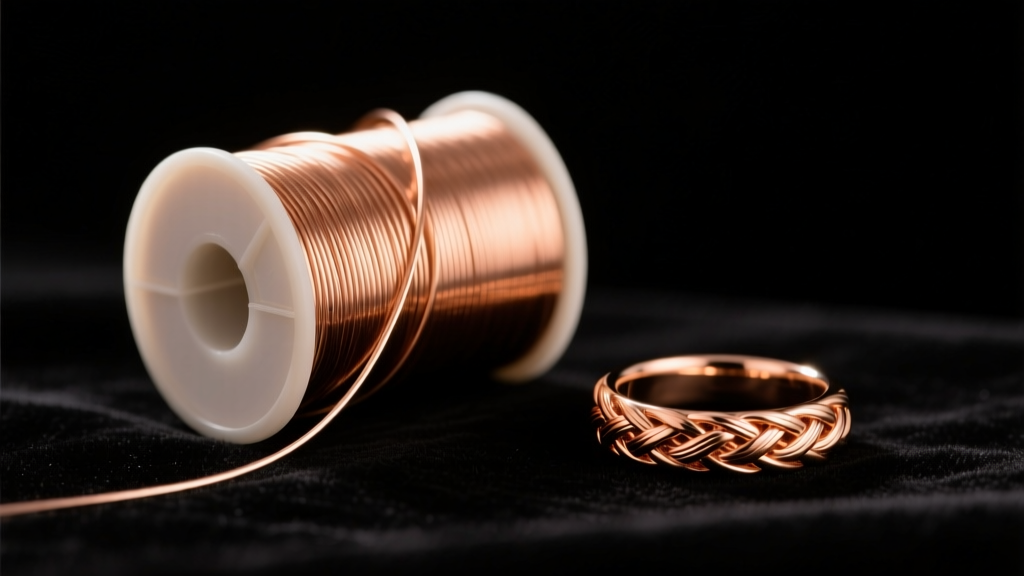
The correct material is Gold-Filled (GF). According to Federal Trade Commission guidelines, gold-filled wire must have a mechanically bonded layer of karat gold that constitutes at least 5% (or 1/20th) of the total weight of the item.
In wire wrapping, you will typically see 14/20 GF (14k gold, 1/20th the weight). The gold layer in 14/20 GF is up to 100,000 times thicker than standard electroplating. It will not flake off when bent with pliers, and it can withstand years of wear. Rose gold-filled wire uses a 14k rose gold alloy (mixed with a higher copper content) bonded to a brass core, offering a warm, vintage aesthetic that pairs beautifully with morganite, moonstone, and peach sapphires.
Gauge Selection Matrix for Wire Wrap Jewelry
Choosing the correct gauge (thickness) is just as critical as choosing the metal. The American Wire Gauge (AWG) system is inverse: the higher the number, the thinner the wire. Fire Mountain Gems provides extensive gauge charts, but here is a practical framework for wire wrapping:
- 14 to 16 Gauge (1.6mm - 1.3mm): Heavy structural frames, thick bangles, heavy-duty clasps, and large jump rings. Requires significant hand strength and heavy-duty flush cutters.
- 18 to 20 Gauge (1.0mm - 0.8mm): The workhorses of wire wrapping. Ideal for standard pendant frames, ear wires, ring shanks, and linking components. 20-gauge half-hard is the most versatile wire in a jeweler's kit.
- 22 to 24 Gauge (0.6mm - 0.5mm): Used for securing cabochons, creating small jump rings, and adding structural support weaves. 24-gauge is excellent for threading through small gemstone beads.
- 26 to 28 Gauge (0.4mm - 0.3mm): Strictly for fine coiling, micro-weaving, and binding thicker frame wires together. This wire is fragile and will snap if pulled too tightly with pliers; use your fingers or nylon pliers to tension it.
Sourcing & Tool Care for Different Alloys
The metal you choose also dictates how you must maintain your tools. Wrapping bare copper or brass will quickly mar the jaws of your steel pliers, leaving black oxidation marks that can transfer to softer metals like silver or gold-filled wire.
Always dedicate a specific set of pliers for base metals, or meticulously clean your tool jaws with a brass wire brush and isopropyl alcohol before switching to precious metals. When sourcing materials, avoid mystery spools from unverified online marketplaces. The dimensional accuracy of the AWG standard varies wildly in cheap imports; a spool labeled 20-gauge might actually be 21-gauge, which will ruin the tension and symmetry of a tightly calculated weave pattern. Stick to reputable jewelry suppliers who guarantee ASTM or ISO metallurgical standards.
By mastering the specific properties, tempers, and gauges of these metals, you elevate your wire wrap jewelry from simple craft projects to durable, heirloom-quality wearable art.


