Top Wire Wrap Jewelry Tutorials for 2026 Personalized Gifts
Discover the best wire wrap jewelry tutorials for 2026 personalized gifts. Match techniques, gauges, and stones to the perfect recipient.


The Art of Gifting Handmade Wire Jewelry
In the landscape of 2026, mass-produced accessories have taken a backseat to hyper-personalized, artisan-crafted pieces. When you master wire wrapping, you are not just bending metal; you are engineering wearable art tailored to the specific lifestyle and aesthetic of your recipient. However, matching the right project to the right occasion requires more than just creative vision—it demands a rigorous understanding of metallurgy, wire temper, and structural integrity. This guide bridges the gap between artistic intent and technical execution, providing a curated matrix of wire wrap jewelry tutorials designed specifically for gifting.
A successful handmade gift survives the unboxing and thrives in daily wear. If your wire wrap piece deforms after a week, the emotional resonance is lost to structural failure.
Occasion-Matching Matrix: Which Project for Which Person?
Before cutting your first inch of wire, consult this decision framework to align your skill level, material choice, and the recipient's lifestyle.
| Recipient / Occasion | Ideal Project | Recommended Wire & Gauge | Technical Focus |
|---|---|---|---|
| Bridesmaids / Anniversaries | Minimalist Birthstone Rings | 20g Half-Hard Argentium 935 | Tension setting, mandrel sizing |
| Graduations / Milestones | Woven Bail Cabochon Pendants | 20g Frame / 26g Dead Soft Weave | Mohs scale tension, weave consistency |
| Holidays / Push Presents | Rosary-Link Gemstone Bracelets | 24g Half-Hard 14k Gold-Filled | Wrapped loops, work hardening |
The Beginner: Minimalist Birthstone Rings
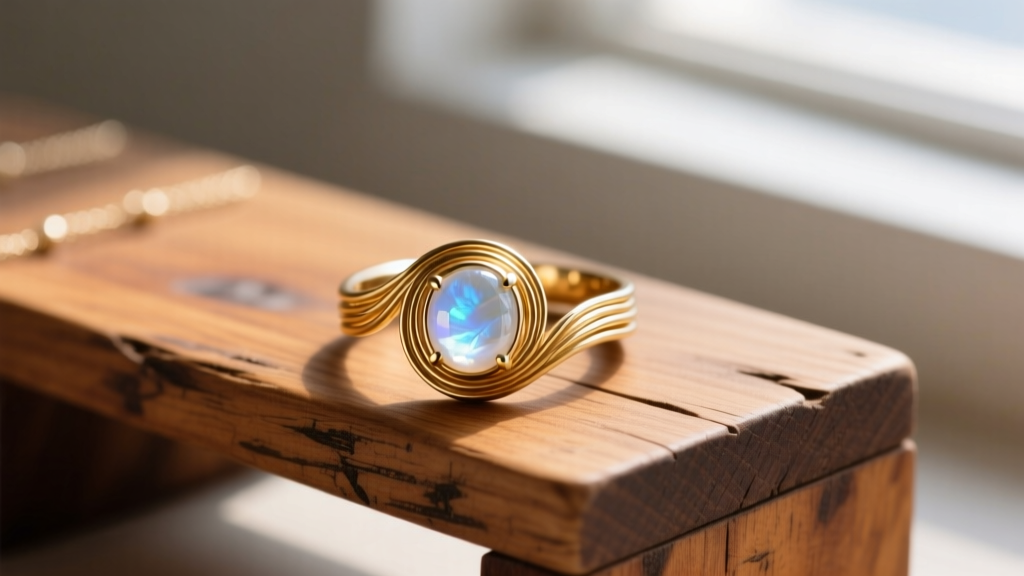
For bridesmaids or anniversary gifts, minimalist wire-wrapped rings offer a delicate aesthetic backed by surprising structural durability when executed correctly. The most common failure mode in beginner ring-making is selecting a wire temper that is too soft, resulting in a ring that warps the moment the wearer grips a steering wheel or a coffee mug.
Material Selection and Metallurgy
Opt for 20-gauge half-hard Argentium 935 silver. Unlike traditional Sterling 925, Argentium contains germanium, which forms a transparent, self-healing oxide layer that drastically slows tarnishing. This is critical for gifts that may sit in a jewelry box for months before being worn. According to Ganoksin's Metallurgy Breakdown on Argentium, this alloy also resists firescale during any optional soldering steps, though pure wire wrapping requires no heat.
Execution and Failure Modes
When wrapping a 4mm to 6mm faceted birthstone, use a steel ring mandrel to establish your base band. The failure point occurs at the stone's setting. If you pull the securing wraps too tightly on a softer stone like opal or moonstone (Mohs 5.5-6), the girdle will fracture. Conversely, wrapping quartz (Mohs 7) requires significant tension to prevent the stone from rattling. Always use nylon-jaw pliers for the final tightening passes to prevent marring the silver's mirror finish.
The Intermediate: Woven Bail Pendants
A woven wire pendant is a profound gift for graduations or major life milestones, symbolizing complexity and interwoven journeys. This project transitions you from simple bending to intricate weaving, requiring a dual-wire approach.
Wire Selection and Weaving Dynamics
Your frame wire must be rigid; use 18-gauge or 20-gauge half-hard wire. Your weaving wire must be highly malleable; use 26-gauge or 28-gauge dead soft wire. Dead soft wire has been fully annealed, meaning its crystalline lattice is relaxed, allowing it to bend repeatedly without work-hardening and snapping. When weaving around a cabochon, maintain exact 90-degree angles at the frame transitions to ensure the weave sits flush.
Sourcing Quality Cabochons
The success of a woven pendant hinges on the geometry of the center stone. Avoid stones with severe asymmetrical curves or undercut girdles, as the wire will slip out of the setting. Source calibrated cabochons with a consistent 3mm to 5mm dome height from reputable lapidaries. The Fire Mountain Gems Encyclopedia offers excellent guidelines on matching wire hardness to specific cabochon profiles, ensuring your bezel tension remains uniform.
The Advanced: Intricate Rosary-Link Bracelets
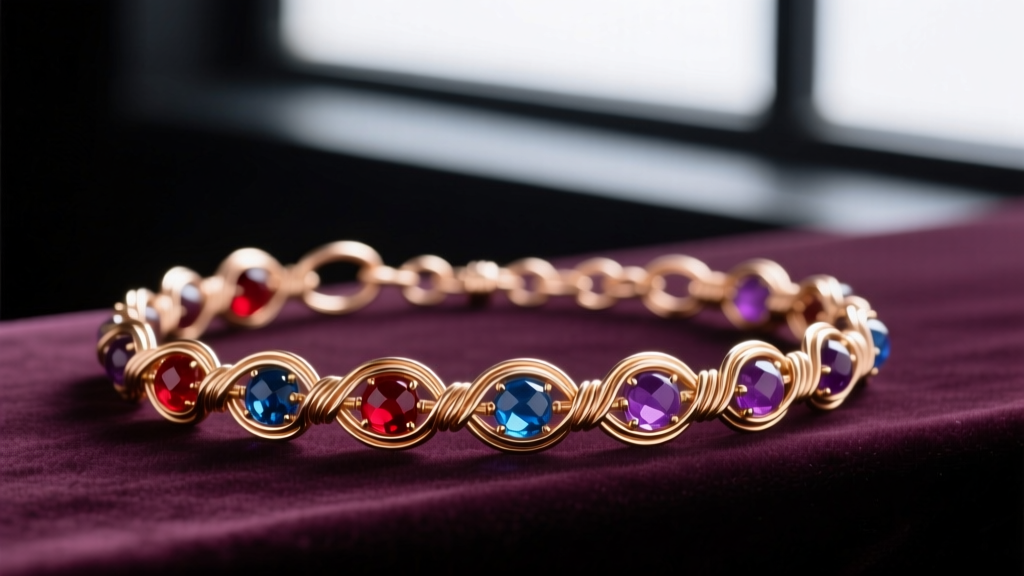
For high-stakes gifting like holidays or "push" presents, a fully articulated rosary-link bracelet showcases master-level wire manipulation. This technique relies entirely on the wrapped loop, a structural joint that must withstand thousands of articulation cycles without catching on delicate fabrics.
Mastering the Wrapped Loop
To create a durable link, use 24-gauge half-hard 14k gold-filled wire. The process requires precise geometry:
- The Bend: Grip the wire with round-nose pliers exactly 10mm from the end and bend to a strict 90-degree angle.
- The Loop: Reposition the pliers to the apex of the bend and sweep the wire into a complete circle, ensuring the loop is perfectly centered over the stem.
- The Wrap: Coil the tail tightly around the stem exactly three times. Fewer wraps compromise structural integrity; more wraps look clumsy on delicate beads.
- The Trim: Use flush cutters to snip the tail perfectly flush against the stem. A protruding wire end will instantly ruin silk blouses or wool sweaters.
Work Hardening and Finishing
Gold-filled wire work-hardens rapidly due to its brass core. As you manipulate the wire, dislocation pile-ups in the metal lattice increase its tensile strength but decrease its ductility. If you attempt to adjust a wrapped loop after it has been fully formed, the wire will snap. According to Rio Grande's Guide to Wire Temper, understanding the threshold between half-hard and full-hard states is the hallmark of an advanced wire artist. Finish the bracelet by tumbling it in stainless steel shot for 45 minutes to burnish the surface and close any microscopic gaps in your wraps.
Sourcing Guide: Where to Buy Supplies in 2026
The post-pandemic supply chain has stabilized, but quality disparities in wire manufacturing are more pronounced than ever. Avoid craft-store spools for fine gifting; the temper inconsistencies and alloy impurities will ruin your final product.
- Rio Grande: The industry standard for precious metals. Their Argentium and solid gold wire spools are laser-measured for exact gauge tolerances, ensuring your woven patterns align perfectly every time.
- Fire Mountain Gems: Ideal for sourcing bulk gemstone beads and cabochons. Filter their inventory by Mohs hardness to plan your wrapping tension accordingly.
- Wubbers & Lindstrom Tools: Invest in high-carbon steel cutters and polished-jaw pliers. A $60 pair of Lindstrom flush cutters will leave a flat, burr-free cut that a $15 hardware store cutter simply cannot achieve.
Packaging Your Wire-Wrapped Gifts
In 2026, eco-conscious packaging is just as important as the jewelry itself. Avoid plastic poly-bags and synthetic velvet inserts, which can off-gas sulfur compounds that accelerate tarnishing, even on Argentium silver. Instead, line your recycled kraft boxes with unbleached cotton or anti-tarnish Pacific Silvercloth. Include a small silica gel packet and a care card detailing how to clean the piece using a mild phosphate-free dish soap and a microfiber cloth. By controlling the micro-environment of the gift box, you ensure that when your recipient opens their personalized wire-wrapped treasure, it shines with the exact same luster it had on your workbench.


