Wire Wrapping Jewelry Making Ideas: Copper vs Brass vs Argentium
Discover the best wire wrapping jewelry making ideas by comparing copper, brass, and Argentium silver properties, gauges, and work hardening rates.

The Foundation of Wire Wrapping: Why Metal Choice Dictates Design
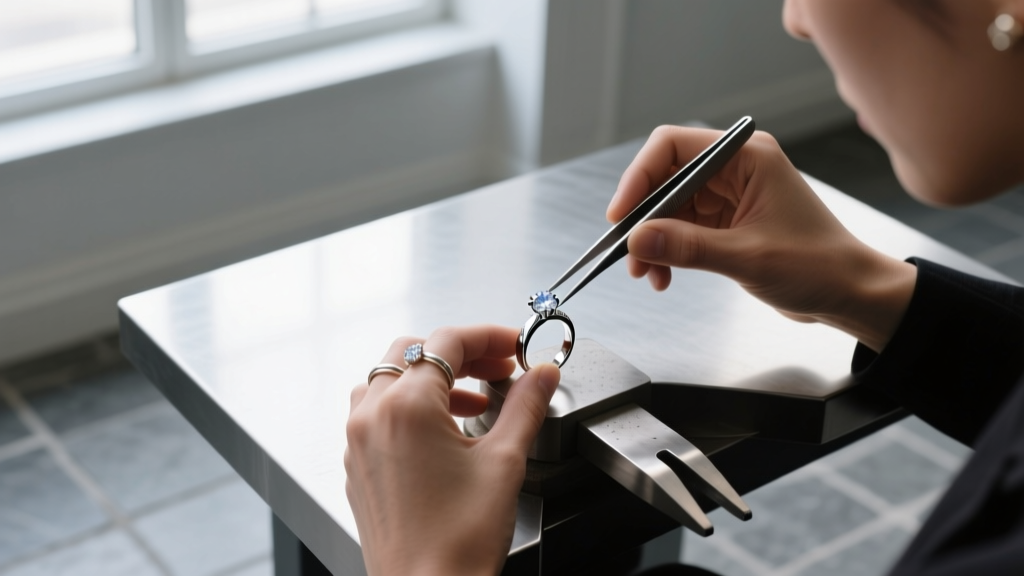
When exploring complex wire wrapping jewelry making ideas, the structural integrity of your final piece relies entirely on the metallurgical properties of your chosen wire. Wire wrapping is not merely bending metal; it is the mechanical manipulation of a metal's crystalline structure to create tension-based joins without the use of heat or solder. A design that works flawlessly in dead-soft copper may suffer catastrophic springback or structural failure if executed in half-hard brass. Understanding the specific work-hardening rates, tensile strengths, and oxidation behaviors of different alloys is the difference between a fragile prototype and an heirloom-quality garment.
In this guide, we break down three foundational metals used in non-soldered jewelry fabrication—Copper, Brass, and Argentium Silver—analyzing their exact properties, optimal gauge applications, and failure modes to help you match the right material to your specific design requirements.
Copper: The Forgiving Standard for Prototyping and Weaving
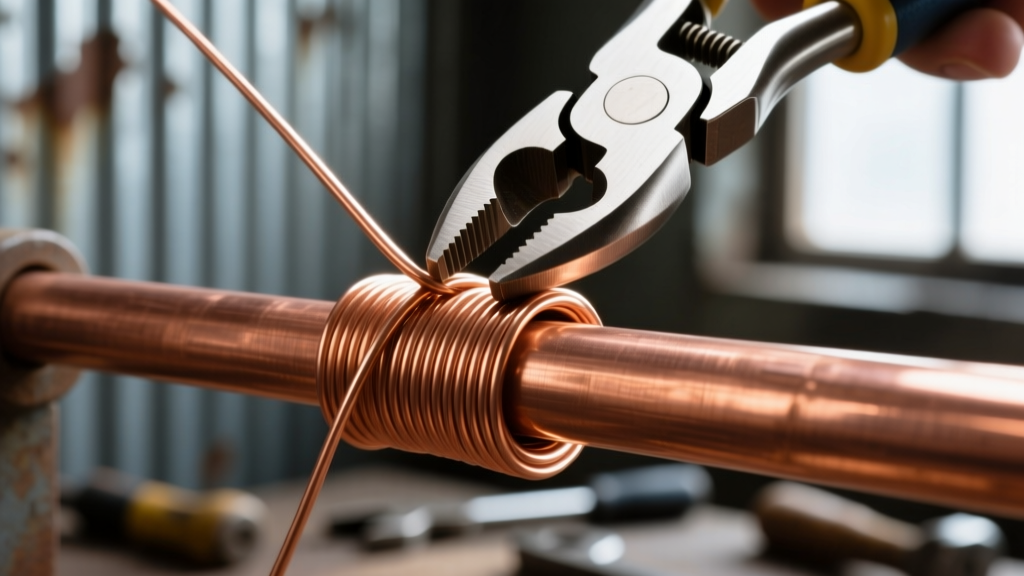
Copper (Cu) is the baseline for almost all wire artists. Its face-centered cubic (FCC) crystal structure allows for immense malleability, making it the premier choice for intricate weaves and high-tension coils. For most jewelry making ideas involving micro-weaves or Viking knits, commercially pure copper (C110) is the standard.
Gauge and Temper Applications
- 28-Gauge to 30-Gauge (Dead Soft): Used exclusively for weaving and coiling. At this thickness, copper work-hardens very slowly, allowing for dozens of wraps around a core wire before becoming brittle.
- 20-Gauge to 22-Gauge (Half Hard): The workhorse for structural frames, jump rings, and prong settings. Half-hard copper has been drawn to increase its yield strength, providing enough 'bite' to hold a cabochon securely without bending out of shape during daily wear.
- 12-Gauge to 14-Gauge (Dead Soft or Half Hard): Reserved for heavy bangle cores and thick neck collars.
Oxidation and Patina Failure Modes
While copper is highly workable, its primary failure mode is environmental. Unsealed copper reacts with the sulfur and acids in human sweat, creating copper chloride and copper sulfide (the notorious 'green skin' effect). When applying a Liver of Sulfur patina to highlight weaves, the antiquing can rub off on the wearer's skin. To mitigate this, jewelers must seal copper pieces with micro-crystalline wax or a specialized nano-coating like ProtectaClear, adding a crucial post-production step to your workflow.
Brass and Bronze: The Vintage Aesthetic with a Harder Bite
Brass is an alloy of copper and zinc, while bronze is an alloy of copper and tin. Both offer a gold-like aesthetic at a fraction of the cost of karat gold, but they behave drastically differently under the pliers. According to Rio Grande's Metal Alloys Chart, the addition of zinc or tin fundamentally alters the slip planes within the metal's crystal lattice, resulting in a much stiffer, less forgiving material.
Yellow Brass vs. Red Brass
Yellow brass (typically 70% Cu, 30% Zn) is highly rigid and possesses a severe 'springback' factor. If you are cutting jump rings from yellow brass coils, you must account for the ring expanding slightly once removed from the mandrel. Red brass (85% Cu, 15% Zn), often sold as 'jeweler's bronze' or 'nu-gold', behaves much closer to pure copper but offers a rich, 14k-yellow-gold hue.
Work Hardening and Annealing
Brass work-hardens significantly faster than copper. When executing tight, repetitive weaves (like a 4-in-1 chainmaille or a tight coiled rosette), brass will become brittle and snap if pushed past its tensile limit. You must anneal brass frequently. Unlike copper, which can be annealed to a dull red heat and quenched in water, brass should be heated to a dull red and allowed to air cool to prevent thermal shock cracking. Furthermore, jewelers with zinc or nickel sensitivities should avoid brass, as prolonged skin contact can trigger contact dermatitis.
Argentium Silver: The Tarnish-Resistant Premium Upgrade
When your jewelry making ideas evolve from hobbyist prototypes to premium, retail-ready pieces, Argentium Silver is the ultimate upgrade over traditional Sterling (925). Argentium is available in 935 and 960 grades, where a portion of the copper alloy is replaced with the metalloid germanium.
The Germanium Advantage: Fusing and Firescale
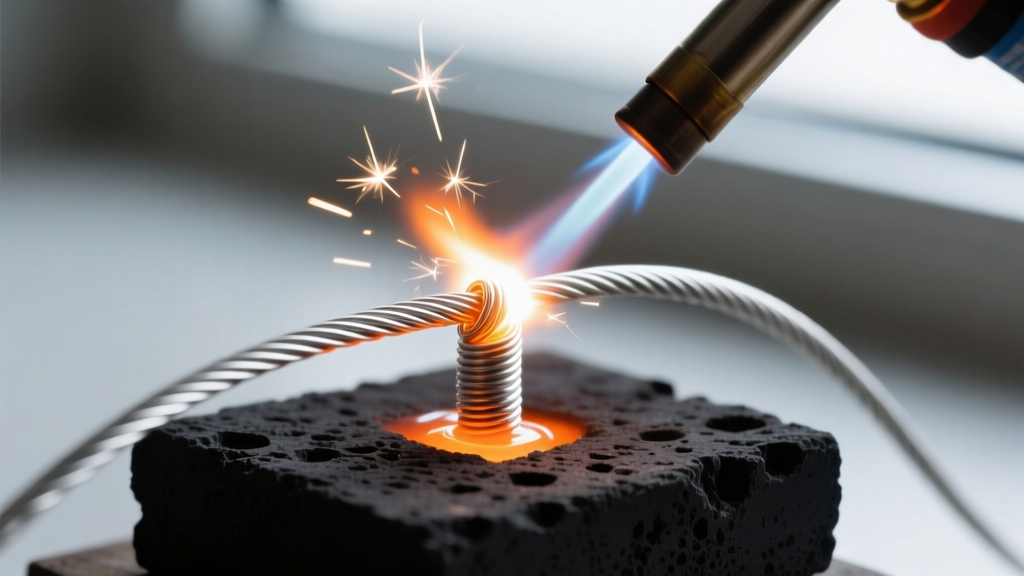
The germanium in Argentium migrates to the surface when heated, creating a transparent layer of germanium dioxide. This provides two massive advantages for wire wrappers and fabricators:
- Tarnish Resistance: Argentium is highly resistant to sulfur-induced tarnishing, meaning your intricate wire weaves will not turn black in the display case, saving hours of polishing labor.
- Fusing Capabilities: As detailed in Ganoksin's comprehensive guide on Argentium fusing, this alloy can be fused to itself without the use of solder or flux. For wire artists, this means you can fuse continuous mobius coils or secure the ends of a heavy gauge wire wrap with a simple butane micro-torch, creating seamless, invisible joins that are impossible with standard sterling silver.
Cost and Handling Considerations
Argentium is softer than traditional sterling in its annealed state but can be precipitation-hardened in a standard kitchen oven at 325°F (163°C) for an hour after your piece is finished. While the material cost is higher (roughly $40 to $80 per troy ounce depending on gauge and market spot prices), the elimination of solder, flux, and pickling solutions offsets the initial investment for high-end production.
Comparative Data: Hardness, Cost, and Best Use Cases
Use the following matrix to quickly determine which metal aligns with your current project parameters, factoring in both material science and economic constraints.
| Metal / Alloy | Composition | Work Hardening Rate | Tarnish / Skin Reaction | Approx. Cost (per oz) | Best Temper for Frames |
|---|---|---|---|---|---|
| Pure Copper (C110) | 99.9% Cu | Slow / Forgiving | High tarnish / Turns skin green | $1.50 - $3.00 | Half-Hard |
| Yellow Brass | 70% Cu, 30% Zn | Fast / Brittle | Moderate tarnish / Zinc allergies | $3.00 - $5.00 | Dead-Soft (to allow bending) |
| Red Brass (Nu-Gold) | 85% Cu, 15% Zn | Moderate | Moderate tarnish / Hypoallergenic | $3.50 - $5.50 | Half-Hard |
| Sterling Silver | 92.5% Ag, 7.5% Cu | Moderate / Fast | High tarnish / Firescale when heated | $30.00 - $45.00 | Half-Hard |
| Argentium 935 | 93.5% Ag, Cu, Ge | Slow (until hardened) | Highly Resistant / Hypoallergenic | $45.00 - $65.00 | Dead-Soft (then oven hardened) |
Matching Metals to Specific Jewelry Making Ideas
To maximize both the aesthetic and structural success of your designs, pair your metal choice with the specific mechanical demands of the project:
- Intricate Micro-Weaves & Viking Knits: Use Dead-Soft Copper (26g-28g) or Dead-Soft Argentium (24g-26g). The slow work-hardening rate prevents the weave from snapping mid-project. Avoid brass entirely for micro-weaves.
- Heavy Cabochon Pendants & Prong Settings: Use Half-Hard Red Brass (18g-20g) or Half-Hard Sterling/Argentium (18g-20g). You need the pre-hardened tensile strength to ensure the prongs snap tightly over the stone's girdle and do not pull back open when bumped.
- Continuous Tension Bangles: Use Yellow Brass (12g-14g). The severe springback of yellow brass is actually an advantage here; it allows the bangle to flex open to pass over the hand, then aggressively snap back to its original circular shape on the wrist.
Tooling Adjustments Based on Material Properties
Your pliers and mandrels must be adapted to the metal you are working. When wrapping softer metals like dead-soft copper, standard steel-jawed pliers are sufficient. However, when working with Argentium silver or highly polished brass, steel jaws will leave deep, irreversible gouges in the metal. Always use nylon-jaw pliers or wrap your steel pliers in painter's tape when manipulating premium alloys.
Furthermore, when cutting brass or work-hardened silver jump rings, standard flush cutters will dull rapidly and leave sharp 'pinch points' on the wire ends. Upgrade to a pepe tool (jump ring maker) paired with a jeweler's saw and a 2/0 blade. Sawing your rings ensures a perfectly flush, flat seam that is critical for seamless weaving and invisible fusing in high-end Argentium pieces. For more foundational guidance on wire tempers and cutting techniques, consult Rio Grande's Wire Temper Guide before ordering your bulk spools.
By respecting the unique crystalline behaviors of copper, brass, and Argentium, you elevate your wire wrapping from simple craft to precision metallurgy, ensuring every piece you create is as durable as it is beautiful.


