Top Jewelry Making Supplies Tools for Wire Wrapping (2026)
Discover the best jewelry making supplies tools for wire wrapping in 2026. Compare pliers, cutters, and wire gauges with our expert buying guide.

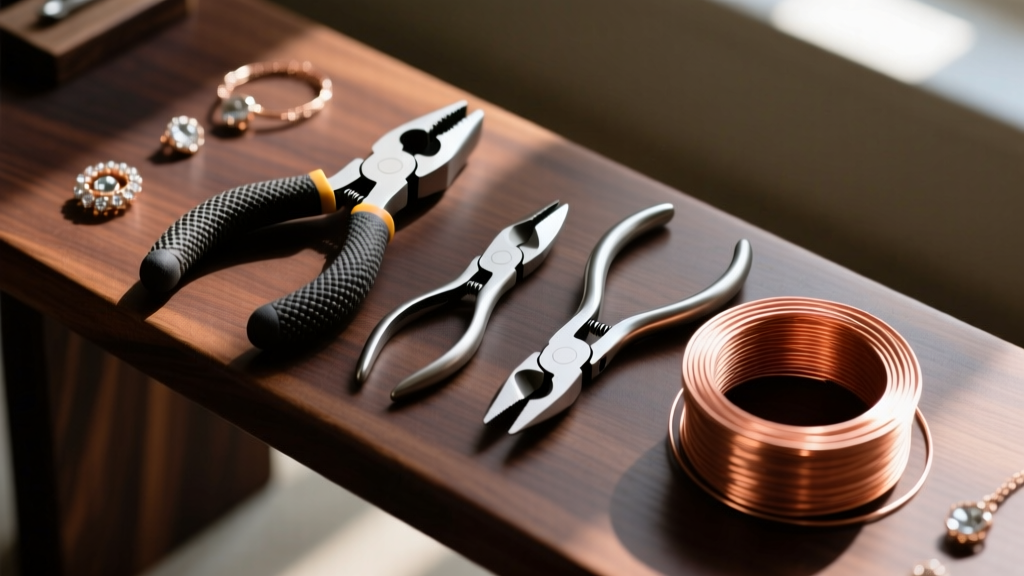
Wire wrapping is one of the most ancient and rewarding jewelry fabrication techniques, relying entirely on mechanical connections rather than solder. Because your hands and tools are doing 100% of the work, the quality of your jewelry making supplies tools directly dictates the structural integrity and aesthetic finish of your pieces. In 2026, the market is flooded with cheap, bulk tool kits that promise everything but deliver bent jaws, marred wire, and severe hand fatigue. This buying guide cuts through the noise, providing a professional-grade framework for selecting the exact pliers, cutters, and metallurgical supplies you need to build a lasting toolkit.
The Anatomy of a Professional Wire Wrapping Toolkit
When sourcing jewelry making supplies tools, beginners often make the mistake of buying 15-piece carbon steel kits from general craft stores. These tools typically feature lap joints that wobble after a few weeks of use, and their teeth will aggressively gouge soft metals. A professional wire wrapping setup requires precision, ergonomic handles, and specialized jaw profiles.
Pliers: Box Joint vs. Lap Joint Construction
The most critical decision you will make is the joint type of your pliers. Standard craft pliers use a lap joint, where two pieces of metal overlap and are pinned together. Under pressure, lap joints develop lateral play, causing the jaws to misalign. This misalignment makes it nearly impossible to close jump rings perfectly flush.
Professional tools, such as those from Rio Grande or Swanstrom, utilize a box joint. In this construction, one jaw passes through a milled slot in the other, creating a zero-tolerance pivot point. Box joint pliers eliminate wobble entirely, ensuring that the tips meet with microscopic precision every single time.
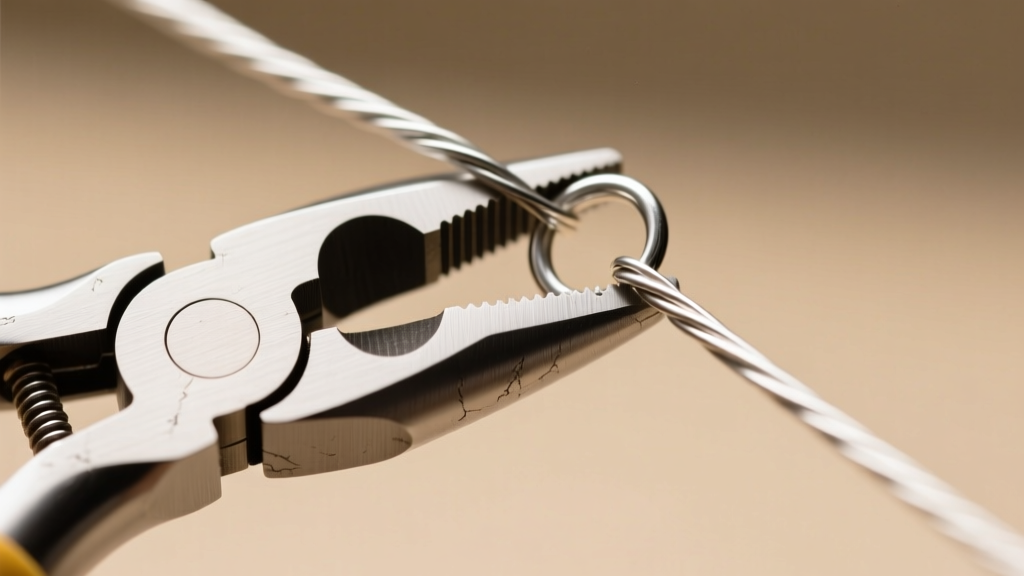
The Essential Jaw Profiles
- Chain Nose (Smooth): The workhorse of wire wrapping. Used for gripping, bending, and closing jump rings. Ensure the inner jaws are completely smooth to prevent marring.
- Round Nose: Essential for creating perfectly uniform loops and eye pins. Look for graduated jaws with laser-etched gauge markers for repeatable loop sizes.
- Nylon Jaw: Features replaceable nylon inserts. Use these for straightening kinked wire and tightening wrapped loops without scratching the metal surface.
- Flat Nose: Features a wider, flat gripping surface. Ideal for holding structural components steady and making sharp, 90-degree angular bends.
Cutting Tools: Understanding the Flush Cut
A standard pair of scissors or diagonal wire cutters will leave a V-shaped pinch on both sides of your severed wire, creating sharp, dangerous burrs. When evaluating jewelry making supplies tools for cutting, you must invest in true flush cutters.
Flush cutters feature a single bevel on one blade and a flat edge on the other. When you cut the wire, one side is left perfectly flat, while the other retains a microscopic pinch. The golden rule of wire wrapping is to always face the flat side of the cutter toward your finished work. For standard wire wrapping (16g to 24g), a high-carbon steel flush cutter like the Xuron Maxi-Shear ($25-$30) is exceptional. However, if you plan to work with ultra-fine weaving wires (26g to 30g), you must upgrade to precision micro-shears to prevent crushing the delicate strands.
Wire Gauges, Tempers, and Material Grades
Tools are only half the equation; the wire itself is your primary medium. According to metallurgical guidelines outlined by Ganoksin, understanding wire temper is just as important as understanding gauge thickness. Temper refers to the hardness of the metal, which dictates how easily it bends and how well it holds its shape.
| Gauge (AWG) | Diameter (mm) | Recommended Temper | Primary Application |
|---|---|---|---|
| 28g - 30g | 0.32 - 0.25mm | Dead Soft | Micro-weaving, coiling, Viking knit |
| 24g - 26g | 0.51 - 0.40mm | Dead Soft | Bead wrapping, intricate woven links |
| 20g - 22g | 0.81 - 0.64mm | Half-Hard | Jump rings, ear wires, clasps, structural wraps |
| 16g - 18g | 1.29 - 1.02mm | Hard / Half-Hard | Bangle frames, heavy structural hooks |
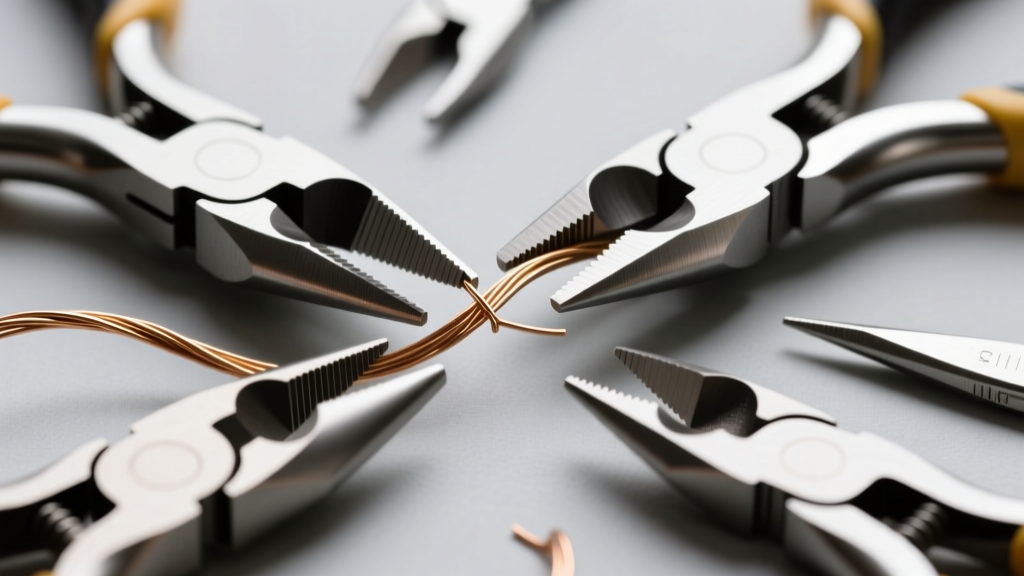
Material Selection: Beyond Basic Copper
While bare copper is the undisputed champion for practice and prototyping, your final pieces require more durable materials. In 2026, Argentium Silver has largely overtaken traditional Sterling Silver for independent wire artists. Argentium contains a small amount of germanium, which makes it highly resistant to tarnish and eliminates firescale. It also fuses to itself without solder, making it a dream for wire weavers. For gold-toned pieces, always specify 14k Gold-Filled wire (which contains a thick, mechanically bonded layer of 14k gold over a brass core) rather than gold-plated wire, which will rub off and expose the base metal within weeks of wear.
Mandrels, Jigs, and Hammers
To achieve professional consistency, you cannot rely on freehand bending alone. Steel ring mandrels are essential for sizing bracelets and rings, but hammering wire against hardened steel will flatten and mar the metal. Instead, invest in Delrin (acetal) mandrels and rawhide or nylon mallets. Delrin is a dense, industrial polymer that is hard enough to resist denting but soft enough to absorb the impact of a hammer without transferring texture to your wire. This process, known as planishing, work-hardens the wire and locks your structural shapes into place without leaving tool marks.
Expert Insight on Work Hardening: Every time you bend, twist, or hammer wire, you are rearranging its crystalline structure, making it harder and more brittle. This is called 'work hardening.' A dead-soft 20-gauge wire will easily bend into a clasp, but once you hammer and manipulate it, it becomes stiff and springy enough to function as a secure closure. Over-working the wire, however, will cause it to snap. Always anneal or replace wire that shows signs of micro-fracturing.
Tool Maintenance and Longevity
High-carbon steel tools are prone to oxidation, especially in humid environments. To protect your investment in premium jewelry making supplies tools, wipe down the jaws and joints with a silicone-impregnated polishing cloth after every session. Apply a single drop of synthetic watch oil to the pivot joints of your box-joint pliers once a month to maintain their buttery-smooth action. Never use your flush cutters on memory wire, steel, or titanium; the hardened blades will chip instantly. Reserve a separate, heavy-duty pair of shears exclusively for those abrasive materials.
Final Verdict: Building Your 2026 Starter Kit
If you are building a kit from scratch, do not buy a pre-packaged set. Allocate your budget strategically. Spend the majority of your funds on a premium pair of box-joint chain nose pliers and a high-quality flush cutter. You can supplement the rest of your toolkit with mid-tier brands like Beadalon or Xuron until your skill level demands the ultra-precision of Lindstrom or Swanstrom. By prioritizing joint construction, jaw smoothness, and proper metallurgical matching, your tools will become an extension of your hands, allowing you to execute complex wire weaves with absolute confidence.


