How to Value an Antique Wood Jewelry Box: A Buyer's Pricing Guide
Learn how to assess the true value of an antique wood jewelry box. Discover pricing tiers, wood identification, and hardware appraisal tips.

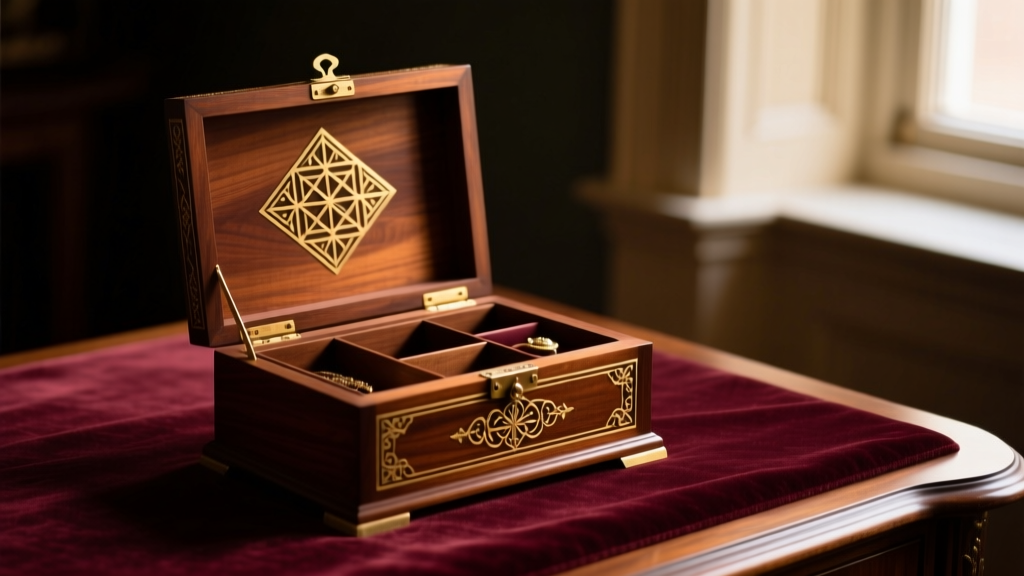
The Allure and the Appraisal: Understanding Antique Wood Boxes
In an era dominated by mass-produced acrylic and MDF organizers, the discerning collector is increasingly turning to heirloom-quality storage. However, navigating the secondary market for an antique wood jewelry box requires more than just an appreciation for aesthetics; it demands a rigorous understanding of historical craftsmanship, material grading, and restoration economics. Whether you are browsing estate sales, auction houses, or specialized online dealers, accurately assessing the value of these pieces hinges on specific, verifiable details. This guide breaks down the exact metrics professional appraisers use to evaluate antique storage, ensuring your investment retains its financial and functional integrity.
Wood Species and Veneer: The Foundation of Value
The primary driver of an antique box's base value is the timber used in its construction. In the 18th and 19th centuries, cabinetmakers reserved specific woods for luxury goods. Identifying the species—and more importantly, the quality of the veneer work—is your first step in budget assessment.
- Cuban Mahogany (Swietenia mahagoni): Highly prized for its tight grain and deep, chatoyant figuring. Boxes featuring solid Cuban mahogany or thick, book-matched veneers from the Georgian era (1714–1837) command premium prices, often starting above $1,200.
- American Black Walnut (Juglans nigra): Common in mid-to-late 19th-century American pieces. Look for burl walnut veneers. Original 19th-century burl veneer is typically 1/16-inch thick, whereas modern reproductions use paper-thin, micro-sliced veneers that are prone to blistering.
- Rosewood and Tortoiseshell: Frequently used in Victorian and Edwardian eras. Due to modern CITES restrictions on endangered rosewood species, well-preserved antique examples with intact, un-cracked rosewood veneer have seen a 20-30% appreciation in market value over the last decade.
Pro Tip: Inspect the edges of the box. If you see a repeating, identical grain pattern on multiple panels, it is likely a 20th-century photographic reproduction or laminated transfer, which drops the value to under $50.
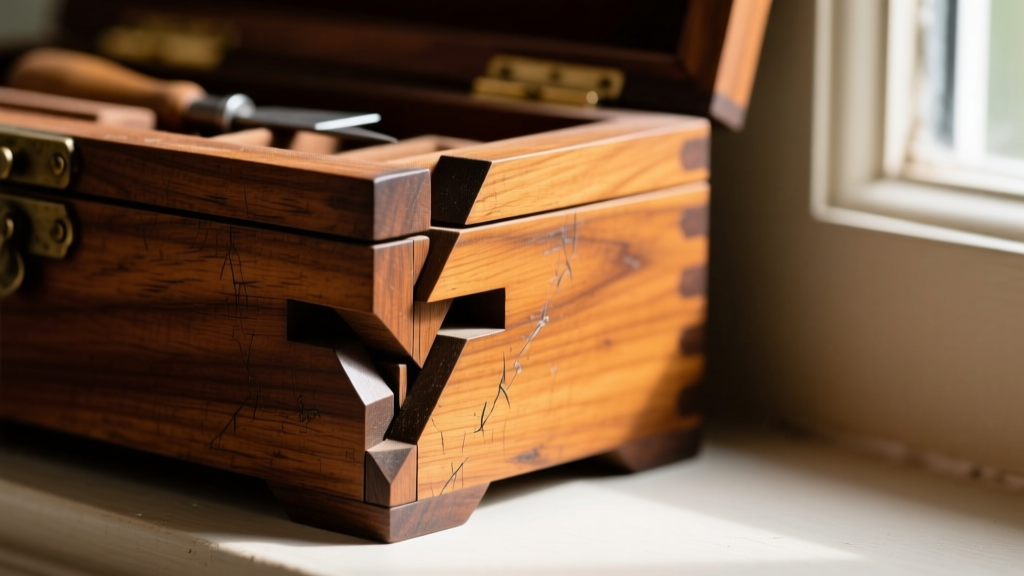
Joinery and Hardware: Spotting Authentic Age
A beautiful exterior means little if the structural integrity has been compromised or if the piece is a clever 20th-century forgery. According to appraisal guidelines from Kovels' Antiques & Collectibles, the hardware and joinery are the most difficult elements for forgers to replicate accurately.
Dovetail Analysis
Examine the drawers or the corner joints of the main carcass. Hand-cut dovetails, indicative of pre-1860s craftsmanship, are asymmetrical, varying in size and spacing. The pins and tails will show slight chisel marks and imperfections. Conversely, perfectly uniform, machine-cut dovetails indicate a post-1890s manufacturing date, significantly altering the valuation bracket.
Screws and Hinges
Remove a hinge screw if possible. Hand-forged screws from the early 19th century feature off-center slots, uneven threads, and blunt ends. Machine-made screws with perfectly centered slots and sharp, uniform threads did not become standard until the late 1840s. Furthermore, original brass snipe hinges (flush-mounted) are highly desirable; if you see modern steel piano hinges or bright, untarnished brass replacements, deduct 15-25% from the asking price for the cost of period-correct restoration.
Pricing Tiers: What Should You Actually Pay?
Based on current 2026 market data and historical sales tracked by Antique Trader, here is a realistic pricing matrix for an antique wood jewelry box in the current landscape.
| Era & Style | Typical Wood | Condition | 2026 Market Value |
|---|---|---|---|
| Victorian (1837-1901) | Walnut, Mahogany | Good (Minor veneer loss, original lining) | $250 - $600 |
| Edwardian (1901-1910) | Marquetry Inlay, Satinwood | Excellent (Intact veneer, working locks) | $450 - $950 |
| Georgian / Regency | Cuban Mahogany, Rosewood | Restored (Period-correct French Polish) | $1,500 - $3,500+ |
| Art Deco (1920s-1930s) | Burl Walnut, Macassar Ebony | Good (Original lacquer finish) | $600 - $1,200 |
The Hidden Costs: Restoration and Lining
When budgeting for an antique wood jewelry box, the purchase price is only half the equation. The interior lining and exterior finish often require professional intervention to make the piece safe for modern, high-value jewelry storage.
"Never attempt to clean an original watered silk (moiré) interior with modern solvents. The dyes used in the 19th century are highly fugitive and will bleed, ruining both the fabric and the jewelry stored within." — Conservation Standards for Antique Textiles
French Polishing vs. Polyurethane: If the exterior shell finish is alligatored or stripped, it must be refinished using traditional French polish (shellac dissolved in alcohol). A professional French polish restoration costs between $250 and $500 depending on the box's size and intricacy. Avoid boxes that have been coated in modern polyurethane, as this traps moisture, ruins the wood's patina, and is viewed as "damage" by serious collectors.
Re-lining Costs: If the original velvet or silk is degraded, shedding fibers, or stained, professional re-lining using acid-free, archival-quality materials typically costs $150 to $300. This is a necessary expense, as degrading vintage fabrics can emit acidic off-gassing that tarnishes silver and degrades pearls.
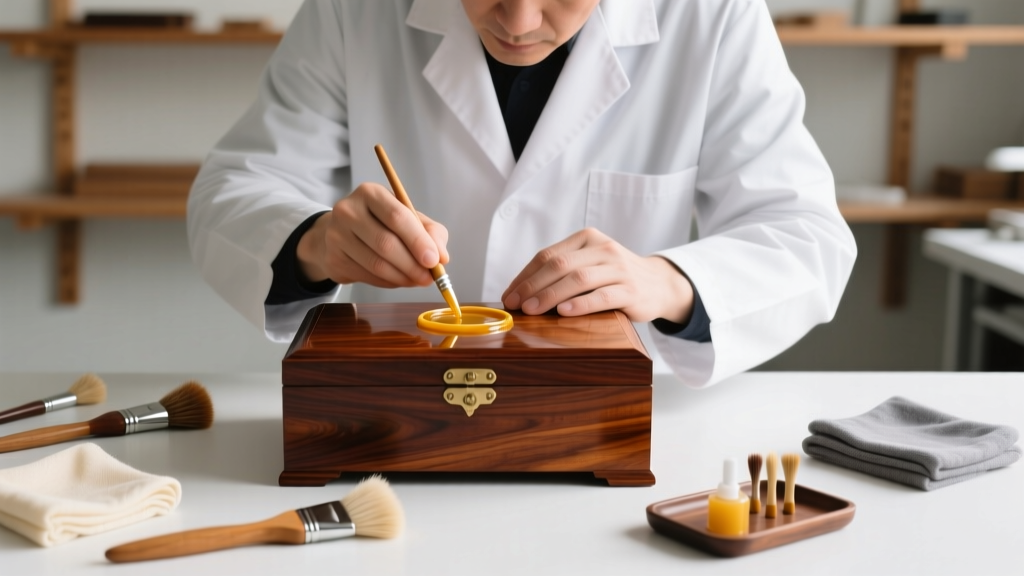
Retrofitting for Modern Preservation
The most significant functional drawback of an antique wood jewelry box is the lack of modern anti-tarnish technology. 19th-century cabinetmakers did not have access to Pacific Silvercloth or activated carbon linings. If you plan to store sterling silver or copper-heavy alloys, you must retrofit the box without compromising its historical value.
- Anti-Tarnish Tabs: Discreetly adhere 3M anti-tarnish strips to the underside of the lid or the back of interior compartments. These absorb hydrogen sulfide in the air and last up to 6 months.
- Chalk and Silica: Place small, breathable muslin bags of activated charcoal or silica gel in the lower drawer compartments to regulate humidity, keeping the internal environment below 50% relative humidity to prevent wood warping and metal oxidation.
- Acid-Free Barriers: Line the bottom of shallow ring trays with unbuffered, acid-free tissue paper before placing jewelry. This creates a physical barrier between the metal and any residual acidity in the antique wood or vintage velvet.
Final Verdict: Investment or Expense?
Acquiring an antique wood jewelry box is a highly rewarding pursuit that merges functional storage with tangible history. By focusing on verifiable metrics—such as hand-cut joinery, original hardware, and premium timber species—you can confidently separate true heirloom investments from overpriced reproductions. Factor in the potential $200-$500 restoration costs when negotiating your purchase price, and prioritize pieces with intact, original interiors to maximize both your budget efficiency and the long-term preservation of your jewelry collection.


