Engineering the Perfect Antler Jewelry Holder for Heavy Gems
Discover the structural engineering, weight limits, and anti-tarnish sealing techniques required to build or buy a safe antler jewelry holder.

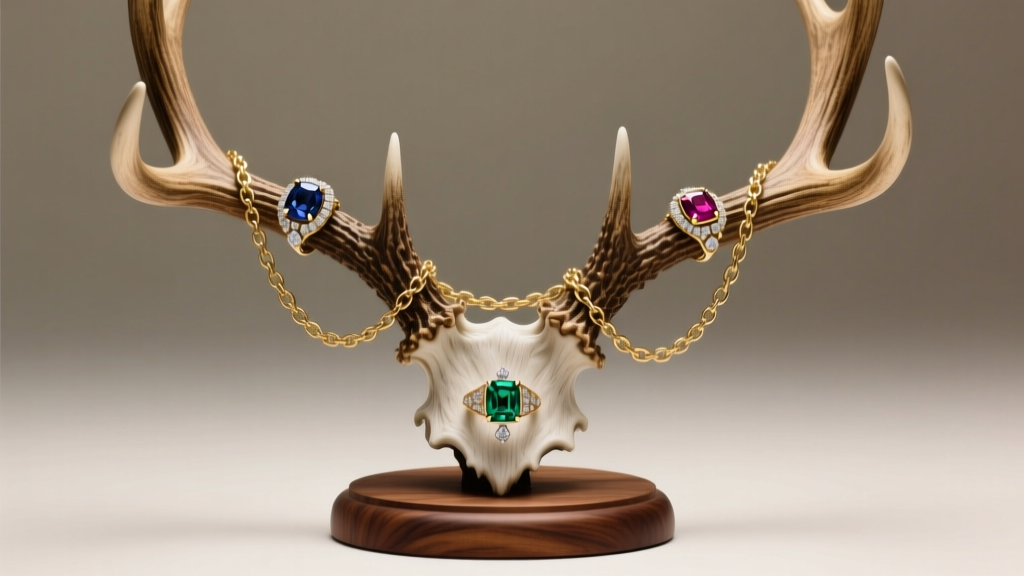
Antler jewelry holders have surged in popularity for their striking, organic aesthetics, bridging the gap between rustic decor and functional luxury. However, storing fine jewelry—particularly heavy gold chains, gemstone-laden pendants, and delicate sterling silver rings—on organic bone structures requires a rigorous understanding of material science, load distribution, and chemical reactivity. As a jewelry storage specialist, I frequently see expensive pieces damaged by improperly cured antlers or unsealed organic acids. This expert deep dive explores the structural engineering, weight limits, and anti-tarnish protocols necessary to safely utilize an antler jewelry holder in 2026 and beyond.
The Anatomy of an Antler Jewelry Holder: Natural vs. Cast Resin
To understand the structural integrity of an antler jewelry holder, we must first differentiate between naturally shed specimens and faux polyurethane alternatives. Naturally shed antlers (primarily from whitetail deer, elk, and moose) are composed of two distinct structural layers: the dense outer cortical bone and the spongy inner cancellous core.
The cortical bone boasts a density of approximately 1.8 to 2.0 g/cm³, making it remarkably strong. However, the critical vulnerability lies in moisture content. If a natural antler is not kiln-dried or naturally cured to a moisture content of less than 8%, it will slowly off-gas moisture into the surrounding microclimate. According to the USDA Forest Products Laboratory, organic materials with high moisture content can warp over time and harbor microscopic mold spores, which can permanently pit porous gemstones like turquoise and opals. Conversely, cast resin antlers offer uniform density and zero moisture risk, but they lack the micro-texture of real bone, causing smooth metal bands to slide off the tines more easily.
Load-Bearing Mechanics: Prong Thickness and Weight Distribution
Not all tines on an antler jewelry holder are created equal. The base of a whitetail antler tine can measure 20-25mm in diameter, tapering down to a fragile 3-4mm at the tip. Hanging a 150-gram heavy gold Cuban link chain on a distal tine will eventually cause structural failure or micro-fractures in the bone matrix.
| Antler Type / Material | Average Base Tine Diameter | Max Safe Point Load (Per Tine) | Best Jewelry Application |
|---|---|---|---|
| Whitetail Deer (Natural) | 18 - 22 mm | 250 grams | Rings, lightweight chains, stud earrings |
| Elk (Natural) | 25 - 35 mm | 600 grams | Heavy statement necklaces, multi-strand pearls |
| Moose (Palmate) | N/A (Flat Webbing) | N/A | Draping long chains; poor for rings |
| Polyurethane Resin (Faux) | 15 - 20 mm | 400 grams | General purpose, high-volume storage |
For heavy statement pieces, always utilize the primary beam or the thickest basal tines of the antler. If you are commissioning a custom piece, request that the artisan reinforce the internal cancellous core of the primary tines with a threaded steel rod epoxied into the base, effectively transferring the sheer force directly into the mounting board.
Prong Modification and Surface Grits
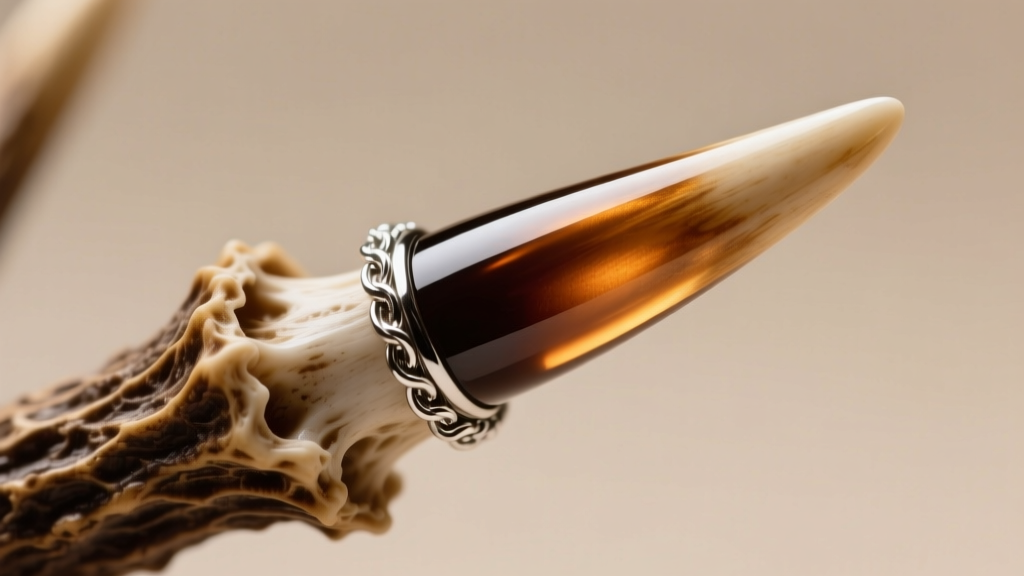
A raw, naturally shed antler is covered in microscopic ridges, burrs, and residual periosteum (the membrane that covered the antler during growth). Dragging a high-polish 18k gold ring across an unmodified tine will result in severe micro-scratches.
Proper preparation of an antler jewelry holder requires a progressive sanding protocol:
- 120-Grit: Removes burrs and levels severe ridges.
- 400-Grit: Smooths the cortical surface without making it frictionless.
- 800-Grit: Polishes the contact points to a glass-like finish that will not abrade precious metals.
Expert Warning: Do not sand the entire antler to 800-grit. The aesthetic appeal of an antler jewelry holder relies on the contrast between the rough, textured bark-like base and the smooth, polished tips where the jewelry actually rests. Sand only the distal 2 inches of each tine.
The Tarnish Factor: Organic Acids and Metal Reactions
The most insidious threat posed by an organic antler jewelry holder is chemical. Antlers contain trace minerals, calcium phosphate, and residual organic amino acids. When these organic compounds are exposed to ambient humidity, they can create a mildly acidic microenvironment. According to the Gemological Institute of America (GIA), sterling silver (925) is highly susceptible to tarnish when exposed to sulfur compounds and acidic environments, resulting in the rapid formation of silver sulfide.
Sealing Protocols for Organic Holders
To prevent your antler from accelerating the oxidation of your silver and copper alloys, a complete chemical barrier is mandatory. I recommend a two-step sealing process:
- Dewaxed Shellac Base: Apply a single coat of dewaxed shellac (such as Zinsser Bulls Eye SealCoat). Shellac penetrates the porous cortical bone and neutralizes residual acids. As noted by Wood Magazine, dewaxed shellac is an unparalleled universal sealer that bonds to difficult organic surfaces.
- Microcrystalline Wax Topcoat: Once the shellac cures, buff the tines with a museum-grade microcrystalline wax (like Renaissance Wax). This provides a frictionless, non-yellowing barrier that protects both the bone and the jewelry.
Archival Storage Tip: Never use standard polyurethane or lacquer on the tips of an antler jewelry holder. These finishes can become brittle over time, flaking off onto your jewelry and trapping moisture against the metal, which accelerates localized galvanic corrosion.
Wall-Mounting vs. Freestanding: Hardware Specifications
The physical footprint of your antler jewelry holder dictates its mounting requirements. A large, multi-point elk antler can weigh upwards of 6 pounds on its own. Once loaded with heavy gemstone necklaces and silver bangles, the total cantilevered weight can easily exceed 12 pounds.
Freestanding Base Calculations
For freestanding models, the base must counteract the forward center of gravity. The base material (typically walnut, oak, or maple) must be sized so that the center of mass falls squarely within the middle third of the base footprint. A general rule of thumb is that the wooden base should weigh at least 1.5 times the combined weight of the antler and the maximum intended jewelry load. Use a recessed steel counterweight plate on the bottom of the wood base if aesthetic proportions require a smaller footprint.
Wall-Mounting Hardware
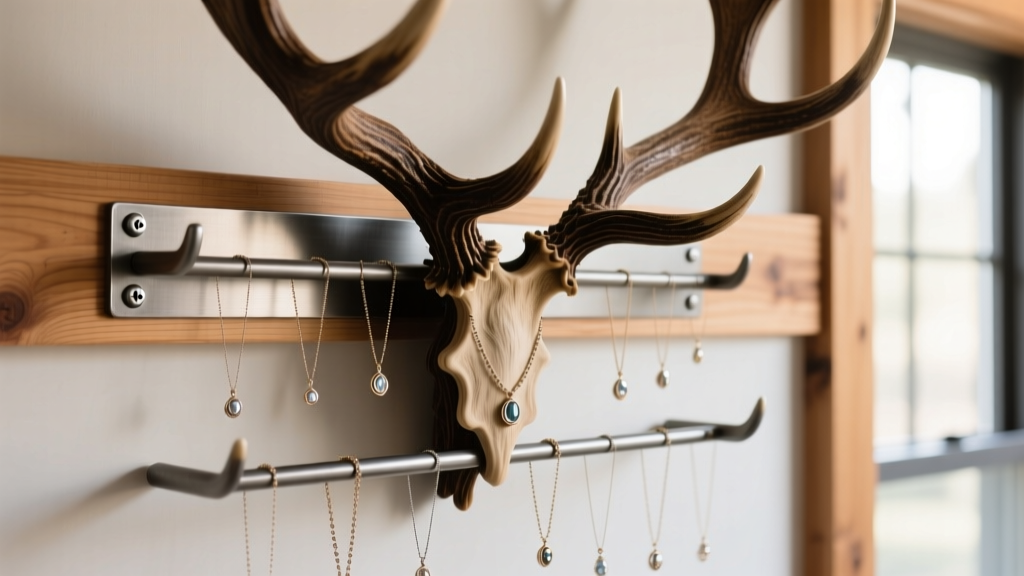
If mounting an antler jewelry holder directly to drywall, standard plastic expansion anchors are entirely insufficient and will eventually pull out under the dynamic load of removing and replacing jewelry. You must use one of the following methods:
- Stud Mounting: Drive 2.5-inch #10 wood screws directly into the wall studs through a French cleat system attached to the antler's base plate.
- Toggle Bolts: If studs are unavailable, use 1/4-inch steel Snaptoggle anchors, which distribute the sheer force across a wide area behind the drywall, safely supporting up to 250 pounds in 1/2-inch drywall.
Conclusion: Selecting Your Specimen
An antler jewelry holder is far more than a decorative novelty; it is a functional storage apparatus that interacts chemically and physically with your most prized possessions. By prioritizing kiln-dried specimens, enforcing strict load limits based on tine diameter, executing a progressive sanding protocol, and applying an archival-grade dewaxed shellac barrier, you transform a raw organic artifact into a safe, luxurious display for fine jewelry. Whether you choose the dense, branching architecture of a whitetail or the sweeping mass of an elk, engineering the foundation correctly ensures your collection remains pristine, untarnished, and secure for decades.


