The Beginner’s Guide to Choosing a Wood Jewelry Holder
Learn how to choose the best wood jewelry holder for your collection. We cover wood types, safe finishes, and lining tips to prevent tarnish and damage.

Why Wood is a Superior Storage Material
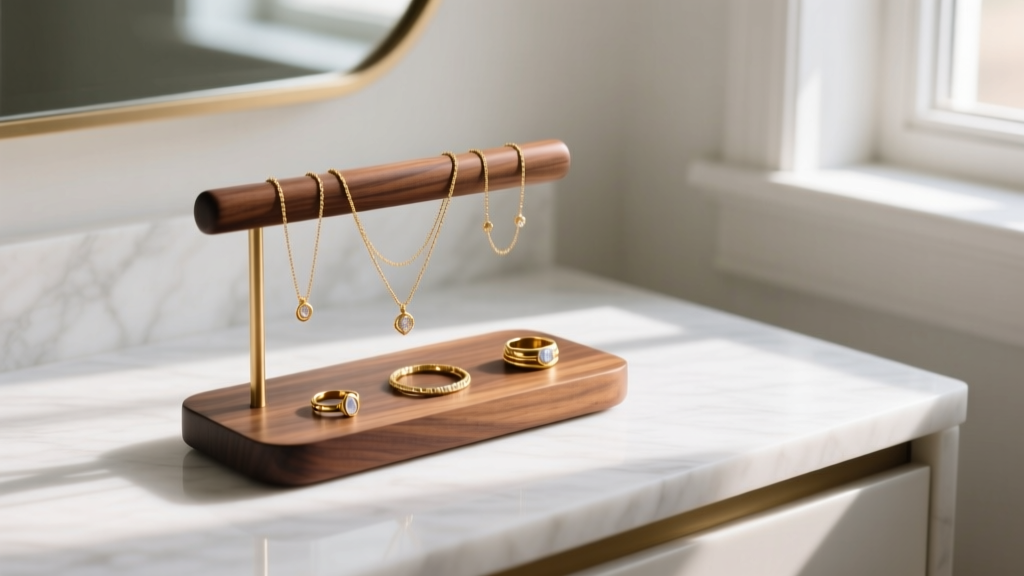
When organizing a growing jewelry collection, beginners often gravitate toward cheap acrylics or velvet-lined cardboard boxes. However, a high-quality wood jewelry holder offers unmatched structural integrity, aesthetic warmth, and longevity. Unlike plastics that degrade and off-gas over time, solid hardwood provides a stable, heavy base that prevents tipping when laden with heavy statement necklaces or stacked bangles. But not all wood is created equal. Choosing the wrong species or finish can actually accelerate tarnishing, degrade delicate pearls, or warp under fluctuating humidity. This guide breaks down the exact material science, spacing ergonomics, and preservation techniques you need to select the perfect wooden organizer for your pieces.
Understanding Wood Types and Metal Reactions
Wood is a porous, organic material. Its natural chemical composition—specifically its tannin levels and acidity—can interact with the metals in your jewelry. Silver, copper, and brass are particularly reactive to acidic environments and sulfur compounds. Therefore, the species of wood you choose dictates the baseline safety of your storage environment.
The Best Woods for Jewelry Storage
- Black Walnut: With a Janka hardness rating of 1010 lbf, walnut is incredibly stable, resists warping, and has naturally low tannin levels. Its rich, dark grain also provides a high-contrast background that makes diamonds and gold pop visually.
- Hard Maple: Rating at 1450 lbf on the Janka scale, maple is exceptionally dense and non-porous. It resists denting from heavy metal clasps and requires minimal chemical sealing, making it a safe, inert option for sensitive gemstones.
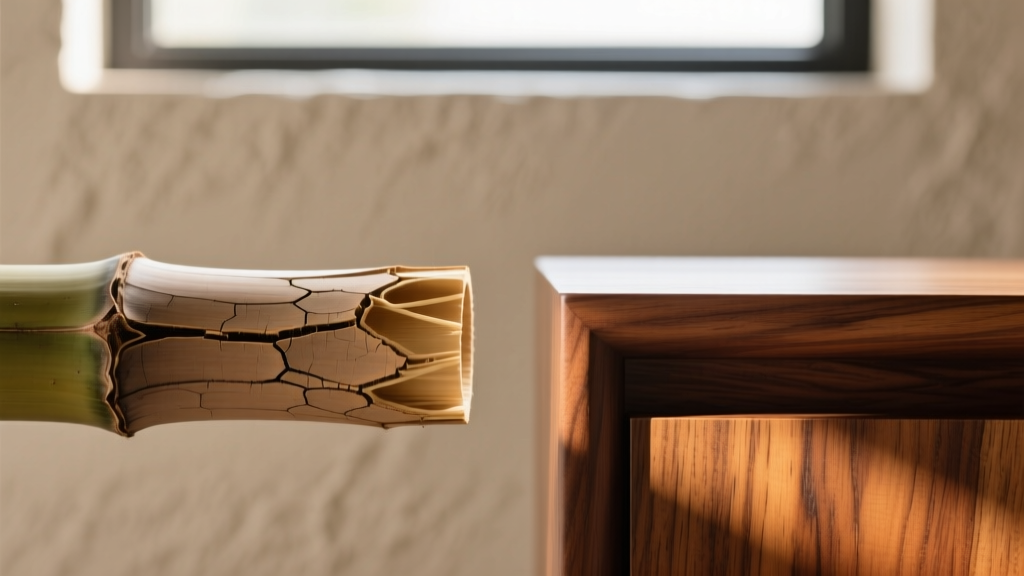
- Bamboo: Technically a grass, bamboo boasts a high silica content and extreme hardness. It is highly resistant to moisture absorption, meaning it will not swell and trap humidity against your silver chains.
Woods to Avoid
Avoid Red Oak (high tannic acid that can transfer to silver in high humidity) and Pine (Janka rating of just 380 lbf; it dents easily and can leach sticky sap resins over time). Furthermore, never use engineered woods like MDF or particleboard for bare-metal storage.
The Hidden Danger: Finishes and Off-Gassing
Raw wood is rarely used in commercial jewelry holders; it is almost always treated with a finish to seal the grain. According to the Smithsonian Museum Conservation Institute, certain wood finishes and adhesives off-gas volatile organic compounds (VOCs) and sulfur-bearing gases that cause rapid, severe tarnishing of silver and copper alloys.
Engineered woods (MDF, plywood) are bound together with urea-formaldehyde resins. The Environmental Protection Agency (EPA) notes that formaldehyde off-gassing can degrade organic gems like pearls and amber while accelerating metal corrosion. Always opt for solid hardwood treated with safe, fully cured finishes.
| Finish Type | Curing Time | Safety for Metals | Safety for Pearls/Organics |
|---|---|---|---|
| Water-Based Polyurethane | 7-14 Days | Excellent (Inert when cured) | Excellent |
| Pure Tung Oil | 30-45 Days | Excellent (Natural, no VOCs) | Excellent |
| Acid-Catalyzed Lacquer | Varies | Poor (Contains sulfur compounds) | Poor |
| Shellac | 1-2 Days | Good (Alcohol-based, safe) | Good |
Lining and Padding: Protecting Your Pieces
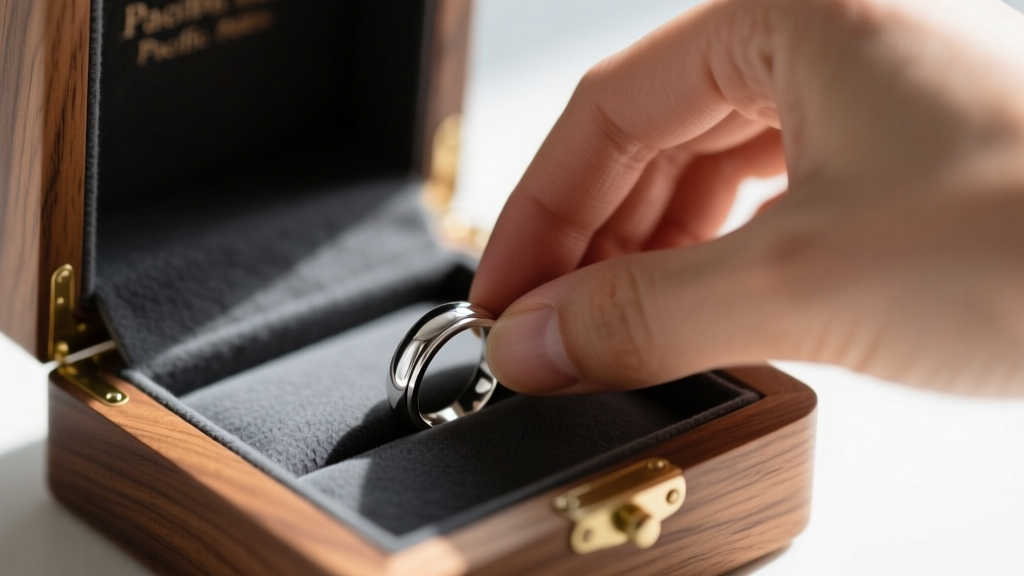
Even the safest wood jewelry holder requires proper lining to prevent micro-scratches on high-polish gold and platinum. Beginners often make the mistake of using standard craft felt. Craft felt is frequently dyed with acidic compounds and sized with starches that trap moisture. Instead, look for holders lined with Pacific Cloth or acid-free microfiber. Pacific cloth is impregnated with microscopic silver particles that act as a sacrificial anode, absorbing ambient sulfur before it can reach your jewelry. For ring rolls and earring pads, ensure the foam underneath the fabric is polyurethane-based and free of PVC, which can break down into hydrochloric acid over time.
Ergonomics and Spacing: A Practical Framework
A beautiful wood jewelry holder is useless if the pegs are spaced incorrectly, leading to tangled chains and crushed pendants. When evaluating a wooden tree or wall-mounted rack, use this ergonomic framework based on standard chain lengths:
"The golden rule of hanging storage is the two-inch clearance rule. Your wooden peg must offer at least two inches of vertical clearance beyond the longest chain you intend to hang to prevent the clasp from catching on the base."
- Chokers (14-16 inches): Require a minimum peg height of 18 inches from the base.
- Princess Chains (18 inches): Require a 20-inch drop. Ensure horizontal peg spacing is at least 1.5 inches apart to prevent overlapping pendants.
- Opera Length (28-36 inches): These should never be hung on standard wooden trees, as the weight of the chain will stretch the links over time. Instead, use a wood holder with deep, felt-lined horizontal drawers to coil them loosely.
Maintenance and Humidity Control
Wood is hygroscopic, meaning it absorbs and releases moisture from the air. If your bedroom or bathroom fluctuates wildly in humidity, the wood can warp, causing drawer tracks to stick or hanging pegs to loosen. The Gemological Institute of America (GIA) recommends storing fine jewelry in environments with a stable relative humidity (RH) between 40% and 50%. To maintain this inside a large wooden jewelry armoire, place silica gel desiccant packets or anti-tarnish tabs (like 3M Silver Protector strips) inside the enclosed drawers. Dust the exterior of your wood jewelry holder monthly with a dry microfiber cloth, and avoid commercial furniture polishes like Pledge, which contain silicones that can transfer to your jewelry and ruin the surface tension of gemstones.
Conclusion
Investing in a solid wood jewelry holder is an investment in the longevity of your collection. By prioritizing stable, low-tannin hardwoods like walnut or maple, verifying that finishes are fully cured and VOC-free, and insisting on acid-free Pacific cloth linings, you create a micro-environment that actively protects your metals and gems. Pay close attention to peg spacing and ambient humidity, and your wooden organizer will serve as both a functional sanctuary and a beautiful display piece for decades to come.


