Step-by-Step: Building a Secure Sports Jewelry Holder
Learn how to build a secure sports jewelry holder for the locker room. Step-by-step guide to materials, anti-tarnish liners, and layout.

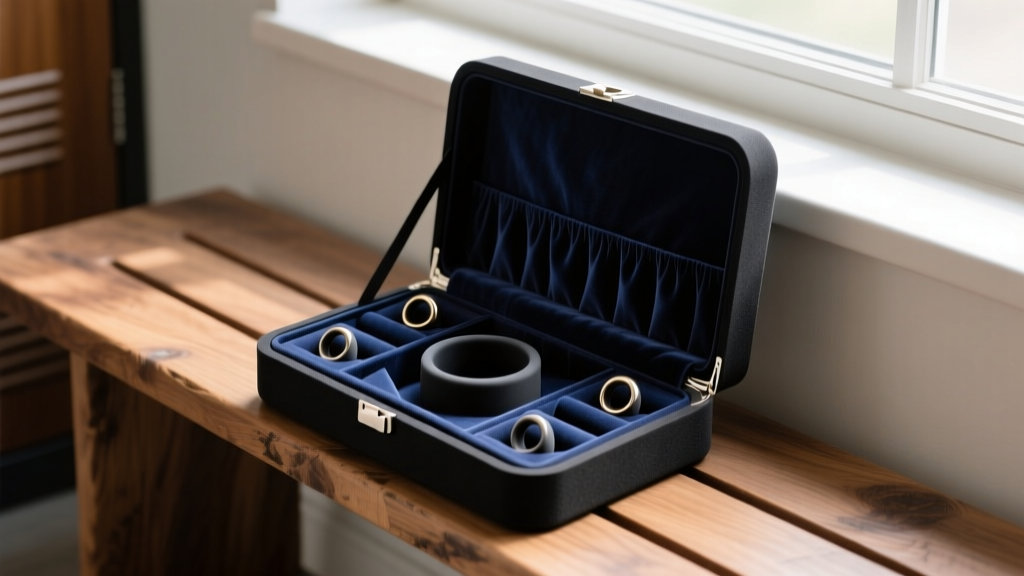
For competitive athletes, the transition from the locker room to the court, field, or mat requires strict adherence to safety protocols. Governing bodies like the National Federation of State High School Associations (NFHS) and the NCAA universally mandate the removal of all jewelry before competition to prevent degloving injuries, lacerations, and equipment snags. Yet, the environment where this jewelry is stored—damp gym bags, humid locker rooms, and shared benches—is notoriously hostile to precious metals and gemstones. Standard velvet-lined boxes absorb ambient moisture and sweat, accelerating tarnish and degrading delicate clasps. Building a custom, purpose-built sports jewelry holder is the ultimate solution for athletes who need rapid, secure, and protective storage for their pre-game loadout.
The Athlete's Dilemma: Why Standard Boxes Fail in the Locker Room
Most commercial jewelry organizers are designed for climate-controlled bedroom vanities, not the harsh realities of athletic environments. When you toss a standard polyurethane-lined box into a gym bag, you expose your pieces to three primary enemies: fluctuating temperatures, high humidity, and volatile organic compounds (VOCs) off-gassing from synthetic foams. According to the Gemological Institute of America (GIA), exposure to sulfur-rich environments and trapped moisture is the leading cause of silver sulfide formation (tarnish) on sterling silver and lower-karat gold alloys. Furthermore, standard ring rolls lack the structural rigidity to protect soft metals like 24k gold or high-purity platinum from being crushed under the weight of shoes or textbooks in a duffel bag. A dedicated sports jewelry holder must solve for impact resistance, moisture barriers, and rapid deployment.
Step 1: Audit Your Pre-Game Jewelry Loadout
Before selecting materials, you must categorize the exact inventory you remove before every game or practice. Athletes typically fall into one of three loadout categories:
- The Minimalist: A wedding band, a simple chain, and small stud earrings. Requires a compact, pocket-sized silicone or hard-shell solution.
- The Moderate Carrier: Multiple rings, a thicker chain necklace, a watch, and hoop earrings. Requires a multi-tiered EVA foam insert with specific tension zones.
- The High-Value Roster: Diamond tennis bracelets, luxury timepieces, and heavy gold chains. Requires a rigid polycarbonate exterior with individual, suspended compartments to prevent diamond-on-diamond scratching (diamonds rate a 10 on the Mohs scale and will easily scratch adjacent gold or platinum).
Step 2: Selecting the Right Base Material
The exterior and structural core of your sports jewelry holder dictate its survival in a gym bag. You need a material that repels sweat, withstands compression, and is easy to sanitize. Below is a comparison of the top three materials used in custom athletic storage.
| Material | Density / Hardness | Sweat & Moisture Resistance | Impact Protection | Best Use Case |
|---|---|---|---|---|
| Closed-Cell EVA Foam | 65 kg/m³ | High (Non-absorbent) | Excellent (Shock absorbing) | Heavy gym bags, travel duffels |
| Polycarbonate (Hard-shell) | Rigid Thermoplastic | Absolute (Waterproof) | Moderate (Resists crushing, scratches easily) | Locker room benches, rigid briefcases |
| Medical-Grade Silicone | Shore A 40-50 | Absolute (Hypoallergenic) | Low (Flexible, offers no crush protection) | Minimalist carry, track & field pockets |
For a comprehensive DIY build, a high-density EVA foam base wrapped in a ballistic nylon exterior offers the best balance of shock absorption and moisture resistance. EVA (Ethylene-Vinyl Acetate) is the same material used in premium athletic shoe midsoles; it does not absorb water, meaning post-game sweat won't seep into the core and breed bacteria.
Step 3: Integrating Anti-Tarnish and Sweat-Proof Liners
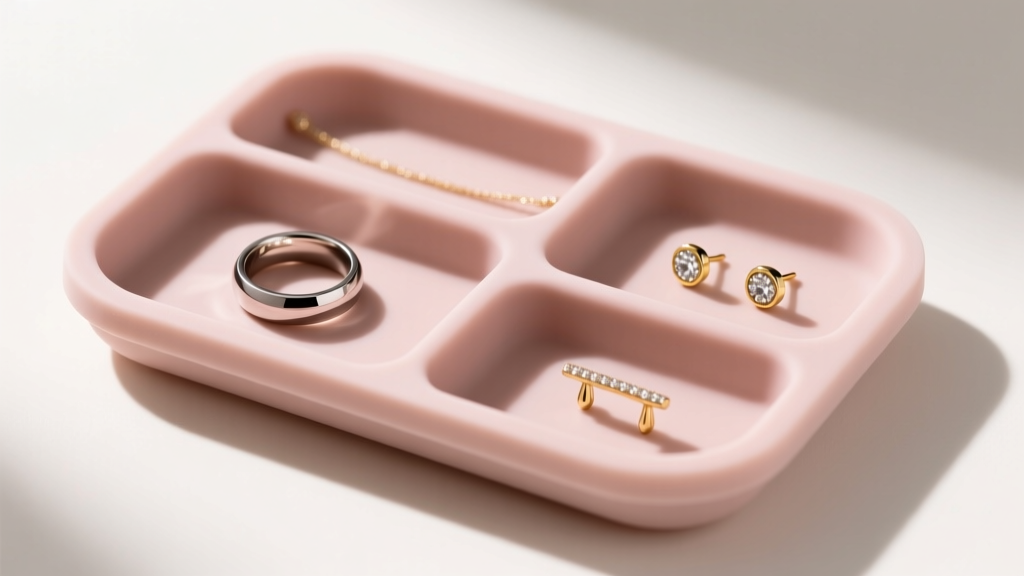
The interior lining is where most DIY projects fail. Standard craft felt and polyurethane foams trap moisture and contain trace sulfur, which reacts with the copper in 14k gold and sterling silver to create black tarnish. To build a true sports jewelry holder, you must line the interior compartments with an active anti-tarnish material.
The Science of Pacific Silvercloth
Instead of standard velvet, source Pacific Silvercloth or a comparable zinc-nanoparticle embedded fabric. These textiles are embedded with microscopic zinc and silver particles that act as a sacrificial anode. They absorb and neutralize hydrogen sulfide (H2S) gases and ambient moisture before these corrosive elements can reach your jewelry. When building your holder, use a water-based, acid-free adhesive (like a PVA bookbinding glue) to secure the anti-tarnish cloth to your EVA foam dividers. Avoid cyanoacrylate (Super Glue) or hot glue, as the chemical off-gassing during the curing process can permanently cloud porous gemstones like opals, pearls, and turquoise.
Step 4: Configuring the Interior Layout for Rapid Deployment
Athletes need to empty their pockets and lockers in seconds. Fumbling with tiny clasps or tight ring rolls leads to dropped earrings and lost items. Configure your sports jewelry holder with the following specialized zones:
- Silicone Ring Cones: Instead of flat slits, mount small, medical-grade silicone cones in the ring section. This allows you to drop rings onto the cone without looking, and the high-friction silicone prevents heavy signet rings from bouncing out when the holder is jostled in a bag.
- Tension-Bar Chain Locks: Necklaces are prone to tangling when tossed into a bin. Install a velvet-covered tension bar at the top of the chain compartment. Drape the chain over the bar and press it down; the friction holds the chain taut, preventing the clasp from slipping through and knotting.
- Magnetic Stud Pads: For stud earrings, embed small neodymium magnets beneath a thin layer of anti-tarnish cloth. Simply press the earring posts against the fabric, and the magnets will hold them securely in place, eliminating the need to fumble with friction backs or butterfly clasps after an exhausting practice.
Maintenance: Post-Game Cleaning Protocols
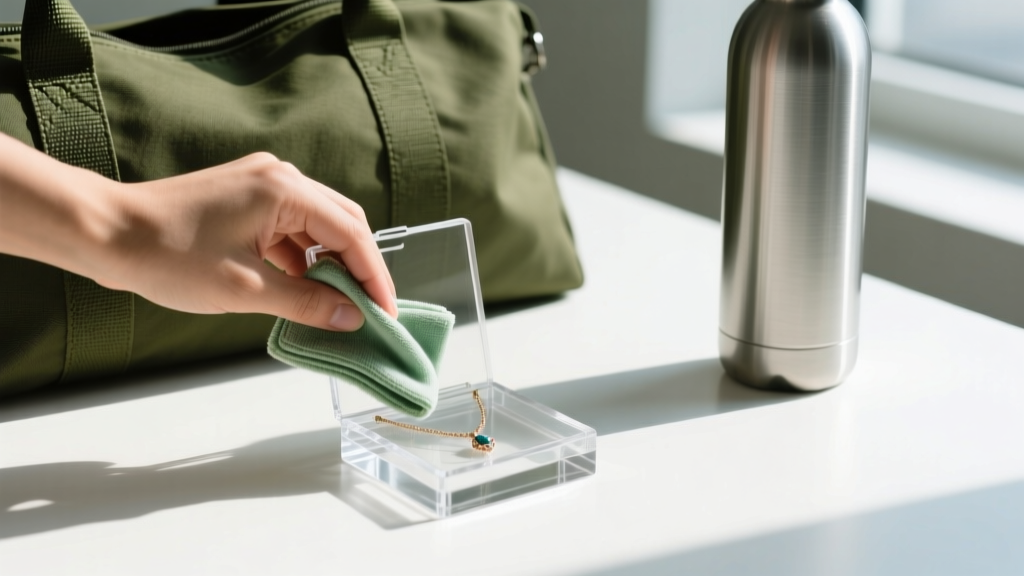
Even the most robust sports jewelry holder requires maintenance. The exterior will inevitably come into contact with gym mats, locker room floors, and athletic tape residue. Clean the EVA foam or polycarbonate exterior weekly using a mild, pH-neutral dish soap and a microfiber cloth. Never use bleach, alcohol, or ammonia-based cleaners, as these will degrade the ballistic nylon fibers and cause polycarbonate to craze and crack over time.
Furthermore, monitor the interior anti-tarnish lining. While zinc-embedded fabrics do not require washing (washing actually strips the active nanoparticles), they do have a lifespan. If the fabric turns completely black or dark brown, it has reached its saturation point and must be replaced to continue protecting your metals from the corrosive effects of athletic environments.
Protecting Your Skin and Your Metals
Finally, remember that the interaction between sweat and metal is a two-way street. The American Academy of Dermatology (AAD) notes that prolonged contact between sweat (which contains urea, lactic acid, and salts) and nickel-containing alloys can trigger severe contact dermatitis. By utilizing a dedicated sports jewelry holder, you are not only protecting the structural integrity of your 316L surgical steel, titanium, and precious metals, but you are also ensuring that your jewelry is wiped clean of acidic sweat before it goes back into the box, preserving both the metal's finish and your skin's health. Building a custom holder is an investment in both your athletic safety and your long-term style.


