Vintage Mele Jewelry Box Materials: A Restoration Guide
Discover the material properties of a vintage Mele jewelry box. Compare mid-century woods, linings, and brass hardware for proper care.

The Legacy of Mele & Co. Craftsmanship
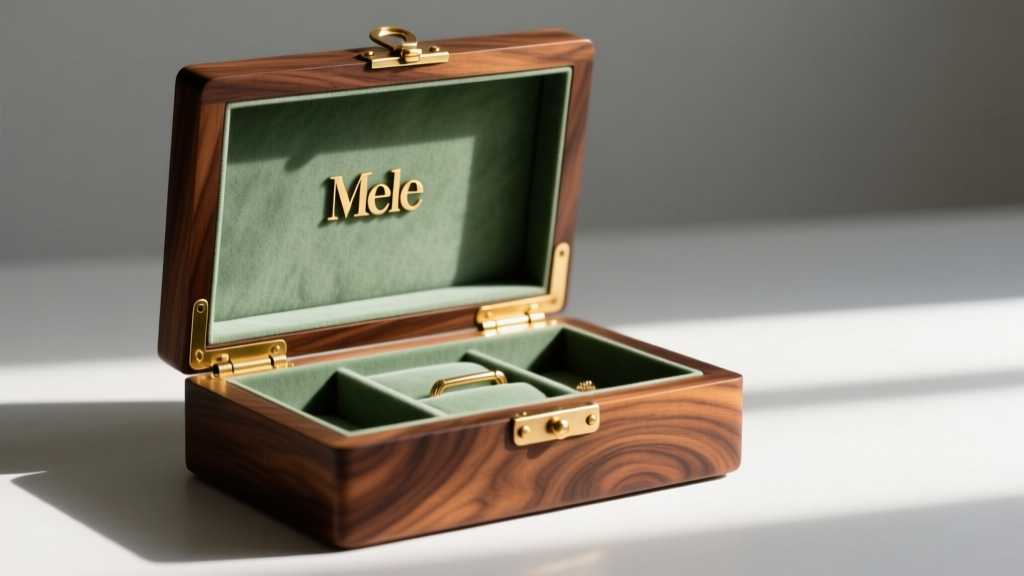
When evaluating antique and mid-century jewelry storage, the vintage Mele jewelry box stands as a benchmark of American craftsmanship. Founded in 1912 in Rhode Island, Mele & Co. built its reputation on producing high-quality, elegantly designed storage solutions that rivaled European imports. Today, collectors and jewelry enthusiasts actively seek out vintage Mele pieces from the 1940s through the 1970s. However, owning a mid-century storage piece requires a deep understanding of its material properties. Unlike modern mass-produced alternatives, vintage boxes were constructed using specific wood veneers, animal-based adhesives, and early synthetic linings that behave uniquely over time. In 2026, properly restoring and maintaining these pieces requires a conservation-minded approach, balancing historical preservation with the practical need to protect precious metals and gemstones from environmental degradation.
Wood Veneers vs. Solid Hardwoods: Structural Integrity
A common misconception is that all vintage luxury boxes are carved from solid hardwoods. In reality, the vast majority of vintage Mele jewelry boxes utilize high-grade wood veneers applied over stable composite or plywood cores. This was not a cost-cutting measure, but a deliberate engineering choice. Solid wood is highly susceptible to warping, splitting, and seasonal expansion, which can misalign delicate drawers and shatter mirror backing. Veneered plywood offers superior dimensional stability.
Identifying Mid-Century Mahogany and Walnut
Mele frequently employed plain-sliced Honduran mahogany and highly figured burl walnut veneers. The thickness of these veneers is a critical diagnostic tool for dating and restoration. Pre-1950s Mele boxes often feature thicker, sawn veneers (approximately 1/16th of an inch), which can be carefully sanded and refinished. By the 1960s, the industry shifted toward rotary-cut, paper-backed veneers that are incredibly thin (often less than 1/32nd of an inch). Attempting to aggressively sand these later veneers will burn right through the decorative layer, exposing the substrate.
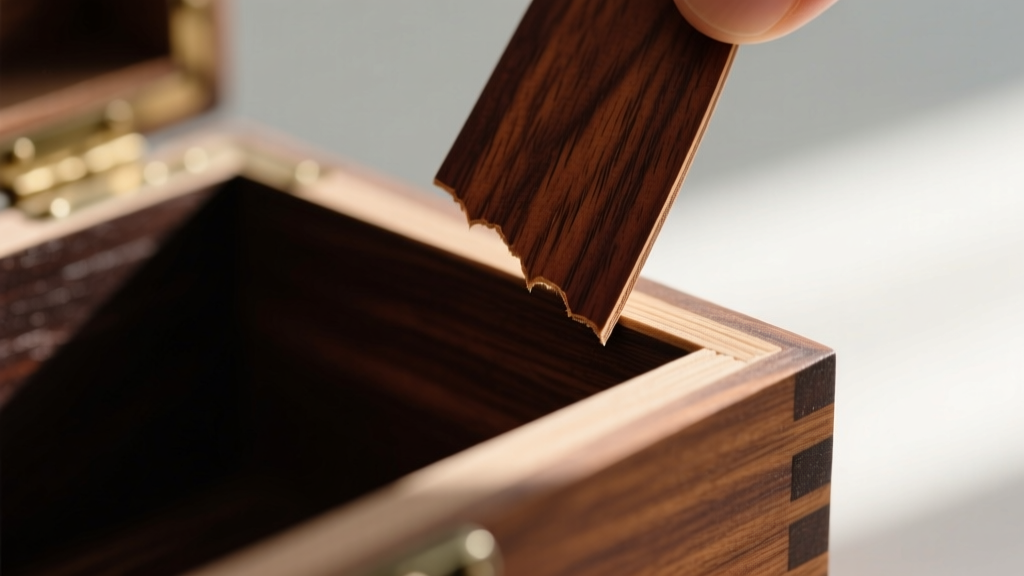
The primary failure mode for vintage wood exteriors is adhesive degradation. Mid-century manufacturers frequently used urea-formaldehyde or traditional liquid hide glues. Over decades, fluctuations in humidity cause hide glue to crystallize and lose its mechanical bond, resulting in 'alligatoring' or lifting veneer at the corners and edges. According to guidelines from the Getty Conservation Institute, reversing this damage requires careful reactivation. For hide glue, introducing localized, controlled moisture and heat can reactivate the bond. For failed synthetic glues, conservators recommend carefully injecting reversible conservation-grade adhesives, avoiding modern PVA (polyvinyl acetate) wood glues which are notoriously difficult to reverse without damaging the fragile veneer.
Interior Linings: Suede, Velvet, and Tarnish Prevention
The interior environment of a jewelry box is arguably more critical than its exterior. The materials touching your jewelry dictate the rate of oxidation and tarnish. Vintage Mele boxes are famous for their plush moire silk, velvet, and suede linings. However, from a materials science perspective, these original mid-century textiles often pose a severe threat to sterling silver and copper alloys.
| Material Type | Era / Origin | Sulfur / Acid Content | Tarnish Risk for Silver | Restoration Approach |
|---|---|---|---|---|
| Vintage Suede (Dyed) | 1940s - 1960s | High (Sulfur-based dyes) | Severe (Rapid blackening) | Complete removal and replacement |
| Mid-Century Velvet | 1950s - 1970s | Moderate (Acidic sizing) | High (Accelerated oxidation) | Isolate with archival barriers |
| Modern Pacific Silvercloth | Contemporary | None (Embedded inhibitors) | Negligible (Actively prevents) | Retrofit into vintage frames |
| Acid-Free Moire Silk | Contemporary | None (Neutral pH) | Low (Passive protection) | Ideal for gold and platinum |
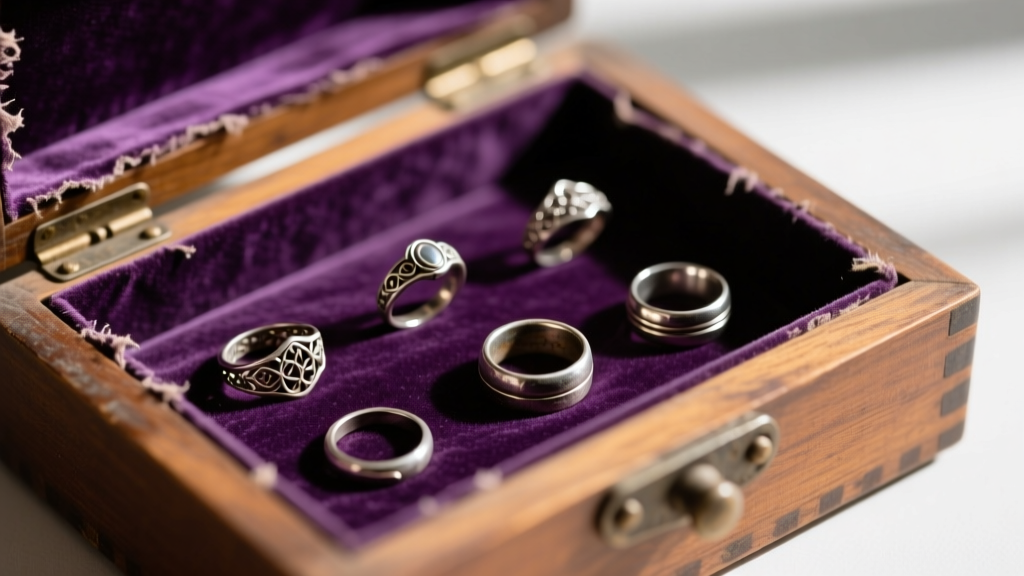
The deep, rich purples, emeralds, and reds found in vintage Mele linings were often achieved using sulfur-bearing direct dyes or acidic mordants. When confined in a closed micro-environment, these textiles off-gas sulfur dioxide and organic acids. As noted by the Smithsonian Museum Conservation Institute, sulfur reacts with the copper in sterling silver to form silver sulfide, the black compound we recognize as tarnish. If you are storing heirloom silver in an unrestored vintage Mele box, you are likely accelerating its degradation. The only permanent solution is to carefully strip the original lining, preserve the structural cardboard or wood armatures, and re-line the compartments with modern, tarnish-inhibiting flannel or certified acid-free, pH-neutral textiles.
Hardware and Hinges: Brass Plating and Steel Failure Modes
The hardware on a vintage Mele jewelry box—escutcheons, drawer pulls, piano hinges, and lock mechanisms—provides vital clues about its manufacturing date and dictates how it should be cleaned. Early pieces (1920s-1940s) predominantly feature solid brass or solid bronze hardware. These can be safely polished using mild abrasives and protected with microcrystalline wax.
By the 1960s and 1970s, the industry transitioned to zinc alloy die-castings (often referred to as 'pot metal') plated with a thin layer of brass or chrome. This material is highly vulnerable to a phenomenon known as 'zinc pest,' where internal impurities cause the zinc to oxidize, expand, and eventually crumble into a powdery mass. Furthermore, if the thin plating on these vintage hinges is breached, the underlying steel or zinc will rapidly corrode when exposed to the oils from human hands or humid environments.
The Magnet Test: Always carry a small neodymium magnet when evaluating vintage hardware. Solid brass and bronze are non-magnetic. If the hinge or pull attracts the magnet, it is a steel core with a brass electroplate. Aggressive polishing compounds will easily wear through this microscopic plating, permanently ruining the piece's aesthetic and exposing the steel to rust.
Restoration Framework: Cleaning and Preservation
Restoring a vintage Mele jewelry box requires a systematic, conservative approach. The goal is to stabilize the materials without stripping the historical patina that gives the piece its value and character.
- Exterior Cleaning: Avoid commercial aerosol furniture polishes, which contain silicones that build up and attract dust. Instead, use a mild solution of naphtha or mineral spirits on a soft cotton cloth to gently lift decades of grime and old wax.
- Veneer Consolidation: For lifting veneer, use a syringe to inject liquid hide glue. Apply gentle, even pressure using a wooden caul padded with cork to prevent clamping marks until the adhesive cures (usually 24 hours).
- Hardware Preservation: Clean solid brass with a specialized, non-scratching brass cream. Once polished, seal the metal with a thin coat of Renaissance Wax (a microcrystalline wax developed by the British Museum) to prevent oxygen exposure and delay future tarnishing.
- Lining Replacement: When removing old velvet, use a heat gun on a low setting to soften the original animal-based or starch adhesives. Scrape the residue with a wooden spatula to avoid gouging the wooden drawer bases. Re-line using 3M Scotch-Weld or archival-grade PVA, ensuring all new fabrics are certified acid-free.
Sourcing and Valuation in the Secondary Market
In the current 2026 market, a fully restored vintage Mele jewelry box commands a premium, particularly models featuring rare burl walnut book-matching or intact, functional Swiss music box mechanisms. However, buyers must look past the superficial shine. A box that smells sharply of chemical solvents or features overly bright, mirror-finish brass hardware has likely been over-restored, diminishing its antique value.
"The true value of mid-century storage lies in its structural integrity and the chemical safety of its interior micro-environment. A beautiful exterior is useless if the interior lining is actively destroying the silver it was built to protect."
— Conservation Principles for Antique Furnishings
Ultimately, treating a vintage Mele jewelry box not just as a decorative object, but as a complex assembly of organic and inorganic materials, ensures that it will continue to safeguard your most precious jewelry for generations to come. By understanding the specific failure modes of mid-century veneers, sulfur-laden dyes, and plated hardware, collectors can make informed, scientifically sound restoration decisions.


