Material Science of the Cactus Jewelry Holder: An Expert Guide
Discover the material science behind cactus jewelry holders. Learn which ceramics, resins, and metals protect fine jewelry from micro-scratches and tarnish.

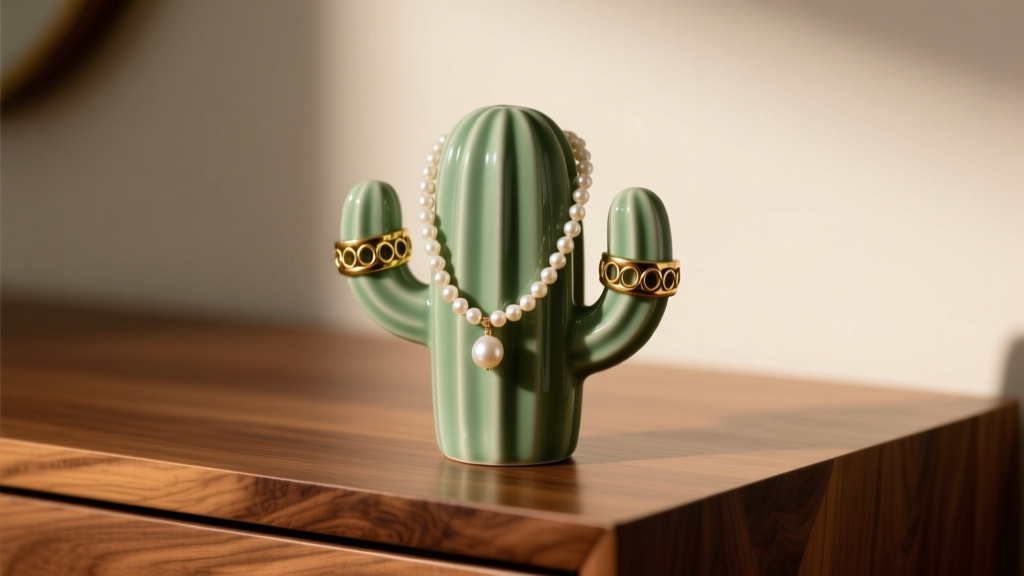
The Anatomy of a Cactus Jewelry Holder: Beyond Novelty
The cactus jewelry holder has become a ubiquitous fixture in modern vanity organization, prized for its whimsical silhouette and space-saving verticality. However, from a horological and gemological preservation standpoint, the novelty of the shape often masks severe material deficiencies. Fine jewelry—particularly high-karat gold, sterling silver, and porous gemstones like pearls or turquoise—requires highly specific environmental and physical conditions to prevent degradation. When you drape a delicate 18k gold chain over a poorly manufactured cactus branch, you are not merely storing it; you are subjecting it to friction, potential chemical off-gassing, and structural stress.
As jewelry storage specialists, we evaluate these organizers not by their aesthetic appeal, but by their material hardness, porosity, center of gravity, and chemical inertness. This expert deep dive dissects the material science behind the cactus jewelry holder, providing you with a technical framework to select a piece that actively preserves your collection rather than slowly destroying it.
Material Breakdown: Ceramic vs. Resin vs. Cast Metal
The market is saturated with three primary material categories for these holders. Each possesses distinct metallurgical and ceramic properties that directly interact with the Mohs hardness of your jewelry.
High-Fired Ceramic (Stoneware & Porcelain)
High-fired ceramics, particularly stoneware and porcelain, are kiln-baked at temperatures exceeding 2,200°F (1,200°C), resulting in a vitrified, non-porous surface. When finished with a food-safe, lead-free glaze, these holders offer an exceptionally smooth surface with a Mohs hardness rating of around 6 to 7. According to the Gemological Institute of America (GIA), pure 24k gold has a Mohs hardness of just 2.5 to 3. This means an unglazed or poorly glazed ceramic branch will act like sandpaper against soft precious metals, creating micro-abrasions that dull the polish over time. Always verify that the ceramic holder features a fully vitrified, high-gloss glaze on every surface that touches metal.
Polyurethane and Epoxy Resins
Resin cactus holders are lightweight, highly detailed, and inexpensive. However, they present two hidden dangers. First, cheap polyurethane resins can undergo chemical off-gassing, releasing volatile organic compounds (VOCs) that accelerate the tarnishing of sterling silver. Second, many manufacturers use silica or quartz sand as a filler to add weight and reduce costs. If this filler is exposed near the surface, it introduces a Mohs 7 abrasive directly against your jewelry. High-quality epoxy resins are safer, but they remain susceptible to UV degradation, which can cause the material to become brittle and develop microscopic surface crazing that snags delicate prong settings.
Cast Aluminum and Brass Alloys
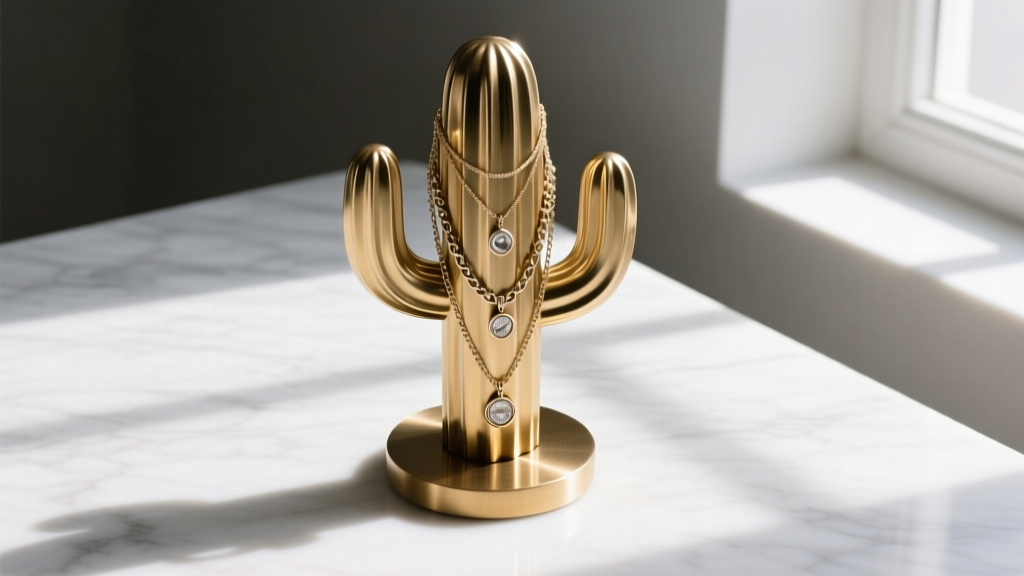
Cast metal cactus holders offer superior structural integrity and a premium aesthetic. Brass alloys (copper and zinc) are highly durable and can be polished to a mirror finish. However, bare brass contains copper, which can react with the sulfur and moisture in the air, potentially transferring corrosive compounds to adjacent silver pieces if they touch. The best metal holders are those that have been electrophoretic coated or finished with a clear, anti-tarnish lacquer. Aluminum variants are naturally rust-proof and lighter, but they must be anodized to prevent the raw metal from oxidizing and leaving gray residue on light-colored pearls or opals.
Structural Integrity and Weight Distribution
A cactus shape is inherently top-heavy. The branches extend outward, creating a high center of mass. When you load the outermost branches with heavy statement necklaces or layered chain stacks, the torque applied to the base can easily exceed the holder's tipping threshold. A structurally sound cactus jewelry holder must adhere to a strict base-to-height footprint ratio.
For every 3 inches of vertical height, the base diameter should be at least 1 inch. Furthermore, the base should contain a concealed weighted core—typically a steel or lead-free zinc disc embedded in the bottom. Without this counterweight, the kinetic energy of simply removing a heavy bangle from a top branch will cause the entire structure to pivot and crash onto your vanity, potentially snapping the cactus arms and scattering your jewelry.
| Material Type | Surface Mohs Hardness | Tarnish / Scratch Risk | Base Weight Ratio | Average Price Range |
|---|---|---|---|---|
| Glazed Porcelain | 6.5 - 7.0 | Low (if fully glazed) | Moderate (Requires wide base) | $25 - $60 |
| Polyurethane Resin | 2.0 - 3.0 | High (Off-gassing / Fillers) | Poor (Inherently top-heavy) | $12 - $30 |
| Anodized Aluminum | 2.5 - 3.0 | Very Low | Good (Requires steel insert) | $45 - $90 |
| Lacquered Brass | 3.0 - 4.0 | Low (if lacquer intact) | Excellent (Naturally heavy) | $60 - $150+ |
The Hidden Danger: Micro-Abrasions and Tarnish Traps
Many novelty jewelry organizers are manufactured using slip-casting techniques that leave microscopic defects in the finish. In a cactus holder, the joints where the arms meet the main trunk are notorious for glaze pooling and subsequent cracking. These micro-fissures act as tarnish traps. They accumulate ambient humidity, skin oils, and airborne sulfur compounds. When you hang a silver chain in these crevices, the trapped moisture creates a localized galvanic cell, accelerating black silver sulfide formation on the metal.
Furthermore, the Smithsonian Museum Conservation Institute notes that porous materials can absorb and later release corrosive gases. If your cactus holder is made from unsealed wood or low-grade MDF disguised with paint, it will continuously emit acetic acid and formaldehyde. These organic acids are highly corrosive to lead, silver, and copper alloys. Always inspect the underside of the holder; if the base material is exposed, unsealed, or smells distinctly of chemicals, it is unsafe for long-term precious metal storage.
Expert Buying Framework: What to Look For
When evaluating a cactus jewelry holder, bypass the aesthetic marketing and run it through this technical checklist:
- The Fingernail Test: Run your fingernail firmly along the underside of the branches. If you feel resistance, grit, or unglazed ceramic, the piece will cause micro-scratches on high-polish metals.
- The Pivot Test: Press down firmly on the longest, most extended branch. If the base lifts even a millimeter off the table without significant weight, the center of gravity is poorly engineered.
- The Joint Inspection: Examine the seams where the arms attach to the trunk. They should be seamlessly blended. Visible glue lines or deep crevices will harbor moisture and tarnish-inducing dust.
- The Snag Check: Rub a piece of sheer silk or a microfiber cloth over the tips of the cactus spines. If the fabric catches, it will eventually snag the silk threads of your pearl necklaces or the prongs of your gemstone rings.
Environmental Factors: Humidity and UV Degradation
Where you place your cactus holder is just as critical as what it is made of. Direct sunlight will rapidly degrade dyed resins, causing the vibrant greens to bleach into a sickly yellow while simultaneously embrittling the polymer chains. Once embrittled, the microscopic surface flakes off, creating abrasive dust. Conversely, placing a ceramic holder in a high-humidity environment (like a bathroom vanity) without ensuring the base is sealed with a waterproof cork or silicone pad will allow moisture to wick into the unglazed bottom, eventually causing the ceramic to spall or crack from the inside out.
Maintenance and Cleaning Protocols
To maintain the inert nature of your holder, it requires periodic decontamination. Do not use harsh chemical cleaners, ammonia, or abrasive scrubbing pads, as these will strip protective lacquers from metal holders and dull the glaze on ceramics. Instead, use a solution of distilled water and a pH-neutral dish soap. Wipe down the branches with a lint-free microfiber cloth, ensuring you reach into the crevices where the arms meet the trunk. For brass or copper-alloy holders where the protective lacquer has worn off, apply a thin layer of microcrystalline wax (such as Renaissance Wax) to seal the metal from ambient oxygen and sulfur, ensuring your storage solution remains a protective vault rather than a catalyst for corrosion.


