Chess Board Jewelry Holder Buying Guide: What to Look For
Discover what to look for in a chess board jewelry holder. Our expert buying guide covers wood grades, anti-tarnish linings, and hinge hardware.

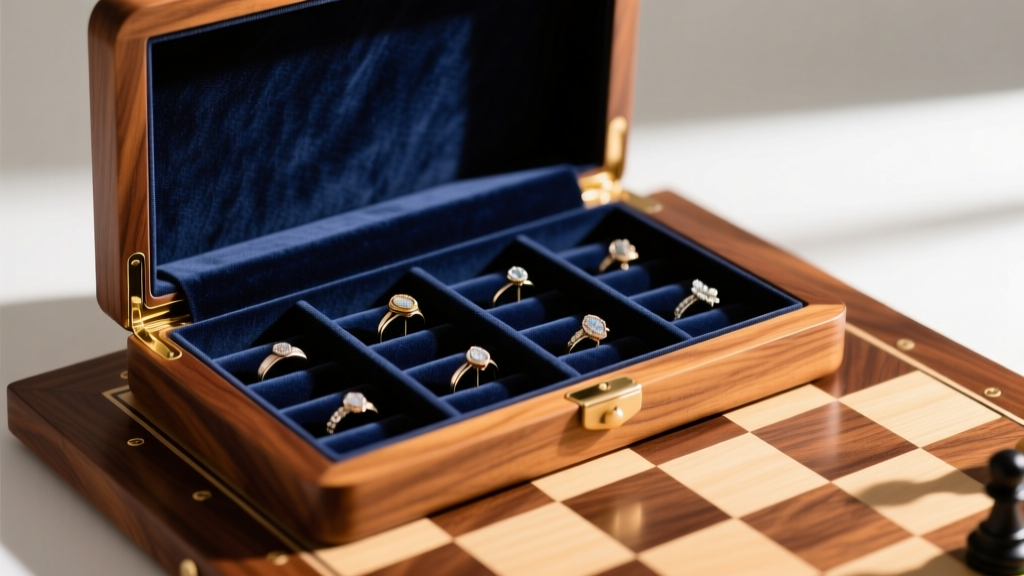
The Intersection of Strategy and Storage
The luxury storage market in 2026 has seen a massive surge in dual-purpose, display-worthy organization solutions. Among the most sophisticated of these is the chess board jewelry holder—a piece that marries the intellectual elegance of the world’s oldest strategy game with the practical necessity of protecting high-value accessories. Whether you are a horology enthusiast, a gem collector, or simply someone who appreciates functional art on their vanity, selecting the right chess board storage box requires looking far beyond the surface aesthetic.
A poorly constructed chess board box can lead to scratched gemstones, oxidized silver, and warped wood. This comprehensive buying guide will walk you through the critical material specifications, interior lining technologies, and hardware details you must evaluate before making a purchase.
Material and Build Quality: Hardwood vs. Engineered Composites
The exterior of a chess board jewelry holder dictates its longevity, weight, and resistance to environmental fluctuations. According to The Wood Database, understanding the difference between solid hardwoods and engineered veneers is the first step in assessing quality.
Solid Hardwoods (Walnut, Maple, Rosewood)
Premium chess board jewelry holders are crafted from FAS (First and Seconds) grade solid hardwoods. Black Walnut and Hard Maple are exceptional choices due to their tight grain structures and natural resistance to warping. Rosewood offers a deeper, richer hue but requires careful humidity control. Solid wood expands and contracts with seasonal humidity shifts, meaning high-end manufacturers will utilize floating panel joinery to prevent the lid from cracking or sticking.
Engineered MDF with Veneer
Many mid-tier options utilize Medium-Density Fiberboard (MDF) wrapped in a thin slice of real wood veneer. While MDF offers superior dimensional stability and is less prone to warping in humid bathrooms or dressing rooms, it lacks the structural integrity for heavy hardware. If the box feels unusually light or the edges show repetitive grain patterns, you are likely looking at a veneered composite.
Sizing and Scale: Tournament Boards vs. Vanity Footprints
Standard tournament chess boards feature 2.25-inch squares, resulting in a board that measures roughly 20 by 20 inches. While impressive on a library desk, this footprint is often too cumbersome for a standard bedroom vanity or dresser. When shopping for a chess board jewelry holder, pay close attention to the scale.
- Vanity Scale (12" to 15" total width): These boards typically scale the squares down to 1.5 or 1.75 inches. They are ideal for dedicated jewelry storage and fit easily next to perfume trays and mirrors.
- Statement Scale (18" to 22" total width): Full-sized boards that double as coffee table centerpieces. These usually feature deeper internal reservoirs for bulkier items like statement necklaces and oversized cuff bracelets.
Interior Layout and Anti-Tarnish Specifications
The most beautiful exterior is useless if the interior damages your collection. The Gemological Institute of America (GIA) emphasizes that improper storage is a leading cause of jewelry degradation. Untreated velvet and standard felt can trap moisture and emit volatile organic compounds (VOCs) that accelerate silver sulfide formation (tarnish).
What to Look For in Linings
In 2026, top-tier jewelry organizers utilize advanced anti-tarnish microfibers or treated flannel. Look for linings that explicitly mention LusterLoc or Pacific Cloth technology. These materials are impregnated with tarnish-inhibiting compounds that absorb sulfur gases and neutralize corrosive elements in the air. The interior should also feature modular, removable dividers so you can customize the grid to accommodate everything from delicate pavé bands to chunky signet rings.
Material Comparison Chart
| Material | Durability | Weight Profile | Price Range | Best Use Case |
|---|---|---|---|---|
| Solid Walnut | Exceptional | Heavy | $150 - $400+ | Heirloom storage, high-humidity areas |
| Rosewood | High | Heavy | $200 - $500+ | Display pieces, formal libraries |
| MDF + Veneer | Moderate | Light/Medium | $45 - $120 | Budget-friendly, travel, dry climates |
| Acrylic/Glass | Low (Scratches) | Medium | $80 - $180 | Modern aesthetics, quick visual access |
Evaluating the Chess Pieces: Functional vs. Decorative
A true chess board jewelry holder should not force you to sacrifice the game for the sake of storage. Evaluate the chess pieces based on three criteria: weighting, base protection, and dual-functionality.
High-quality Staunton-style pieces will feature lead-free steel weights in their bases, giving them a satisfying heft and preventing them from tipping over when the board is bumped. Crucially, the bottom of each piece must be lined with thick billiard cloth or soft leather. Bare wood or hard plastic bases will inevitably scratch the polished finish of the board’s squares over time.
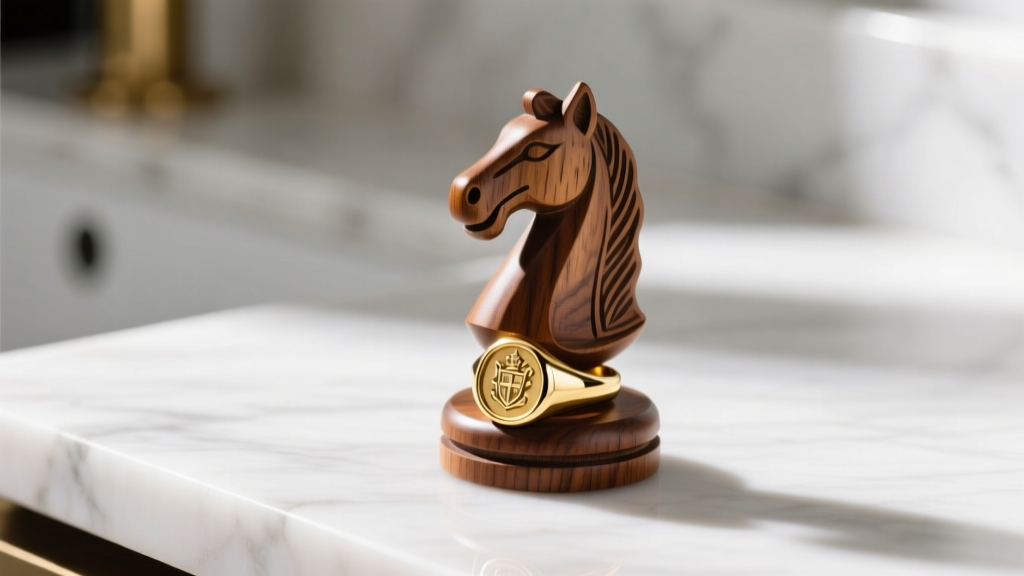
Pieces as Jewelry Holders
Some innovative 2026 designs feature chess pieces that double as individual ring or earring holders. For example, the Knight piece might feature a subtle, velvet-lined groove around its collar to securely hold a band, while the Rook might have a slotted top for drop earrings. If you opt for this style, ensure the pieces are scaled appropriately; a standard 3-inch King will not comfortably hold a size 10 ring without modifications.
Hardware, Hinges, and Security Features
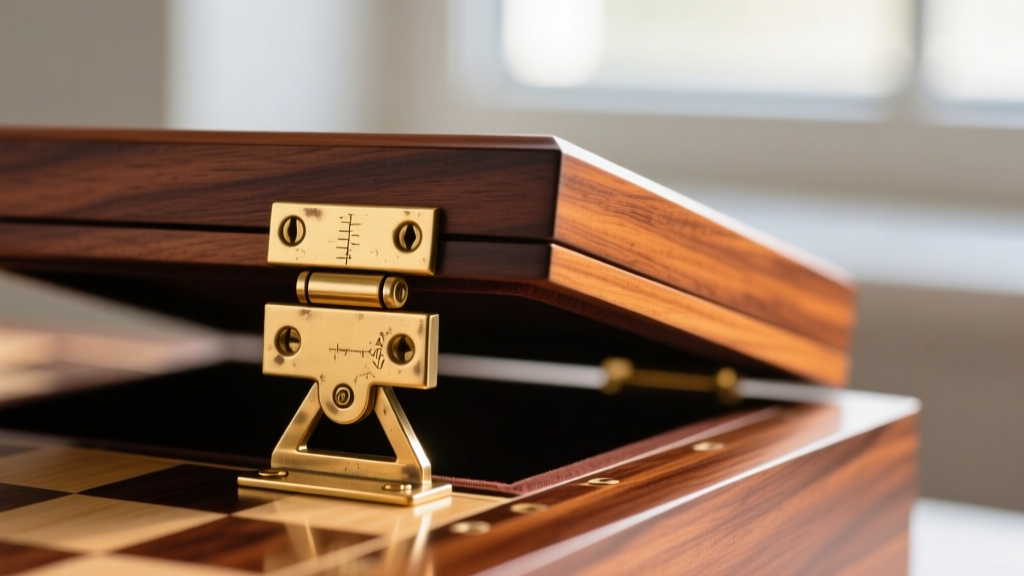
The hardware is the skeletal system of any lift-top jewelry box. A heavy solid-wood lid supported by cheap stamped-steel hinges will inevitably strip the screws from the wood, rendering the box useless. When inspecting a chess board jewelry holder, demand the following hardware specifications:
Expert Tip: Always test the lid's drop rate. A premium jewelry box should feature pneumatic stays or tightly calibrated quadrant hinges that hold the lid open at a perfect 90-degree angle and close it slowly, preventing crushed fingers and sudden shocks to the jewelry inside.
- Quadrant Hinges: These L-shaped brass hinges lock the lid at 90 degrees. Solid brass is mandatory; brass-plated zinc will pit and corrode over time.
- Hidden Piano Hinges: Running the entire length of the board, these distribute the lid's weight evenly. They are ideal for wider, tournament-sized boards.
- Locking Mechanisms: If you are storing high-value diamonds or heirloom pieces, look for a flush-mounted brass lock with a tubular key. Avoid cheap magnetic clasps, which lose their grip as the wood naturally shifts with age.
Final Verdict: Matching the Board to Your Collection
Investing in a chess board jewelry holder is about elevating your daily dressing ritual into an experience. For collectors of fine silver and porous gemstones like pearls or opals, prioritize solid hardwood construction paired with advanced LusterLoc anti-tarnish linings. If your collection consists mainly of everyday gold bands and durable diamond studs, a beautifully veneered MDF board with standard velvet and functional, weighted chess pieces will serve you perfectly.
By scrutinizing the wood grades, hinge mechanics, and interior chemical treatments, you ensure that your dual-purpose masterpiece protects your valuables while keeping your strategic edge sharp.


