The Contemporary Jewelry Box: 2026 Interior Trends & Storage Hacks
Discover 2026's top contemporary jewelry box trends, from sustainable vegan leathers to modular anti-tarnish interiors and smart storage solutions.

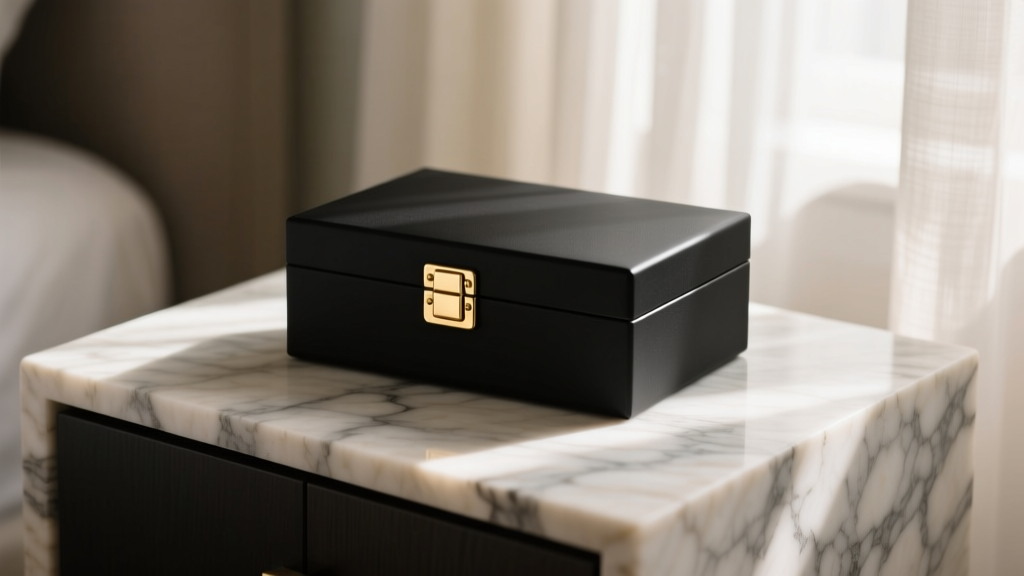
The evolution of the contemporary jewelry box has reached a fascinating inflection point in 2026. No longer relegated to dusty, ornate Victorian replicas or cheap, velvet-lined plastic bins, today’s storage solutions are treated as micro-architecture. As interior design shifts heavily toward "quiet luxury" and "warm minimalism," the modern collector demands storage that doubles as a sculptural nightstand accent while providing museum-grade preservation for high-carat gems and precious metals. In this trend analysis, we deconstruct the materials, tech integrations, and structural design choices defining the contemporary jewelry box landscape this year.
The Shift from Ornate to Architectural Minimalism
If the 2010s were defined by tufted leather and heavy, polished brass hardware, 2026 is all about concealed engineering and monolithic silhouettes. The leading contemporary jewelry box designs now favor raw, tactile materials that echo high-end interior architecture. We are seeing a massive surge in limed oak veneers, matte-finish ceramics, and fluted glass accents.
"The best contemporary storage doesn't scream for attention; it anchors a room with material honesty and geometric restraint." — Architectural Digest, 2026 Design Forecast
Hardware is increasingly hidden. Soft-close friction hinges, machined from aerospace-grade aluminum, replace traditional exposed piano hinges. This allows the exterior of the box to maintain unbroken, seamless lines. Brands like Wolf and emerging indie studios are utilizing PVD (Physical Vapor Deposition) coated brass that resists fingerprint smudging, ensuring the exterior remains as pristine as the interior. According to trend forecasts from Architectural Digest, the integration of natural stone bases—like honed travertine or Nero Marquina marble—is the defining luxury upgrade for tabletop organizers this year, providing necessary weight to prevent sliding when opening heavy, multi-tiered drawers.
Material Innovations: What’s Inside Matters Most
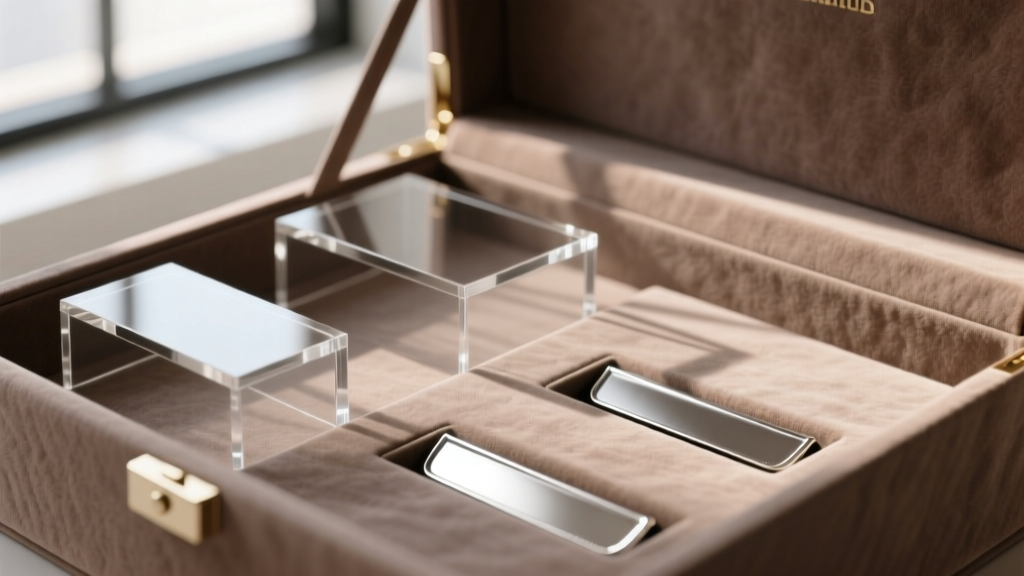
A beautiful exterior is useless if the interior accelerates oxidation. The most critical advancement in the contemporary jewelry box market is the departure from standard polyurethane (PU) leathers and cheap nylon flocking. These older materials often off-gas volatile organic compounds (VOCs) and sulfur-based adhesives, which react with copper and silver alloys to cause rapid tarnishing.
According to the Gemological Institute of America (GIA), controlling ambient humidity and preventing sulfur exposure are the primary defenses against silver sulfide formation (tarnish). To combat this, 2026’s premium boxes utilize advanced synthetic textiles and treated linings.
| Lining Material | Tarnish Resistance | Durability & Failure Modes | Price Tier |
|---|---|---|---|
| Standard Flocking | Poor (traps moisture) | Low; sheds micro-fibers onto prongs, creating bald spots in 12-18 months. | Budget ($30-$80) |
| PU / Vegan Leather | Moderate | Medium; prone to hydrolysis (peeling) in high-humidity environments. | Mid ($80-$150) |
| Alcantara® | High (breathable) | Very High; stain-resistant, grippy texture prevents necklaces from sliding. | Premium ($200+) |
| Pacific Silvercloth | Excellent (absorbs H2S) | High; embedded silver particles neutralize gas, but cloth requires eventual replacement. | Specialty ($150+) |
For serious collectors, Alcantara—a high-end synthetic suede used in luxury automotive interiors—has become the gold standard for ring rolls and watch cushions. Its microscopic grip prevents heavy gold chains from sliding into tangled knots, while its breathability prevents the moisture trapping that leads to pearl degradation.
Modular & Smart Storage: The Tech-Integrated Box
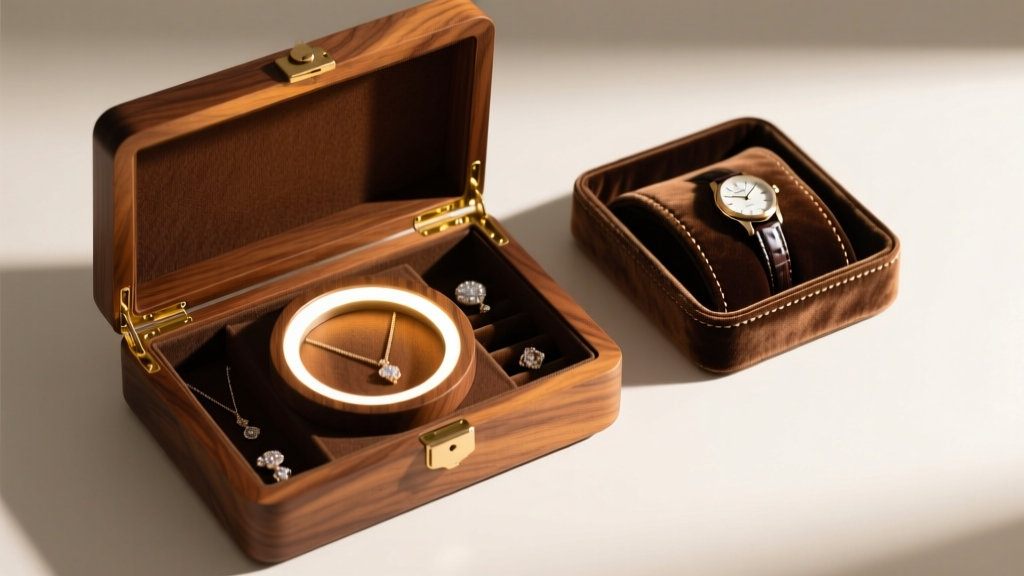
The contemporary jewelry box in 2026 is not just a passive container; it is an active display and maintenance ecosystem. The integration of technology has moved past novelty and into practical necessity, driven by the rise of lab-grown diamonds and high-value mechanical watches.
- High-CRI LED Illumination: Integrated lighting is now standard in mid-to-high-tier boxes. However, the metric that matters is CRI (Color Rendering Index). A CRI of 90+ is mandatory for accurately displaying the fire and scintillation of diamonds and the true body color of sapphires. Cheap LEDs with a CRI of 70 will cast a greenish hue, flattening the appearance of gemstones.
- Programmable Watch Winders: Modern winders built into jewelry boxes now feature digital TPD (Turns Per Day) programming. Instead of a generic 600 TPD setting, contemporary modules allow users to dial in exact specifications (e.g., 850 TPD, bi-directional) to prevent over-winding the mainspring of delicate calibers like the ETA 2824.
- Magnetic Modular Dividers: Snap-in acrylic and aluminum dividers allow users to reconfigure their layout as their collection grows. A box purchased for stud earrings can be reconfigured a year later to accommodate long drop earrings and tennis bracelets without buying a new unit.
Curating Your Collection: Sizing & Failure Modes
When investing in a luxury contemporary jewelry box, understanding structural failure modes is essential. Many beautifully designed boxes fail within three years due to overlooked engineering flaws.
Common Failure Points in Modern Designs
1. Neodymium Magnet Slamming: Many sleek, contemporary designs use hidden neodymium magnets for lid closures. If the magnetic strike plate is poorly calibrated, the lid can snap shut with over five pounds of force. If a fragile gemstone (like an emerald or opal cabochon) is resting near the rim, this sudden impact can easily chip the stone. Always test the closure tension in person before purchasing.
2. MDF Warping in Humidity: To achieve perfect, seamless geometric shapes, some manufacturers use Medium-Density Fiberboard (MDF) as the core material beneath wood veneers. While MDF machines beautifully, it is highly susceptible to swelling if exposed to the ambient humidity of a master bathroom or a coastal climate. Always opt for boxes constructed with marine-grade plywood or solid hardwood cores.
3. Flocking Shedding on Prongs: As mentioned in the material table, cheap flocking breaks down. The micro-fibers catch on the delicate prongs of pavé settings. Over time, this friction can loosen the prongs, leading to lost melee diamonds. If your current box is shedding, line the drawers with anti-tarnish felt immediately.
Sourcing Authentic Contemporary Pieces
The market for the contemporary jewelry box is highly segmented. Entry-level architectural boxes (featuring MDF cores and PU interiors) range from $60 to $120 on direct-to-consumer sites. Mid-tier designer pieces ($150 to $450) offer solid wood frames, Alcantara linings, and high-CRI lighting. For the luxury tier ($500 to $2,000+), buyers are looking at bespoke Macassar ebony veneers, hand-stitched leather exteriors, and Swiss-made watch winding modules.
When styling your space, treat the contemporary jewelry box as you would a piece of tabletop sculpture. Pair a matte ceramic organizer with organic linen bedding, or place a fluted glass and brass valet on a dark walnut dresser to create a striking, textural contrast. By prioritizing material integrity and concealed engineering, your storage solution will protect your investments while elevating your daily dressing ritual.


