Jewelry Display Ideas for Craft Shows: Material Guide
Compare the best materials for craft show jewelry displays. Explore acrylic, wood, and metal properties to maximize sales and protect pieces.

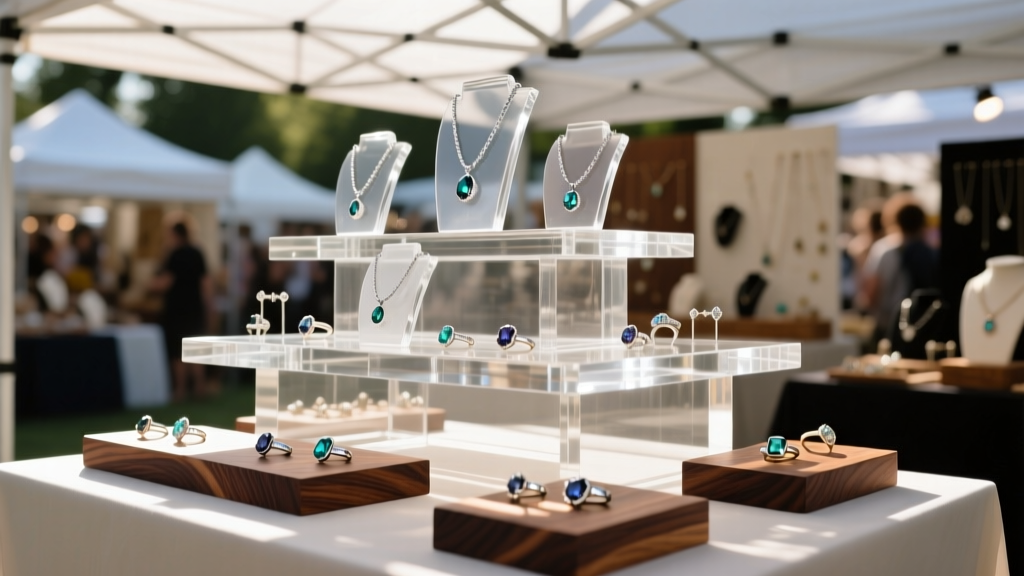
When selecting jewelry display ideas for craft shows, most artisans focus purely on aesthetics. However, the underlying material science of your display fixtures dictates your setup efficiency, transit durability, and even the chemical safety of your inventory. A display that looks beautiful in a climate-controlled studio can warp, crack, or accelerate tarnishing when exposed to the fluctuating humidity and UV radiation of an outdoor artisan market.
In this comprehensive material guide, we break down the physical properties, failure modes, and practical applications of the top display materials used by professional jewelers in 2026. Whether you are showcasing delicate 20-gauge gold-fill ear wires or heavy cast bronze statement necklaces, understanding these material properties will help you build a booth that converts foot traffic into sales.
The Big Five: Display Material Properties Compared
Before diving into specific applications, it is crucial to understand how the most common display materials compare across vital metrics like weight, durability, and cost. The table below outlines the baseline properties for standard 12x12-inch display panels.
| Material | Weight (per sq ft) | Impact Resistance | UV / Glare Index | Avg Cost (12x12 Panel) |
|---|---|---|---|---|
| Cast Acrylic (PMMA) | 1.1 lbs | Moderate (Shatters if dropped) | High Glare (Clear) / Low (Frosted) | $18 - $25 |
| Kiln-Dried Walnut | 3.8 lbs | High (Dents, won't shatter) | Zero Glare (Matte finish) | $45 - $70 |
| Engineered Bamboo | 2.9 lbs | High (Flexible, resilient) | Low Glare (Satin finish) | $22 - $35 |
| Anodized Aluminum | 1.4 lbs | Very High (Bends under extreme stress) | Moderate Glare (Brushed) | $30 - $45 |
| Solid Brass | 5.2 lbs | Very High | High Glare (Polished) / Low (Antiqued) | $60 - $90 |
Cast Acrylic & Polycarbonate: The Modern Minimalist
Acrylic is a staple for contemporary jewelry displays, offering a clean, invisible backdrop that forces the customer's eye directly onto the gemstones and metals. However, not all acrylic is created equal. For craft show displays, you must specifically source cast acrylic (PMMA) rather than extruded acrylic.
Extruded acrylic is manufactured by pushing molten plastic through a roller, creating internal stresses. When you attempt to drill holes for earring displays, extruded acrylic will spider-crack and splinter. Cast acrylic, poured into molds, has a uniform molecular structure that machines beautifully. According to material specifications from Evonik's Acrylite guidelines, cast acrylic also boasts superior UV resistance, meaning it won't yellow after seasons of outdoor sun exposure.
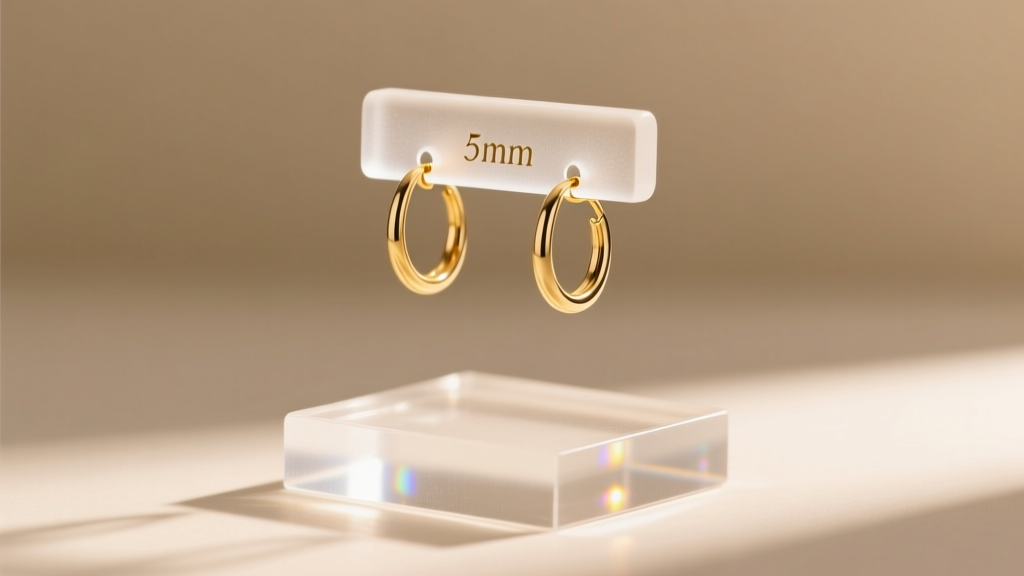
Drilling Specifications and Thickness Grades
For earring displays, thickness and hole gauge are critical. Standard earring posts are typically 20-gauge (0.8mm) or 18-gauge (1.0mm). If you drill holes exactly to these sizes, friction will make insertion difficult and risk bending the posts. The ideal drill bit size for standard posts is 1.5mm (approx. 1/16-inch). For heavier pieces utilizing 16-gauge (1.2mm) ear wires, step up to a 2mm drill bit.
Furthermore, never use 3mm acrylic for freestanding necklace or earring tiers. The weight of just five or six heavy beaded necklaces will cause a 3mm panel to bow forward, eventually leading to structural failure at the base joint. Always opt for 5mm or 6mm cast acrylic for vertical, load-bearing display tiers.
Hardwoods & Engineered Bamboo: The Artisan Aesthetic
Wood displays communicate craftsmanship, warmth, and organic beauty, making them ideal for artisan jewelers working with raw stones, recycled metals, or nature-inspired motifs. However, wood is a hygroscopic material—it absorbs and releases moisture from the air. This is the primary failure mode for wooden displays at outdoor craft shows.
If you are using solid hardwoods like walnut, cherry, or maple, the wood must be kiln-dried to a moisture content (MC) of 6% to 8%. If the MC is higher, the wood will warp or twist when exposed to the dry heat of a summer festival or the artificial heating of a winter indoor expo. To stabilize the wood, it must be sealed on all six sides with a marine-grade spar urethane or a hardwax oil like Rubio Monocoat. Sealing only the top and bottom while leaving the end-grain exposed creates an imbalance that guarantees cupping over time.
The Bamboo Alternative
Engineered bamboo is an increasingly popular alternative to solid hardwood. Because bamboo displays are constructed from cross-laminated strips, the opposing grain directions neutralize the natural expansion and contraction of the material. Bamboo is roughly 15% lighter than walnut and offers exceptional dimensional stability, making it a superior choice for jewelers who travel frequently and need to minimize shipping weight without sacrificing the organic wood aesthetic.
Anodized Aluminum & Brass Grids: High-End Industrial
Grid panels and metal armatures are essential for maximizing vertical space in a standard 10x10 craft show tent. The material you choose for these grids drastically impacts your setup time and wind resistance.
Anodized aluminum is the undisputed king of modular grid systems. The anodization process integrates a protective oxide layer into the metal, preventing corrosion and eliminating the need for polishing. A standard 24x36-inch aluminum grid panel weighs less than two pounds, allowing you to hang multiple panels from a single canopy frame without risking structural collapse. However, aluminum's low mass means it acts as a sail in high winds. Always secure aluminum grids with weighted steel bases or sandbags rated for at least 20 lbs per linear foot in outdoor environments.
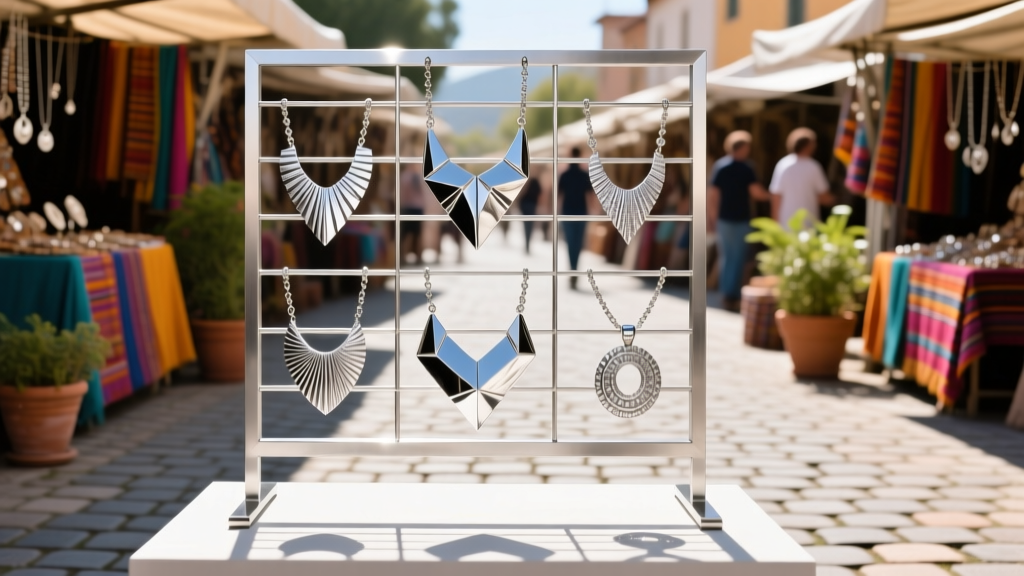
Solid brass, conversely, offers a luxurious, heavy-duty feel that elevates high-end fine jewelry. The natural weight of brass provides excellent wind resistance. The primary drawback is oxidation. Bare brass will develop a patina when exposed to the oils from customers' hands and the humidity of an outdoor show. If you prefer a bright brass finish, ensure your fixtures are coated with a clear lacquer or electrophoretic deposition (e-coat) to seal the metal from the environment.
The Hidden Variable: Anti-Tarnish Overlays
The material of your display panel is only half the equation; the surface overlay is what actually interacts with your jewelry. Untreated cotton, standard felt, and raw wood can accelerate the tarnishing of sterling silver and copper due to the presence of sulfur compounds and trapped moisture.
For craft shows, where pieces are constantly handled and exposed to open air, integrating anti-tarnish materials into your display design is a non-negotiable best practice. The Gemological Institute of America (GIA) notes that proper storage and display environments are critical to preventing silver sulfide formation. Utilizing Pacific Silvercloth or specially treated anti-tarnish flannel as an adhesive overlay on your wooden or acrylic tiers can actively absorb atmospheric sulfur. These treated fabrics embed microscopic silver particles that tarnish themselves, sacrificially protecting your inventory. While this adds roughly $4 to $6 per square foot to your display costs, it saves hours of polishing time between show days and ensures your silver remains brilliantly reflective under booth lighting.
Strategic Decision Framework: Matching Material to Your Line
To finalize your jewelry display ideas for craft shows, use this quick decision framework based on your specific inventory and show circuit:
- For Fine Jewelry (Gold, Platinum, Diamonds): Use frosted 5mm cast acrylic or lacquered brass. The minimalist or high-end aesthetic prevents the display from competing with the high value of the pieces. Avoid raw wood, which can look too casual.
- For Artisan / Bohemian Jewelry (Raw stones, oxidized silver): Opt for kiln-dried walnut or engineered bamboo with a matte hardwax finish. The organic texture complements the handmade nature of the work.
- For High-Volume, Low-Cost Inventory (Enamel pins, stamped brass): Utilize anodized aluminum grid systems with acrylic header signs. This maximizes vertical density, allows for rapid restocking, and keeps the overall booth weight manageable for solo vendors.
- For Sterling Silver Specialists: Regardless of the structural material (wood or acrylic), every horizontal resting surface must be lined with treated anti-tarnish flannel to prevent yellowing during multi-day outdoor expos.
Conclusion
Mastering your craft show setup requires looking past the surface aesthetics and evaluating the physical and chemical properties of your display materials. By selecting the correct thickness of cast acrylic, properly sealing hygroscopic hardwoods, leveraging the lightweight strength of anodized aluminum, and integrating anti-tarnish overlays, you create a professional, durable, and chemically safe environment for your jewelry. According to veteran sellers featured in the Etsy Seller Handbook, investing in high-quality, material-appropriate displays not only protects your inventory but significantly elevates the perceived value of your brand, directly correlating to higher conversion rates on the show floor.


