Expert Woodworking Jewelry Box Plans: Joinery & Anti-Tarnish Guide
Master custom woodworking jewelry box plans with our expert guide on precision joinery, anti-tarnish linings, and safe wood species for fine jewelry.

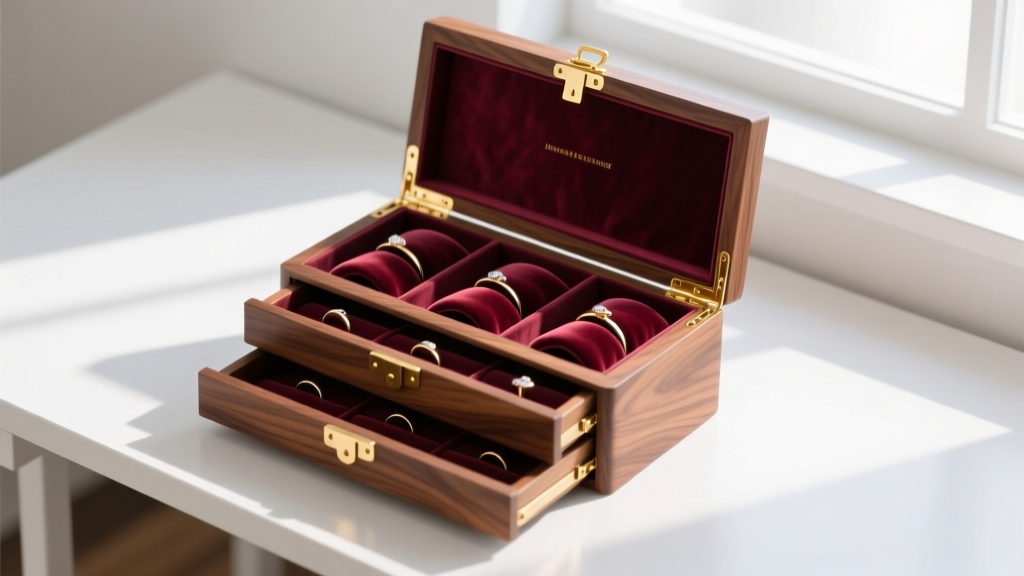
Commercial jewelry boxes often fail the most critical test of heirloom storage: chemical stability. Mass-produced units frequently utilize medium-density fiberboard (MDF), acidic PVA glues, and synthetic felts that trap moisture and off-gas sulfur compounds, leading to rapid silver sulfide formation and gold alloy degradation. For serious collectors and bench jewelers, executing custom woodworking jewelry box plans is not merely an aesthetic choice; it is a vital preservation strategy. This technical deep dive explores the material science, precision joinery, and micro-climate engineering required to build a jewelry storage vessel that actively protects precious metals and gemstones.
The Chemistry of Wood Selection for Jewelry Storage
Not all hardwoods are safe for direct or indirect jewelry contact. The primary enemy of fine metals in a wooden enclosure is acetic and tannic acid off-gassing. According to conservation guidelines referenced by the GIA Gem Encyclopedia, acidic environments accelerate the corrosion of copper-bearing alloys (like rose gold and sterling silver) and can permanently etch porous gemstones such as pearls and turquoise.
Woods to Avoid
- Red and White Oak: Exceptionally high in tannic acid. Even when sealed, oak can off-gas corrosive vapors in a closed micro-climate for decades.
- Pine and Cedar: High resin and terpene content. Cedar is famously used to repel moths, but those same volatile organic compounds (VOCs) can react with silver and degrade delicate pearl nacre.
- MDF and Plywood: The urea-formaldehyde resins used in composite boards continuously off-gas formaldehyde, which oxidizes into formic acid in the presence of ambient humidity.
Archival-Safe Wood Species
When sourcing lumber for your woodworking jewelry box plans, target species with neutral pH profiles and low VOC emissions. Hard Maple (Acer saccharum), Black Walnut (Juglans nigra), and Honduran Mahogany (Swietenia macrophylla) are the gold standards for archival cabinetry. Ensure your lumber is kiln-dried to a precise moisture content (MC) of 6% to 8%. Wood with an MC above 10% will continue to off-gas water vapor into the sealed box, creating a localized humidity spike that promotes tarnish.
Precision Joinery Techniques for Micro-Compartments
A jewelry box is essentially a series of nested micro-climates. The structural integrity of the outer carcase dictates the alignment of the interior trays. If the main box twists due to seasonal humidity fluctuations, the interior drawers will bind, and the lid will fail to seal.
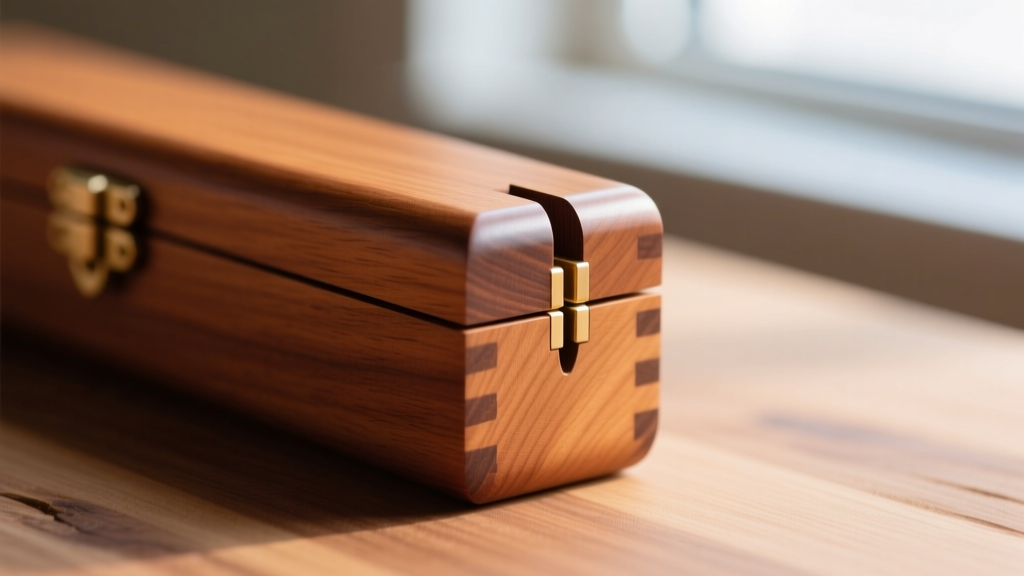
Carcase Construction: Blind Dovetails vs. Spline Miters
For the main carcase, blind (or secret) dovetails offer the ultimate combination of mechanical strength and clean exterior sightlines. Unlike through-dovetails, blind dovetails hide the end grain on the front face of the box, allowing for uninterrupted figure in highly-figured woods like crotch walnut. When cutting blind dovetails for a box of this scale (typically 12 to 16 inches wide), aim for a tail-to-pin ratio of 1:1. The smaller scale of the box requires finer pins—typically 1/8-inch at the narrowest point—to maintain structural integrity without overwhelming the delicate proportions of the piece.
For interior dividers and tray frames, slip joints and housed dados are preferred. Avoid using metal fasteners (brads or screws) inside the main compartment. Ferrous metals will eventually rust, and the tannins in walnut will react with iron to create indelible black stains. If mechanical reinforcement is necessary, use bamboo or hardwood dowels, or rely entirely on high-quality aliphatic resin glues like Titebond III, which cures to a rigid, moisture-resistant bond.
Sourcing and Integrating Anti-Tarnish Linings
The interior lining is the final barrier between your woodworking and the jewelry. Standard craft felt is a trap; it is often dyed with sulfur-bearing compounds and acts as a sponge for ambient humidity.
The Pacific Silvercloth Standard
For serious anti-tarnish protection, integrate Pacific Silvercloth or a comparable 100% cotton flannel embedded with microscopic silver particles. These embedded particles act as a sacrificial anode, absorbing hydrogen sulfide and other corrosive gases before they can reach your actual jewelry. When adhering this cloth to your wooden trays, never use aerosol spray adhesives or solvent-based contact cements. The solvents will break down the anti-tarnish treatment and introduce harmful VOCs into the box. Instead, use a thin, even layer of traditional hide glue or a pH-neutral PVA like Lineco Neutral pH Adhesive, which is specifically formulated for archival bookbinding and conservation work.
Active vs. Passive Tarnish Prevention
In addition to the lining, incorporate a hidden cavity beneath the main drawer to house activated carbon packets or 3M Anti-Tarnish Strips. These strips absorb sulfur compounds and remain effective for up to two years in a sealed environment. Design your woodworking jewelry box plans with a friction-fit false bottom in the lowest drawer, allowing you to swap out these chemical absorbers without dismantling the interior lining.
Hardware and Hinge Specifications
The hardware on a jewelry box must operate with horological precision. A lid that slams shut can shatter fragile gemstone settings or snap delicate prongs. Standard butt hinges are entirely inadequate for this application.
| Hinge Type | Material | Torque / Stop Angle | Best Application |
|---|---|---|---|
| Quadrant Hinge | Solid Brass | 95-degree positive stop | Heavy, deep lids requiring rigid support |
| Rule Joint Hinge | Solid Brass | Variable (requires lid stay) | Drop-leaf style tray extensions |
| Piano Hinge | Brass / Steel | Continuous, no stop | Wide, shallow lids (requires chain stay) |
| Knife Hinge | Brass / Steel | 180-degree swing | Recessed interior tray doors |
For the main lid, Brusso CB-301 solid brass quadrant hinges are the industry benchmark. These hinges feature an integral 95-degree stop mechanism that prevents the lid from hyperextending and straining the carcase. When mortising quadrant hinges, the tolerances are unforgiving. You must route the hinge pocket to a depth that perfectly matches the hinge leaf thickness (usually 0.062 inches). If the hinge sits even 0.010 inches proud of the wood surface, the lid will bind; if it sits too deep, the lid will gap at the front.
Dimensional Blueprints and Compartment Sizing
Ergonomics and spatial planning separate a functional jewelry box from a mere wooden container. When drafting your interior layouts, adhere to these standardized horological and jewelry dimensions to ensure every piece fits without crowding.
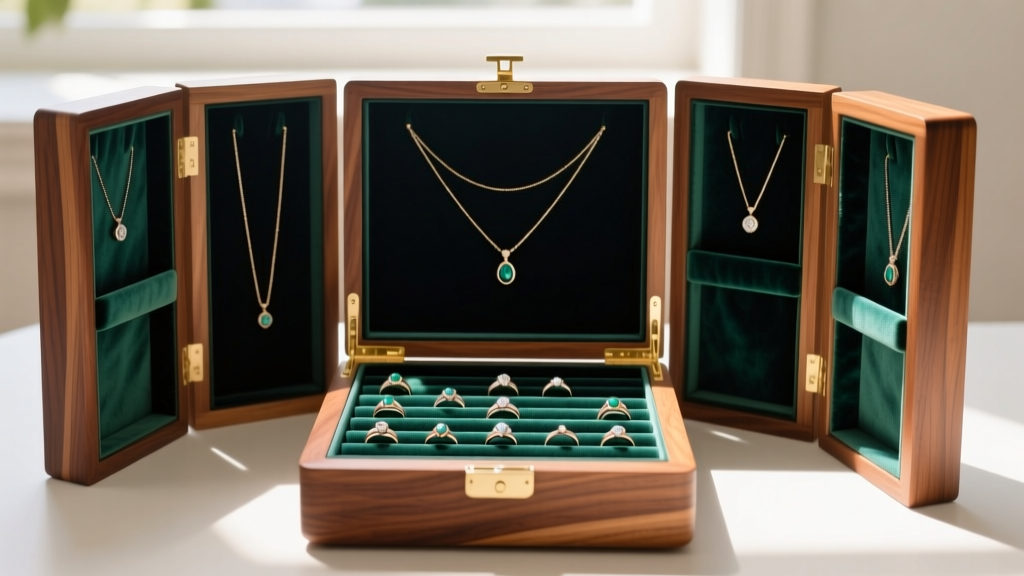
- Ring Rolls: Standard ring rolls require a center-to-center spacing of exactly 1.75 inches. The rolls themselves should be 1.25 inches in diameter, wrapped in Dacron batting to provide gentle, consistent pressure that holds rings upright without stressing the shanks.
- Necklace Drops: To prevent chains from tangling, vertical necklace compartments must offer a minimum drop height of 14 inches. Include a brass hook at the top and a small, weighted velvet pouch at the bottom to keep the chain taut.
- Watch Pillows: Modern automatic watches require specific clearance. Design watch compartments with a footprint of 3.5 inches wide by 4.5 inches deep, and ensure the pillows are stuffed with acid-free tissue to maintain a 6-inch interior circumference.
- Bracelet Trays: Utilize shallow, felt-lined dividers with a depth of 1.5 inches and a width of 8 inches to accommodate standard tennis bracelets and bangles without overlapping.
Final Finishing: Safe Sealants and Curing Times
The exterior finish of your jewelry box must be durable enough to resist skin oils and cosmetics, yet chemically inert once cured. Avoid oil-based polyurethanes and catalyzed lacquers for the interior surfaces, as their extended off-gassing periods can introduce harmful solvents into the storage environment.
The Shellac Barrier Method
Before applying any exterior topcoat, seal the entire interior of the box—including all drawer interiors and the underside of the lid—with two coats of dewaxed blonde shellac (such as Zinsser SealCoat). Shellac is a natural, non-toxic resin that acts as an impenetrable vapor barrier, locking in any residual wood tannins and preventing them from migrating into the jewelry compartment. Once the shellac has fully flashed off (typically 2 hours), you can safely install your anti-tarnish linings.
Exterior Topcoats
For the exterior, a hard-wax oil like Osmo Polyx-Oil or a high-quality wiping varnish provides a beautiful, hand-rubbed luster that is highly resistant to moisture and fingerprints. Apply a minimum of three coats, buffing lightly with 0000 steel wool between layers. The most critical step in the finishing process, however, is the cure time. Even after a finish feels dry to the touch, it continues to off-gas solvents. Allow the completed box to sit open in a well-ventilated, climate-controlled room for a minimum of 14 days before installing the final anti-tarnish linings and introducing fine jewelry. For further insights on safe finishing practices, consult the technical archives at Fine Woodworking, which offer extensive data on VOC emissions in various wood finishes.
By treating your woodworking jewelry box plans as an exercise in archival conservation rather than simple cabinetry, you create a functional heirloom. The synthesis of stable hardwoods, precision brass hardware, and chemically inert linings ensures that the jewelry stored within remains as pristine as the day it was crafted, preserving both its material value and its historical legacy for generations to come.


