2026 Trend Report: Aesthetic DIY Jewelry Storage Ideas
Discover 2026's top aesthetic DIY jewelry storage ideas. Learn how to build trending Japandi, Brutalist, and Maximalist displays while preventing tarnish.

The way we interact with our jewelry collections has fundamentally shifted. As we move through 2026, the era of hiding precious metals and gemstones inside dark, velvet-lined drawers is over. Today's collectors view their pieces as wearable art, demanding storage solutions that double as interior design statements. If you are exploring diy jewelry storage ideas, you are likely looking for ways to merge aesthetic display with material preservation.
This trend report analyzes the top three DIY storage aesthetics dominating interior design in 2026—Japandi Minimalism, Brutalist Concrete, and Maximalist Shadow Boxes. More importantly, we break down the exact material science, sealing requirements, and anti-tarnish protocols needed to ensure your DIY builds do not chemically damage your collection.
The 2026 Shift: From Concealed Vaults to Curated Vignettes
According to recent interior design forecasts, 'display-as-decor' has replaced traditional organization. Jewelry is now styled alongside ceramics, books, and sculptural objects in curated vignettes. However, open-air storage introduces severe environmental risks: hydrogen sulfide in the air causes silver tarnish, while fluctuating humidity can warp organic gems like pearls and opals. The most successful DIY projects in 2026 solve this by integrating invisible conservation-grade materials into highly visible, trendy designs.
Trend 1: Japandi Minimalism & The Floating Linen Display
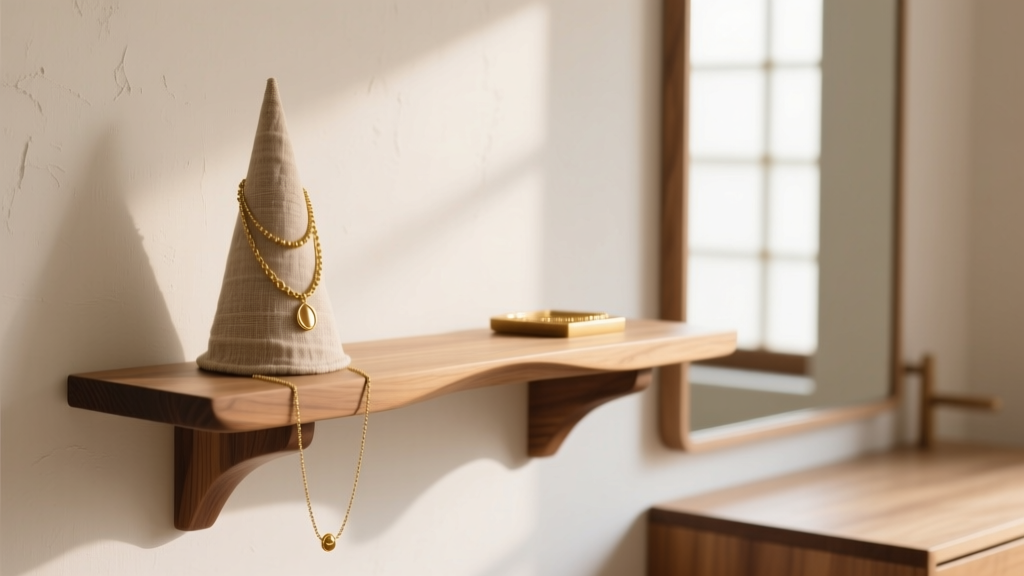
Japandi—the hybrid of Japanese rustic minimalism and Scandinavian functionality—relies on natural textures and clean lines. The quintessential DIY project in this style is the floating wooden shelf paired with raw linen necklace cones.
Material Specs & Anti-Tarnish Integration
When selecting wood for a floating shelf, avoid oak and cedar. These woods emit high levels of acetic acid, which will rapidly corrode silver and copper alloys. Instead, source kiln-dried hard maple or black walnut. To seal the wood and halt any residual off-gassing, apply three coats of a water-based acrylic sealer, such as Minwax Polycrylic. Avoid oil-based polyurethanes, which release volatile organic compounds (VOCs) that can dull the luster of porous gemstones like turquoise.
For the necklace cones, wrap cardboard or foam cones in unbleached, heavyweight linen. To prevent tarnish on the chains resting against the fabric, spray the linen with a micro-thin layer of anti-tarnish botanical extract or line the base of the cone with a strip of 3M Anti-Tarnish paper, which actively absorbs ambient sulfur compounds.
Trend 2: Brutalist Concrete & Raw Metal Armatures
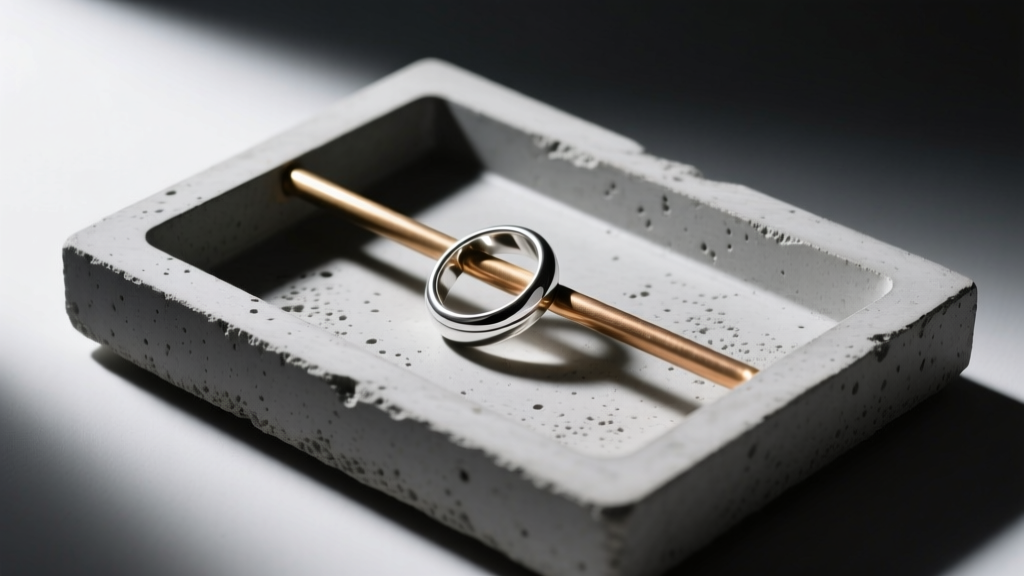
Brutalism has seen a massive resurgence in 2026 vanity design. DIYers are pouring their own concrete jewelry trays and embedding raw brass or copper rods to hang dangle earrings and rings. While visually striking, concrete poses a hidden chemical threat to jewelry.
Preventing Oxidation & Chemical Reactions
Freshly poured concrete is highly alkaline, typically registering a pH between 12 and 13. It also retains deep moisture for months after curing. Placing sterling silver or copper directly onto unsealed concrete will result in rapid, severe oxidation and pitting. Furthermore, the Conservation Wiki's guidelines on display materials explicitly warn against placing metals on alkaline substrates without a barrier.
To safely execute this DIY trend, you must seal the concrete. Use a penetrating silane/siloxane sealer followed by a two-part clear epoxy resin topcoat. This creates a chemically inert, glass-like barrier that preserves the matte look of the concrete while neutralizing the pH threat.
Material Reactivity & Safe Pairings Chart
| Base Material | Off-Gassing / pH Risk | Safe For | Required DIY Sealant |
|---|---|---|---|
| Red Oak / Cedar | High Acetic Acid | Gold, Platinum, Stainless Steel | Water-based Polyurethane (3 coats) |
| Hard Maple / Walnut | Low Acidity | Silver, Copper, Brass | Acrylic Polymer Sealer |
| Poured Concrete | High Alkaline (pH 12+) | Sealed items only | Silane Penetrating Sealer + Epoxy |
| Raw Brass Rods | Oxidizes, transfers patina | Gold, Brass, Copper | Renaissance Wax or Clear Lacquer |
Trend 3: Maximalist 'Cabinet of Curiosities' Shadow Boxes
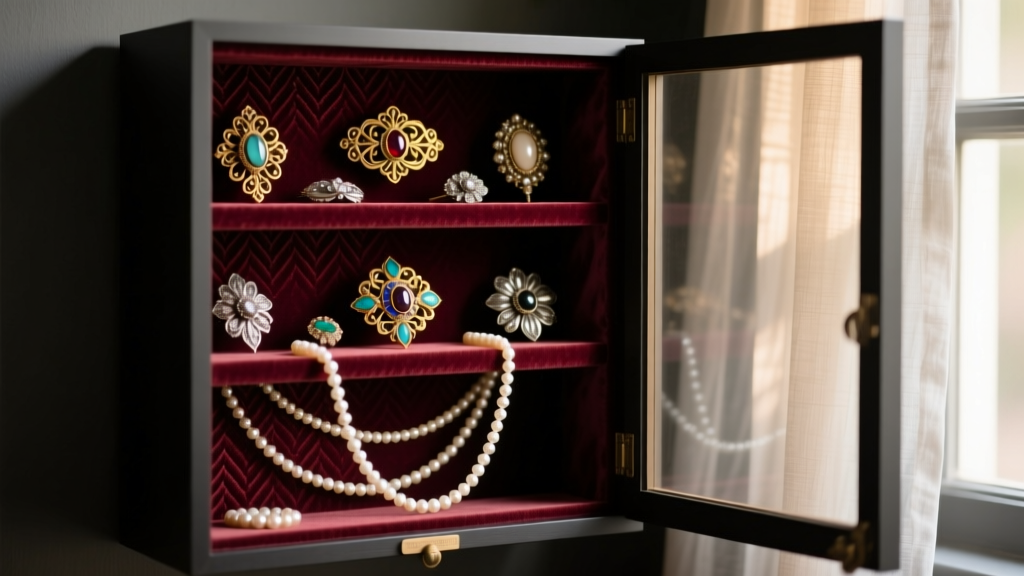
For collectors of vintage brooches, layered pearls, and eclectic charms, the Maximalist shadow box is the ultimate 2026 statement piece. This involves upcycling wooden cigar boxes or building deep pine frames, then lining them with rich textiles to create a dense, museum-style display.
Sourcing & Dimensional Guidelines
When building the internal armature for a shadow box, precision is key. Use a 1.5mm drill bit for standard stud earring posts, and a 2.5mm bit for thicker wire-wrapped hooks. For dangle earrings, ensure a minimum vertical clearance of 4.5 inches between horizontal display bars to prevent tangling.
The most critical upgrade for this DIY project is the lining material. Standard craft velvet traps dust and holds moisture. Instead, line the backboard with Pacific Silvercloth. This specialized fabric is embedded with microscopic particles of zinc and silver that act as a sacrificial shield, absorbing tarnish-causing gases before they reach your actual jewelry. According to the Gemological Institute of America (GIA), controlling the immediate micro-environment is the most effective way to preserve silver and organic gems in open displays.
The Science of Open-Air Storage: Mitigating Tarnish in DIY Builds
When executing any of these diy jewelry storage ideas, you must account for the room's ambient environment. Tarnish is primarily caused by hydrogen sulfide in the air, accelerated by humidity. If your DIY display is located near an en-suite bathroom or a kitchen, the risk multiplies.
- Activated Charcoal Packets: Hide small bamboo charcoal bags behind the structural elements of your display to passively regulate localized humidity.
- Anti-Tarnish Strips: 3M strips contain copper sulfate particles that neutralize sulfur gases. They last for 6 months and can be discreetly taped to the underside of floating shelves or the back of shadow boxes.
- UV Protection: If your display faces a south-facing window, apply a UV-blocking window film to the glass of your shadow boxes to prevent gemstones like amethyst and kunzite from fading.
Cost Analysis: DIY Sourcing vs. Retail Equivalents
Building your own aesthetic storage is not just about customization; it is a strategic financial move. High-end retail displays utilizing conservation-grade materials carry a massive markup.
- Japandi Floating Shelf: Retail price for a pre-finished maple shelf with linen cones averages $180-$250. DIY cost (lumber, linen, Polycrylic, hardware) is approximately $45-$65.
- Brutalist Concrete Tray: Retail cast-concrete jewelry dishes sell for $120+. DIY cost (concrete mix, silicone mold, brass rods, epoxy sealer) is roughly $30, though it requires more labor and curing time.
- Maximalist Shadow Box: A custom-built, Pacific Silvercloth-lined cabinet from a boutique organizer costs upwards of $400. Upcycling a vintage wooden box and sourcing the specialized cloth yourself brings the cost down to $85-$110.
By mastering the material science behind these trending aesthetics, you can build museum-quality, highly personalized jewelry storage that protects your investment while elevating your interior design.


