Buying Guide: Evaluating and Restoring an Old Jewelry Box
Discover what to look for when buying an old jewelry box. Learn to assess wood integrity, acidic linings, and hardware in our expert vintage guide.

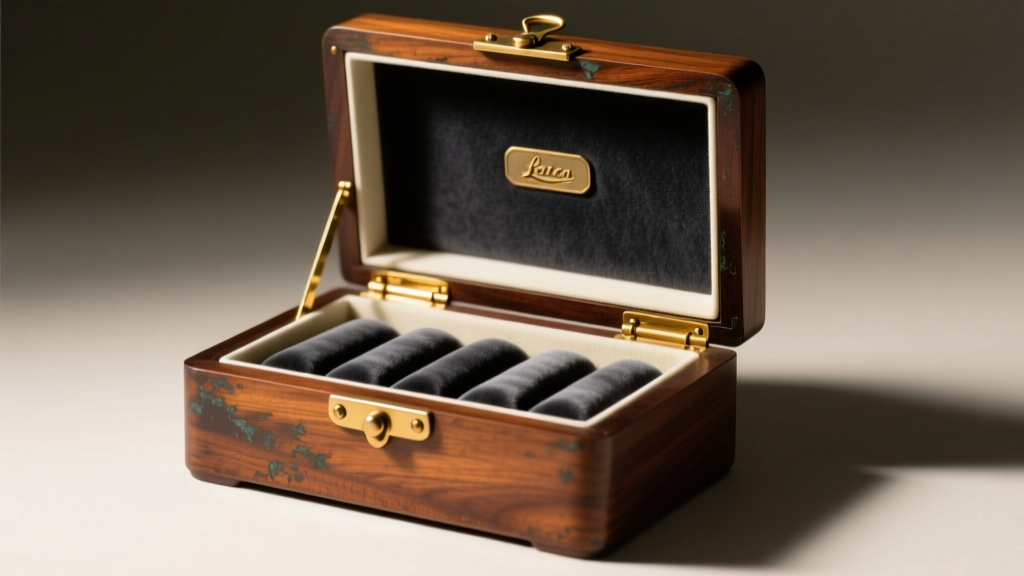
The Allure and Hidden Risks of Vintage Storage
In 2026, the sustainable design movement has pushed collectors and jewelry enthusiasts toward upcycling historical pieces, making the hunt for a high-quality old jewelry box more competitive than ever. A vintage or antique storage piece offers unparalleled craftsmanship, featuring exotic hardwoods and hand-forged hardware that modern mass-produced alternatives simply cannot replicate. However, an old jewelry box is not merely a decorative vessel; it is a micro-climate that can either preserve your precious metals and gemstones or actively destroy them.
Many buyers focus entirely on the exterior marquetry or the patina of the brass escutcheon, completely ignoring the internal chemistry of the box. Degraded textiles, off-gassing adhesives, and compromised structural joints can lead to severe tarnish transfer, pearl nacre degradation, and gemstone scratching. This comprehensive buying guide will teach you how to evaluate an old jewelry box from the inside out, ensuring your investment protects your collection for generations to come.
Structural Integrity: Wood, Joints, and Veneer
The foundation of any antique storage piece lies in its timber and joinery. When evaluating an old jewelry box, you must look past the surface polish and examine how the box was engineered to handle decades of humidity fluctuations and physical stress.
Identifying Quality Hardwoods and Veneers
Premium vintage boxes were typically constructed using dense, stable hardwoods such as Honduran mahogany, black walnut, or rosewood. These woods naturally resist warping and possess tight grain structures that hold hardware securely. However, many antique boxes utilize a technique called cross-banding, where a less expensive secondary wood (like pine or poplar) is used for the carcass, and a thin layer of exotic burl or crotch-grain veneer is applied to the exterior.
When inspecting the veneer, gently run your fingernail along the edges and corners. If you detect lifting, bubbling, or a hollow sound when tapping the surface, the original hide glue has likely crystallized and failed. Hide glue, the standard adhesive of the 19th and early 20th centuries, softens at approximately 140°F and becomes brittle over time. While re-gluing veneer is a standard restoration task, extensive lifting across the top panel indicates severe moisture damage, which compromises the box's overall structural rigidity.
Joint Mechanics: Dovetails vs. Miters
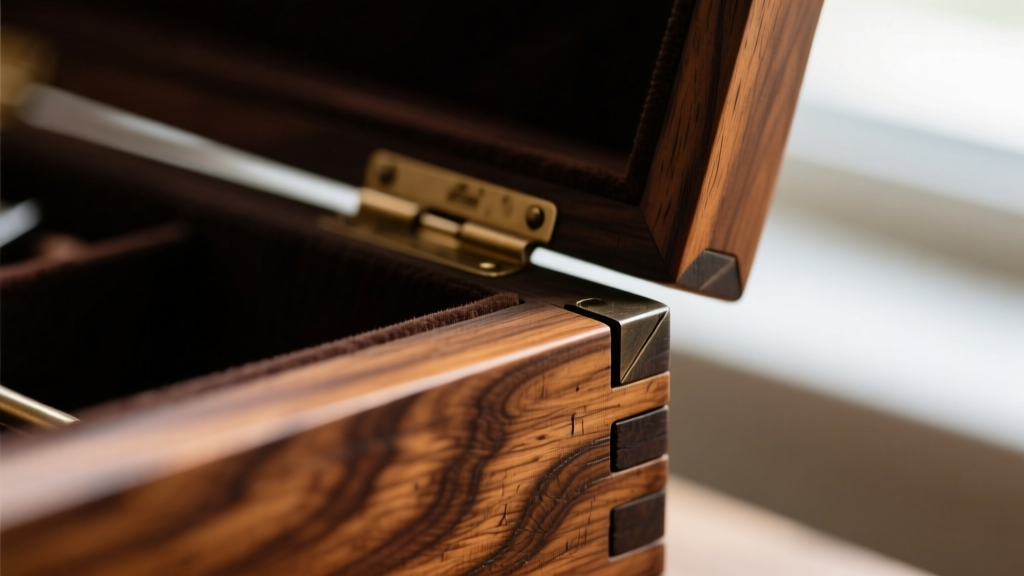
Flip the box over and examine the corner joints. The hallmark of a master-crafted old jewelry box is the hand-cut dovetail joint. Hand-cut dovetails feature slightly asymmetrical, narrow pins and wider tails, providing immense mechanical strength that resists being pulled apart. Conversely, machine-cut dovetails (common in later 20th-century pieces) are uniform and often indicate factory mass-production rather than artisanal craftsmanship. Avoid boxes with simple mitered corners secured only by glue and nails, as these will inevitably separate under the weight of heavy silver or gold collections.
The Hidden Danger: Acidic Linings and Tarnish
The most critical mistake buyers make when purchasing an old jewelry box is assuming the original interior lining is safe for modern jewelry storage. According to conservation guidelines from the American Institute for Conservation (AIC), historical textiles and backing materials often harbor destructive chemical compounds.
The Chemistry of Tarnish Transfer
During the Victorian and Edwardian eras, jewelry boxes were frequently lined with silk, velvet, or wool. These fabrics were often dyed using mordants containing sulfur or heavy metals. Furthermore, the cardboard backing used to stiffen the fabric was highly acidic, made from unbuffered wood pulp. Over decades, these materials off-gas hydrogen sulfide and organic acids. When trapped in a closed environment, these gases react with the copper alloys in sterling silver and karat gold, causing rapid, deep tarnishing and even permanent pitting on delicate gemstones like pearls and opals.
If you open a vintage box and notice that the original velvet is brittle, discolored, or emits a sharp, acidic odor, it must be removed immediately. Storing sterling silver or pearls in this environment will cause irreversible damage.
Lining Material Comparison
| Material Type | Era / Origin | Acidity / Tarnish Risk | Best Use Case |
|---|---|---|---|
| Original Silk/Velvet | 19th - Early 20th Century | High: Sulfur dyes, acidic backing | Display only (remove for storage) |
| Pacific Silvercloth | Modern Replacement | None: Embeds silver particles to absorb H2S | Sterling silver and fine metals |
| Acid-Free Micro-Suede | Modern Replacement | None: Inert synthetic fibers | Gold, platinum, and gemstones |
| Archival Cotton Flannel | Modern Replacement | Low: Must be washed to remove sizing | General purpose, budget-friendly |
Hardware, Hinges, and Locking Mechanisms
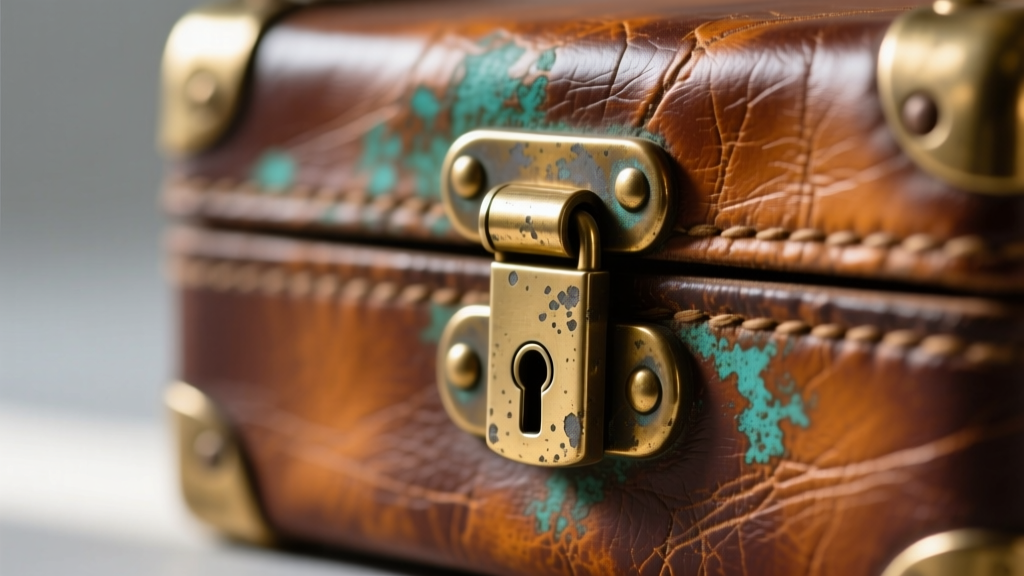
The hardware on an old jewelry box serves both functional and aesthetic purposes. Original brass or bronze hinges are highly desirable, but you must check for metal fatigue and pin wear. Open and close the lid multiple times. If the lid wobbles laterally or sags to one side, the hinge pins have worn down, or the screw holes in the wood have become stripped.
Stripped screw holes in antique hardwoods can be repaired by a conservator using a dowel and hide glue, but it requires precision. Additionally, inspect the locking mechanism. Many antique boxes feature intricate brass lever locks. While they are beautiful, the original skeleton keys are frequently lost. If the lock is seized, do not attempt to force it with modern lubricants like WD-40, which can stain the surrounding wood and degrade the internal tumblers. Instead, use a microscopic amount of dry graphite powder or consult a specialist in antique horology and locks.
2026 Pricing Guide for Antique Jewelry Boxes
The market for vintage storage has stabilized in 2026, with buyers placing a premium on pieces that require minimal structural restoration. Below is a general pricing framework based on era, material, and condition. Note that pieces with documented provenance or those created by renowned makers (such as Asprey or Fabergé) command prices far outside these standard brackets.
- Victorian (1837–1901): $150 – $600. Often made of Coromandel wood or walnut with brass inlay. High likelihood of needing interior re-lining due to acidic materials.
- Art Deco (1920s–1930s): $250 – $900. Characterized by geometric veneers, Macassar ebony, and Bakelite accents. Hardware is usually high-quality plated brass.
- Mid-Century Modern (1950s–1970s): $80 – $400. Teak and rosewood are common. Linings from this era are often synthetic but can still trap moisture if not properly ventilated.
Step-by-Step Restoration for Safe Storage
If you have acquired an old jewelry box with a compromised interior, restoring it to museum-grade safety is a highly rewarding process. The experts at Lang Antiques University emphasize that preservation should always prioritize reversible methods.
- Remove the Old Lining: Carefully pry up the old fabric and cardboard backing using a thin, flexible spatula. Wear a respirator, as degraded cellulose and ancient mold spores can become airborne.
- Neutralize the Wood: Wipe the bare interior wood with a slightly damp cloth and a mild, pH-neutral soap solution to remove decades of trapped acidic oils and dust. Allow it to dry completely for 48 hours.
- Seal the Wood: Apply a thin coat of dewaxed shellac to the interior wood. This creates an impermeable barrier that prevents any residual tannins or acids in the wood from off-gassing into the storage compartment.
- Install Modern Archival Linings: Cut acid-free micro-suede or Pacific Silvercloth to size. Use a reversible, conservation-grade adhesive (such as Jade 403) to attach the new fabric, ensuring it is pulled taut over acid-free mat board for a luxurious, protective finish.
Final Verdict: Is It Worth the Investment?
Purchasing an old jewelry box is an exercise in balancing historical appreciation with practical metallurgical care. While the exterior beauty of antique marquetry and hand-cut dovetails is undeniable, the true value of the piece lies in its ability to safely house your collection. By thoroughly inspecting the structural joints, recognizing the hidden dangers of acidic vintage linings, and committing to a proper archival restoration, you can transform a beautiful antique into a functional, safe haven for your most treasured jewelry. For further reading on gemstone-specific storage requirements, always refer to the Gemological Institute of America (GIA) care guidelines before placing sensitive stones like emeralds or opals into any enclosed environment.


