Fixing & Upgrading Your Mickey Mouse Jewelry Box Storage
Troubleshoot common Mickey Mouse jewelry box issues. Learn how to fix tarnished linings, stuck hinges, and upgrade compartments for safe storage.

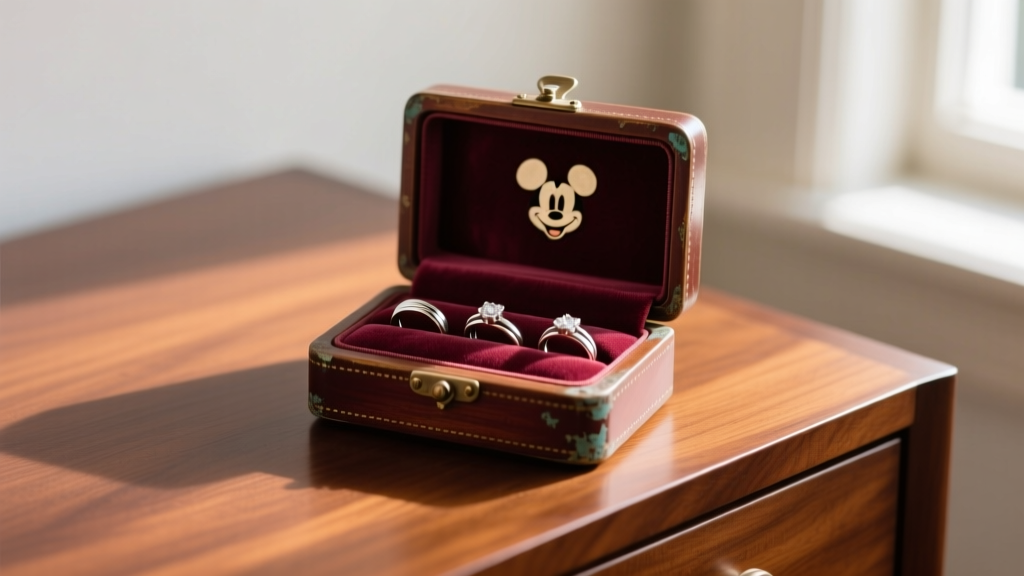
The Hidden Dangers of Novelty Disney Storage
Collectors and Disney fans often acquire novelty storage pieces for their charm, but a standard mickey mouse jewelry box is rarely designed with archival jewelry preservation in mind. Whether you own a 1990s Enesco figurine box, a Bradford Exchange musical keepsake, or a modern Disney Store display case, these items prioritize exterior aesthetics over interior material science. As we move through 2026, many vintage novelty boxes are hitting their 20-to-30-year mark, revealing severe material degradation that can actively damage fine jewelry.
The most common issues plaguing these themed boxes include off-gassing synthetic adhesives, moisture-trapping velvet linings, and failing brass piano hinges. Storing sterling silver, pearls, or porous gemstones in an unmodified novelty box can lead to rapid oxidation, micro-scratching, and chemical etching. Below, we break down the exact troubleshooting steps required to transform a decorative Disney keepsake into a safe, functional storage environment for your valuable pieces.
Troubleshooting Tarnish: Upgrading the Interior Lining
The primary culprit behind tarnished silver in novelty boxes is the original factory lining. Manufacturers typically use inexpensive synthetic velvet or flocked paper backed by PVC-based glues. These materials trap ambient humidity and often contain sulfur compounds in their dyes, which react with silver to form silver sulfide (tarnish). According to the Gemological Institute of America (GIA), controlling the micro-climate and eliminating sulfur exposure is critical for silver preservation.
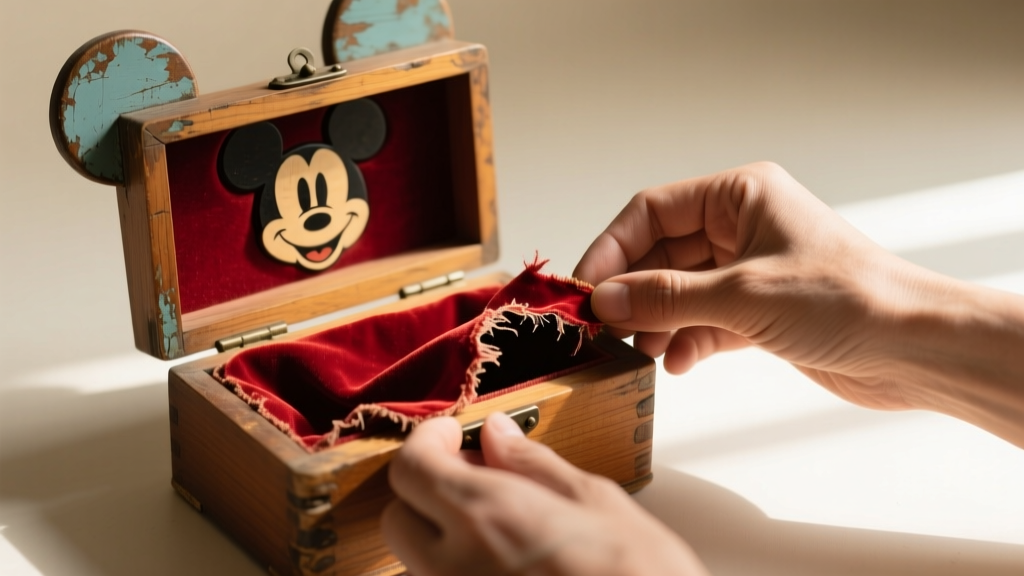
Step-by-Step Lining Replacement
- Removal: Carefully pry up the old fabric using a flat plastic spudger to avoid gouging the MDF or wood base.
- Adhesive Cleanup: Do not use harsh paint thinners, which can warp the box's exterior finish. Apply a citrus-based solvent (like Goo Gone) to break down the old glue, then wipe the area completely clean with 90% isopropyl alcohol to remove any oily residue.
- Material Selection: Replace the old lining with an archival-safe material. Pacific Silvercloth is highly recommended for sterling silver, as it embeds microscopic silver particles that trap hydrogen sulfide gases before they reach your jewelry.
- Installation: Use a pH-neutral, acid-free fabric glue or double-sided archival tape to secure the new lining, ensuring no chemical off-gassing occurs inside the enclosed space.
Lining Material Comparison Chart
| Material | Archival Safety | Tarnish Resistance | Best Use Case |
|---|---|---|---|
| Standard Synthetic Velvet | Poor (traps moisture) | Low | Costume jewelry only |
| Pacific Silvercloth | Excellent | High (embedded Ag) | Sterling silver storage |
| Polyethylene (PE) Foam | Excellent (chemically inert) | Moderate | Rings, heavy bangles |
| Archival Flannel (Washed) | Good | Moderate | Gold and platinum pieces |
Fixing Mechanical Failures: Hinges and Music Boxes
Novelty boxes frequently utilize miniature brass piano hinges and wind-up musical movements. Over time, these mechanical parts fail due to environmental dust, improper lubrication, and metal fatigue.
Stuck or Squeaky Hinges
A common mistake is spraying standard WD-40 onto stuck hinges. WD-40 is a solvent and water-displacer, not a long-term lubricant; it leaves a petroleum residue that attracts dust and eventually gums up the tiny brass pins. Instead, apply a micro-drop of PTFE (Teflon) dry lubricant using a precision needle oiler. PTFE dries completely clear, leaves no sticky residue, and provides long-lasting friction reduction without risking stains on your jewelry or the box's interior.
Wound-Down Music Box Mechanisms
Most musical Mickey Mouse boxes from the late 20th century utilize a Sankyo 18-note movement. If the key turns but the music stops playing, or if the tempo drags significantly, the issue is usually the governor (the small fan that regulates speed) or a disengaged stopper pin.
- Tempo Issues: Use compressed air to blow dust out of the governor fan. Never oil the fan mechanism, as this will cause it to spin too fast and break the delicate brass gears.
- Overwinding: If the key will not turn, do not force it. The mainspring is likely fully tensioned. Gently tap the side of the box to dislodge the stopper pin, allowing the mechanism to play down slightly before attempting to wind it again.
Reconfiguring Compartments for Modern Fine Jewelry
The interior layouts of vintage novelty boxes were designed for the jewelry trends of their era—typically thin chains, small stud earrings, and narrow bands. Today's jewelry, including wide-band men's rings, chunky statement pieces, and thick chain links, simply does not fit into standard 15mm ring rolls or narrow necklace hooks.
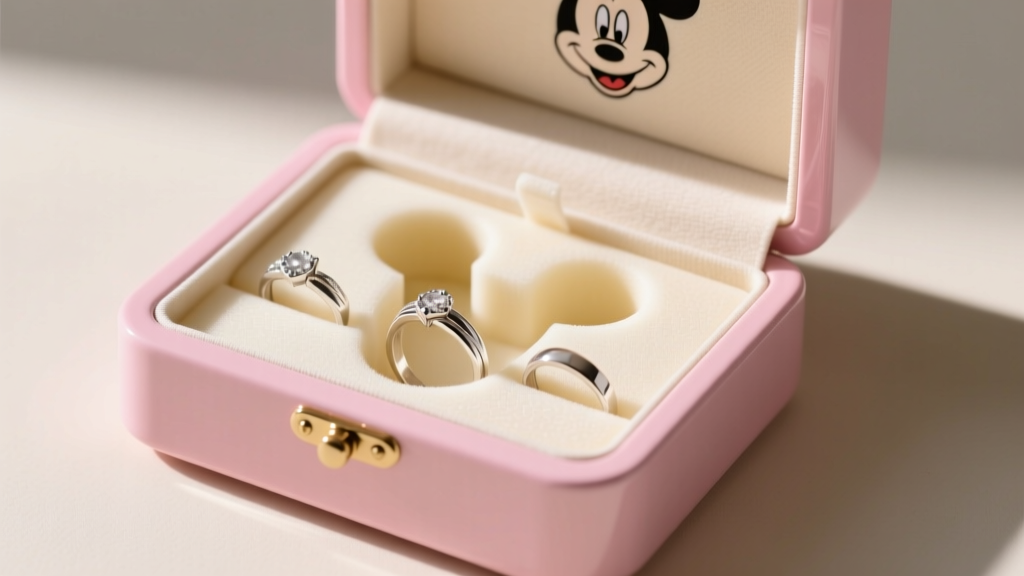
To solve this, discard the plastic injection-molded dividers and flimsy ring rolls. Instead, measure the interior dimensions of the main compartment and order a block of closed-cell Polyethylene (PE) foam. Unlike Polyurethane (PU) foam, which degrades into a sticky, acidic powder over 10-15 years, PE foam is chemically inert and safe for all metals and gemstones.
Foam Cutting Guide for Custom Slots
- Standard Rings: Cut slots 18mm wide and 25mm deep.
- Wide-Band / Men's Rings: Cut slots 25mm wide and 30mm deep to accommodate 8mm+ band widths without compressing the foam.
- Earrings: Use a 3mm hole punch to create clean, uniform holes for post earrings, preventing the foam from tearing over time.
Pro Tip: Use a hot wire foam cutter rather than a utility knife. A hot wire seals the edges of the PE foam as it cuts, preventing micro-plastic shedding that can cling to your jewelry and scratch polished surfaces.
Exterior Restoration: Faux Leather and Paint Peeling
Many themed boxes feature a polyurethane (PU) "leather" wrap or painted resin figurines on the lid. PU leather is highly susceptible to hydrolysis—a chemical breakdown caused by ambient humidity that results in the material peeling and flaking off in sticky sheets. Once hydrolysis begins, it cannot be stopped or reversed with conditioners.
The Fix: Completely strip the failing PU layer using a stiff brass brush and isopropyl alcohol. Once you reach the stable MDF or wood base, you can either apply a bookbinding cloth using PVA glue for a refined, textile finish, or seal the raw wood with a matte polyurethane clear coat for a rustic, distressed look. For peeling enamel paint on resin figurines, lightly sand the area with 800-grit wet/dry sandpaper and touch up using model-grade acrylic enamel paints, sealing with a UV-resistant clear gloss.
Final Verdict: Display vs. Daily Storage
While upgrading a mickey mouse jewelry box vastly improves its protective qualities, it is vital to understand the limitations of novelty shapes. The irregular curves and shallow depths inherent to character-themed designs mean that long, heavy items like pearl sautoirs or large cuff bracelets may still be at risk of tangling or crushing. For optimal preservation, use your restored Mickey Mouse box as a secondary "daily wear" station for rings, studs, and short chains, while keeping heirloom pieces and high-value gems in a dedicated, climate-controlled archival safe. For more comprehensive care routines, consult the storage guidelines provided by Jewelers Mutual to ensure your collection remains pristine for decades to come.


