Glass Jewelry Box Vintage Finds: A Collector's Buying Guide
Discover how to evaluate, authenticate, and restore a glass jewelry box vintage piece. Learn about glass types, hinge hardware, and tarnish prevention.

The Allure and Complexity of Vintage Glass Jewelry Storage
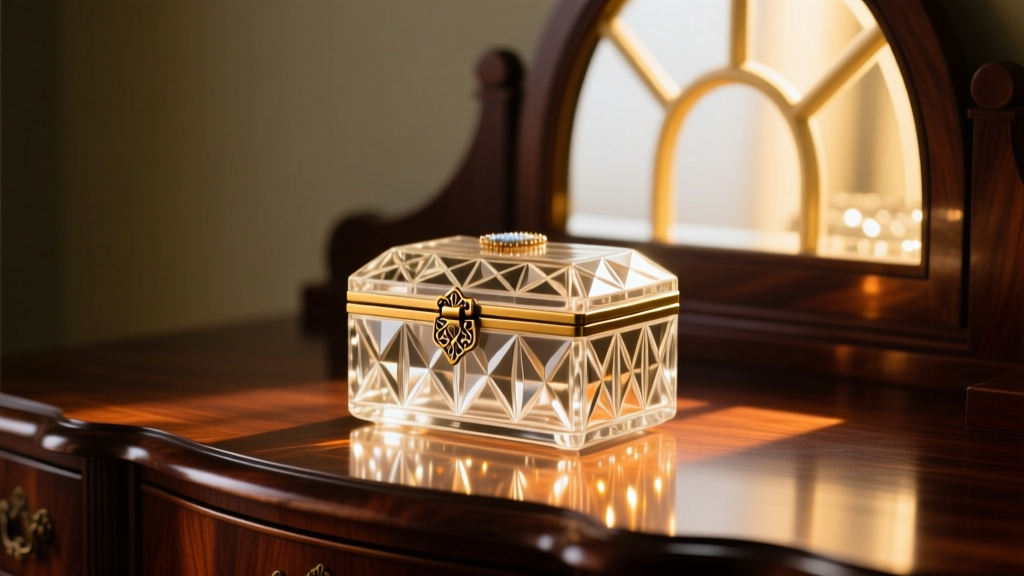
Collecting a glass jewelry box vintage piece is an exercise in balancing aesthetic beauty with functional preservation. Unlike modern acrylic or mass-produced wooden organizers, antique and vintage glass boxes—ranging from 1890s Bohemian overlay crystal to 1930s Depression-era pressed glass—carry unique historical weight. However, they also present specific structural and chemical challenges that modern collectors must navigate. Glass is inherently rigid, meaning hardware stress can lead to catastrophic failure, and the original interior linings often harbor chemicals that actively destroy precious metals.
This comprehensive buying guide will equip you with the domain expertise required to authenticate glass types, evaluate hinge integrity, and safely re-line vintage pieces to protect your jewelry collection in 2026 and beyond.
Identifying Authentic Vintage Glass Types
The value and care requirements of a vintage glass box depend entirely on its material composition. According to the Metropolitan Museum of Art's glass history archives, the late 19th and early 20th centuries saw massive shifts in glassmaking technology. Here is what to look for when evaluating your piece.
Lead Crystal vs. Soda-Lime Pressed Glass
True vintage lead crystal contains a minimum of 24% lead oxide (PbO), which increases the glass's density and refractive index. When tapped gently with a wooden dowel, lead crystal sustains a resonant, multi-second dual-tone ring. In contrast, soda-lime pressed glass (common in 1920s mass-market boxes) produces a dull, short 'clink.' Visually, lead crystal features sharper, deeper hand-cut facets, whereas pressed glass will show slightly rounded, softer mold seams.
Uranium (Vaseline) Glass Authentication
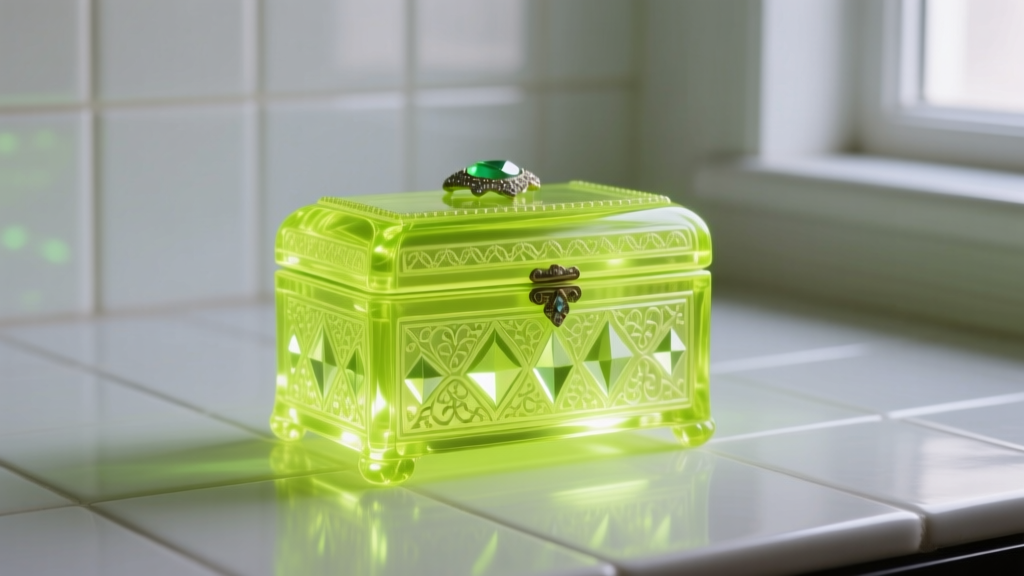
Produced primarily between the 1880s and 1940s, uranium glass contains roughly 2% uranium dioxide, giving it a distinct yellow-green hue in natural light. To authenticate a suspected piece, you must use a 365nm UV flashlight. A 395nm UV light emits too much visible purple light, which will mask the true fluorescence. Under a pure 365nm beam, authentic uranium glass will glow a brilliant, opaque neon green.
Hardware and Hinge Evaluation: The Primary Failure Points
The most common cause of death for a vintage glass jewelry box is hardware failure. Glass has zero tensile flexibility; if a hinge seizes or swells, the torque will instantly fracture the glass base or lid. When inspecting a potential purchase, pay close attention to the following hardware metrics.
| Hardware Material | Era Commonality | Failure Mode & Red Flags |
|---|---|---|
| Solid Brass | 1880s - 1920s | Patina is desirable. Red flag: stripped screw threads or bent pins causing lid misalignment. |
| Pot Metal (Zamak) | 1930s - 1950s | Highly prone to 'zinc pest' (oxidation swelling). If the hinge looks pitted or swollen, avoid the piece; it will eventually shatter the glass. |
| Steel Pins | All Eras | Rust jacking. As steel rusts, it expands, cracking the glass knuckle. Look for orange dust near the hinge joints. |
Expert Tip: Never force a stiff vintage glass hinge. Apply a micro-drop of synthetic watch oil (like Moebius 9010) to the pin barrel and let it capillary inward over 24 hours before attempting to open the lid.
The Hidden Danger: Vintage Linings and Tarnish Chemistry
Perhaps the most critical aspect of buying a glass jewelry box vintage item is understanding the chemical threat posed by its original interior lining. Many collectors assume that keeping the original 1920s velvet or silk lining preserves the piece's historical integrity. In reality, it is actively destroying your silver jewelry.
The Sulfur Off-Gassing Problem
Silver tarnish is not caused by oxygen; it is a chemical reaction between silver and sulfur compounds (specifically hydrogen sulfide and sulfur dioxide) to form silver sulfide (Ag2S). The Gemological Institute of America (GIA) notes that early 20th-century textile dyes, synthetic rayons, and the animal-based hide glues used to adhere velvet to glass are massive sources of sulfur off-gassing. If you store sterling silver in an unrestored vintage box, it will develop a thick, black sulfide layer within weeks.
Archival Relining Protocols
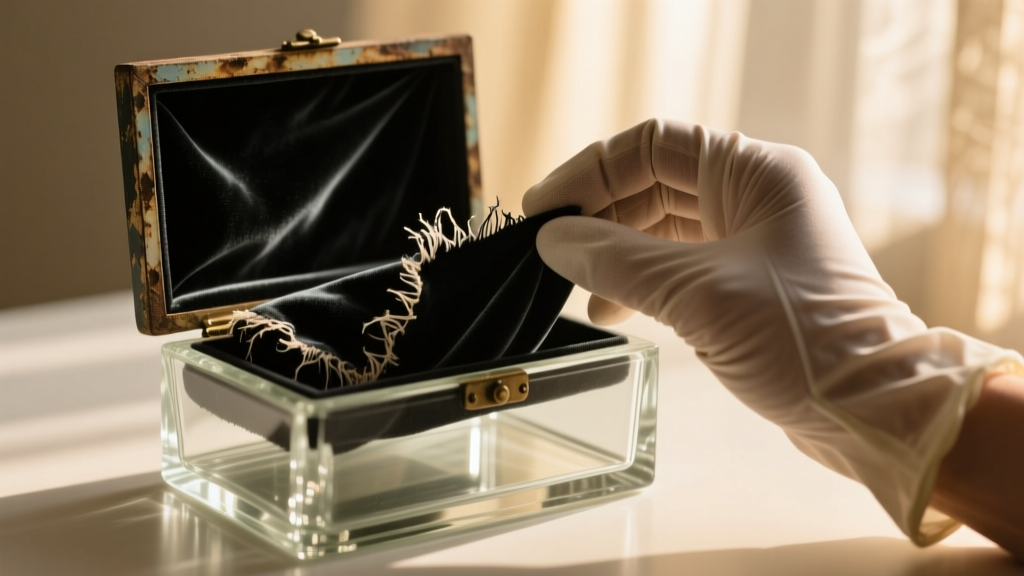
To safely use a vintage glass box for modern jewelry storage, the interior must be professionally relined using archival materials. Follow this protocol:
- Adhesive Removal: Use a glass-safe solvent like d-Limonene to dissolve 100-year-old animal glues without etching the glass or damaging the exterior finish.
- Barrier Layer: Apply a layer of acid-free, unbuffered tissue paper or thin Mylar sheeting directly to the glass to act as a vapor barrier.
- Modern Padding: Use unbleached, undyed cotton flannel or archival-grade Volara polyethylene foam. Avoid modern synthetic velvets unless they are explicitly certified as 'anti-tarnish' or 'jewelry-grade' (free of sulfur-based sizing agents).
Market Pricing and Valuation Tiers
Valuing a vintage glass jewelry box requires cross-referencing the glass type, the maker's mark, and the condition of the hardware. Based on current antique market data and insights from the National American Glass Club, here are the general pricing tiers for highly sought-after pieces in 2026:
- Depression Glass (1920s-1930s): $45 – $120. Often feature molded floral patterns (like the 'Sharon' or 'Princess' patterns). Highly susceptible to chipping along the mold seams.
- Vaseline / Uranium Glass (1890s-1930s): $150 – $400. Prices spike if the piece features intricate EAPG (Early American Pattern Glass) designs like 'Huber' or 'Zipper Block'.
- Bohemian Cut Overlay (1880s-1910s): $250 – $800. Characterized by cased glass (e.g., ruby red over clear crystal) with deep, hand-cut geometric facets.
- French Art Deco Crystal (1920s-1930s): $300 – $1,200+. Heavy, geometric lead crystal boxes, often featuring original bronze or silver-plated mounts by makers like Lalique or Baccarat.
Final Sourcing Advice for Collectors
When hunting for the perfect glass jewelry box vintage piece, always inspect the 'knuckles'—the small glass loops that wrap around the hinge pin. These are the thinnest points of the entire structure. Hold the box up to a strong LED light and look for micro-fractures or 'crizzling' (a network of tiny internal cracks caused by glass disease, common in poorly formulated 19th-century glass). A beautiful exterior means nothing if the structural integrity of the knuckles is compromised. Prioritize pieces with solid brass hardware, intact glass knuckles, and plan to invest in archival relining to ensure your jewelry remains pristine for decades to come.


